The Process Behind Designing a Comprehensive Fire Protection System
When it comes to keeping your building safe from fire, it’s not just about sprinklers and smoke detectors. It’s about systems working in harmony like a well-rehearsed orchestra—minus the tuxedos. Kord Fire Protection technicians have guided countless property owners through this exact process. Their team doesn’t just install systems—they explain, educate, and engineer strategies that actually make sense. If you’ve ever wondered what really goes into a fire protection system besides wires and water, you’re about to discover the hidden genius behind it all, with a little wit to keep things sizzling.

Why Fire Protection Isn’t a One-Size-Fits-All Solution
Not all fires are created equal—and neither are buildings. Designing a comprehensive fire protection system requires more than pulling a kit out of a box. From Lady Gaga’s Las Vegas stage to your cousin Jerry’s BBQ food truck, fire risks vary.
Kord’s technicians begin with a risk assessment that’s basically a fire safety background check. They consider building layout, occupancy type, and your local codes like a fire-savvy Sherlock Holmes. Hospitals need clean agent systems, while data centers can’t afford water-based sprinklers drowning $50,000 servers.
So, no, installing one-size-fits-all protection would be like giving Iron Man a Nerf gun—it just doesn’t work. The experts personalize protection the way a chef seasons food: intentionally and precisely.
What Happens During a Fire Risk Assessment?
Ask 10 people to name a fire risk, and you’ll likely get 8 answers: “Leaving the stove on.” Close, but there’s more under the hood. A fire risk assessment—not to be confused with your annual reality check—identifies, documents, and evaluates every potential ignition source within the building.
Kord Fire Protection technicians play private investigator here, hunting down ignition sources, fuel loads, and identifying flammable materials hiding in plain sight. They examine:
- Occupancy: Who’s present and how often?
- Hazards: Is there equipment that overheats, or maybe a room full of storage boxes that could ignite faster than a rom-com romance?
- Suppression readiness: Can your system handle a fire bursting out at 3 AM on a Tuesday?
They don’t just poke around and leave. They build a clear path from observation to solution with a tailored fire protection blueprint that reflects your building’s unique fire profile.

Understanding the Layers of Fire Protection: It’s Not Just Sprinklers
Think of fire protection as layers of defenses, not unlike building your SIM’s dream house in The Sims. You’re going to want walls, sprinklers, alarms, maybe even a moat—just kidding (unless zoning laws allow).
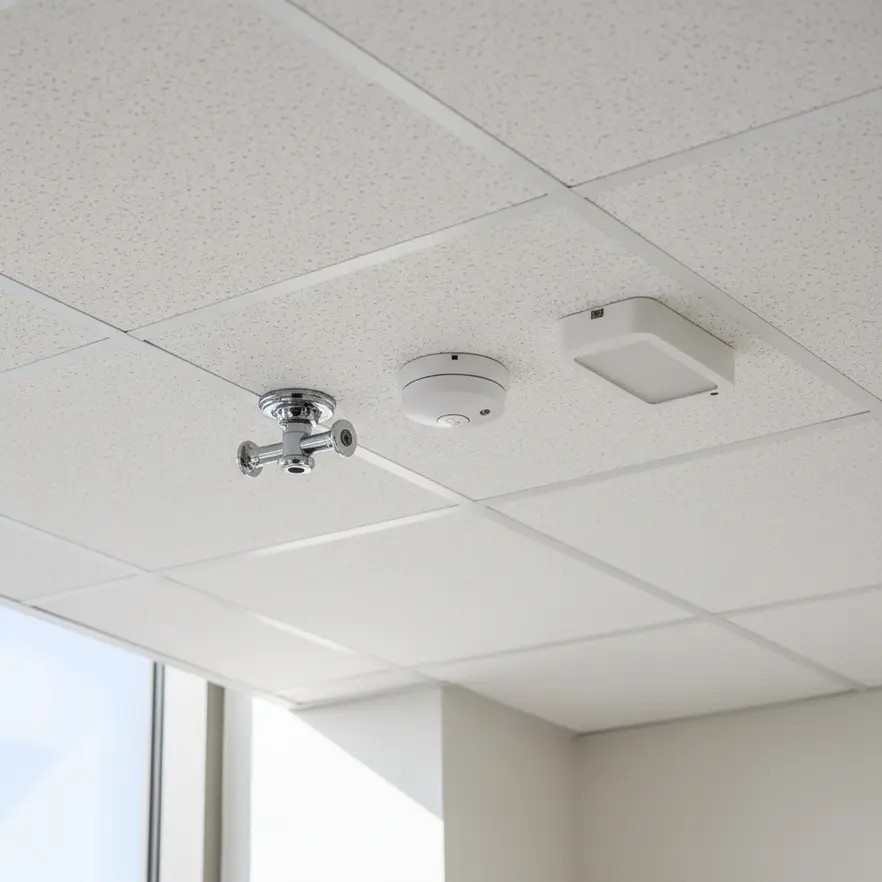
Fire protection systems are a glorious blend of:
- Detection (smoke/heat alarms)
- Notification (audible/visual alarms, strobe lights)
- Suppression (sprinklers, clean agent systems, CO2 systems)
- Containment (firewalls, rated doors, dampers)
The beauty here? These systems don’t just do one job. They detect threats, alert people faster than your phone alerts you about an Instagram like, and activate suppression protocols automatically.
Kord’s team doesn’t just toss sensors on your ceiling and call it a day. They explain how each layer interacts…like how trigger-happy detectors won’t cause a full sprinkler flood unless danger’s truly detected.
How Kord Technicians Simplify Complex Fire Codes
If reading fire code sounds about as enjoyable as watching paint dry, you’re not alone. With volumes of regulations from NFPA, local fire marshals, and building departments, fire codes are a headache-inducing cocktail of acronyms and footnotes.
Fortunately, Kord Fire Protection technicians speak fluent code. They break things down like a Netflix docuseries—easy to understand and weirdly addictive. One technician compared code compliance to assembling IKEA furniture: “Once you know what page you’re on, it actually makes sense.”
They ensure that your system design meets every requirement without turning your building into a fortress of flashing lights and pipes. So yes, they stay flexible when translating code into a smooth, cost-effective game plan.
Design Wizardry: From Blueprint to Real-life System
Now that your fire risk is assessed and codes are decoded, it’s time for the heavy-lifting: actual design. Not unlike fitting Tetris pieces, this means making sure all components—sprinkler heads, pipes, alarms, and panels—fit with the building architecture.
The Kord engineers use CAD software to draft detailed layouts. Every valve, wire, and nozzle is determined with military-grade precision, while still accounting for aesthetics—because nobody wants a sprinkler smacked into their chandelier.
They also consider hydraulic calculations. Simple put? Making sure water flows at the right rate, with just enough pressure to quash flames but not flood your drywall. It’s science, but the kind with a clear purpose and zero lab coats.
Installation Day: The Pipes, The Alarms, The Magic
Design is only as good as installation. This is the no-nonsense portion of the journey: where pipes meet ceilings, wires meet circuits, and you start to hear terms like “trapeze supports” that sound more like circus acts than fire tech.
While your inner monologue might contemplate how you’ve become so fascinated with dry pipe systems, Kord’s certified crew gets hands-on. They ensure:
- Gaps are sealed (through fire-stopping methods)
- Sprinkler heads are properly spaced (no more, no less)
- Alarms respond instantly (and no, not to steam from your shower)
Installations are organized chaos—like cooking Thanksgiving Dinner with Gordon Ramsay whispering instructions. But with a team like Kord’s on deck, things stay smooth and safe.
Testing and Commissioning: Proving It Works, Not Just Hoping It Does
Before anyone stretches out and sighs “It’s done,” the system gets tested—rigorously. Every valve, every alarm, every connection must pass with flying colors. Because building owners don’t want surprises when there’s actual smoke.
Tests include:
- Flow Testing: Does water flow where we told it to?
- Alarm Verification: Do all strobes & horns activate?
- Zone Integrity: Can systems isolate specific areas during a fire?
Kord Fire Protection technicians guide this stage like seasoned pilots, running all final verifications and walking you through the ‘what if’ scenarios. Think of this moment as the dress rehearsal. Only the stakes are higher, and there are fewer audience snacks.
Two Columns: Myth vs Fact on Fire Protection
Myth
Sprinklers go off when someone burns toast.
Fire systems only matter for industrial buildings.
Once installed, you’re set for life.
All suppression systems use water.
Fact
False. Each sprinkler activates individually at high heat, not from smoke.
All occupancies involve fire risk—from hotels to hair salons.
Inspection and maintenance are vital—systems aren’t immortal.
Nope. Some use gas, foam, or powder—depending on what’s being protected.
Maintenance Is Not Optional—Your System Has A Daily Grind Too
Imagine installing a home gym and never using it. That’s what it’s like installing fire protection and forgetting maintenance. Over time, valves can corrode, alarms may lag, and pipes develop leaks that make rooftop coffee drip look harmless.
Kord offers regular inspections, checking flow rates, battery backups, and confirming that nothing’s been disabled by curious maintenance crews thinking they were unplugging a copier. Not naming names, but it happens. A lot.
Regular maintenance not only keeps you safe—it keeps you legal, too. Fire marshals adore compliant buildings. Code violations? Less so.
FAQ
What is a fire protection system?
A fire protection system detects, controls, and suppresses fires automatically or manually using devices like sprinklers, alarms, and suppression agents.
How long does it take to install a fire protection system?
Depending on building size and complexity, installation could take from a few days to several weeks.
Can I design a system without a professional?
No. Fire protection design requires certified professionals to meet code and safety standards.
How often should systems be tested?
Most systems need quarterly and annual inspections to remain compliant and operational.
Do all fire suppression systems use water?
No. Some use clean agents like FM-200 or CO2 for sensitive equipment.
What’s the cost of designing a fire protection system?
Costs vary with building size, complexity, and system type. Consulting professionals early helps control expenses.
Wrapping It Up Before Things Get Too Heated
Designing a comprehensive fire protection system is a layered, complex journey—but with the right team, it feels manageable. Kord Fire Protection technicians stand as partners, not just providers, bringing clarity, compliance, and a little charm to the process. They don’t just build safety—they build confidence. For those serious about safeguarding property and lives, it’s time to take the first step.
Get in touch with Kord Fire Protection today and let the experts simplify, design, and install a fire system that works as hard as you do, even when you’re off the clock.
Know Your Weapon Before You Fight the Flame
Kord Fire Protection is your go-to when it comes to all things fire protection. For over 20 years, we’ve been serving Southern California with the quality service and equipment to keep your home or business safe at all times. Our competitive prices reflect our unwavering commitment to protecting what matters most in the event of a fire emergency. Give us a call, send an email, or use that form!

Join Our Newsletter!
Get the latest fire safety tips delivered straight to your inbox From our Newsletter.