NFPA 1 Section 1.4 Fire Code Equivalency Alternatives
Quick Answer
NFPA 1 Section 1.4 lets a building owner or fire professional ask for an approved alternative when strict code rules do not fit the site. In plain terms, it supports fire code equivalency alternatives, NFPA code modifications, and alternative fire protection methods when they still deliver equal safety. Kord Fire Protection can help make that case with solid design, testing, and support.
When a property team is already thinking through system changes, it helps to work with a provider that handles full fire protection services so design, documentation, inspections, and follow through stay aligned instead of drifting into separate lanes.
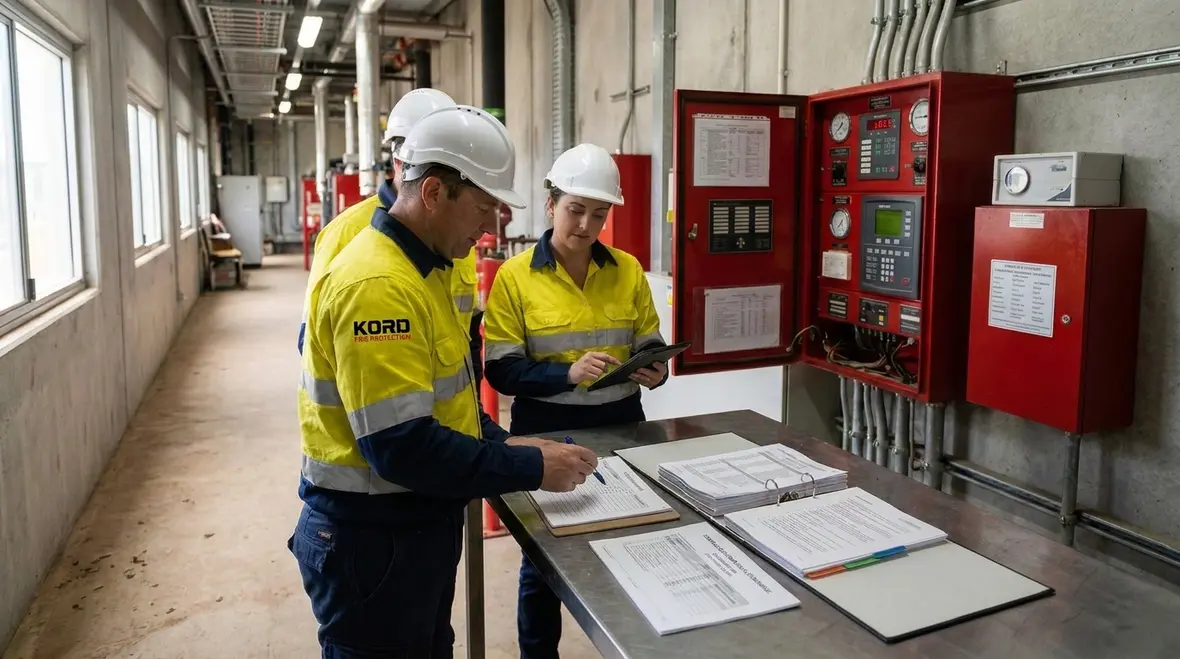
NFPA 1 Section 1.4 Explained for Real Sites
NFPA 1 Section 1.4 gives a path for equivalency, alternatives, and modifications when a standard code rule does not suit a building, process, or layout. That matters because not every industrial plant, retail fit out, or commercial site looks neat on paper. Some sites have odd layouts, special equipment, high traffic zones, or legacy systems that make a plain code fix hard to use.
This is where fire code equivalency alternatives come into play. The goal is not to dodge safety. The goal is to prove that another method gives equal or better fire protection. In other words, the code does not ask for drama. It asks for proof. Very sensible, really. Fire does not care about excuses, and neither does compliance.
For industrial and commercial facilities, this can help with sites that need practical solutions instead of forced one size fits all upgrades. NFPA code modifications can support a smarter route when the original rule creates more risk, more cost, or a bad fit for the operation. That is one reason broader planning articles like designing a comprehensive fire protection system are useful context for teams trying to connect code intent with field reality.
Why equivalency exists in the first place
Codes are written to create dependable safety outcomes, but buildings and operations are rarely polite enough to stay inside neat little boxes. A manufacturing floor may have large process equipment. A retrofit may run into structural barriers. A logistics site may have storage, traffic, and access conditions that complicate a standard installation. Section 1.4 exists because equal safety matters more than robotic sameness.
That does not mean anything goes. It means the site team has to show that the alternative is deliberate, engineered, maintainable, and able to achieve the same core objective as the prescriptive rule. The authority reviewing it is not looking for a clever shortcut. They are looking for a defensible answer.

How a Fire Code Alternative Gets Accepted
An alternative does not win on charm alone, even if the paperwork looks lovely. It must show equivalent protection. That usually means a fire safety team or authority reviews the hazard, the building use, the system design, and the life safety outcome.
To build a strong case, the submission often needs:
A clear description of the current risk
The exact code section that needs an alternative
A full explanation of the proposed fire protection method
Evidence that the new method gives equal or better performance
Test data, drawings, reports, and maintenance plans
Because of that, the process works best when the site team, designer, and fire specialist stay aligned from the start. Otherwise, the review can drag on like a sequel no one asked for.
What reviewers usually want to see
The strongest submissions connect the problem, the proposed alternative, and the safety outcome in a clean chain of logic. If a standard sprinkler arrangement cannot physically serve the hazard, the submission should explain why, identify the operational constraints, and show how the replacement strategy controls ignition, growth, detection, notification, suppression, and ongoing maintenance. A reviewer should not have to guess what the team meant.
It also helps when maintenance is addressed early. A system that performs beautifully on paper but cannot be tested easily in service tends to raise eyebrows for good reason. The same practical lens shows up in related discussions like NFPA 1: A Comprehensive Guide to Fire Prevention and Safety, where code goals and ongoing readiness are tied together rather than treated like separate chores.
Where NFPA Code Modifications Help Industrial and Commercial Sites
Some facilities need code modifications because their operations create unusual hazards. A warehouse with high rack storage has very different needs from a shopping center plant room. Likewise, a food site, logistics hub, data area, or heavy manufacturing floor may need a tailored answer.
NFPA code modifications can help when:
Existing layouts block a standard sprinkler or detection layout
Plant equipment limits access for routine fire system work
Operations cannot stop long enough for a full rebuild
Alternative suppression or detection offers better control
In these cases, the aim is simple. Keep the facility working, keep people safer, and keep the authority satisfied. That balance matters especially in live sites where downtime can cost real money and a surprise shutdown feels a lot like a bad Monday.
Common situations where the standard path gets messy
Retrofits are a classic example. The building may have been constructed under older assumptions, with limited ceiling space, odd piping routes, or inaccessible service zones. New hazards may also arrive long after the original design, such as automated storage, new electrical equipment, or sensitive rooms that cannot tolerate water damage. In those moments, a thoughtful alternative can reduce disruption while preserving the intent of the code.
Industrial facilities often need especially careful coordination because protection has to match both the fire scenario and the production environment. A one note answer rarely survives contact with a real process line. That is why engineered evaluation matters more than blanket assumptions.
Alternative Fire Protection Methods That Can Support Equivalency
Alternative fire protection methods can include more than one control layer. That may involve early detection, clean agent systems, water mist, smoke control, enhanced alarm response, compartment changes, or a better maintenance plan. The right choice depends on the hazard, the building type, and the code goal.
Common code need
Standard sprinkler coverage
Fixed access issue
High risk equipment zone
Old site limitations
Possible alternative method
Targeted suppression with added detection and alarm response
Revised system layout with documented performance support
Local suppression plus separation and fast shutdown controls
Phased upgrade plan with temporary safety measures
These options work only when they match the risk. A clever system that does not control the fire is just a very expensive light show. So, the design must show clear performance, not wishful thinking.
Layered protection usually tells the stronger story
In many equivalency proposals, no single feature carries the whole argument. Instead, the safety case becomes stronger because several controls work together. Faster detection can reduce time to response. Better compartmentation can slow spread. Local suppression can address a concentrated hazard. Improved monitoring and maintenance can protect long term reliability. That layered approach often feels more realistic because real safety rarely depends on one heroic component doing all the work.
That is also why system design and service planning should never be separated by a large internal shrug. If a proposed method cannot be inspected, tested, and maintained properly, it will not stay equivalent for very long.
Why Kord Fire Protection Matters in This Job
Kord Fire Protection can become a vital partner because this work needs more than product supply. It needs fire code knowledge, design skill, and the ability to support a case from first review to final sign off. That matters when a site needs fire code equivalency alternatives or NFPA code modifications that must stand up to scrutiny.
A capable partner can help with risk review, system selection, compliance documents, and installation planning. More importantly, they can help shape a practical solution that fits the site without weakening safety. That can save time, reduce rework, and avoid a painful back and forth with reviewers.
For industrial, retail, and commercial facilities, this type of support becomes especially useful when operations cannot pause for a full code rewrite. Kord Fire Protection can help keep the site safe, keep the paperwork clean, and keep the project moving. In the world of compliance, that is close to magic, but with more spreadsheets.
What Decision Makers Should Ask Before Approving an Alternative
Before a site approves any alternative, the team should ask a few direct questions. These questions help protect safety and reduce later trouble.
Does the alternative meet the same fire safety goal as the code rule?
Will it work during normal use and during an emergency?
Can the team inspect, test, and maintain it over time?
Has the authority or reviewer seen enough proof?
Will it support the site’s operational needs as well as compliance?
When those answers are strong, the approval path gets easier. When they are weak, the proposal often needs more work. That is not failure. That is the process doing its job.
A practical review mindset helps
Decision makers do not need to chase novelty for its own sake. They need to ask whether the method is understandable, supportable, and dependable in the conditions the building will actually face. If the proposal looks brilliant only in a clean diagram but awkward in daily operation, it probably needs refinement. The best alternatives usually feel practical once the evidence is laid out, not theatrical.
FAQ
Final Takeaway and Next Step
NFPA 1 Section 1.4 gives sites a smart path when standard rules do not fit real world operations. With the right evidence, fire code equivalency alternatives and NFPA code modifications can keep safety strong and projects on track. The point is not to weaken the code. The point is to meet its safety goal in a way the actual site can support, operate, and maintain.
Kord Fire Protection can help guide that process with practical fire protection methods that suit industrial and commercial sites. For facilities that need a better way forward, now is the time to speak with a specialist and turn a difficult compliance problem into a workable, well supported solution.

Join Our Newsletter!
Get the latest fire safety tips delivered straight to your inbox From our Newsletter.