Data Center Uptime with Data Center Power Redundancy
Data center uptime does not happen by luck. It happens through data center power redundancy that keeps critical systems running even when a component fails. In the real world, power events show up like uninvited guests: they arrive late, they act like they belong, and they always leave a mess behind. That is why Kord Fire Protection technicians explain the layers of protection and the power design choices that help facilities stay online while keeping risk under control. After all, the job is not just to keep servers powered. It is also to keep the building and the people safe, even when something goes wrong.
What redundant power really means for uptime
Redundant power means the data center does not bet everything on one path. Instead, it builds multiple independent ways to deliver electricity to the same loads. As a result, a failure in one component does not shut down the work. This approach also reduces the chance of long downtime during maintenance. In other words, the team can service parts without turning the facility into a dark cave.
Most facilities target a design that supports rapid failover. They use separate feeders, protected switching, and independent power chains that do not share a single point of failure. Then they pair that with monitoring and alarms that catch trouble early. So, when something begins to drift out of spec, the staff responds before the system hits a hard stop.
Still, redundancy is not a magic shield. The design must match the operational reality. If controls, transfers, and protections are mismatched, the system can behave like a group project where everyone did one piece and nobody coordinated the final result. A strong plan ties electrical and fire safety thinking together so the site stays stable and safe.
Redundancy starts with the electrical single line plan
To keep uptime high, the team must first build a clear single line plan. This document shows how power flows from utility sources to switchgear, transformers, UPS systems, and ultimately to critical loads like IT racks and cooling controls. Then it identifies where redundancy applies and where it does not. That distinction matters, because some parts can share safely while others cannot.
Kord Fire Protection technicians often stress that electrical design and fire risk management should not live in separate worlds. Therefore, the single line plan should connect to protection strategy early. It should also show cable routing paths, fire stopping plans, and how the facility avoids spreading a fault during a failure.
When engineers and technicians review the plan, they verify that each critical path stays independent. They also confirm that transfers happen in the right order and within safe time windows. If transfers take too long, the UPS may cover the gap, but that coverage has limits. So, the plan must align with battery runtime, load profiles, and the expected operating mode during events.
How UPS and failover modes prevent messy shutdowns
UPS systems act like a bridge. When utility power dips or fails, the UPS supplies power to the load. Then the system transfers responsibility to an alternate source, such as a generator. In practice, uptime depends on how quickly the UPS switches, how stable the output stays, and how the facility transitions between modes.
There are common UPS operating modes. Some sites run online and keep the inverter actively supplying power. Others use line interactive approaches. No matter the mode, the team must test that failover works under realistic conditions. That means checking that bypass switching does not interrupt power, that control signals behave as intended, and that the system returns cleanly after the event.
Transition planning helps here. For example, the facility can stage maintenance so that one chain stays fully available while another chain undergoes work. This reduces the chance of a cascading issue during routine tasks. And yes, redundancy still needs discipline. A redundant design can fail if the staff treats it like a backup you never touch. So they schedule inspections, verify alarms, and document system behavior.
Why generator design must match the site’s risk profile
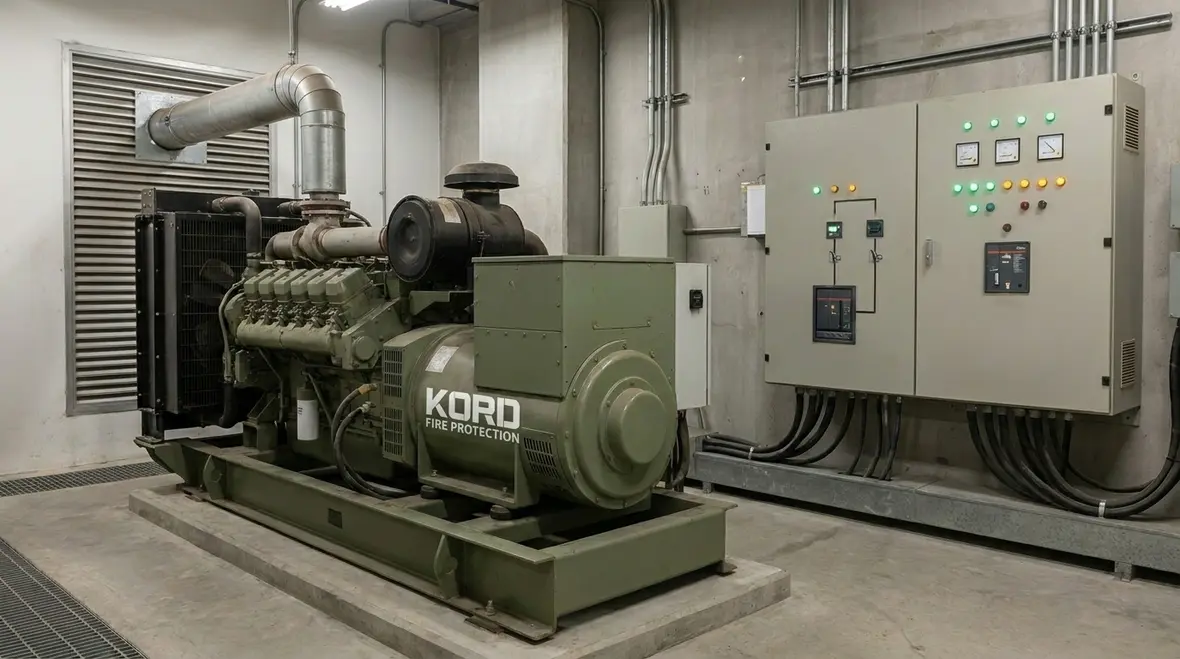
Generators matter when the utility outage lasts long enough to exceed UPS runtime. Therefore, generator sizing and controls must align with the actual load. If the generator output does not support starting currents for chillers, pumps, or other motor loads, the facility can stumble at exactly the wrong moment.
Kord Fire Protection technicians explain that fuel systems and exhaust setups also impact safety. They care about containment, ventilation, and how fire protection systems interact with mechanical spaces. Even a perfect electrical chain can run into trouble if the physical environment does not support safe operation. So the project team reviews the generator room design alongside fire detection and suppression strategy.
They also test transfer under conditions that reflect the site. A transfer test should confirm that the ATS or switchgear logic starts generators reliably, loads them appropriately, and avoids unwanted backfeeding. Then they check that the UPS transitions smoothly during the switch to generator power. In addition, they confirm that shutdown and recovery procedures keep critical loads stable.
When teams build this approach into a routine, the data center gains confidence. Confidence leads to fewer surprises. And fewer surprises mean fewer late night calls that start with, “Uh, quick question.”
Where distribution and switching reduce the chance of a single point
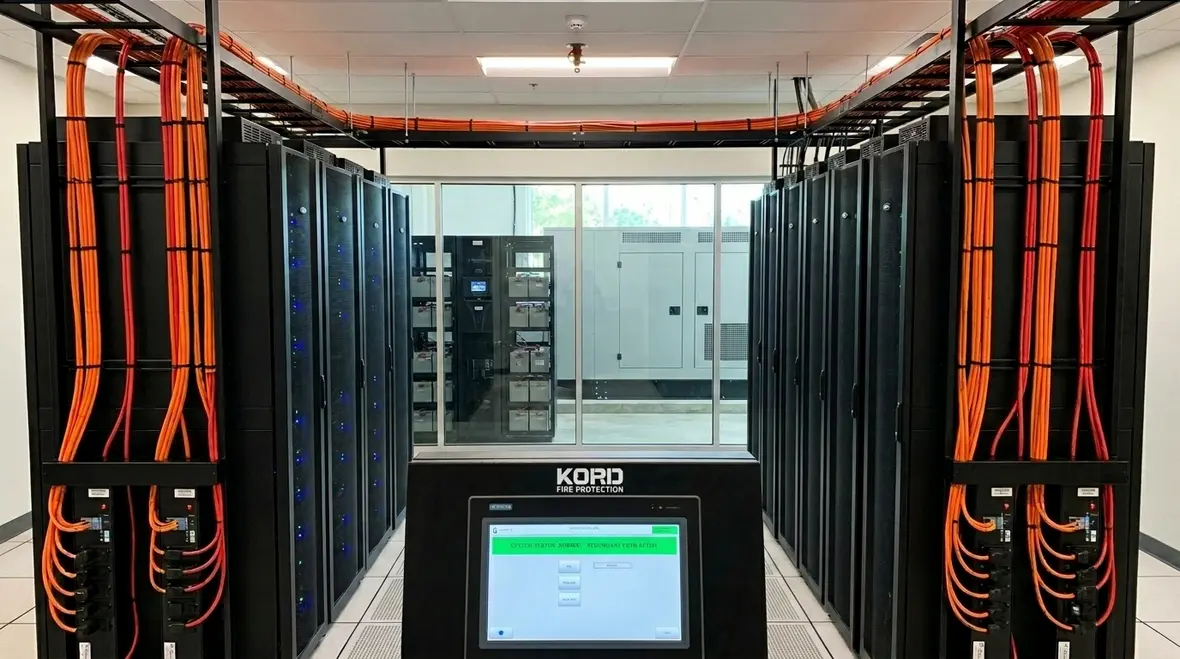
Even if the utility, UPS, and generator parts look strong, distribution and switching determine how well redundancy holds at the rack level. That is where careful electrical zoning comes in. The team can divide loads across separate distribution paths, often with independent bus sections and switching devices.
To support stable operation, switchgear should include protections that isolate faults quickly. For example, protective relays and breakers must coordinate. Coordination means that a fault clears at the lowest practical level, so the rest of the facility keeps running. If protection timing is wrong, the system might trip more than it needs to. Then it behaves like turning off the whole house because one toaster sparked. That is not the kind of efficiency anyone wants.
Distribution also includes busbar design, grounding practices, and monitoring. Better monitoring catches abnormal patterns early, such as rising load imbalance, harmonic distortion, or temperature changes in electrical components. When staff spots these issues early, they can correct them before they become outages.
Additionally, the team should consider how maintenance affects power paths. If technicians can isolate a section without shutting down the entire chain, they improve uptime. And that is where practical procedures matter. Procedures turn theoretical redundancy into real reliability.
Integrating power reliability with fire protection planning
Power redundancy and fire safety move together in a mature data center. Fire can start from electrical faults, overheating, or cabling issues. Therefore, the facility must detect heat, smoke, and flame quickly, then control the spread. Kord Fire Protection technicians explain that the safest design treats electrical rooms, cable pathways, and mechanical spaces as a connected system. That means cable management, fire stopping, and suppression choices all support the electrical architecture.
They also advise teams to avoid a common pitfall: treating fire protection as an afterthought. When the staff installs protection later, they may need rework around cable trays, conduits, and bus runs. Rework costs money and can create gaps in coverage. So the facility should plan fire detection and suppression with the same seriousness as UPS architecture.
In addition, proper labeling and access matter. Fire responders and technicians need clear routes and documentation. They should know which sections can shut down without shutting down everything. That reduces response time and supports controlled intervention.
When electrical protections clear a fault, fire protection should handle any remaining thermal risk. And when fire protection does its job, the electrical design should keep critical loads stable long enough for safe shutdown sequences. In short, the facility should fail safely, not fail dramatically.
Testing, maintenance, and monitoring that keep redundancy honest
Redundant power systems require more than design. They require ongoing verification. The facility should perform routine checks on UPS health, battery capacity, switchgear operation, generator readiness, and transfer logic. Then it should test alarms and monitoring dashboards so the staff receives alerts in the right way.
Monitoring provides the “early warning radar.” It can show trends like voltage drift, frequency deviation, load growth, and abnormal temperature readings at critical points. When data signals a change, technicians can act before a fault becomes a shutdown. And because redundancy involves multiple paths, monitoring must include each path, not just the overall status.
Maintenance practices should also protect uptime. Teams can use procedures that isolate one segment while another segment carries the load. They should also confirm that technicians follow lockout and bypass rules correctly, so they do not unintentionally remove redundancy during work. A system can be redundant on paper and single points in practice if the operational steps do not match the design.
Finally, documentation keeps reliability consistent. Staff turnover happens. Equipment gets replaced. Without updated diagrams and runbooks, redundancy can degrade silently. So facilities should keep the single line plan, equipment schedules, and test results current.
FAQ on data center power redundancy
Data center uptime through redundant power architecture: a clear next step
Redundancy works best when it is designed with care, tested often, and tied to fire safety planning from day one. A site that combines solid electrical architecture with real verification steps keeps uptime high and surprises low. If a facility wants to strengthen reliability, the next move is simple: schedule a redundancy review that includes switchgear behavior, UPS and generator transfers, monitoring coverage, and fire protection alignment. Contact Kord Fire Protection technicians to walk through your power and protection plan and find the gaps before they find you.
Quick read with related context: For more on aligning fire protection with IT environments and planning under NFPA 75, see Data Center Fire Protection and NFPA 75 Guide.
Know Your Weapon Before You Fight the Flame
Kord Fire Protection is your go-to when it comes to all things fire protection. For over 20 years, we’ve been serving Southern California with the quality service and equipment to keep your home or business safe at all times. Our competitive prices reflect our unwavering commitment to protecting what matters most in the event of a fire emergency. Give us a call, send an email, or use that form!

Join Our Newsletter!
Get the latest fire safety tips delivered straight to your inbox From our Newsletter.