Addressable vs Conventional Fire Alarm Systems for Offices
Quick Answer: Addressable fire alarm systems use smart signaling to identify the exact device or zone that triggered an alarm. Conventional systems detect broader alarm areas and can require more detective work. For office buildings, choosing the right system improves response time, reduces nuisance alarms, and supports faster service and compliance. Kord Fire Protection can guide the choice end to end.
In many offices, the fire safety plan starts with the alarm system. Addressable fire alarm systems often win attention because they help crews pinpoint the source quickly, even when the building is busy and complex. In contrast, conventional systems take a simpler approach and group signals by zone, which can slow down the investigation when seconds matter.
That difference is not just technical. It changes how incidents are handled, how service teams diagnose faults, and how building owners manage risk across industrial, retail, and commercial facilities. And yes, nobody wants their alarm to act like a smoke detector that watched one too many action movies and decided everything is an emergency.
Near the start of that decision, many teams also compare system design with broader fire alarm services and system support, because install quality, testing, monitoring, and maintenance affect day to day reliability just as much as the panel type. And while alarms may be the star of the show here, buildings with larger protection demands often coordinate that planning with related equipment like the fire pump system so the whole life safety strategy works together.
What makes office fire protection smarter with addressable systems
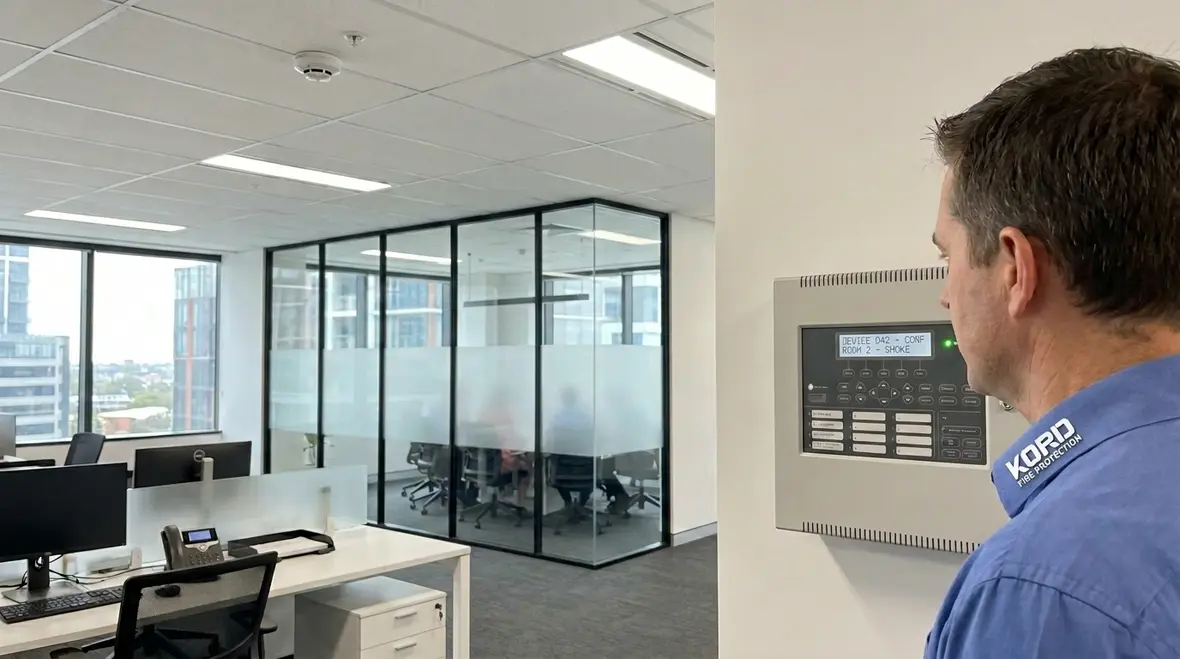
Addressable systems send more detailed information than conventional setups. Instead of treating each area like a single bucket of “something happened,” they let the control panel know which detector or device generated the alarm. As a result, the response team can move directly to the likely floor, corridor, or work zone rather than checking everywhere like it is a very slow game of hide and seek.
When office layouts shift over time, addressable wiring also supports flexible change. Facilities often add meeting rooms, renovate tenancies, or reconfigure cable runs for new network and electrical needs. Therefore, a well designed addressable fire alarm system can reduce rework during upgrades, because the system architecture is designed to understand device locations.
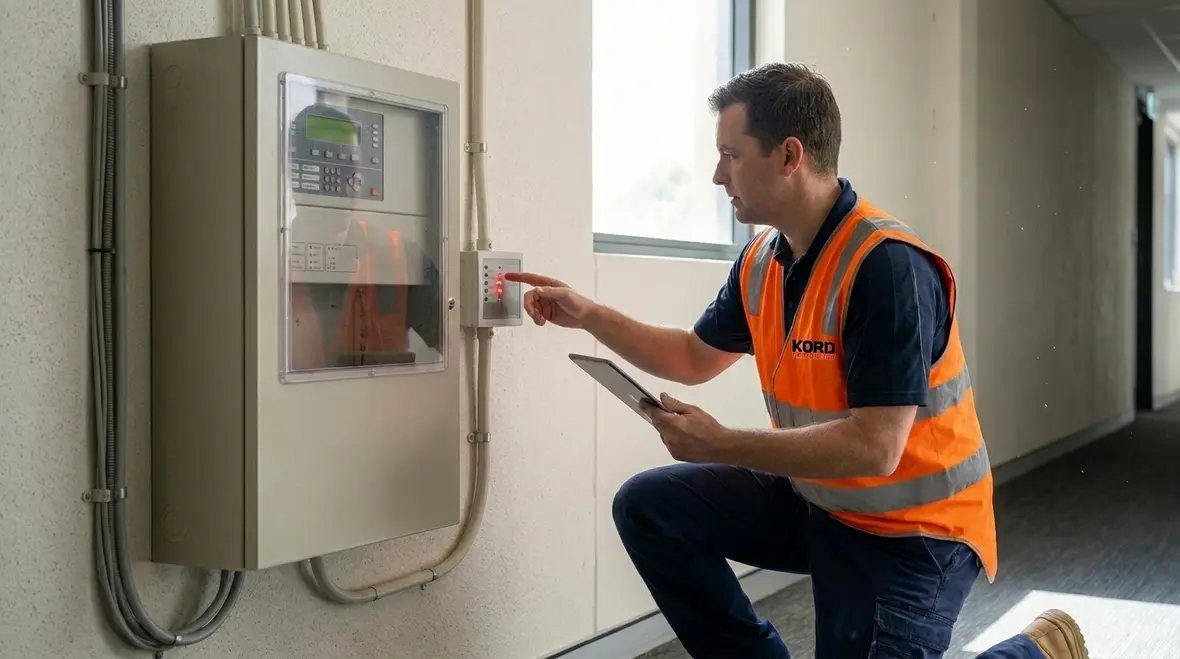
For commercial sites, this also supports clearer maintenance reporting. Technicians can isolate faults to a specific device and address it quickly. In addition, building managers can track trends and prevent repeat nuisance events before they become a “boy who cried smoke” situation.
Why that matters in a real office
An office is rarely as static as the original drawings suggest. People move teams around, add temporary walls, convert storage into meeting space, and somehow there is always one room that changes names every six months. In that environment, smarter device identification is not a luxury. It helps teams keep pace with the building they actually operate, not the version that only exists in a dusty folder.
Conventional systems for offices: simpler, broader, and sometimes slower
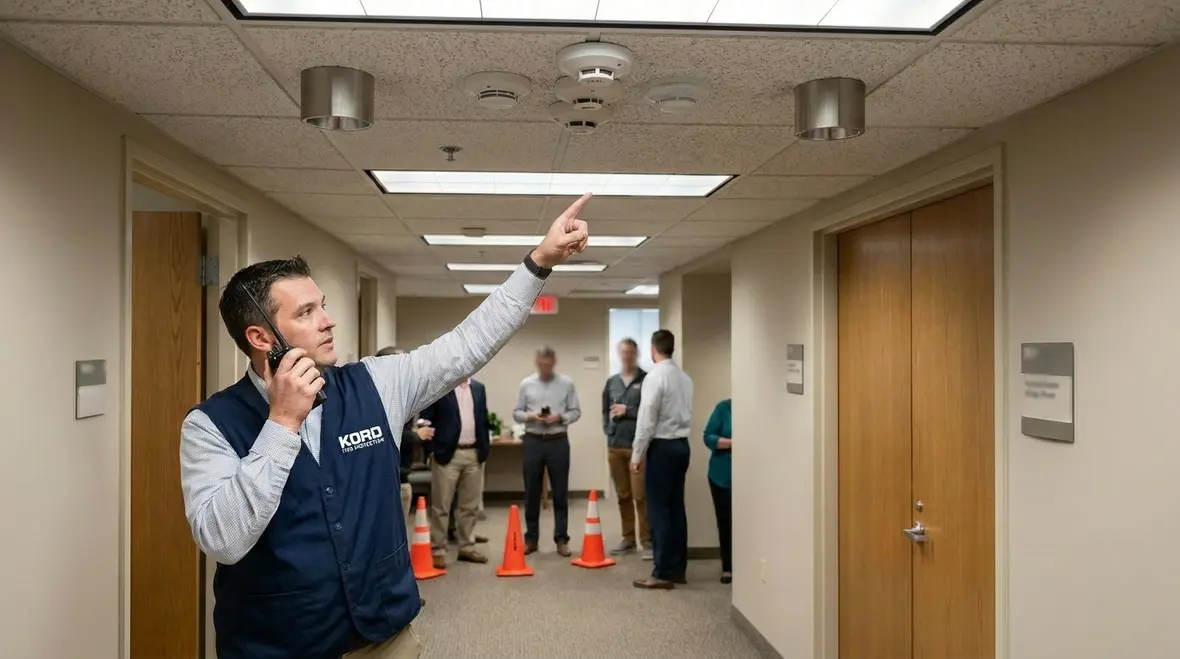
Conventional fire alarm systems typically divide a building into zones. When an alarm activates, the panel reports which zone. However, it does not reliably identify which exact detector triggered the event. Consequently, staff and responders may need to physically inspect multiple detectors within that zone.
This structure can still be effective, especially for smaller, straightforward spaces. Yet in larger office environments with open plan areas, multiple tenancies, and complex corridors, conventional systems can create extra steps at the exact moment people need clarity.
Another point matters during routine service. With conventional systems, fault finding can involve more manual checking. Even though trained teams can handle it, the time cost adds up over months and years. And in a busy facility, downtime is never just “downtime,” it is usually “we are now behind schedule and the landlord is calling.”
Where conventional still makes sense
That does not mean conventional is automatically the wrong answer. In a smaller office with a stable layout, simple occupancy patterns, and limited future changes, a conventional setup can still do the job well. The key is matching the system to the building’s operational reality instead of assuming every site needs the same answer stamped onto it.
How addressable vs conventional affects response time
Response speed depends on more than notification. It depends on what information the system provides. With addressable fire alarm systems, the panel can show the device identity and location path, which helps teams coordinate faster evacuations and targeted investigations where policy allows.
Meanwhile, conventional systems can trigger an alarm for an entire zone. As a result, responders often focus on confirming the source manually before they can take safe next steps. This can be manageable, but it can also increase time spent in areas that may already be affected by smoke, heat, or power hazards.
Additionally, office operations often rely on clear communication. When the system pinpoints the likely source, the building can provide more accurate instructions to floor coordinators, security, and contractors. Therefore, training becomes more effective because staff can practice actions that match how the system will behave in real events.
In short, the best systems do not only sound alarms. They tell the truth quickly and precisely, which is the entire point of an alarm system. The louder option is easy. The smarter option is what saves time and reduces risk.
Office compliance and service planning
Facilities often face tight deadlines, tenant turnover, and ongoing maintenance requirements. Building owners generally want systems that support predictable testing, clear documentation, and efficient fault correction.
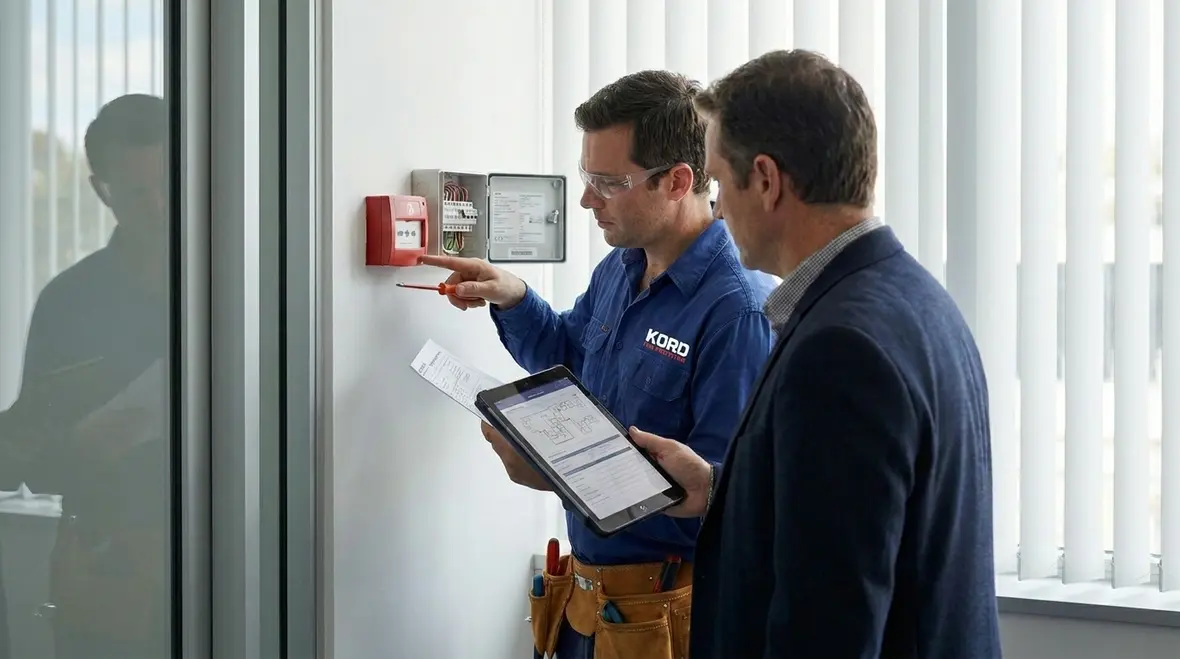
Addressable fire alarm systems support this goal because they provide device level data. For example, service teams can perform diagnostics and isolate issues without combing through every detector in a zone. Then, once repairs are complete, the panel records details that help future audits and maintenance checks.
Conventional systems still work, but owners may need more time during testing and troubleshooting. Over time, that can influence whole life costs, especially in multi tenant commercial facilities. Moreover, if a building undergoes renovations, conventional zoning may need updates to reflect new layouts, which can increase disruption.
For industrial, retail, and commercial sites, the decision should also consider how the building changes. It is one thing to install a system and another to keep it performing as the facility evolves. Therefore, the best approach includes service planning, documentation, and a clear strategy for upgrades.
Planning for the long haul
A good system choice should survive more than the initial handover meeting. It should still make sense after tenancy changes, contractor visits, future device additions, and the inevitable moment when someone asks if a wall can move “without affecting anything important.” That is exactly why service planning belongs in the conversation early.
Where Kord Fire Protection fits as a vital partner
Kord Fire Protection does not only install hardware. It operates like a partner that helps owners plan the full lifecycle of fire safety in office and commercial environments. That means the right design choices, careful device placement, and practical recommendations based on how the facility actually runs.
When addressable fire alarm systems are selected, Kord Fire Protection helps align system design with the building layout, risk profile, and future growth. In addition, it supports ongoing service so the system stays reliable, not just “installed.” Because anyone can wire a box. Keeping it dependable when the building gets busy is the real job.
Kord can also help coordinate with stakeholders, including facilities teams, contractors, and tenant managers. This reduces delays during commissioning and makes handover smoother. As a result, owners get clear guidance on testing routines, reporting, and what to watch for over time.
And if someone asks whether the alarm should be addressable or conventional, Kord can help explain the trade offs in plain language. After all, fire safety is not the place for mystery. It is the place for answers.

Cost, expansion, and future proofing in commercial offices
Some decision makers start with cost and then figure the rest later. However, fire safety is like buying insurance you hope never to use. The smart move is to choose what fits the building now and later.
Addressable systems can cost more upfront in many projects, yet they often reduce operational friction. They deliver better diagnostics, faster fault isolation, and clearer reporting during routine checks. Consequently, service time can decrease, and the system remains easier to manage as the office changes.
For offices that plan expansions, tenant refits, or future tech upgrades, addressable fire alarm systems can be the more flexible option. Therefore, owners can adjust the installation with less disruption, instead of reworking zones like someone rearranging furniture with a blindfold on.
Conventional systems may still be practical when the building is simple and change is unlikely. Still, even in those cases, decision makers should weigh service and upgrade effort over the building’s life. The cheapest option on day one can become the most expensive if it causes ongoing maintenance delays and slower troubleshooting.
Ideally, the selection reflects the operational reality of the site, not only the floor plan on installation day.
A quick comparison teams use to decide
Addressable fire alarm systems
- Pinpoints the exact device or location
- Supports faster investigation and clearer instructions
- Improves maintenance diagnostics and reporting
- Often fits better with office changes over time
Conventional fire alarm systems
- Alerts by broader zone, not exact device
- Requires more manual checking within zones
- Can increase service time during fault finding
- May work for simpler, stable layouts
FAQ
Final call: choose the right partner for dependable office fire protection
Choosing between addressable and conventional systems affects response time, maintenance effort, and how confidently teams manage incidents. Kord Fire Protection can help industrial, retail, and commercial offices select, install, and maintain the right solution for real operating conditions.
If a fire alarm job is on the roadmap, act now and get expert guidance from a team that stays involved after the install. Learn more about fire alarm system services.

Join Our Newsletter!
Get the latest fire safety tips delivered straight to your inbox From our Newsletter.