Commercial Electrical Load Calculation for Reliable Power
In commercial facilities, the difference between a smooth day and a surprise blackout often comes down to numbers, not vibes. That is why a commercial electrical load calculation matters early in design, and why it keeps matter-of-fact business operations from turning into emergency comedy. Kord Fire Protection technicians explain it in plain terms: when the load math matches reality, equipment gets sized right, breakers trip when they should, and standby systems get the chance to perform as intended. When the math is off, the electrical system can run hot, protective devices may act wrong, and critical loads can lose power at the exact moment they should not. And nobody wants their facility to behave like a sitcom character who insists, “This time, it is different,” right before the lights flicker.

What a commercial electrical load calculation really controls
A commercial electrical load calculation helps teams predict how much electrical demand a building will place on its service, feeders, panels, and distribution gear. It does not just estimate “some power.” Instead, it accounts for connected equipment, operating schedules, voltage levels, and how loads share time. In other words, it translates a facility layout into an electrical reality.
When Kord Fire Protection technicians review load and safety coordination, they emphasize the link between accurate demand and protection. Then, protective devices and system components can match the expected current draw. Consequently, the system does not waste capacity, and it does not overload hidden weak points. If calculations run too low, the facility may exceed ratings during peak usage. If they run too high, teams oversize equipment, which can raise costs and still leave the building exposed if protection settings are not coordinated.
How wrong load numbers lead to power outages
Power outages in commercial spaces do not usually start with fireworks. They often start with small mismatches that build up over time. First, an inaccurate commercial electrical load calculation can push breakers, bus bars, transformers, or conductors past their expected operating conditions. Then, the system may experience overheating, insulation stress, voltage drop, and nuisance trips or, worse, failure to trip when required.
Second, the problem often shows up at the least convenient time. For example, elevators and HVAC may start together during peak hours. If a design did not properly apply diversity and demand factors, the actual maximum current can exceed what the system was sized for. As a result, the utility feed, switchgear, or a main breaker may trip under stress.
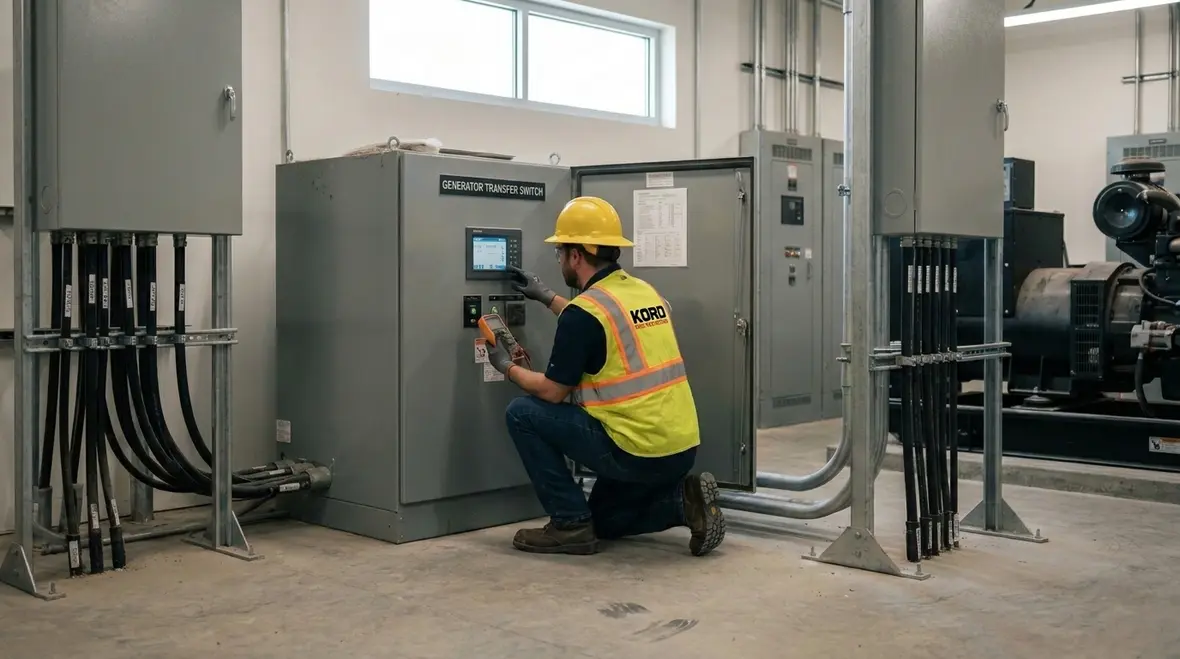
Third, inaccurate load math can disrupt emergency power performance. Standby generators and transfer equipment depend on predictable load profiles. If the facility expects fewer watts than it actually uses, the generator can bog down. Then voltage and frequency can drift, and sensitive equipment may drop out. That kind of cascade feels less like “one outage” and more like a domino line with a very poor event coordinator.
And yes, sometimes people blame the weather, the grid, or “random bad luck.” However, when the demand is miscalculated, the outage becomes predictable in hindsight.
Why load accuracy matters for fire and life safety systems
Commercial facilities depend on life safety power, including fire alarm panels, smoke control components, emergency lighting, and communications. These loads may not all run at the same time, but they must remain available when people need them most. Kord Fire Protection technicians explain that correct electrical sizing supports proper operation under both normal and alarm conditions.
Accurate calculations also help teams avoid two common failures. One failure involves undervaluing code required loads, which can overload panels during alarm events. The other involves missing control power paths, like signals, relays, and supervisory circuits. Even if the “big” loads are correct, a missed smaller load can still cause an issue once the system switches modes.
When load calculations and device coordination align, protective equipment can behave as intended. Consequently, the correct circuits remain energized during an alarm, while faults localize instead of spreading. That is the goal: keep essential systems running and prevent faults from taking out the entire facility like an unplanned “group project” where everyone gets blamed.
Where calculations go wrong in the real world
In practice, most calculation errors do not come from malicious intent. They come from speed, missing data, and assumptions that sound reasonable until they hit the field.
One, incomplete equipment lists. A facility adds a new production line, a freezer bank, or a set of tenant upgrades. Then nobody updates the load study. Later, the electrical system meets its “new normal,” but the paper math still matches the old version.
Two, wrong operating assumptions. Some loads cycle in patterns that do not match generic schedules. HVAC staged startup, motors with soft starts, and lighting with controls can reduce or shape demand. However, if designers do not apply the correct duty cycles and diversity, the load study can drift away from reality.
Three, missing future plans. People love saying, “We will worry about the expansion later.” Yet later arrives quickly in commercial life. If growth is not addressed in the load profile, teams can run out of capacity before the next phase even begins.
Four, misunderstanding voltage and power factor impacts. Some equipment draws current differently depending on power factor and harmonic effects. If the commercial electrical load calculation does not reflect those traits, conductors and overcurrent devices may not operate as expected under peak load.
Finally, teams sometimes treat load calculation as a one time document. That view creates trouble during commissioning and maintenance. Instead, Kord Fire Protection technicians often recommend a living approach: update the load profile when equipment changes, and recheck coordination when major systems are replaced.
How technicians use load calculations to improve reliability
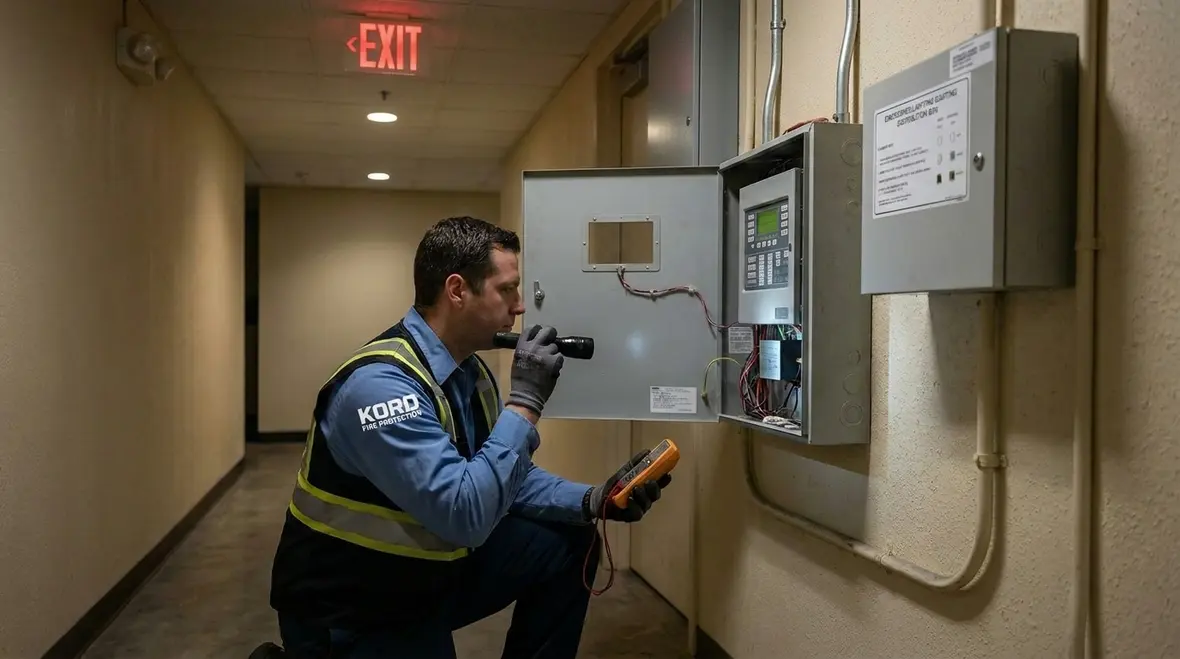
Kord Fire Protection technicians explain reliability through coordination, not guesswork. When load estimates are accurate, the entire protection chain can align from utility service to branch circuits.
|
Step What they verify
|
Step How it helps prevent outages
|
Then, they connect the dots between electrical and life safety needs. For instance, they confirm that emergency lighting and alarm power can support required runtime and alarm states. Next, they review coordination so that a fault does not accidentally shut down unrelated safety circuits. In a well planned system, a problem in one area does not trigger a full building shutdown. That is how accurate load calculations prevent power outages without turning the building into a tragedy of errors.
What commercial teams should do next
Commercial owners and facility managers can reduce outage risk with a few practical steps. First, they should ensure the commercial electrical load calculation exists for the current facility condition, not just for the original build. Then, they should update it when they add equipment, remodel spaces, or change HVAC or refrigeration systems.
Second, teams should ask for load profile review that ties to protection coordination. Accuracy alone does not guarantee reliability. The system still needs proper settings, device ratings, and correct emergency transfer logic.
Third, they should coordinate with qualified technicians early in planning, especially before upgrades. Kord Fire Protection technicians often stress that correcting errors during design usually costs less than correcting them after installation. However, waiting until after issues appear turns the budget into a guessing game, and budgets do not win guessing games.
Lastly, organizations should store documentation and keep it accessible. A facility with clear records avoids “who changed what” debates during commissioning or troubleshooting.
FAQ
Conclusion: secure power now, not after the lights go out
Accurate electrical demand planning helps commercial facilities avoid overheating, mis-coordination, and emergency power surprises. When a commercial electrical load calculation matches the building as it truly operates, the protection system works the way it was designed to work. Kord Fire Protection technicians bring that reliability mindset by connecting load, sizing, and life safety needs into one dependable plan. Do not wait for the next peak hour to find out your numbers were off. Contact Kord Fire Protection to review your current load profile and protection coordination.
Related insight
If you are also thinking about protecting critical equipment, pair load reliability planning with proven suppression system design. Explore clean agent fire suppression for critical equipment for another layer of dependable protection.
Next step: get your load profile reviewed
Know Your Weapon Before You Fight the Flame
Kord Fire Protection is your go-to when it comes to all things fire protection. For over 20 years, we’ve been serving Southern California with the quality service and equipment to keep your home or business safe at all times. Our competitive prices reflect our unwavering commitment to protecting what matters most in the event of a fire emergency. Give us a call, send an email, or use that form!

Join Our Newsletter!
Get the latest fire safety tips delivered straight to your inbox From our Newsletter.