
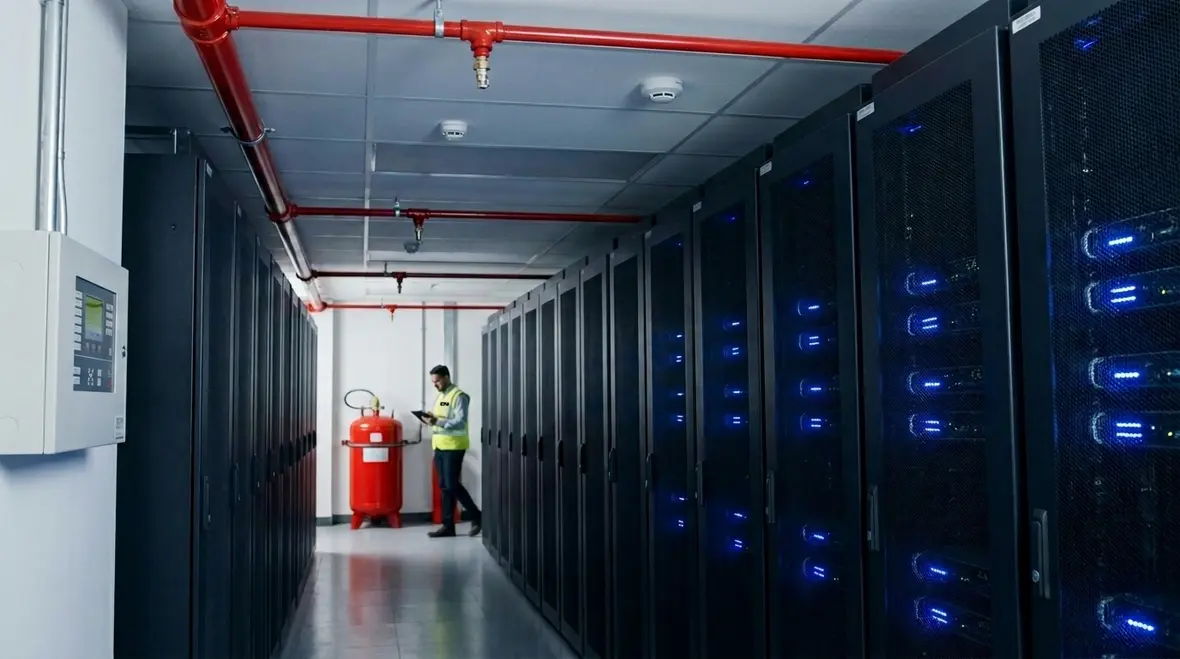
Data Center Fire Suppression: Layered Protection Design
Quick answer: Modern data centers use layered fire suppression designs that protect people, equipment, and uptime. They combine clean agent or water mist systems, smart detection, zoning, and proven safety controls. For many operators handling complex facilities, Kord Fire Protection becomes the partner that audits risk, coordinates installation, and supports ongoing compliance. Near the start of planning, many teams also review fire alarm service systems so detection, notification, and suppression all speak the same language when it matters most.
In the real world, data center fire suppression is not a single device and it never should be treated like one. Instead, it becomes a full architecture that connects detection, suppression, airflow behavior, door hardware, and emergency procedures. When a modern rack room needs protection, the design must account for fast flame growth, cable clutter, hot aisle airflow, and the way smoke travels when fans keep working. After that, the build moves from drawings to verified performance, because “close enough” is a phrase that belongs in a karaoke bar, not in a machine room.
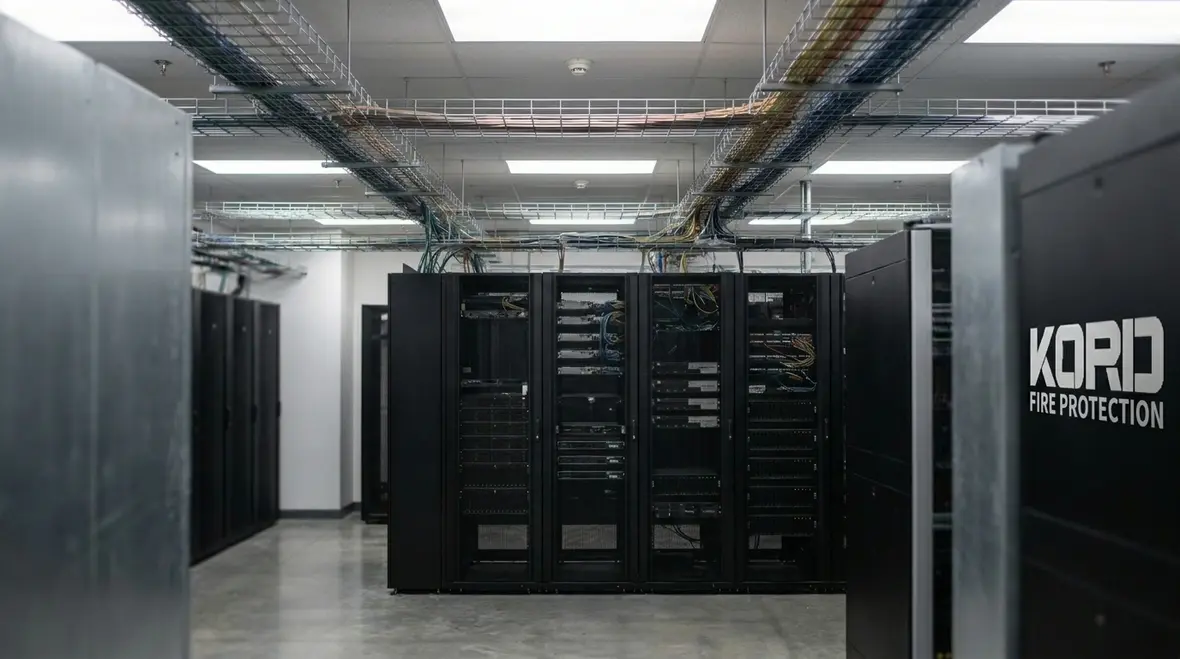
Layered protection beats one magic button
Advanced fire suppression architectures start with a simple truth: fires do not wait for perfect conditions. Therefore, a strong design uses multiple layers that respond in sequence and in the right part of the space. First, the system detects smoke, heat, and sometimes early flame indicators. Then it triggers suppression with the correct agent, discharge timing, and zone control. Finally, it supports evacuation and safe shutdown while preventing unwanted damage.
Data centers also face a complication multiplier: airflow. In many facilities, cooling systems push air through hot aisles, which can either delay smoke or spread it quickly. As a result, engineers model airflow paths and place detection and nozzles where they will work, not where it looks convenient during installation. That is where good design saves downtime, and where bad design quietly creates surprise costs later.
What a layered design actually includes
The strongest systems do not rely on one dramatic release event to save the day. They rely on a chain of verified actions. Very early detection can identify developing smoke before staff even smells it. Cross-zone confirmation can reduce nuisance activations. Suppression can target the correct enclosure. Interlocks can shut down the airflow behaviors that would otherwise undermine the discharge. Documentation can guide operators through alarm, investigation, reset, and recovery without turning the incident into a scavenger hunt.
That sequence matters because a data center is full of little details that become very big details during a fire event. Cable trays, underfloor voids, overhead pathways, battery support spaces, and network rooms can all influence the spread of smoke and heat. If one layer underperforms, another layer should still help contain the problem. That is what “layered protection” means in practice: not optimism, but backup plans with wiring diagrams.
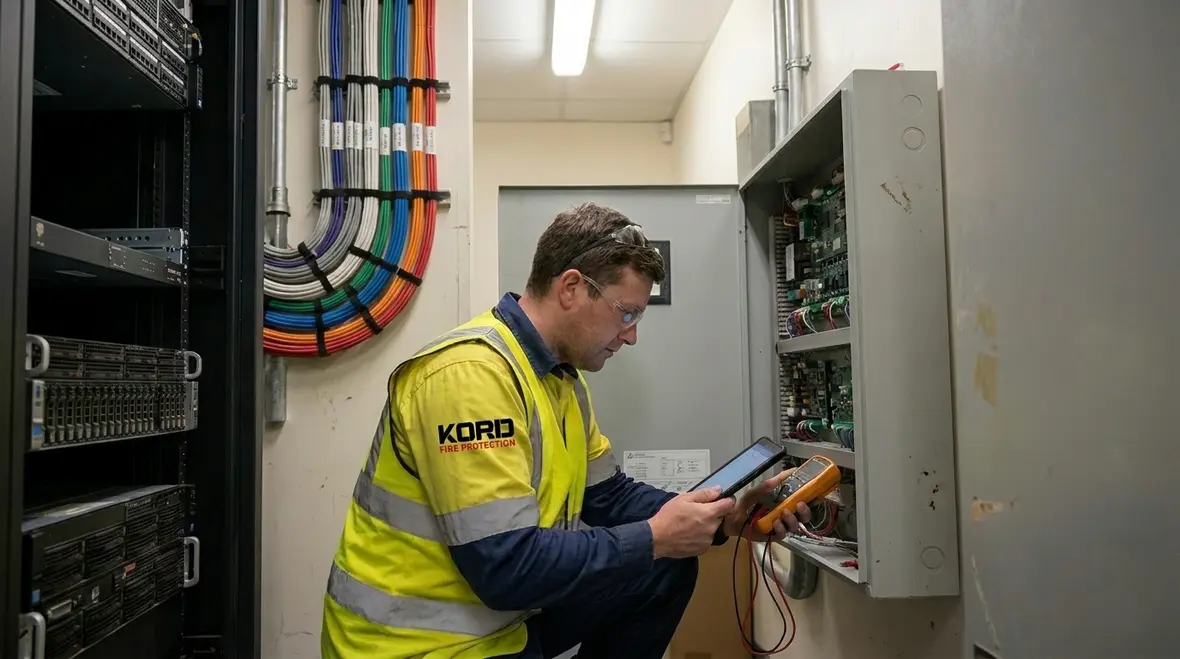
How detection, zoning, and airflow work together
To make data center fire suppression effective, detection must see what matters and zoning must act without flooding the entire facility. Modern projects often use addressable detection and sectional control. That means the system can identify the likely origin area and suppress only the relevant zone.
In practice, the architecture accounts for:
- Hot aisle and cold aisle pressure differences that affect smoke movement
- Ceiling height, cable tray density, and rack spacing that shape heat transfer
- Air handling fan states and damper behavior during alarm conditions
- Operational needs like maintenance mode, construction hold points, and phased commissioning
Then the system links to building controls. For example, it may coordinate with smoke extraction dampers, shutdown interlocks, and fire alarm panels. In turn, this reduces the chance that suppression occurs while ventilation keeps pulling smoke away from the protected volume, like trying to put out a candle while blasting a hairdryer at it.
Why zoning is more than a nice feature
Zoning is what turns a blunt instrument into a precision tool. If an event starts in one area, operators do not want a broad release affecting unrelated rooms, equipment, or operations unless the design truly calls for it. Well-planned zones help reduce business interruption, simplify post-event restoration, and make investigations faster. They also improve confidence during maintenance, because teams know which devices, circuits, and release paths belong to each protected area.
Airflow analysis supports that zoning logic. A smoke detector placed in a visually tidy location may still miss the fastest detection point if air currents carry products of combustion elsewhere first. That is why effective layouts follow physics rather than convenience. In a data center, convenience usually sends the invoice later.
Clean agent and water mist in the same playbook
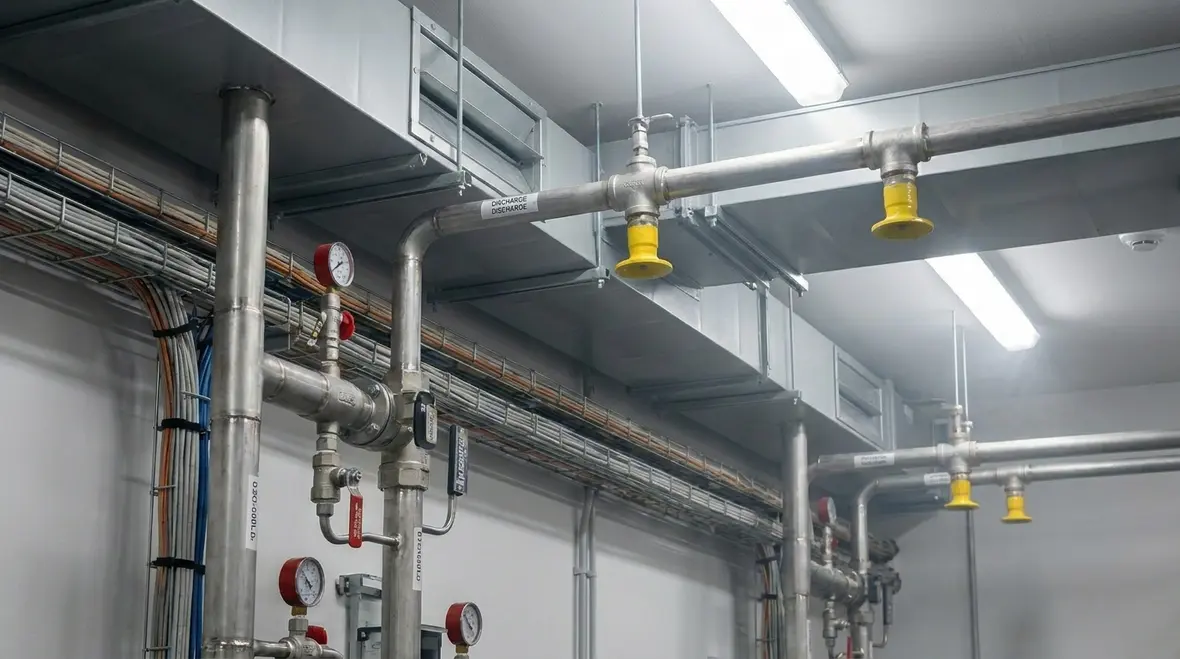
Not every room needs the same approach. Therefore, modern designs often mix suppression technologies across the site. Clean agent systems can suit spaces where leaving residue is a major concern. Water mist can fit areas that need robust heat control and where the facility can manage discharge effects and drainage.
These choices depend on risk assessment, occupancy, and equipment sensitivity. Teams evaluate factors such as server density, power density, and the potential for fuel load from plastics, packaging, and cable insulation. After that, they select the agent that can suppress quickly without causing secondary damage. For rooms with especially sensitive electronics, many owners also review Kord’s guidance on clean agent fire suppression for critical equipment to understand how targeted protection fits into a broader life safety strategy.
In addition, the architecture considers discharge performance. For clean agents, it must achieve the right concentration within the required time. For water mist, it must create effective cooling and suppression while staying within acceptable limits for water impact. This is not guesswork; it is engineered performance.
Choosing the right technology by room type
A facility may use one approach in the main server space, another in electrical support rooms, and another in adjacent service zones. The point is not to force one technology everywhere. The point is to match the response to the hazard profile and recovery expectations of each area. That is how layered design protects uptime instead of just checking a compliance box and sprinting away from the paperwork.
Design for uptime, not just for code compliance
Compliance matters, but uptime matters too. Advanced systems therefore include operational safeguards that prevent accidental release, manage testing, and support staged commissioning. This is where many projects win or lose: the design might be solid on paper, but the rollout can still go wrong if integration is rushed.
Operators often need downtime windows measured in hours, not days. So the architecture may include:
- Safe test procedures that do not disrupt production
- Clear isolation plans for valves, panels, and control wiring
- Alarm and maintenance workflows that keep teams calm during real events
- Training for facilities staff, because the fastest system is useless if nobody can verify it
And yes, people sometimes treat fire protection like a background app that just works. Unfortunately, suppression systems are not background apps. They demand verification, documentation, and periodic inspection, the way a server demands updates even when it seems fine.
Integration with fire alarm, BMS, and emergency response
A modern suppression architecture connects with other safety layers. Detection triggers the fire alarm logic, which triggers evacuation and response. At the same time, the building management system can coordinate plant shutdown and confirm damper positions. This integration prevents conflicting actions.
For example, if the system discharges suppression but the ventilation keeps running at full speed, smoke and heat behavior can worsen. Therefore, the architecture uses interlocks and monitored signals. It also defines who gets alerted and how. That means control rooms receive the right information, and maintenance teams know what to do without playing a guessing game in a live environment.
In facilities that span multiple rooms or future expansion areas, consistent integration also helps. Teams can use standard procedures, which makes commissioning repeatable and reduces the one-off risk that haunts large rollouts.
Why Kord Fire Protection becomes a vital partner
Even the best designs can fail during delivery if coordination is weak. Kord Fire Protection can become a vital partner because it supports the full lifecycle: risk and design review, installation guidance, integration checks, and ongoing service readiness. That matters because advanced data center fire suppression is not just hardware. It is system behavior, documentation, and verified performance.
Kord Fire Protection’s value typically shows up where projects get complex: multi-zone layouts, tight commissioning schedules, integration with detection and controls, and the practical realities of coordinating different trades and contractors. If a facility team is evaluating a regional solution for industrial environments, it may also be useful to review Irwindale fire alarm systems for industrial safety as a related example of how dependable alarm infrastructure supports larger protection goals.
After installation, the partner role continues through inspection support and maintenance planning, so the architecture stays reliable instead of becoming a decorative feature. In other words, Kord helps teams move from “we installed something” to “we can prove it works.” That is the difference between confidence and hoping.
Commissioning, testing, and life cycle support
Once the system is installed, commissioning verifies that the architecture performs under real conditions. This includes checking device addresses, signal paths, valve operation, control logic, and discharge readiness. Teams also confirm that drawings match what sits in the room, because the world has a way of changing during construction.
Life cycle support then covers recurring inspections, maintenance intervals, and documentation updates. For a data center, those steps reduce downtime risk during testing and ensure the system still protects racks and staff after upgrades and layout changes.
Facilities sometimes add new fitouts, shift equipment locations, or increase power density over time. Therefore, the best approach includes change management. When the room changes, the suppression strategy may need confirmation too. That keeps protection aligned with actual risk, not yesterday’s floor plan.
FAQ
Final call to action
Modern sites need more than a basic system. They need an engineered approach to data center fire suppression that matches airflow, zoning, and real operations. Facilities can protect equipment and reduce downtime risk by planning the architecture, commissioning it properly, and maintaining it over time.
If you want a partner who helps your project stay verified and dependable, contact Kord Fire Protection and build protection you can trust. The best time to design layered protection is before a minor incident auditions for a major outage.

Join Our Newsletter!
Get the latest fire safety tips delivered straight to your inbox From our Newsletter.



