Commercial Standpipe Pressure Testing for High-Rises
Ensuring Optimal Pressure in High-Rise Building Standpipes starts with knowing what the system is supposed to do when reality gets loud. That is why Commercial standpipe pressure testing matters from the beginning. In the first stages, the right pressure range helps crews fight fires efficiently, and it helps building owners avoid expensive surprises during inspection season. Even if everyone involved hopes for a quiet day, fire protection does not run on wishful thinking. So, the Kord Fire Protection technicians explain the standards, the test method, and the results in plain terms, then they translate data into safe action. Because in a high rise, water pressure is not a “nice to have.” It is the difference between control and chaos.
For owners and facility teams, pressure testing is one of those tasks that sounds technical until the consequences get painfully simple. If the standpipe cannot provide what firefighters need on upper floors, the problem does not stay theoretical for long. It becomes a delay, a hazard, and potentially a code issue with very expensive timing. That is why a good testing program checks more than whether water merely exists. It verifies whether the system performs where it counts, at the elevations and outlets that matter most during an emergency. Kord Fire Protection technicians approach that job with the same mindset they bring to broader full fire protection services: clear planning, precise measurements, and fixes that hold up when the pressure is on.
How Kord Fire Protection technicians verify pressure at the standpipe
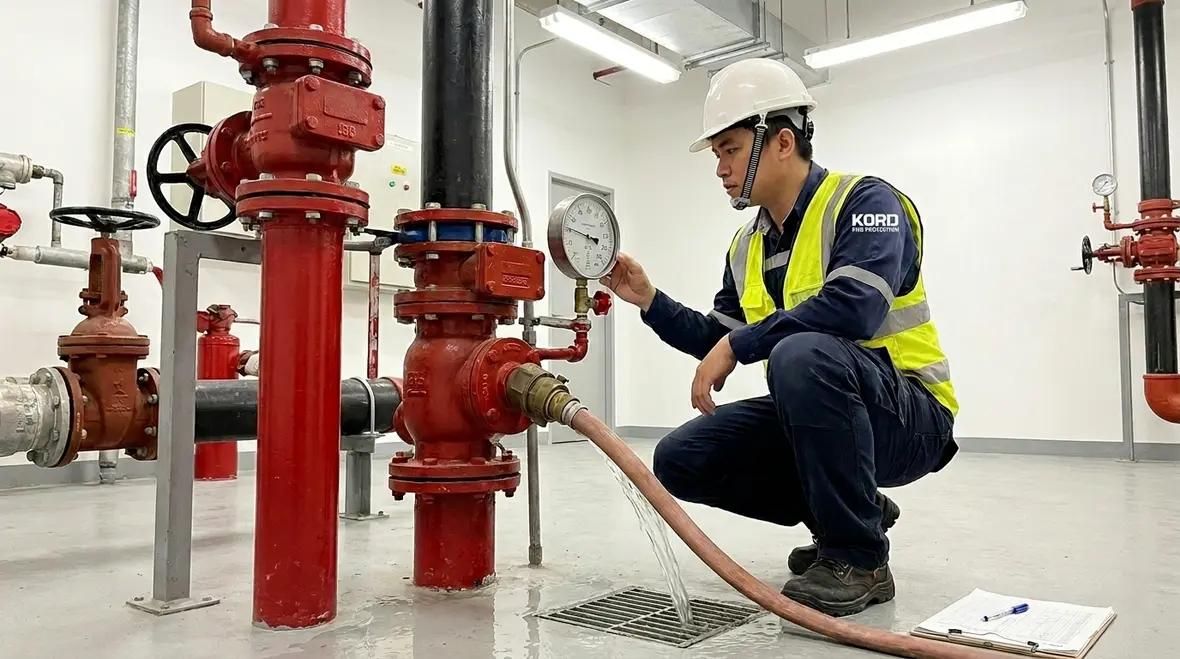
High-rise standpipes serve a simple promise: when a fire happens, water must reach the standpipe and move where it needs to go. However, pressure can shift due to elevation, hose usage, valve condition, pump performance, and even changes made during renovations. That is why Kord Fire Protection technicians approach pressure checks like engineers, not guessers. They confirm that the system can deliver water at the right pressure and flow across the building’s range, and they document everything so the results hold up under scrutiny.
To keep the process clear, technicians typically review system design, then measure performance at key locations. After that, they compare readings to the required limits set by the applicable code and local authority. In other words, they test the standpipe the way it will actually be used, not just on paper. Yes, paper can be wrong. Paper has never fought a fire.
What technicians review before pressure is measured
- Standpipe classification and intended use points
- Current water supply conditions and fire pump support
- Valve positions, hose connections, and gauge condition
- Recent renovations or piping changes that may affect flow
- Documentation needed for inspection records and corrective action
That review phase matters because pressure data without context can mislead a building team into solving the wrong problem. A weak reading might point to a restriction, a pump issue, a poor gauge, or a system configuration mistake. Testing is not just about collecting numbers. It is about understanding what those numbers are trying to say before anyone starts replacing parts that were minding their own business.
Why standpipe pressure changes in tall buildings
In lower floors, pressure may feel comfortable. Yet as height increases, gravity starts doing its part, and it always gets the last word. When water travels upward, friction losses build along the piping, elbows, and fittings. Meanwhile, pump behavior can shift as demand changes. Even if the system once performed well, small issues can stack up over time: partially closed valves, roughened pipe interiors, or minor leaks that never make it into a quick walk-through.
Additionally, building systems often evolve. New sprinkler zones, upgraded mechanical rooms, or changes to fire pump controls can indirectly affect standpipe performance. Therefore, pressure testing is not a one time task. It is a repeating check that confirms the building still matches its intended fire flow reality.
The usual suspects behind pressure loss
Most pressure changes are not caused by one dramatic failure wearing a villain cape. More often, the issue comes from cumulative drag on the system. A single fitting here, a control tweak there, a neglected valve somewhere nobody enjoys visiting, and suddenly the upper floors are asking harder questions than the lower ones. This is exactly why high-rise standpipe testing should be treated as a performance check, not just a paperwork exercise.
What a Commercial standpipe pressure testing plan should include
A solid plan does not just “run a test.” It sets expectations, protects occupants, and captures useful data. First, technicians coordinate with the building team to confirm water supply conditions, access routes, and safety needs. Then they verify the system configuration at the time of testing, including valves, hose connections, and any gauges that must be monitored.
Next, they measure performance during controlled conditions. This typically includes assessing static pressure and flowing pressure, while also confirming flow characteristics. Because pressure without flow can mislead, the testing approach should capture both. After testing, the results need to be recorded in a format that clearly shows how the system performed at the tested points and how it compares to the requirements.
Finally, Kord Fire Protection technicians explain findings in business casual language that building leadership can use immediately. Nobody wants a 40 page mystery novel when the fire department wants clarity.
A practical testing plan usually covers
- Pre-test coordination with building management and occupants
- Verification of water supply and fire pump operating conditions
- Selection of representative hose valves and elevations
- Measurement of static and residual or flowing pressure
- Clear reporting, recommendations, and follow-up steps
For properties managing multiple life safety priorities, that disciplined planning fits naturally within the broader full lifecycle of fire protection servicing. Testing should not live in a silo. It works best when inspection, maintenance, repairs, and documentation all pull in the same direction.
How technicians choose test points and flow conditions
Technicians must pick locations that reflect how water will behave during an actual response. They usually focus on outlets and elevations that represent critical standpipe performance. For high rises, this often means selecting points that show both higher elevation demands and common operational risks.
They also set flow conditions so results reflect real use. Too little flow can hide a problem. Too much can create an unrealistic view or stress components beyond what matters for code compliance. Therefore, the plan balances safety, realism, and repeatability. Additionally, technicians watch how pressure stabilizes during flow, since pressure drop patterns can hint at friction loss, valve restrictions, or pump control issues.
And if a measurement looks off, technicians do not treat it like a horror movie jump scare. They investigate. They recheck gauges, confirm valve positions, and make sure the readings match the system configuration. That methodical approach prevents “false failures” and supports faster correction when real issues appear.
Why the right test point tells the truth faster
A standpipe system can look respectable at one outlet and underperform badly at another. That is why Kord technicians focus on representative points rather than convenient ones. The job is to find out how the building behaves where fire department operations will place real demand, not where the numbers are most flattering. If the system has a dead zone, pressure testing is supposed to find it before an emergency does.
Property teams that want a deeper overview of the process can also review Kord Fire Protection’s standpipe flow test guide for fire protection, which aligns closely with how technicians connect pressure readings to real-world system behavior in taller structures.
Common pressure problems that show up during testing
When standpipe pressure testing is done well, it reveals problems early, before they turn into last minute emergencies. Some common issues include restricted flow due to partially closed valves, clogged strainers, or debris that limits water movement. Others involve pump performance, where pressure may rise or fall in a way that does not match the system curve.
Technicians also frequently see gauge problems, such as inaccurate readings from aging instruments or installation errors. If a gauge is off by even a small amount, the decision based on that data can become wrong. Meanwhile, pressure losses from fittings and piping changes can increase over time. In older buildings, modifications around the standpipe routes can change friction loss in ways maintenance teams did not expect.
Then there are the sneaky ones. A building can pass early checks but fail under specific flow conditions. That is why careful measurement during controlled flow matters. It is like testing a Wi Fi signal in a stairwell. You might get lucky in one room. Yet the dead zone shows up where you actually need it.
Problems technicians often uncover
- Partially closed control valves or hidden restrictions
- Weak or inconsistent fire pump response
- Inaccurate gauges that distort decision making
- Unexpected friction loss from modifications or aging piping
- Readings that only fail once real flow demand is introduced
Correcting pressure issues without creating new risks
Once Kord Fire Protection technicians identify the cause, they focus on fixing the problem and preserving system integrity. First, they determine whether the issue is control related, hardware related, or design related. Then they recommend actions that restore correct performance. If valves restrict flow, technicians coordinate adjustments or repairs. If the pump system does not maintain required pressure, they review control settings and pump operating behavior, and they confirm the pump can deliver the needed performance at the required times.
Where piping friction losses have increased, technicians evaluate the system route and confirm that changes do not conflict with code requirements. They also verify that any replaced parts match the intended specs. After repairs, the process should include re testing. Otherwise, the team is flying blind, and nobody enjoys that. Building owners want certainty, not suspense.
In many cases, corrective work connects directly to related system support, especially where standpipe performance depends on pump reliability and ongoing inspection discipline. That is one reason Kord Fire Protection also emphasizes connected service planning through pages like Standpipe Systems and the broader full fire protection services offering. A pressure issue rarely stays politely in one corner of the building.
Frequently asked questions about high-rise standpipe pressure
Conclusion and call to action
High-rise standpipe performance depends on steady, reliable pressure when seconds matter. That is why Commercial standpipe pressure testing should not be treated like a checkbox. Kord Fire Protection technicians bring the right planning, careful measurement, and clear explanations so building teams can fix issues early and stay confident. A strong testing program reduces guesswork, supports compliance, and gives decision makers something more useful than crossed fingers.
If a building owner wants safer operations and smoother compliance, they should request an on site evaluation now. Contact Kord Fire Protection for standpipe system service or explore full fire protection services to build a results based plan, fast. In a high rise, confidence is good. Verified pressure is better.

Join Our Newsletter!
Get the latest fire safety tips delivered straight to your inbox From our Newsletter.