Commercial Sprinkler System Water Damage Prevention
Commercial sprinkler systems save lives, and they can also save businesses from chaos. However, when a sprinkler head activates, the resulting commercial sprinkler system water damage can still be painful for owners, tenants, and property managers. Water can spread fast, damage ceilings and walls, ruin inventory, and disrupt operations. Therefore, the goal is not to fear sprinklers. Instead, it is to reduce risk, improve response time, and guide the system and the building toward safer outcomes. Kord Fire Protection technicians often explain it like this: sprinklers do their job during a fire, and the building systems should be ready to handle what comes next. In other words, plan ahead, so the day after the activation is not a mystery thriller with a flooded plot twist.
Understanding sprinkler activation and where water damage starts
Sprinkler damage usually begins the moment water leaves the pipe network. Even when only one head operates, water can travel along ceiling spaces, drop into wall cavities, and flow toward drains or low points. Then, if the fire department cuts off water supply quickly, the spread can slow. Yet delays create more loss.
First, technicians look at the system design. They confirm proper pipe sizing, correct sprinkler layout, and proper water supply capacity. Next, they focus on how the building is built. Drop ceilings, concealed spaces, and older mechanical chases can become hidden highways. Meanwhile, damaged or poorly placed drainage can push water into areas that should stay dry.
Kord Fire Protection technicians explain that sprinkler performance and water spread are connected. A system that functions correctly during a fire can still cause significant impact if the building lacks basic safeguards. So, the mitigation plan must cover both fire safety and water control. If you want a broader breakdown of system behavior and response basics, the Fire Sprinkler Overview and System Guide offers helpful context.
Preventing avoidable leaks before they become a problem
Routine inspection catches the boring stuff before it becomes dramatic
Not all water events come from true fires. Sometimes valves stick, pipes corrode, seals age, and minor issues grow into major messes. To cut risk, inspections should catch early warning signs. For example, technicians check for low air pressure in systems that use supervision, inspect tamper switches, and verify that control valves operate smoothly. They also look for staining around fittings, unexplained moisture near risers, and pressure readings that seem a little too creative for comfort.
Additionally, maintenance should include routine testing in line with code requirements and manufacturer guidance. When technicians find corrosion or mineral buildup, they address it before it triggers flow. They also confirm that pressure relief devices and drain lines discharge to safe locations. Kord’s article on signs that your fire sprinkler system needs repair is useful for spotting the kinds of trouble that rarely announce themselves politely.
Because small leaks can hide in ceiling voids, businesses benefit from a clear reporting routine. Then, building staff knows what to document, such as damp drywall, recurring puddles near valves, or discoloration around sprinkler cabinets. That log helps Kord Fire Protection technicians pinpoint the source faster, which reduces commercial sprinkler system water damage after the fact. Think of it as giving the maintenance team clues before the building decides to audition for a disaster documentary.
Water control strategy: valves, zones, and shutoff timing
Fast decisions depend on labeled controls and a calm plan
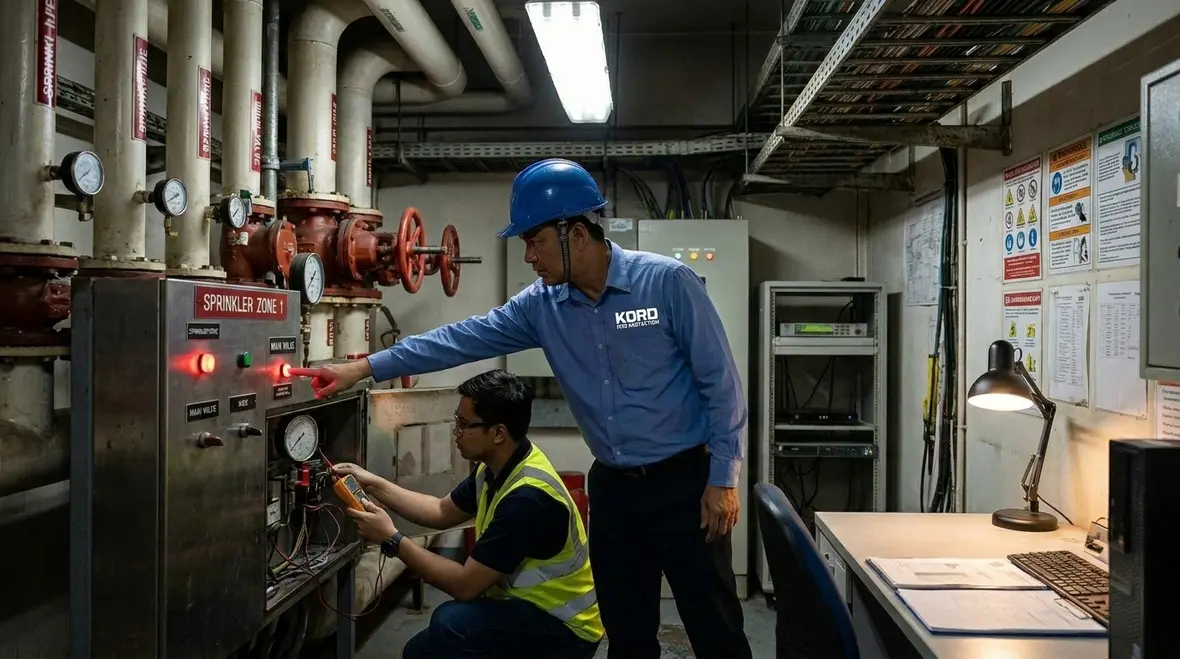
Effective water damage mitigation depends on how fast the building can limit flow. Therefore, system zoning matters. Many commercial designs group sprinklers into manageable sections through specific valve arrangements. When an event happens, the goal is to stop water to unaffected areas as soon as it is safe. That only works when the people responding know where the controls are and what each one affects.
Technicians also review site layout. They confirm valve locations are accessible, labeled, and not blocked by storage. Then, they verify that fire department connections and control panels remain reachable under stress. A locked electrical room in a crisis is like bringing a spoon to a barbecue. It is not helpful. The same goes for a riser room hidden behind holiday decorations, archive boxes, and whatever else people swear is only temporary storage.
In many cases, response teams coordinate shutdown steps with the fire service. However, decisions must be based on safety. Kord Fire Protection technicians help teams understand the system logic so operators do not guess. When staff knows which actions reduce spread without creating hazards, the property suffers less and recovers faster. If alarm coordination is part of your response planning, it is also worth reviewing Fire Alarm Service Systems so notification and suppression work like teammates instead of strangers at a networking event.
Design and maintenance choices that reduce spread in hidden spaces
The water usually finds the places nobody wanted it to find
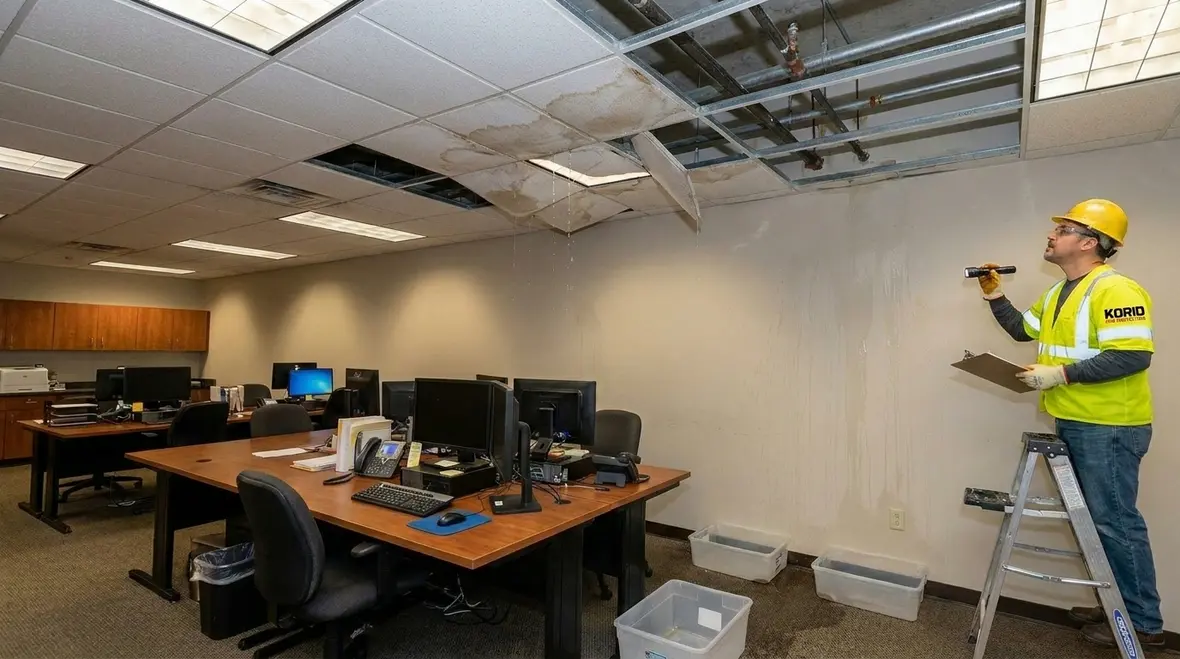
Water damage often spreads in the places nobody checks. That includes above ceilings, behind wall finishes, and around duct shafts. To reduce this, technicians and facilities teams can improve sealing and protection details. Firestopping and proper sealing around penetrations help keep water from traveling into unintended rooms. Even small pathway changes can make a big difference once water starts moving with determination.
Also, suspended ceilings deserve attention. If a ceiling grid is already weak, water weight can cause sagging and rapid failure. Even worse, damaged tiles block clean access for drying crews. Proper ceiling condition and early removal of affected materials can lower restoration costs. This is one reason Kord Fire Protection technicians often connect water spread discussions with broader maintenance conversations, including articles like Water Quality and Fire System Reliability Explained and Fire Sprinkler Corrosion Prevention in Large Facilities.
Then there is the matter of inspection access. Maintenance is smoother when access panels exist at planned points. Kord Fire Protection technicians often recommend verifying that inspectors can reach valves, drains, and sprinkler lines without destructive work. That simple change cuts recovery time during an emergency and saves everyone from learning far too much about drywall demolition on a weekday afternoon.

Commercial water damage mitigation plan after a sprinkler activation
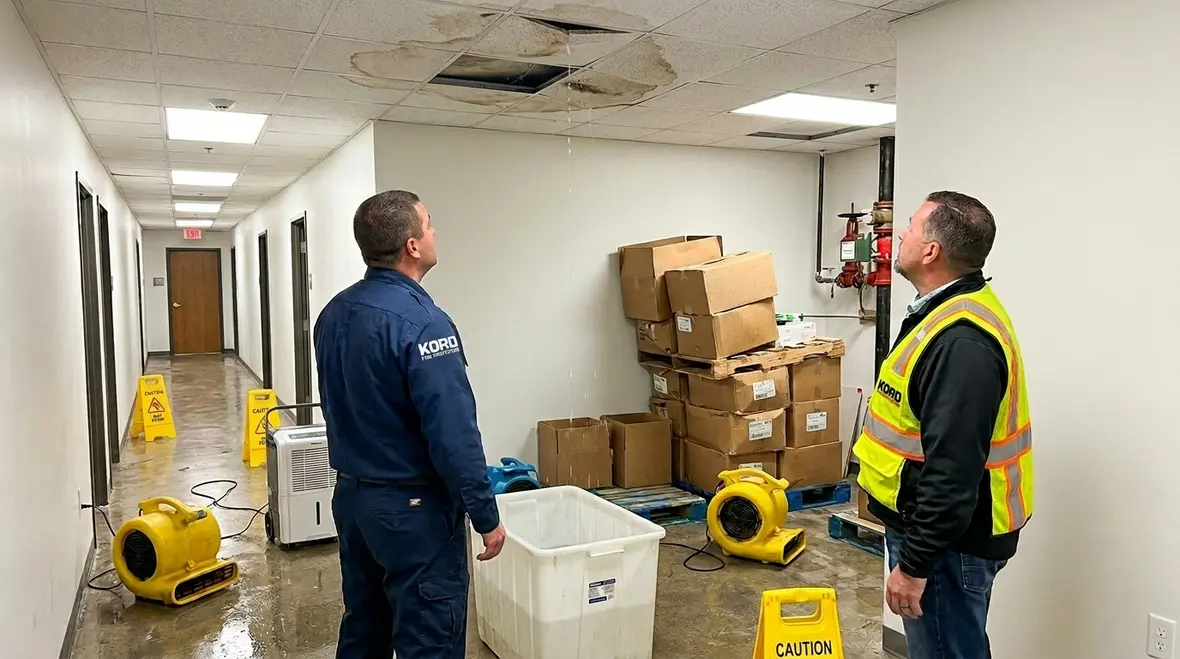
When sprinklers activate, mitigation must start right away. First, the teams assess safety, confirm the fire is out, and verify the system is controlled. Next, they document the condition of affected areas with photos and basic notes. That record helps restoration and insurance teams move quickly. It also reduces confusion later, when everyone is trying to remember whether that stain was old, new, or suspiciously theatrical.
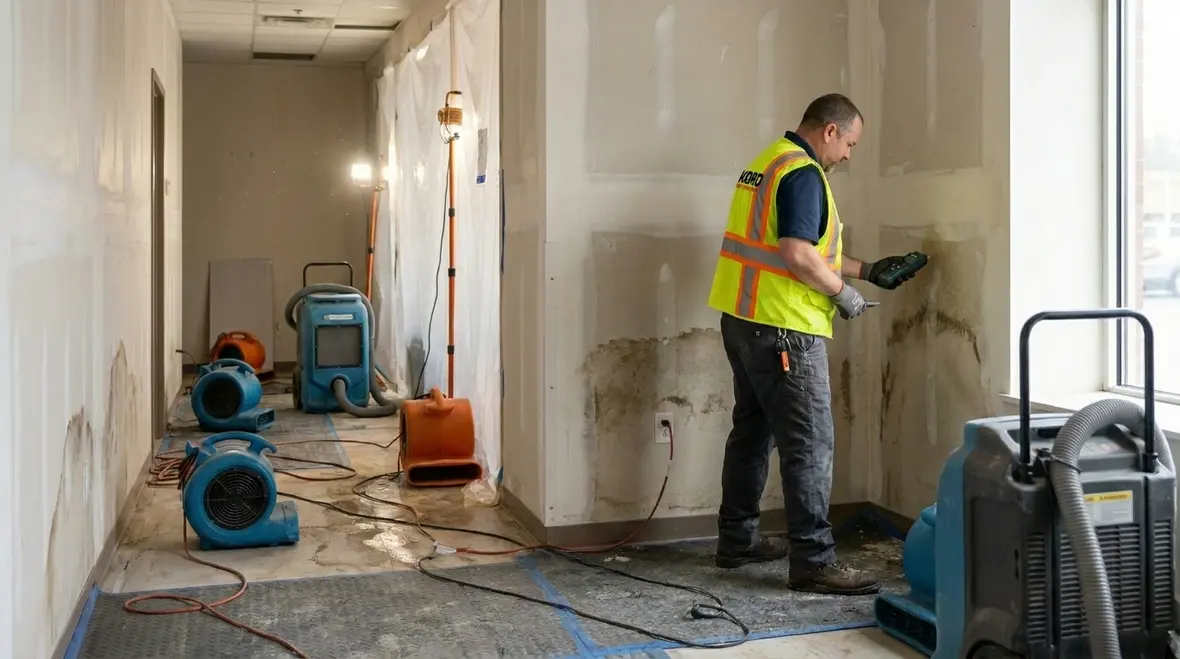
After that, drying must follow a structured plan. Professionals often use air movers and dehumidifiers sized to the space. They also check moisture levels within walls and flooring materials, because surface dryness can lie. Meanwhile, they remove wet insulation and materials that cannot dry fully. This is where commercial sprinkler system water damage becomes less of a long-term problem and more of a defined scope.
Because mold risk rises when moisture lingers, timing matters. Technicians and restoration leaders often coordinate to limit dwell time. Kord Fire Protection technicians can support this by sharing system details and the areas likely affected by water flow paths. Then, the drying plan becomes more accurate. Faster coordination usually means less demolition, fewer lingering odors, and fewer follow-up surprises hiding behind paint and baseboards.
Working with Kord Fire Protection technicians for smarter risk control
Planning works best when safety experts and facilities teams speak the same language. Kord Fire Protection technicians focus on system health, compliance, and practical guidance for reducing damage. They help building owners understand what the system will do during an emergency and what it means for operations afterward.
In practice, that can include improved inspection schedules, clearer valve identification, better maintenance documentation, and recommendations for layout fixes. Technicians also help facilities teams prepare staff training so everyone knows who does what after an activation. Then the company does not run around like a famous sitcom character searching for keys that are in the freezer. You know the one.
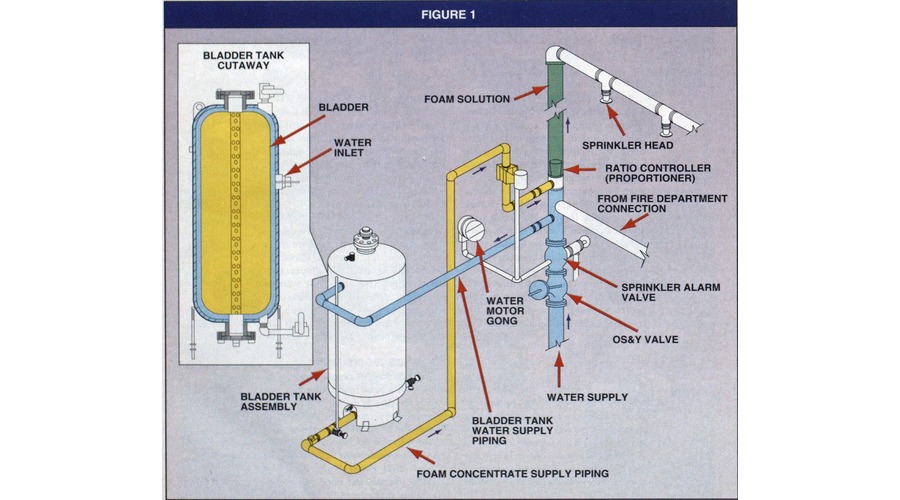
They also explain system types and their behaviors. That helps owners avoid false assumptions, such as thinking that one small activation equals minimal impact. Sometimes a single head can still release enough water to affect multiple rooms. Yet with the right steps, recovery moves fast. Near the end of any planning conversation, it also helps to line that strategy up with a direct service path, such as Water Mist System Service, especially in spaces where controlling excess water exposure is part of the larger protection strategy.
FAQ about mitigating sprinkler system water damage
Conclusion and next steps
Sprinklers protect people, and good planning protects the property. By focusing on inspection health, accessible shutoff steps, reduced spread in hidden spaces, and fast, structured drying after activation, businesses can sharply reduce commercial sprinkler system water damage. Kord Fire Protection technicians help owners build a practical response plan, not just a code checklist.
Now is the time to review system access, valve labeling, and emergency coordination. Schedule a professional risk review, then update your mitigation plan so the next activation ends with recovery, not regret. If you are ready to tighten both notification and suppression response, start with Fire Alarm Service Systems and talk with Kord Fire Protection about the right next step for your property.

Join Our Newsletter!
Get the latest fire safety tips delivered straight to your inbox From our Newsletter.