
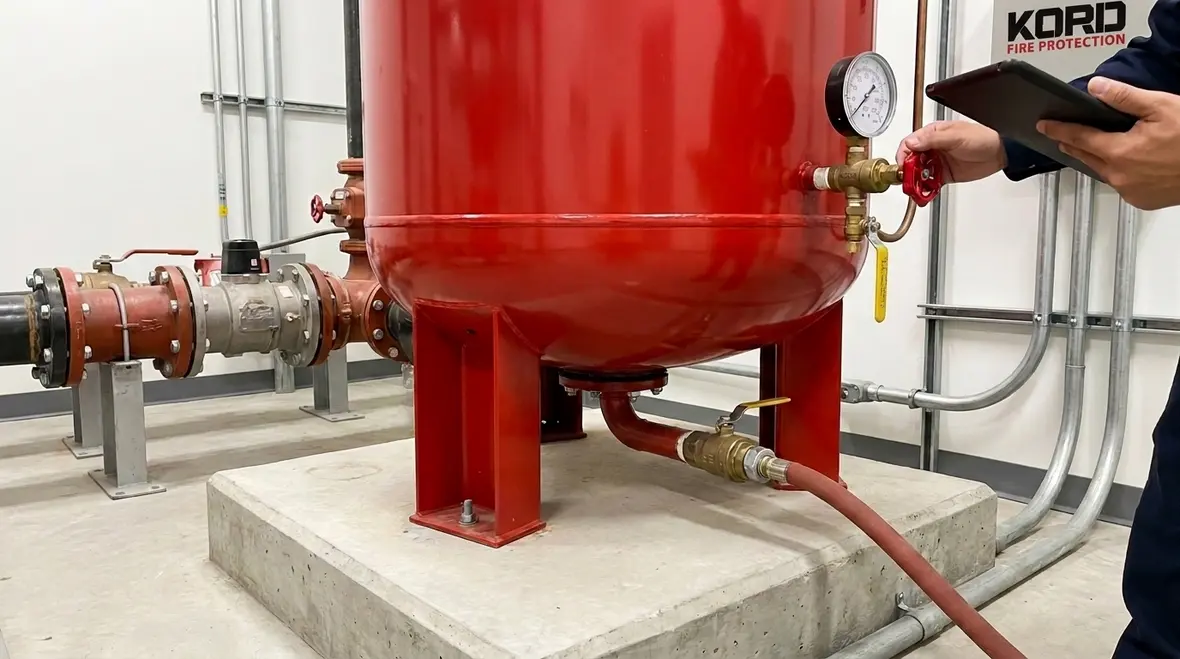
NFPA 22 Section 7.1: Pressure Water Tank General Requirements
Quick Answer
NFPA 22 Section 7.1 sets the baseline expectations for pressure water tanks used to support fire suppression systems. It focuses on safe installation, tank integrity, pressure and control arrangements, inspection readiness, and ongoing maintenance so the tank can deliver reliable water pressure when needed.
What NFPA 22 Section 7.1 requires for pressure water tank compliance
Pressure water tank requirements NFPA 22 are designed to ensure the tank delivers dependable water pressure and volume to the connected fire protection system throughout its service life. For commercial, industrial, and retail facilities, the main compliance challenge is not just initial installation. It is maintaining the tank, its pressure controls, and associated components so performance remains within design intent and testable ranges.
Facilities typically struggle with documentation gaps, deferred corrective actions, and missing access for inspection and operational testing. These issues can turn routine annual checks into costly stop work events during AHJ reviews or insurance loss control surveys.
Core tank design and installation expectations
Section 7.1 establishes general expectations that support safe, reliable tank operation. While specific numeric limits depend on the system configuration and the tank role in the water supply, the intent is consistent. The tank must be installed and arranged so that it can be inspected, tested, and maintained without guesswork. It must also protect against damage that could compromise pressure integrity.
Practical installation compliance considerations include:
- Secure mounting and structural support. Supports must resist tank loads and seismic or environmental conditions applicable to the site.
- Clear access routes. Inspectors and technicians must be able to reach gauges, valves, drains, and control devices safely.
- Protection from physical damage. Locate the tank and fittings where forklifts, maintenance traffic, and impact hazards cannot easily compromise piping or valves.
- Proper connection to system piping. Joinery and piping layout must prevent unintended restrictions, leaks, or air entrapment that can reduce delivered flow and pressure.
When facilities are built without tank service access, later maintenance often forces partial disassembly of piping. That increases downtime, raises the chance of improper reassembly, and creates more opportunities for failure at exactly the components NFPA 22 expects to be testable.
If you are reviewing broader system support needs alongside tank compliance, Kord Fire Protection’s fire suppression system services fit naturally with inspection readiness, maintenance planning, and corrective action tracking.
Pressure control, operating intent, and readiness to perform
Pressure water tanks typically function as a pressurized water source for fire protection systems. Section 7.1 focuses on ensuring the tank control strategy supports the system’s operating intent and that the connected equipment can respond when demand occurs.
Pressure indication and verification
Tank systems depend on accurate pressure reading and consistent performance. Pressure gauges and control interfaces must be readable, stable, and positioned for safe observation. In commercial facilities, gauge failure or miscalibration is a common failure point because it may not immediately stop operation, but it can mask a gradual loss of performance until testing reveals the issue.
Valves and control components
Valve arrangement must support both operation and inspection. Technicians must be able to confirm valve positions and verify that valves respond correctly to required system states. Seated leaks, clogged strainers, and sticking check valves can all lead to insufficient water delivery or failure to maintain the expected pressure range.
Air management and water quality effects
In pressurized tank applications, air and system entrainment can significantly impact pressure stability. Over time, water quality issues and sediment accumulation can contribute to restriction, corrosion, and valve malfunction. These conditions frequently show up as inconsistent pressure recovery during operational tests.
Inspection, testing, and maintenance: where compliance often breaks down
NFPA 22 compliance is not only about having a pressure water tank installed. It is about keeping the tank and its associated components in a condition that allows the facility to pass operational and inspection requirements. Section 7.1 is foundational, which means early failures often cascade into later noncompliance findings.
Common operational and maintenance gaps include:
- Incomplete service records. Missing test reports, gauge calibration records, and valve maintenance logs delay corrective action and complicate AHJ or insurer review.
- Deferred repairs to small leaks. Slow leaks can reduce maintained pressure and can also create hidden corrosion that affects fittings and internal components.
- Corroded or obstructed drain and test connections. If drains and test ports are blocked, the system cannot be properly verified, even if it initially operated.
- Out of service piping modifications. Unapproved changes around tank connections can invalidate performance assumptions and reduce testability.
To support ongoing compliance, professional inspection must include verification of accessibility, functional condition of valves and controls, and the ability to conduct required tests without improvisation. Kord Fire Protection supports commercial facilities with practical compliance planning, testing readiness, and targeted maintenance so the tank system performs as intended and documentation stays audit ready.
For a broader context on how NFPA 22 regulates fire protection water tanks, review: how NFPA 22 regulates fire protection water tanks.
Commercial facility realities: coordination with AHJ and stakeholders
Commercial and industrial environments add complexity. Tanks may be located in basements, process areas, parking structures, or mechanical rooms shared with other utilities. Section 7.1 expectations for safe access and test readiness often require coordination with facility operations before testing or repairs occur.
Facilities should plan for the following coordination items:
- Operational downtime windows. Testing may require controlled changes in system status and coordination with building management.
- Work permits and confined space controls. Tank rooms can involve utility hazards, electrical equipment, or limited ventilation.
- Maintenance access improvements. Temporary barriers, locked doors, and poor routing around valves and gauges can prevent timely verification during inspections.
- Documentation alignment. Ensure service reports reference the correct system components and match the facility’s as built records.
When teams coordinate early, the facility avoids repeated access attempts and reduces the risk of finding issues late in the compliance cycle. Kord Fire Protection helps commercial operators standardize procedures so maintenance activities directly support pass fail outcomes and reduce administrative burden.
Frequently Asked Questions about pressure water tank requirements NFPA 22
Next steps
Pressure water tanks can meet NFPA 22 intent, but only if the installation, access, controls, and maintenance stay aligned with real operating conditions. Kord Fire Protection can help commercial facilities plan inspections, validate tank readiness, correct recurring failure points, and keep documentation audit ready. Schedule a compliance-focused assessment to identify gaps early and protect system performance before the next inspection cycle.

Join Our Newsletter!
Get the latest fire safety tips delivered straight to your inbox From our Newsletter.



