
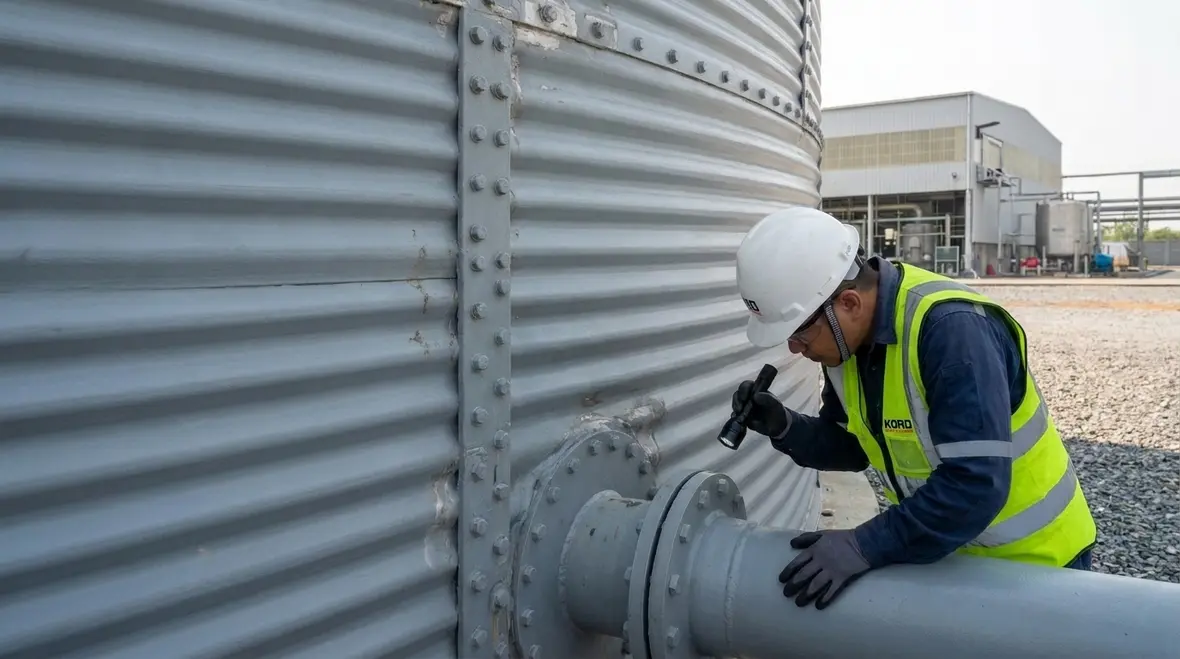
NFPA 22 Section 6.3: Corrosion Protection for Factory-Coated Bolted Tanks
Quick Answer: NFPA 22 Section 6.3 focuses on keeping factory-coated bolted water tanks corrosion resistant throughout installation, service, and inspection. Compliance requires controlling damage, verifying coatings and interfaces, and maintaining integrity through documented maintenance and inspection practices.
Teams tightening inspection records and corrective-action tracking can also benefit from Kord Fire Protection’s fire protection system documentation checklist, which fits naturally here because corrosion control falls apart fast when the paperwork behaves like a disappearing act.
Why Section 6.3 Matters for corrosion protection factory-coated bolted water tanks
NFPA 22 Section 6.3 addresses corrosion protection for factory-coated bolted tanks because coating failures at joints, edges, penetrations, and field repairs can quickly become system wide water quality and structural reliability risks. For owners, the goal is simple: maintain the coating performance that the tank design depends on. This article explains how facilities manage corrosion protection factory-coated bolted water tanks in real-world installation and maintenance operations, aligned with NFPA 22 expectations.
What NFPA 22 Section 6.3 expects during installation and coating integrity
Section 6.3 requirements typically concentrate on preventing corrosion from forming where protective coating is compromised. Factory coatings do not remove the need for disciplined installation procedures. Commercial facilities routinely encounter coating damage from handling, shipping impacts, field drilling, gasket misalignment, improper fastener torque, and abrasive contact during assembly.
1) Protect coating during receiving, storage, and placement
-
Receiving: document coating condition on arrival. Identify dents, scratches, and coating holidays early so repairs can occur before assembly.
-
Storage and staging: avoid direct contact abrasion and standing water on coating surfaces. Use appropriate blocking that does not gouge the coating.
-
Placement: ensure the tank base is installed as designed to prevent uneven loading that can flex joints and widen corrosion-prone interfaces.
2) Manage bolted joint interfaces and coating damage points
Bolted tanks concentrate risk at interfaces: flange faces, overlap seams, gasket locations, and fastener penetrations. Section 6.3 corrosion protection is not only about the tank shell coating. It also depends on the integrity of contact surfaces where dissimilar materials, moisture entrapment, or improper seal compression can accelerate corrosion.
-
Gasket selection and condition: use specified gaskets and confirm they remain seated and undamaged through assembly cycles.
-
Fastener torque control: over torque can damage coating at edges and distort joint faces. Under torque can allow micro gaps that trap water.
-
Coating at interfaces: ensure field repairs restore protective performance at cut edges, drill points, and any scratched zones that expose bare substrate.
Where corrosion starts in factory-coated bolted tanks, and how to prevent it
In commercial, industrial, and retail facilities, the most common corrosion initiation points are predictable. Facilities reduce risk when they treat these areas as controlled “hot zones” rather than routine visual checks.
Common failure points
-
Cut edges and field penetrations: drilling for fittings and instrumentation often exposes bare metal. Even small coating holidays can drive localized corrosion.
-
Undetected transport and handling coating damage: scratches and dents may not show loss of adhesion immediately, but they can become active corrosion sites under wet service.
-
Bolted seam condensation and water entrapment: joint geometry and gasket compression can trap moisture and oxygen variability, accelerating corrosion.
-
Improper coating repair materials or process: patching with incorrect primers or coatings, insufficient surface preparation, and inadequate cure time can create weak layers.
-
Galvanic effects at dissimilar metals: different fasteners, clamps, or fittings can establish galvanic corrosion paths when moisture and conductivity are present.
Operational controls that keep coatings performing
Corrosion protection relies on disciplined controls before and after installation. A practical approach includes written procedures, a repair decision tree, and documented verification.
-
Surface readiness criteria: cleaning and profile requirements for any coating repair must match the tank coating system.
-
Approved repair system: repairs should use an approved coating compatible with the factory system to prevent coating disbondment.
-
Correct cure conditions: temperature and humidity control matters for adhesion and barrier performance. Facilities that ignore cure windows often see early failures.
-
Inspection frequency and method: recurring inspections should focus on joints, penetrations, and any areas prone to mechanical contact.
Inspection and maintenance workflows that align with compliance
Facilities typically struggle with corrosion protection because they treat inspections as visual only. NFPA 22 compliance expectations require an inspection mindset that detects early damage and controls how it is corrected. A robust workflow ties inspection results to corrective action tracking.
Inspection planning for commercial asset owners
-
Establish inspection zones: split the tank into areas including shell field, seam interfaces, bolt lines, and penetrations.
-
Use consistent documentation: photos with reference points and a standard rating for coating condition. This enables trend analysis rather than one time judgment.
-
Track repairs and warranty requirements: ensure repair records include surface preparation steps, coating type, batch or product identification, cure time, and location.
Corrective action procedures when coating damage appears
When corrosion indicators appear, facilities should respond quickly and prevent recurrence. A compliant corrective action typically includes removal of loose coating, cleaning to remove corrosion products, verifying substrate condition, and applying the correct compatible repair coating system.
-
Isolate the defect area: control runoff and prevent contamination from spreading into adjacent sound coating.
-
Prepare the substrate correctly: achieve the required cleanliness and profile for adhesion. Spot sealing without preparation frequently fails.
-
Apply compatible coating: match the existing coating system so the repaired area maintains barrier performance.
-
Verify after cure: confirm the coating has reached cure and inspect transitions at edges and seams.
Common compliance challenges in the field and how facilities manage them
Even when facilities have knowledgeable personnel, compliance can fail due to process gaps. These issues show up often in commercial operations such as retail complexes, industrial parks, multi tenant facilities, and distribution centers.
Challenge 1: Field modifications after installation
New valves, instrumentation, alarms, and piping tie ins can require drilling, grinding, and rework. Facilities need a controlled process that treats every modification as a coating integrity risk. The repair work should follow an approved compatible system and be documented for audit readiness.
Challenge 2: Inconsistent inspection ownership
When inspections depend on day to day responsibilities, coverage becomes inconsistent. Ownership should be assigned to a role trained to understand tank coating risk points and corrective action expectations.
Challenge 3: Repair execution quality
Coating repair quality often varies between contractors. Facilities reduce risk by requiring procedure driven repair method control, approved coating materials, surface preparation verification, and cure confirmation.
How Kord Fire Protection supports ongoing compliance
Kord Fire Protection helps commercial facility teams keep corrosion protection programs aligned with NFPA 22 expectations through inspection support, maintenance coordination, and compliance documentation. This service approach reduces operational uncertainty by standardizing how defects are identified, how repairs are handled, and how records support ongoing inspections.
For broader context on how NFPA 22 regulates fire protection water tanks, review: how NFPA 22 regulates fire protection water tanks.
Frequently Asked Questions
Conclusion and call to action
Corrosion protection for factory-coated bolted water tanks becomes a compliance and reliability issue the moment coating integrity is compromised. Facilities should standardize inspection zones, control field modifications, and ensure repairs restore protective performance with documented process. Contact Kord Fire Protection to evaluate your corrosion protection practices, strengthen inspection and maintenance workflows, and support NFPA 22 readiness for your fire protection water tanks.

Join Our Newsletter!
Get the latest fire safety tips delivered straight to your inbox From our Newsletter.



