Commercial Fire Sprinkler Reliability with Kord Fire Protection
Quick Answer: Long term reliability for commercial fire sprinkler networks comes from better design reviews, smart inspection routines, clean hydraulic data, and fast response when issues appear. By partnering with Kord Fire Protection, facilities across Australia gain repeatable service quality, clearer reporting, and fewer shutdown surprises.
Commercial fire sprinkler networks protect people, operations, and balance sheets. However, real-world wear, altered layouts, and routine building changes can quietly chip away at performance over time. That is why commercial fire sprinkler reliability must be treated like a living system, not a one-time install. With the right service plan, clear documentation, and expert support, fire protection performance stays steady even as facilities evolve. Near the top of that plan, it helps to align reliability work with broader full fire protection services so inspections, alarms, sprinklers, and corrective actions are not operating like distant cousins at a family reunion. And when the job gets complex, Kord Fire Protection can become a vital partner, helping businesses keep standards high across industrial, retail, and commercial sites throughout Australia.
Plan for Longevity: reliability starts before the first inspection
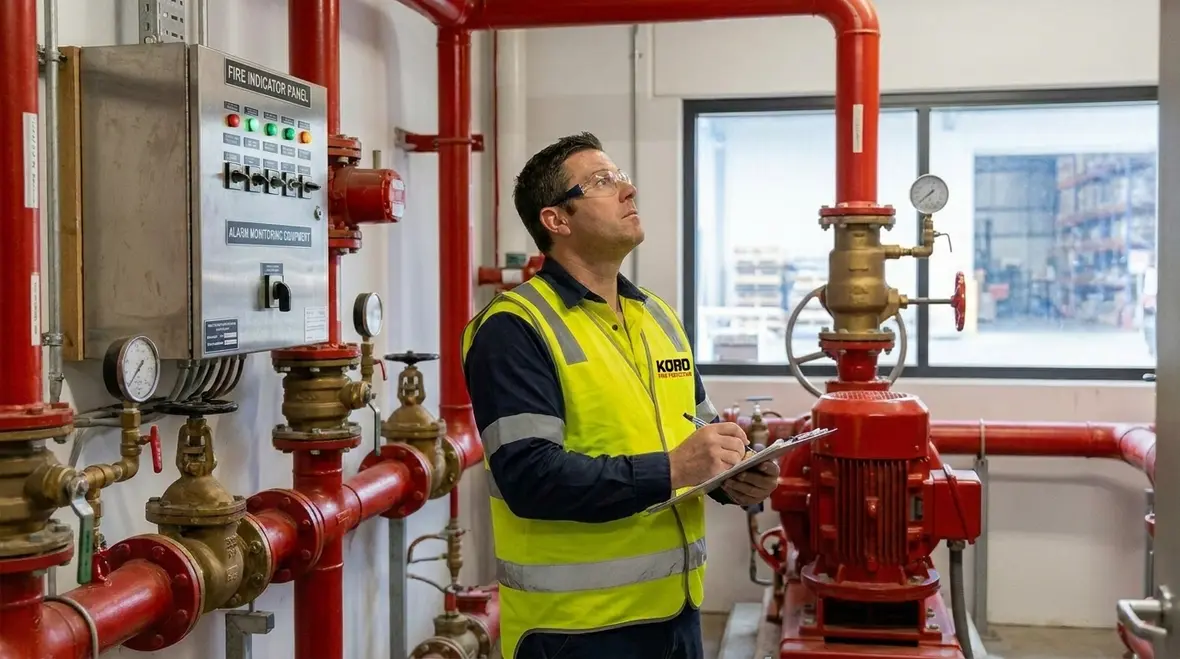
Long term reliability does not begin with annual testing. It begins with practical thinking during design handover and commissioning, and then continues with disciplined maintenance choices. First, facilities should verify that the network matches the current building use. Then they should confirm that all appurtenances, including valves, water supply components, alarms, and controls, align with the actual layout.
For example, when a retail tenant remodels a unit or an industrial area adds new storage racking, the system can face changed airflow, changed obstructions, and different fire loads. Even when sprinkler heads remain in place, the environment around them can shift. That shift can affect response times and activation conditions. So the plan must include a method to capture changes and feed them into inspection and servicing decisions.
Why design intent needs to survive real life
This is where reliability gets practical. A system may have been beautifully designed on day one, but buildings rarely freeze in time out of respect for the drawings. Rooms change. Tenants change. Storage grows upward and sideways with suspicious enthusiasm. If the original intent is not checked against present conditions, reliability slowly drifts from engineering to guesswork. Kord Fire Protection’s broader thinking on the full lifecycle of fire protection servicing fits naturally here because longevity depends on what happens after installation, not just during it.
Know the weak points: where commercial systems quietly fail
Commercial fire sprinkler networks usually fail in predictable ways. Pipes and fittings handle water, then temperature swings, then vibration and minor movements. Over time, that can lead to internal scaling, corrosion at joints, and valve drift. Meanwhile, quick fixes like temporary reroutes can create hidden risks if someone never updates the as-built documentation.
In addition, many failures trace back to water supply realities. A building may have a reliable supply during calm conditions, yet struggle during peak demand or when underground lines shift. If facilities only test alarms without confirming system performance, they may miss a trend. This is where commercial fire sprinkler reliability becomes more than a slogan. It becomes the habit of checking what actually matters, not just what is easiest to record.
And yes, documentation errors can be as dangerous as a missing wrench. People make them. Then they move on. The system keeps the receipt, though.
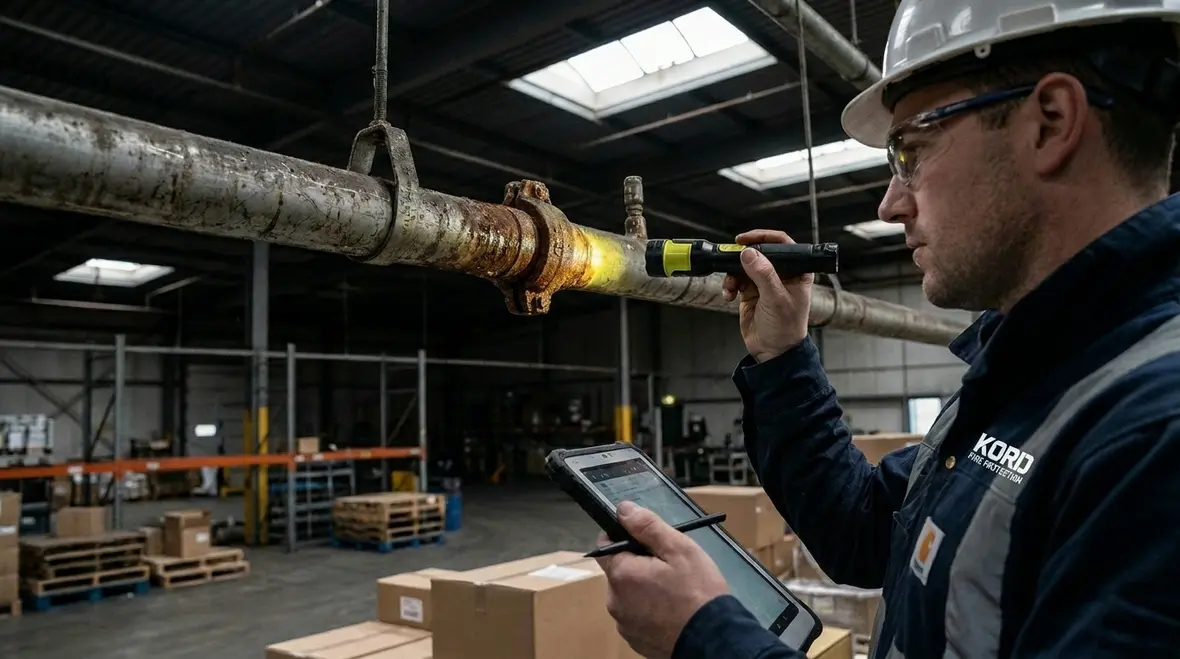
The quiet troublemakers that deserve attention
Weak points rarely announce themselves with dramatic music. More often, they show up as a valve that no longer feels quite right, a sketchy note on an old report, or a part of the building everyone assumes someone else checked. Water supply analysis matters here too, which is why Kord Fire Protection’s article on water supply reliability analysis for fire suppression systems makes a useful companion read. If the water side is uncertain, the rest of the network is basically trying to win a race in work boots.
Inspection that finds issues early, not late
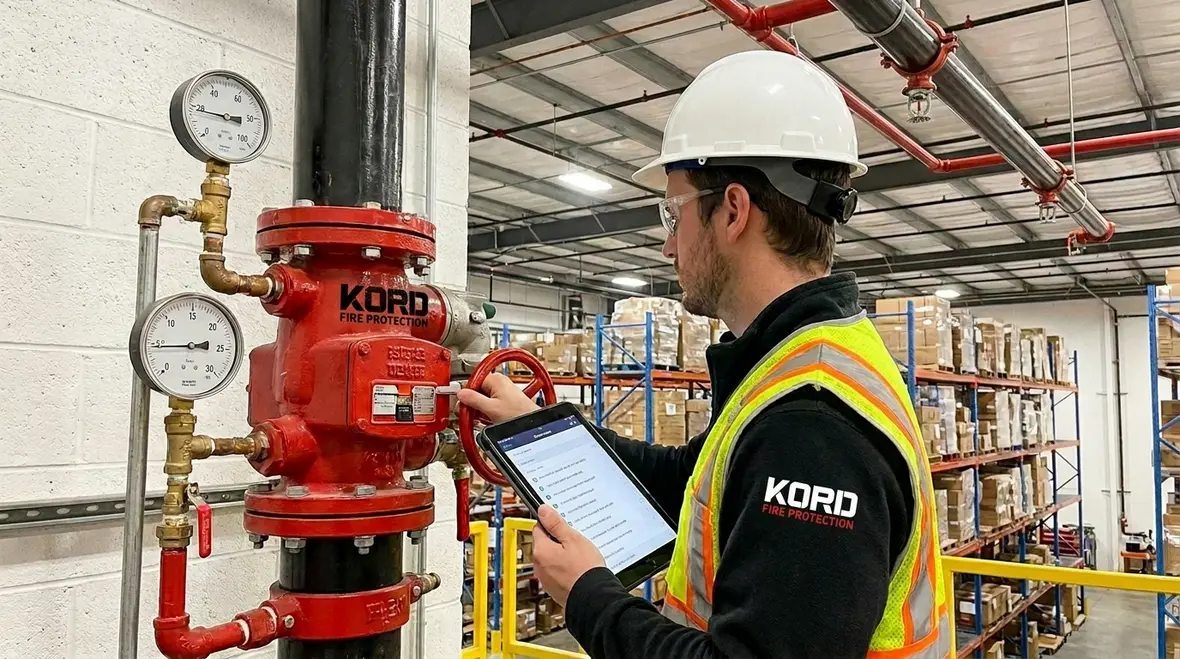
Strong service programs rely on smart inspection sequencing. First, technicians should review prior reports and trend findings. Then they should inspect the network in a way that matches risk: critical valves, water supplies, alarms, and areas with higher obstruction potential. After that, they should validate that records match the physical system.
Facilities often ask for checklists. That is fine. But checklists alone do not stop failures. A better approach uses targeted observations. For instance, technicians can look for signs of water leakage around hangers, monitor cleanliness where debris accumulates, and confirm the accessibility of control valves. They can also verify that sprinkler heads show no signs of damage, corrosion, or incorrect installation patterns.
Additionally, the best programs include a cadence for minor corrections. Waiting until a major test day to fix a small issue is like waiting until the car makes a loud noise before checking the oil. It usually feels brave, until it becomes expensive.
Inspection sequencing that actually helps
A useful inspection rhythm starts with history, moves to critical components, and ends with action tracking. That sounds obvious until a site has years of scattered reports, three different contractors, and a valve room that looks like it was organized by raccoons. Reliable inspection programs create continuity. The same issues get trended, the same risk areas get prioritized, and the same documentation habits support better decisions each visit.
Hydraulics and data: keep the numbers clean
Fire sprinkler reliability lives and dies by hydraulic accuracy. As-builts can become outdated when ceiling heights change, when pipe routes get adjusted, or when occupancy changes add new hazards. Therefore, facilities should maintain hydraulic documentation that reflects the real system. They should also ensure that water supply data stays current, including flow tests and pressure readings where appropriate.
When the network experiences updates, service partners should update calculations, not just sketches. This helps reduce surprises during later assessments and supports confident decision making for ongoing maintenance. It also helps avoid the common trap of repeating older assumptions even when the site has changed.
In practice, this means technicians and engineers must collaborate closely with facility managers. Then the facility can plan inspections that verify performance against the latest system reality. Documentation discipline also supports stronger compliance conversations, especially when records must show what changed, why it changed, and how the system was verified afterward. Kord Fire Protection covers that side well in fire safety system documentation for compliance, which pairs nicely with reliability planning.

Upgrade paths that reduce downtime and risk
Over time, older networks may still function, yet improvements can enhance reliability and reduce disruption. Upgrading can include replacing aging valves, improving control components, refining alarm integration, or correcting poor accessibility so inspections remain efficient.
However, upgrades should not become random projects. They should follow risk ranking and a clear schedule. For example, a facility can prioritize components that affect water delivery or detection. Then it can align upgrade work with planned shutdown windows. This reduces downtime and avoids “surprise work orders” that show up like pop-up ads.
Kord Fire Protection can support these upgrade pathways by providing service continuity and practical guidance for how to stage work with minimal business impact. In short, the goal is not to overhaul everything at once. The goal is to keep the network dependable while the facility keeps moving. If alarms and sprinklers need to work more closely together during those improvements, it is smart to review fire alarm integration for smarter building safety as part of the planning conversation.
Make upgrades deliberate, not dramatic
Facilities do not need an upgrade strategy built on panic and sticky notes. They need one built on priorities. Tackle the items that most affect water delivery, detection coordination, and inspection access first. Then line up the rest with operating schedules and planned shutdowns. Reliability improves fastest when work is staged logically and communicated clearly, not when everyone discovers the plan at 6:45 a.m. in the parking lot.
Why a reliable partner matters: Kord Fire Protection as the service edge
Some businesses treat fire sprinkler maintenance as a vendor transaction. Yet commercial operations need consistency, communication, and accountability. A vital partner can connect the dots between inspection findings, corrective actions, and future planning.
Kord Fire Protection can become that partner by supporting facilities with clear reporting, proactive recommendations, and on-site coordination that respects business schedules. Instead of vague “issues found” notes, a strong partner explains what the issue means, how it affects system performance, and what needs to happen next. Then they help facilities track actions so nothing falls through the cracks.
For industrial, retail, and commercial sites across Australia, that consistency matters. One team understands the network context across visits, which reduces repeating steps and increases the chance that reliability improves year after year.
How service programs should look on the ground
A practical program usually blends routine tasks, targeted checks, and planned improvements. Below is a simple structure many facilities can adapt to their own risk profile.
Meanwhile, the facility manager should expect clear schedules, timely communication, and traceable records. If that does not happen, the reliability plan stays theoretical. And fire protection, unlike most office meetings, does not accept theories.
FAQ: commercial fire sprinkler reliability, answered fast
Conclusion: build reliability you can trust, then keep it
Commercial fire sprinkler networks stay dependable when facilities treat maintenance as an ongoing process, not an annual checkbox. By improving inspection quality, keeping hydraulics and records current, and planning smart upgrades, businesses reduce risk and downtime.
For facilities across Australia, a partner like Kord Fire Protection can help coordinate service, track actions, and turn findings into measurable reliability gains. If the network supports your business, it deserves a plan. Start with a reliability review.

Join Our Newsletter!
Get the latest fire safety tips delivered straight to your inbox From our Newsletter.