Commercial Fire Pump Maintenance Signs Kord Fire Protection
Quick Answer: A commercial fire pump needs professional service when performance drops, inspections fail, or alarms point to deeper issues. Common signs include unusual noise, pressure swings, leaks, corrosion, or controller faults. Kord Fire Protection can help keep systems reliable across commercial and industrial facilities with testing, diagnostics, and documentation support.
In many facilities, commercial fire pump maintenance is not a “nice-to-have” activity. It is what stands between a small incident and a full escalation. And yet, when a pump runs in the background day after day, people can start treating it like background infrastructure, the way we ignore ceiling fans until summer hits. That is how preventable failures sneak in.
A site that already depends on broader full fire protection services often benefits from treating pump care as part of the larger life safety picture rather than a side task that gets attention only when something starts blinking, clanking, or behaving suspiciously. Because once a fire pump turns dramatic, it rarely does so at a convenient time.
This article walks through the common signs a commercial fire pump requires professional service. It also explains how Kord Fire Protection becomes a useful partner in the job, from early diagnosis to performance verification and cleaner records. Along the way, it also connects to related system planning, including integrated fire and security systems with Aritech Fire Systems, because dependable pumps work best inside a facility strategy that actually talks to itself.
Pressure starts acting strange during tests
When a system cannot hold steady pressure, it does not just “misbehave.” It signals that the pump curve, controls, or hydraulics may be drifting away from what the site needs. Technicians often see this as pressure that surges up and down, fails to reach setpoints, or drops too quickly under load. Sometimes the change is obvious. Other times it hides inside a routine test result that looks close enough until someone compares it with previous readings and realizes the numbers have been quietly wandering for months.
In addition, the controller may log events after routine testing even if no alarm sounds across the building. That is not the system being quirky for entertainment value. It is often the system leaving breadcrumbs. Facilities should treat those outcomes as a clear cue for professional service. If the pump cannot deliver the required flow and pressure when tested, it may struggle during an actual emergency, which is a terrible time for a machine to start exploring its feelings.

Why early pressure drift matters
Early pressure drift matters because it gives teams a chance to intervene before one issue becomes three. A weak sensor can point crews toward the wrong conclusion. A partially restricted line can make a healthy motor look guilty. A control setting that has shifted just enough can slowly train staff to accept “close enough” as normal. Professional service helps separate symptom from cause so the site is not left troubleshooting by guesswork.
Unusual noise, vibration, or heat tells a real story
Next, consider the mechanical clues. A healthy fire pump should not sound like it is auditioning for a movie soundtrack. Grinding, rattling, squealing, or a new low hum can point toward bearing wear, misalignment, cavitation, impeller damage, or coupling problems. Likewise, vibration that increases over time often means components have shifted or clearances have changed. Even if the pump still starts, that does not mean it is happy about it.
Heat is also a major indicator. If technicians find abnormally hot motor bearings, overheated couplings, or warm pump casings, that can reveal restricted flow, friction, lubrication issues, or electrical stress. Operating at the wrong temperature accelerates wear fast, and fast wear has a rude habit of becoming sudden failure. So, when noise, vibration, or heat show up, it is time to schedule a proper service visit rather than waiting to see whether the pump “settles down.”
Mechanical symptoms rarely stay small
Mechanical symptoms rarely stay politely contained. What begins as slight misalignment can become seal wear. Seal wear can become leakage. Leakage can invite corrosion, contamination, or unsafe wet areas around critical equipment. This is why experienced service teams do not inspect one symptom in isolation. They look at how the entire assembly is behaving together and whether the change matches the system’s baseline performance.
Controllers throw faults or the pump refuses to start cleanly
Modern fire pump systems rely on controls, protections, and safety logic to respond predictably when they are needed. However, when controllers display faults, reset unexpectedly, or delay start sequences, the issue goes beyond a simple “glitch.” It may involve phase loss detection, sensor drift, relay contact wear, loose terminations, or an aging controller power supply. These are the kinds of problems that can hide in plain sight because the system still appears operational from across the room.
Additionally, some systems start but run unevenly, then shut down after hitting limits. If the pump does not start cleanly during scheduled testing, facilities should not keep repeating the same test as if hope is a maintenance plan. Professional service can confirm whether the issue sits in wiring, control components, incoming power conditions, or the pump itself. That saves time, reduces unnecessary part swapping, and gets teams closer to the real fix.
Control issues affect confidence as much as hardware
Control issues do more than interrupt a test. They chip away at confidence in the whole system. Facility teams need to know that a start command, supervisory signal, and sequence response will happen the same way every time. A controller that behaves unpredictably makes every other component look suspicious too, which is why proper troubleshooting matters.
Leaks, corrosion, or wet areas appear around critical points
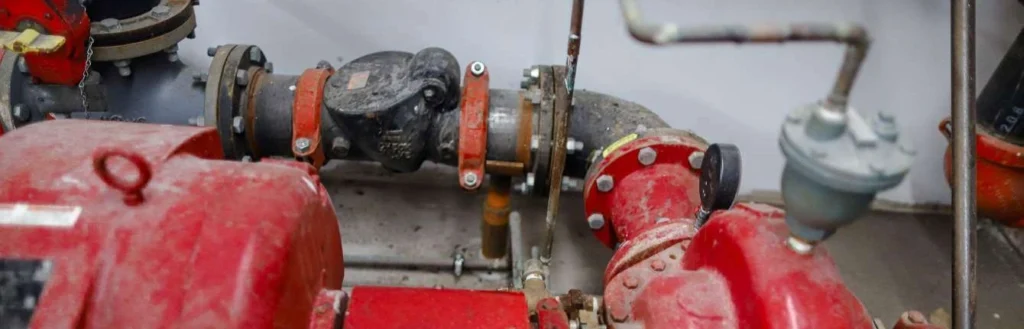
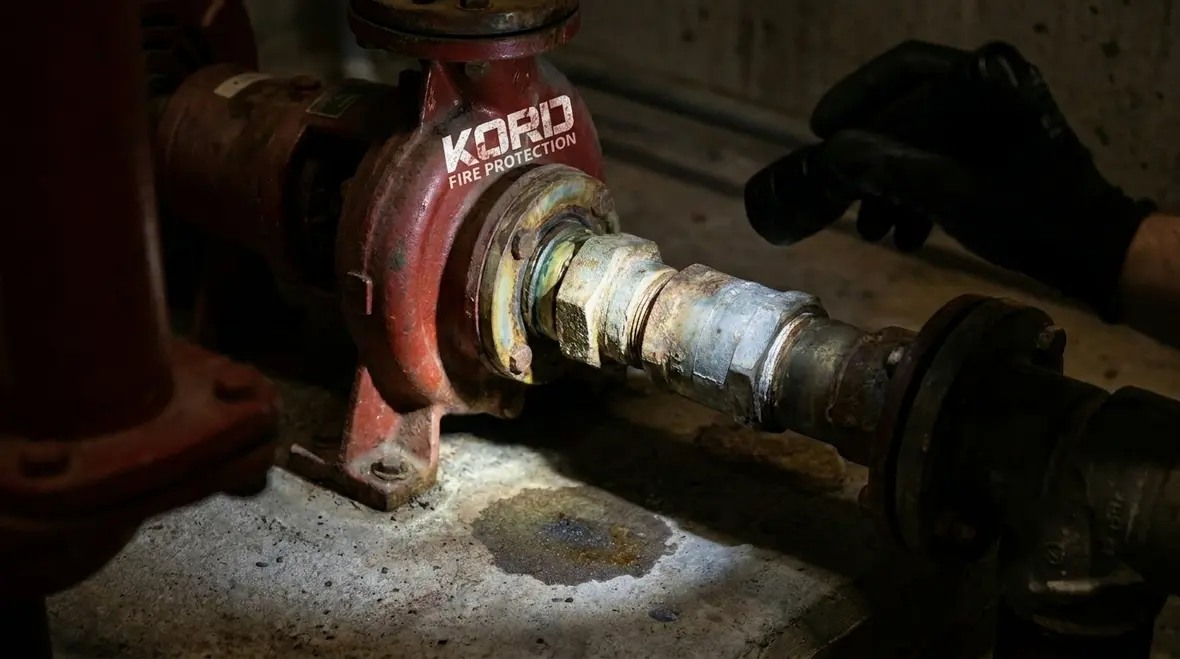
Now the attention shifts to the pump room floor and the connections that people overlook. Leaks around seals, joints, fittings, and threaded connections can reduce system performance and create a slipping hazard that no one wants to explain in a safety meeting. Corrosion on pipework, supports, fasteners, and pump surfaces can also reduce reliability, especially in humid environments or areas where maintenance conditions are less than ideal.
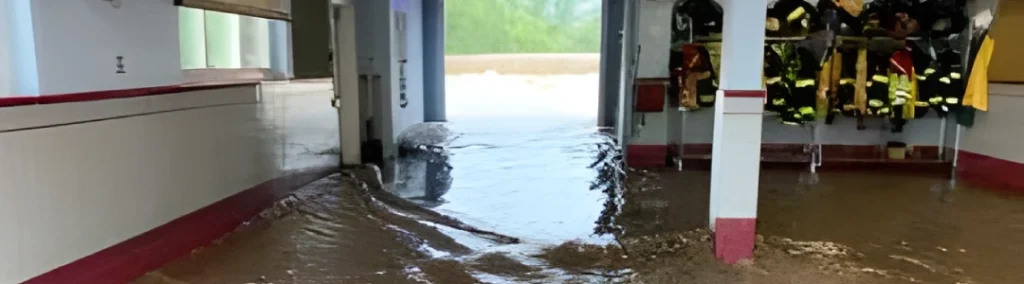
Slow seepage can hide until it reaches a critical level. That means a small damp patch can become a bigger problem because pumps rely on stable pressure and flow. A service provider can inspect for seal degradation, evaluate wear patterns, verify drain and vent arrangements, and determine whether water where it should not be is the result of age, stress, installation issues, or a combination of all three. None of those possibilities improve with denial.
Flow tests reveal gaps between expected and delivered performance
During commissioning and ongoing upkeep, fire pump performance should match the design intent. So when flow tests show underperformance, the cause can include worn impellers, clogged strainers, trapped air in suction lines, improper valve conditions, or internal wear that no one notices during a visual walkthrough. Sometimes the pump delivers pressure at one test point yet falls short under different flow conditions. That mismatch matters because real emergencies seldom hit the exact test point everyone hoped for.
Flow test data can also reveal trends. If delivered flow slowly decreases after each service window, the pump may need impeller inspection, cleaning, calibration review, or deeper hydraulic analysis. Professional analysis should not stop at a single test result. It should compare readings over time and connect them to mechanical and electrical findings. That is how technicians move from reactive repairs to useful planning.

Trend data beats one-time reassurance
Trend data matters because one decent reading can hide a slow decline. Facilities that compare results over time are better positioned to catch degradation before it becomes a readiness issue. That approach is less dramatic, more boring, and exactly what a life safety system should be. In fire protection, boring reliability is a compliment.
Service records look thin, outdated, or incomplete
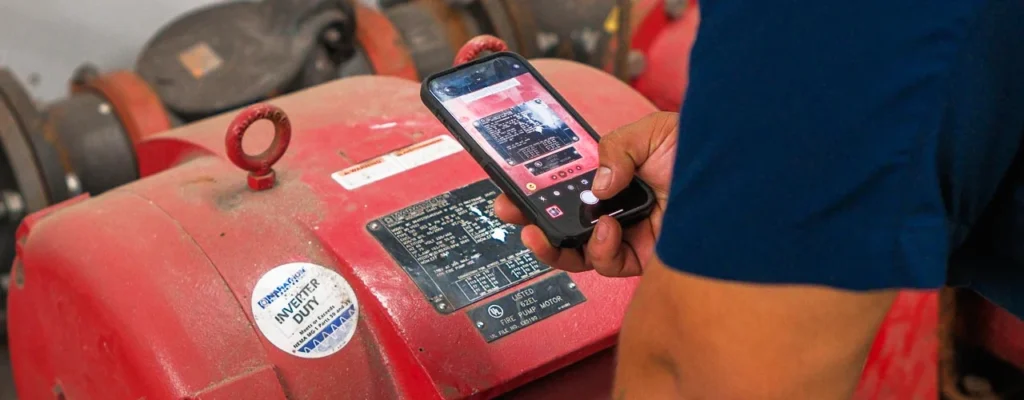
Even when the pump appears to run, documentation often tells the truth. If commercial fire pump maintenance records are missing key measurements, lack calibration references, or show long service gaps, then risk increases. Incomplete records make it harder to diagnose repeating faults because technicians lose the comparison points that explain what changed, when it changed, and whether the same issue keeps returning in a slightly different costume.
Instead of guessing, a good service partner can trace history and pinpoint the likely cause. That is where Kord Fire Protection becomes especially useful, not just by turning bolts, but by aligning service work with what matters for compliance, internal planning, and operational continuity. A clean service history helps managers make better budget decisions too, which is far preferable to emergency spending inspired by panic and clipboard regret.
Why Kord Fire Protection fits the service job
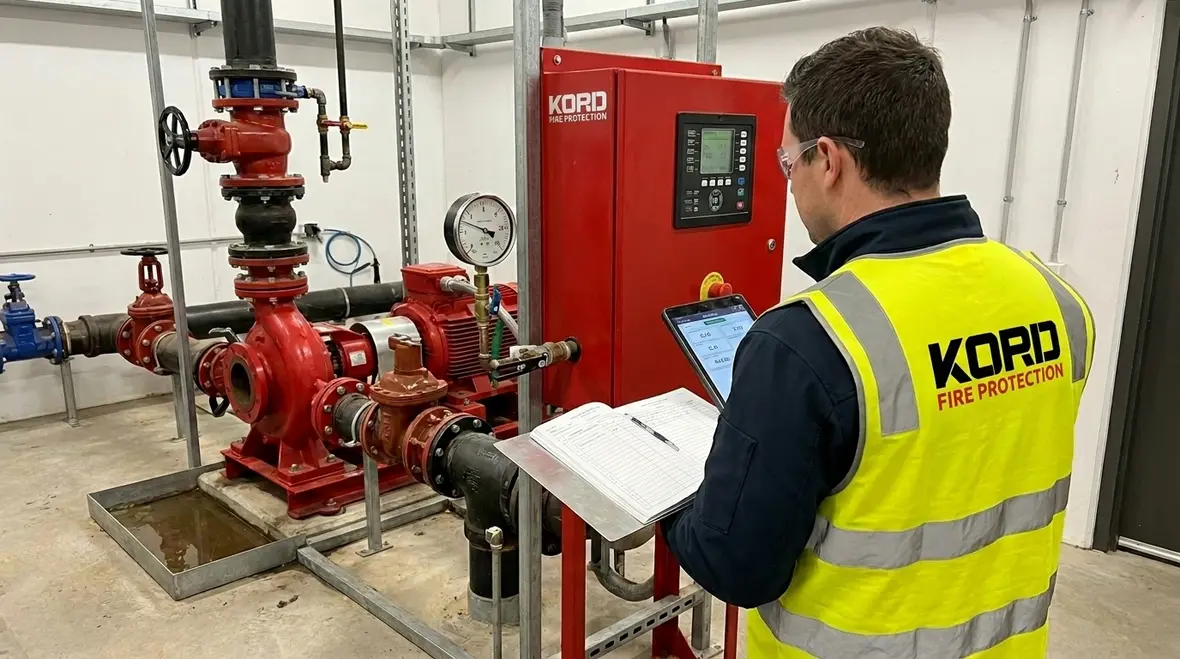
When a facility needs professional service, it needs more than a van, a toolkit, and a cheerful “she’ll be right.” It needs a steady process. Kord Fire Protection supports sites with practical inspection routines, careful troubleshooting, and clear reporting that facility teams can actually use. That process matters because a service visit should leave the site with more clarity than confusion, more evidence than assumptions, and a stronger sense of what comes next.
- Thorough diagnostics that connect pressure swings, noise, heat, and faults to likely mechanical or electrical causes
- Clear performance checks that verify the pump meets delivery needs under realistic operating conditions
- Documentation support that helps facilities maintain cleaner service records for audits, planning, and readiness reviews
- Corrective work planning so repairs do not turn into random delays that grow into longer disruptions
In short, Kord Fire Protection helps facilities treat the pump room like a mission control center, not like a “we will look at it later” storage space. And yes, that approach usually costs less than discovering a hidden problem the hard way during a real emergency or a failed inspection.
Maintenance timing that keeps teams ahead of failures
Professional service should not only happen after obvious problems appear. A proactive rhythm helps prevent wear from becoming failure. Technicians often focus on early indicators such as seal wear patterns, controller drift, suction side cleanliness, and alarm behavior. They also verify that protective devices and related components operate correctly so a small issue does not quietly compromise the wider system.
Routine service also improves predictability for facility managers. When maintenance plans run on schedule, sites can coordinate access, isolate equipment safely when needed, and reduce surprise downtime. That smoother approach supports business continuity, reduces rushed decisions, and keeps readiness from depending on luck. Luck is fun in board games. It is less impressive in pump rooms.
FAQ: Commercial fire pump service
Final call for action
If any sign points to drifting performance, odd sounds, faults, leaks, or gaps in service history, a facility should not wait for a dramatic failure to justify the budget. Early action gives teams more control, better repair planning, and a clearer path back to reliable operation.
Kord Fire Protection can help keep systems reliable through thorough commercial fire pump maintenance, practical troubleshooting, and clear reporting. Contact the team to plan the next service visit and protect readiness when it matters most.

Join Our Newsletter!
Get the latest fire safety tips delivered straight to your inbox From our Newsletter.