Commercial Fire Alarm Integration With Building Automation
Quick Answer (40-60 words)
Modern fire alarm systems do more than ring bells. They now exchange data with building automation platforms to coordinate HVAC shutdowns, door releases, smoke control, and access control. This creates faster, clearer responses for teams across Australian industrial, retail, and commercial sites. A strong integrator, like Kord Fire Protection, helps make it work reliably.
In Australia’s industrial parks, shopping precincts, and multi site commercial facilities, fire safety cannot run on guesswork. That is why modern commercial fire alarm integration is becoming a practical backbone for building automation. When a fire alarm panel talks to the building systems, the building can respond as a single team instead of a collection of devices doing their own thing. And when integration gets complex, a capable partner matters. Kord Fire Protection can become that partner, helping facilities reduce downtime, improve testing, and keep life safety functions aligned with the way the building actually operates.
For teams planning broader support around alarms, sprinklers, monitoring, and maintenance, Kord Fire Protection’s full fire protection services fit naturally into the conversation. And for added context on connected life safety planning, this topic pairs well with fire alarm integration for smarter building safety, especially when the goal is a building that reacts with purpose instead of crossed fingers.
What building automation really means for fire safety
Building automation covers the controls and monitoring that manage how a site runs. Typically, it includes systems like HVAC management, fire doors and smoke control, access control, and alarm annunciation. To modern fire alarm systems, this is not just nice to have. It is a way to coordinate actions during a fire event.
For example, when smoke is detected, the automation layer can support the correct response: stop certain air handling units, hold fire doors in the right state, and drive evacuation wayfinding. In turn, fire alarm devices can share status and events so operators see what happened and when. Think of it like a well rehearsed team, not a group chat where everyone replies late.
Why coordination beats isolated systems
A standalone alarm can still detect trouble, but an integrated setup helps the whole building respond with context. Instead of staff chasing scattered information from separate screens, they can see one event trigger related actions across ventilation, doors, and monitoring points. That means fewer delays, fewer assumptions, and less of the old “who is handling what?” routine that tends to appear at the worst possible moment.
How modern alarm panels communicate with building systems
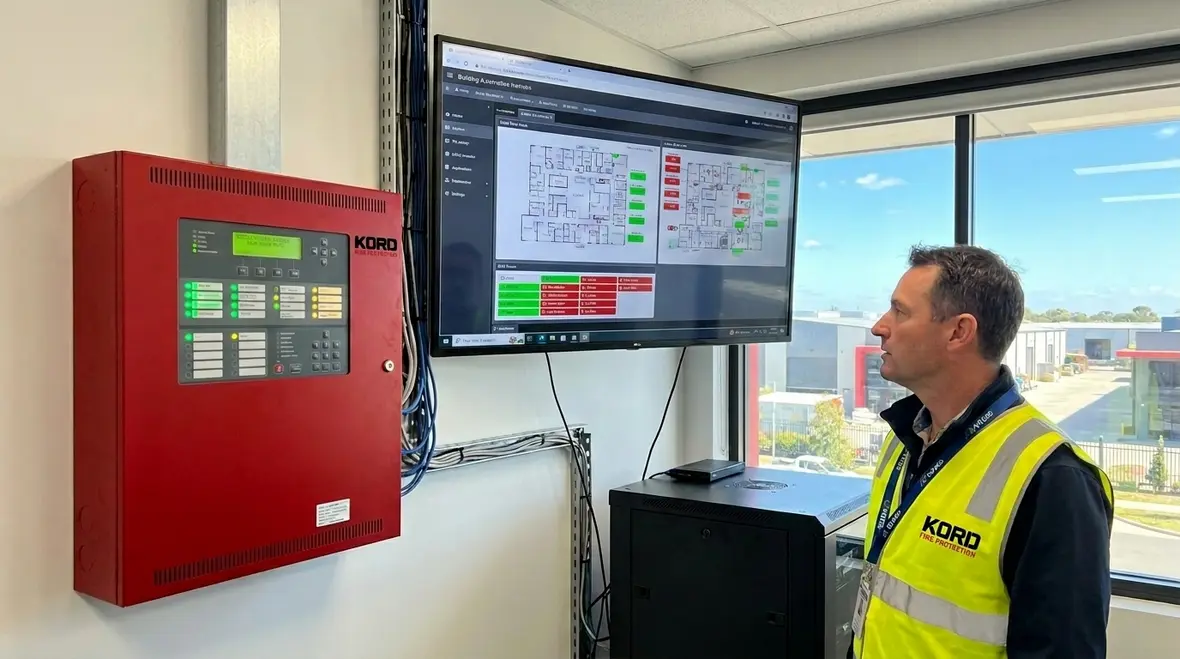
Most modern systems use structured signaling and standardized communication methods so they can exchange signals without chaos. Instead of only sounding alarms locally, the fire alarm system can send event data to automation controllers and display it in control rooms. It can also receive commands that help support building sequences during emergencies.
Typically, integration uses one or more of these approaches, depending on the building and the fire engineering strategy. First, it uses hardwired I O where it must be deterministic for safety functions. Then it uses network based communication for monitoring, event reporting, and supervisory status. Finally, it may use middleware that translates events into the automation platform’s language.
Because each site differs, the best design matches the required safety behavior to the right communication method. And yes, this means the details matter. The building automation vendor and the fire alarm vendor both have roles, and they should not be treated like rivals at a corporate Olympics.
Choosing the right communication layer
Some signals need absolute predictability. Others need visibility, history, and operational convenience. A smart design does not force every function through the same pipe just because the software demo looked polished. Instead, it separates life safety critical behavior from secondary monitoring tasks so the building gets both reliability and useful visibility without mixing up priorities.
HVAC and smoke control coordination that actually helps
In a real fire, air movement can change everything. That is why coordination between fire alarm systems and HVAC or smoke control controls can be lifesaving, not just regulatory checkbox theater.
When an alarm triggers, the system can manage critical steps such as shutting down air handlers, switching smoke extraction fans, or changing damper positions. This helps limit smoke spread and supports evacuation routes.
Importantly, a well designed commercial fire alarm integration setup does not simply issue commands. It verifies state, reports failures, and maintains clarity for operators. If a damper does not move, the control room should know, rather than hope and pray. Transitioning from alarm happens to response sequence runs correctly is where performance gains show up.
Verification matters as much as the command
A sequence is only useful if people can confirm it worked. That means status feedback matters. Operators need to know whether a fan started, whether a damper changed state, and whether a fault appeared halfway through the response. This is where integration stops being flashy and starts being genuinely valuable.
Fire doors, access control, and wayfinding in one operational picture
Many facilities run access control, door releases, and wayfinding systems as separate tools. During an emergency, that separation can slow decisions. Integration ties these functions into the same operational picture so the building response is coordinated.
For example, when the alarm system detects a fire, door release circuits and stairwell controls can support evacuation flow. At the same time, access control can lock down or release only what safety strategy requires. Additionally, connected annunciation systems can help guide staff by displaying event zones and relevant instructions.
This reduces the run around the building like a confused extra in a movie moment. Instead, staff see consistent information across the control room, local panels, and monitored status screens. In industrial and retail environments, where shift handovers happen constantly, consistency is a real advantage.
Consistency helps people act faster
When the same event is represented clearly across multiple interfaces, teams lose less time translating what they are seeing. That is especially useful on larger properties, mixed use sites, and facilities with rotating personnel. The system should not require a detective board and three coffees before someone understands what zone is in alarm.

Testing, commissioning, and ongoing compliance across multiple sites
Australia has many facilities that operate across several locations, each with different tenancy layouts and plant equipment. That is where integration needs discipline. A system that works once during commissioning, but fails during routine tests, is not a system that earns trust.
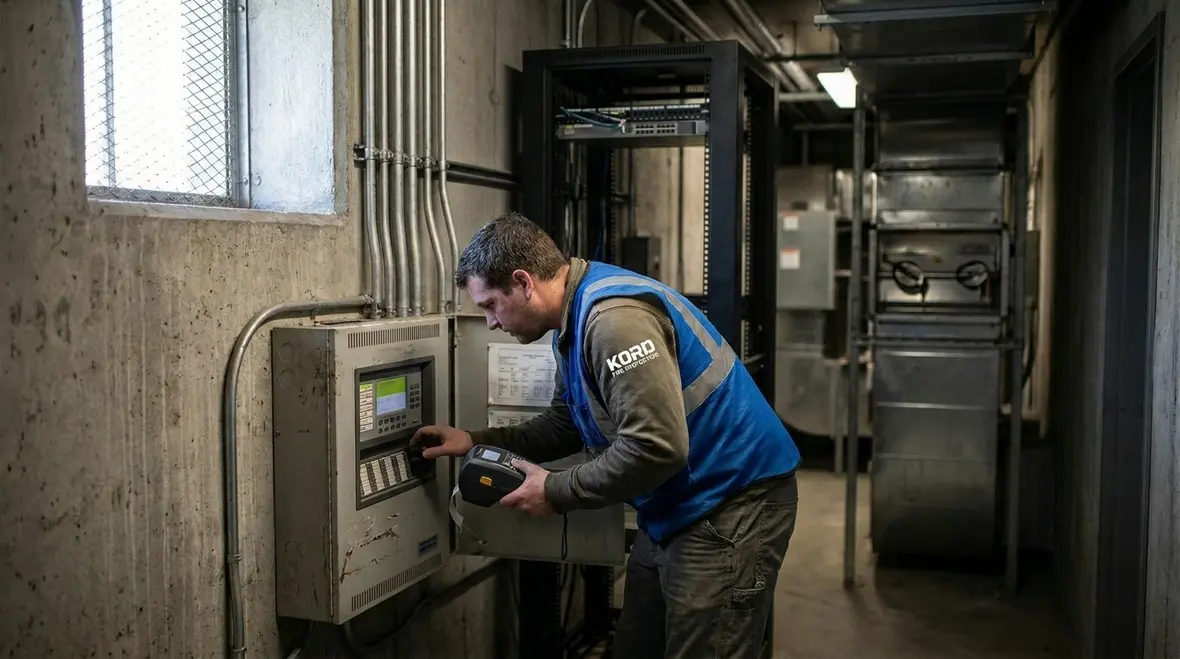
Modern commercial fire alarm integration supports structured testing by linking the fire alarm event logic to automation status points. Consequently, technicians can verify sequence steps, confirm interface health, and document results faster. It also helps facilities during ongoing service by making it easier to trace which device and which control path produced a given event.
Kord Fire Protection can become a vital partner by supporting the entire lifecycle. That includes helping define integration behavior, coordinating with building automation teams, and ensuring that service and maintenance do not break the safety intent. In other words, the integration stays practical after the ribbon cutting and the first couple of everything is fine inspections.
Documentation keeps complex sites sane
Clear point lists, interface drawings, sequence descriptions, and repeatable test procedures save enormous time later. They also reduce the odds that a future maintenance team makes a harmless looking change that quietly breaks a critical response path. In integrated systems, good documentation is not paperwork fluff. It is operational memory.
Choosing the right integration approach for Australian industrial and retail sites
Not every building needs the same level of integration, and that is the good news. Some industrial sites may require tighter deterministic signaling for critical sequences, while retail fit outs may prioritize clear event display and quick operational awareness. Therefore, a facility should match integration depth to risk, occupancy patterns, and the building’s automation architecture.
Key decisions include how the system handles fail safe behavior, what happens when a network link drops, and how alarm events map to automation actions. Additionally, the design should define who does what during an incident. Fire and building automation should support the same emergency mindset, not two different ones.
To avoid confusion, the facility should demand clear documentation for interfaces, point lists, sequence descriptions, and test procedures. And just like choosing the right tool for a job, the best integration plan depends on the site, not on a generic brochure.
Tailored does not mean inconsistent
A multisite operator can still standardize the method even if the details vary from building to building. That means common naming conventions, similar test formats, and shared expectations for how events are reported. Tailoring the design to each site does not require reinventing the wheel every single time.
Cyber and reliability basics without the scare tactics
Some people hear network connected and immediately picture a villain hacking a control panel with a laptop and a dramatic soundtrack. In reality, reliability comes from good design and sensible security practices.
A strong integration strategy isolates life safety functions appropriately, limits access where it should be limited, and uses monitoring so faults show up early. It also ensures that critical actions still behave correctly even if non essential network components fail.
Facilities benefit when integration does not turn life safety into a fragile dependency. So, the design should keep safety behavior safe even during degraded conditions. That is the difference between an integrated system that feels smart and one that actually performs when it counts.
FAQ
Our CTA Conclusion
If a facility wants fire safety that behaves like a coordinated system, it needs more than equipment. It needs integration that stays reliable after commissioning, across industrial, retail, and commercial operations in Australia. Kord Fire Protection can help align fire alarm logic with building automation sequences, testing, and ongoing service.
Reach out to plan your next integration milestone and keep your site prepared. With the right delivery approach, facilities teams gain better visibility, cleaner testing, and a building response that feels coordinated instead of improvised. That is the whole point: smarter systems, fewer blind spots, and less chaos when it matters most.

Join Our Newsletter!
Get the latest fire safety tips delivered straight to your inbox From our Newsletter.