
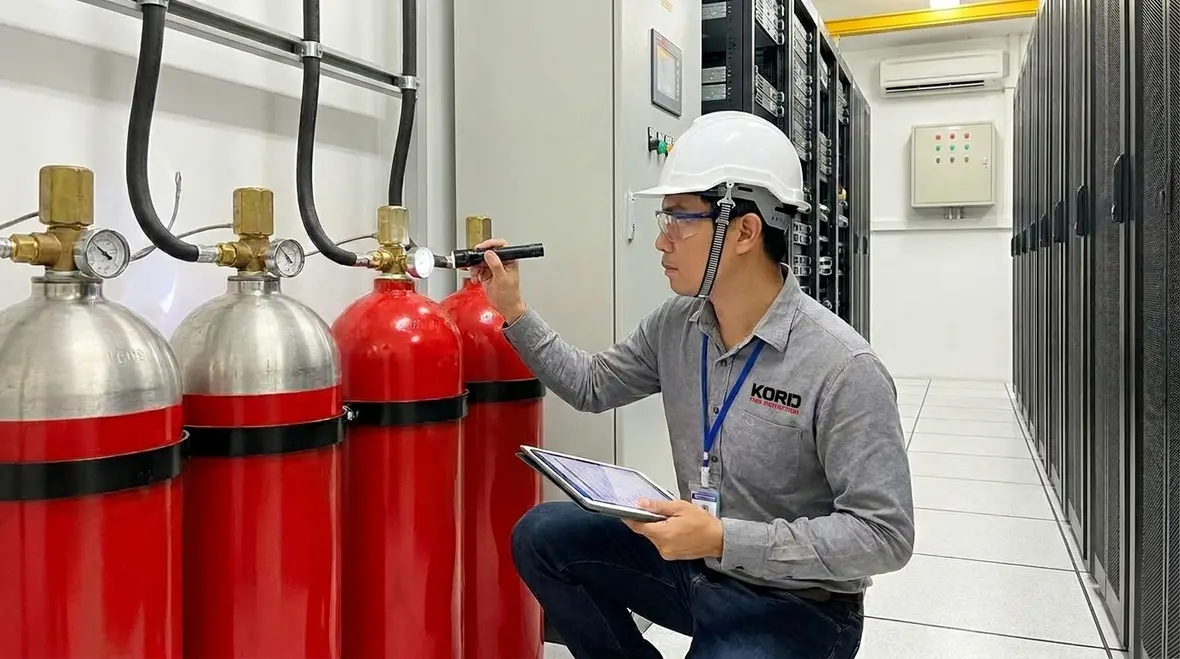
CO2 Fire Suppression Maintenance Checklist for Readiness
CO2 Fire Suppression Maintenance Checklist That Keeps Systems Ready
CO2 fire suppression maintenance is not a “set it and forget it” kind of job. Instead, it is a scheduled routine that protects people, property, and the expensive equipment nobody wants to replace. In other words, it is the difference between a system that works and a system that merely looks good on paper. Kord Fire Protection treats this work like it matters, because it does. Over time, discharge paths can get restricted, components can drift out of spec, and inspection gaps turn into surprises.
So this guide lays out a practical checklist, then adds the service details that keep the system dependable. And yes, the goal is calm confidence, not panic like a smoke alarm that never shuts up. If you want the broader service overview behind these systems, Kord Fire Protection’s CO2 fire suppression systems page offers a useful companion for planning, repairs, and long-term support.
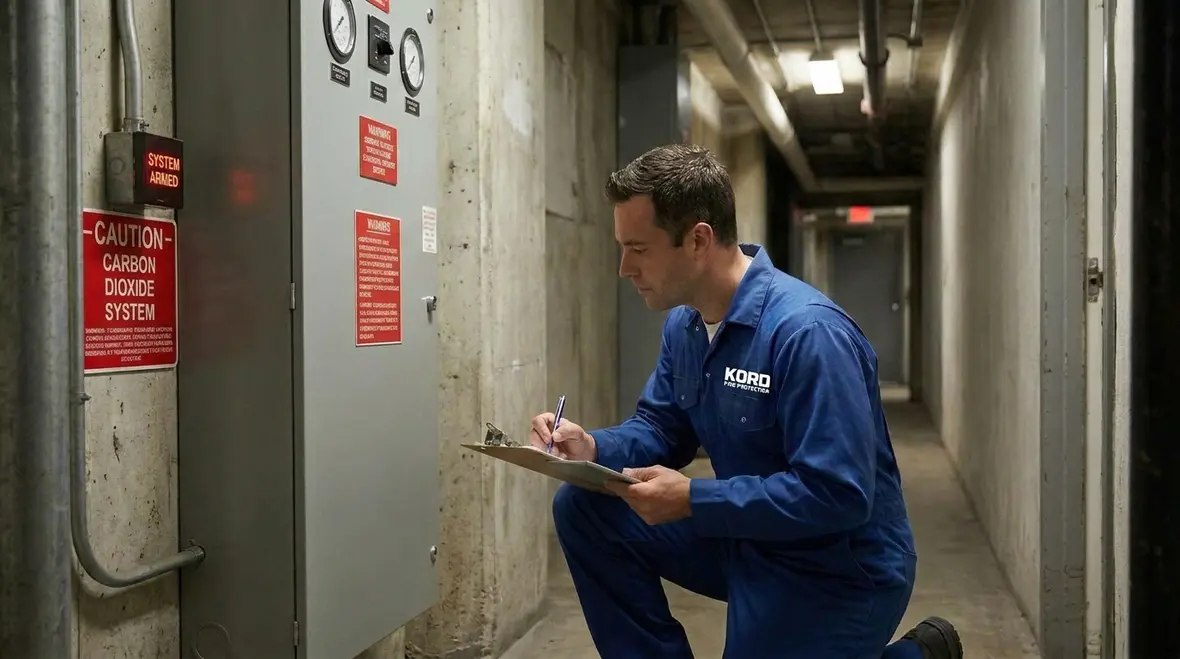
Why CO2 Systems Need More Than a Quick Look
CO2 systems rely on correct pressure, clear release paths, and properly working detection and control equipment. As a result, maintenance must cover the parts that actually move during an event, not only the parts that sit still. For example, if a discharge valve sticks even a little, the best plan on earth becomes a slow-motion problem. Likewise, if regulators drift or seals age, the release timing can change.
Furthermore, CO2 has its own quirks. It changes behavior with temperature and cylinder condition, so routine checks help prevent “it worked last year” from turning into “it failed today.” Kord Fire Protection builds its approach around those realities, coordinating inspections and follow-up actions so the system stays ready for real life, not just theory.
Where maintenance usually pays off first
- Valve response and release reliability
- Pressure consistency across cylinders
- Clear discharge nozzles and stable piping
- Detection circuits that do not hide faults
- Safety interlocks, alarms, and signage that still do their job
That same focus on safety interlocks and warning devices also lines up well with Kord Fire Protection’s article on CO2 fire suppression system safety and alarms, especially for facilities that need stronger evacuation planning around protected spaces.
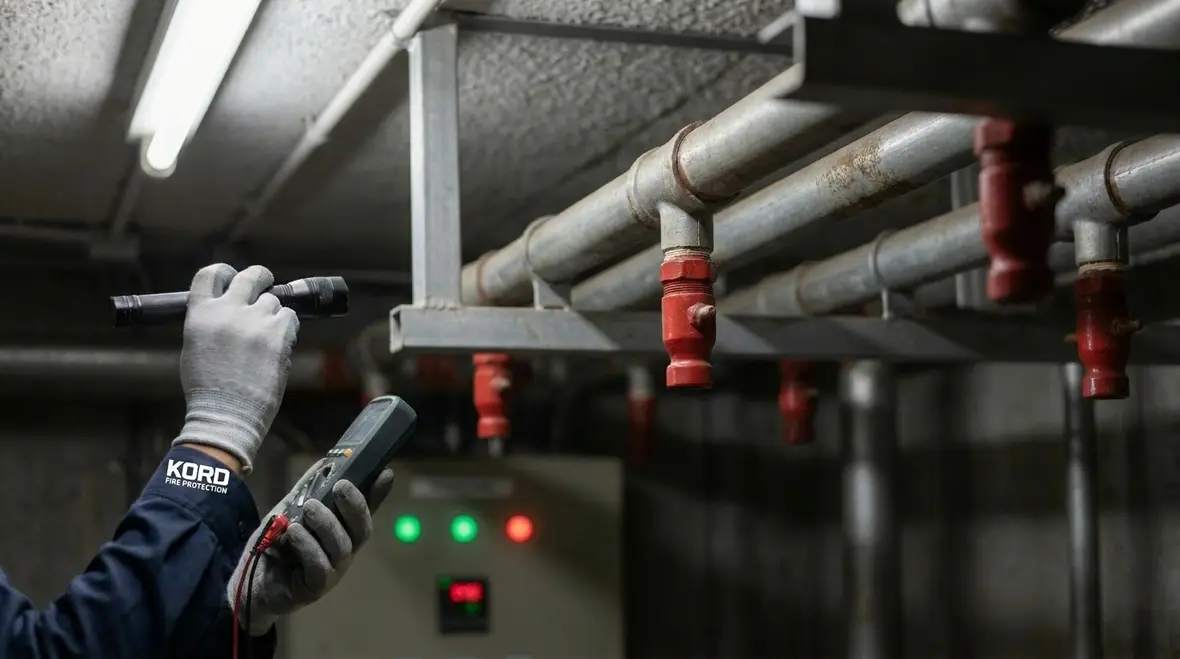
CO2 Fire Suppression Maintenance Checklist for On Site Checks
Below is a field-ready checklist used to guide inspections and help teams document findings. It moves step by step, from verification of access to confirmation of system integrity. When the checklist stays consistent, issues get found early, and that keeps costs under control.
1. Confirm system identification and coverage
- Verify the hazard area matches the drawings and current layout.
- Check cylinder locations, labels, and access routes.
- Confirm enclosure doors and locks allow safe access.
2. Inspect cylinders, valves, and mounting
- Check for corrosion, oil residue, dents, or damaged guards.
- Inspect valve condition and protect caps or covers.
- Confirm proper support and secure mounting.
3. Check pressures and expected discharge readiness
- Verify cylinder pressure readings against manufacturer requirements.
- Record ambient conditions because temperature matters.
- Look for any sign of abnormal pressure change trends.
4. Inspect discharge piping and nozzles
- Confirm discharge nozzles are clear and unobstructed.
- Check pipe hangers, supports, and visible alignment.
- Look for corrosion, leaks, or loose fittings.
5. Review detection, control, and release circuits
- Inspect control panel condition and verify device status.
- Confirm wiring integrity, terminals, and control modules.
- Test manual and automatic functions per schedule.
6. Confirm warning devices and safety interlocks
- Verify pre discharge alarms and visual signals operate correctly.
- Check door closure and ventilation tie-ins if used.
- Confirm signage and hazard labeling remain visible.
And just like that, the checklist turns into an evidence trail. That matters during audits, insurance reviews, and incident investigations, because “we think it should be fine” does not protect anyone. If your team wants an adjacent reference for documenting inspections more broadly, Kord Fire Protection’s fire suppression system maintenance checklist guide is a natural internal next step.
How Kord Fire Protection Supports Safe Service and Documentation
Maintenance is more than hands-on work. It also means clear records, smart follow-up, and fast communication with building teams. Kord Fire Protection acts as a vital partner by coordinating inspection planning, supporting site access, and organizing documentation so the facility team can keep moving.
In many buildings, contractors and maintenance staff juggle multiple systems. However, Kord Fire Protection keeps CO2 service from becoming an orphan task. Instead, it provides a clear workflow that covers what was checked, what was measured, what was found, and what needs attention next. When trends show recurring issues, the plan can shift before the next inspection cycle.
Think of Kord Fire Protection as the “responsible adult” in the room. Nobody wants that role, but the building needs it anyway, and it is better when it arrives on schedule with paperwork that makes sense. Facilities that need a bigger picture view can also connect this maintenance work to Kord Fire Protection’s full fire protection services for coordinated inspection, service, and readiness planning.
Testing, Verification, and Common Failure Points
Once the visual and mechanical checks complete, the next step focuses on verification. Testing should confirm that the detection and release chain works as designed. After that, technicians verify that the system can discharge safely and predictably, without surprises.
Common failure points often include stuck valves, clogged discharge outlets, damaged wiring, and control panel issues that show up as fault states. Additionally, mounting changes from renovations can affect alignment. Even minor work during construction can shift components just enough to create problems later.
Therefore, a solid maintenance process does not rush. It confirms each phase, records results, and flags any out of range readings. Then it provides corrective actions with clear next steps. This is where CO2 fire suppression maintenance becomes a living program, not a once-a-year checkbox. For sites comparing system behavior across suppression types, Kord Fire Protection’s fire suppression system design, types and maintenance article adds helpful context.
Maintenance Scheduling That Works With Real Building Operations
Facilities do not run on perfect timelines. Yet scheduling maintenance around operations can reduce disruptions and keep safety intact. Many sites prefer planned visits during low activity hours, and some use downtime windows for testing. Kord Fire Protection typically supports those needs by coordinating with facility leadership ahead of time.
To keep planning smooth, teams should define responsibilities. Who provides access? Who confirms room conditions? Who approves repairs? When those roles stay clear, the service day stays organized and the system gets the attention it needs.
Finally, the best schedule includes review and follow-up. If readings drift or wear signs appear, the next action should not wait until the next quarter like a character who ignores the warning until the villain appears. Address the issue early, document it, and keep the system ready. If you are mapping maintenance across an entire property, Kord Fire Protection’s full lifecycle of fire protection explained makes a strong supporting read.
Two Column Example: What to Record During Every CO2 Visit
| Category | Details to Capture |
| System status | Panel status, device states, fault history notes |
| Cylinders | Pressure readings, temperature notes, condition observations |
| Valves and fittings | Leak checks, visible wear, mounting stability |
| Discharge path | Nozzle visibility, pipe support condition, obstruction checks |
| Release sequence | Manual and automatic verification results per procedures |
| Safety features | Alarm operation, signage verification, interlock checks |
FAQ: Quick Answers on CO2 Fire Suppression Maintenance
Conclusion: Make CO2 Ready With a Partner You Can Trust
CO2 fire suppression maintenance keeps systems reliable, documentation clean, and safety real. Instead of guessing, teams follow a focused checklist that checks cylinders, release paths, controls, and safety features. Kord Fire Protection supports this work with coordinated service, careful verification, and records that hold up when questions come.
If the facility team wants fewer surprises and more confidence, it is time to schedule a maintenance visit. Contact Kord Fire Protection today to build a plan that fits the site and keeps the system ready for action. For a direct next step, visit the CO2 fire suppression systems service page to connect maintenance, repairs, and long-term readiness with one team.

Join Our Newsletter!
Get the latest fire safety tips delivered straight to your inbox From our Newsletter.



