CO2 Fire Suppression Inspection Requirements and Kord
In many facilities, a CO2 fire suppression inspection is not just a box to check. It helps confirm that a system built for rare, high impact moments will work when seconds matter. Proper inspections also support insurance requirements, code compliance, and good stewardship of life safety. Yet despite its importance, the details often get treated like fine print no one reads until there is smoke in the air, and by then the jokes stop. That is why this article covers the key inspection requirements, what inspectors look for, and how Kord Fire Protection can become a vital partner to manage the work before it becomes a problem.
For many teams, inspection planning gets easier when they understand how the system actually works in the field. Kord Fire Protection breaks that down in its article on CO2 fire suppression systems, which gives useful context for what technicians are verifying during service. That matters because an inspection is not a scavenger hunt with clipboards. It is a structured review of cylinders, controls, discharge paths, alarms, and room conditions that all need to cooperate when the pressure is on. ([kordfire.com](https://kordfire.com/understanding-co2-fire-suppression-systems/?utm_source=openai))
What codes and standards drive CO2 system inspections
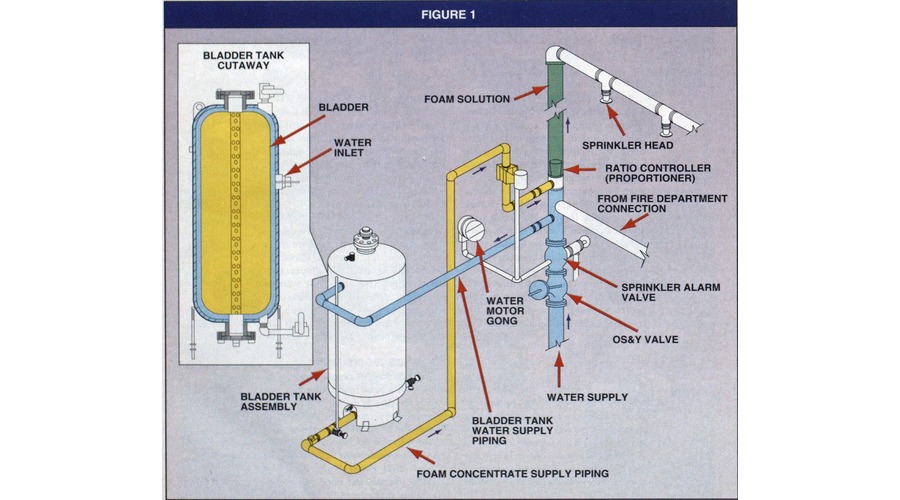
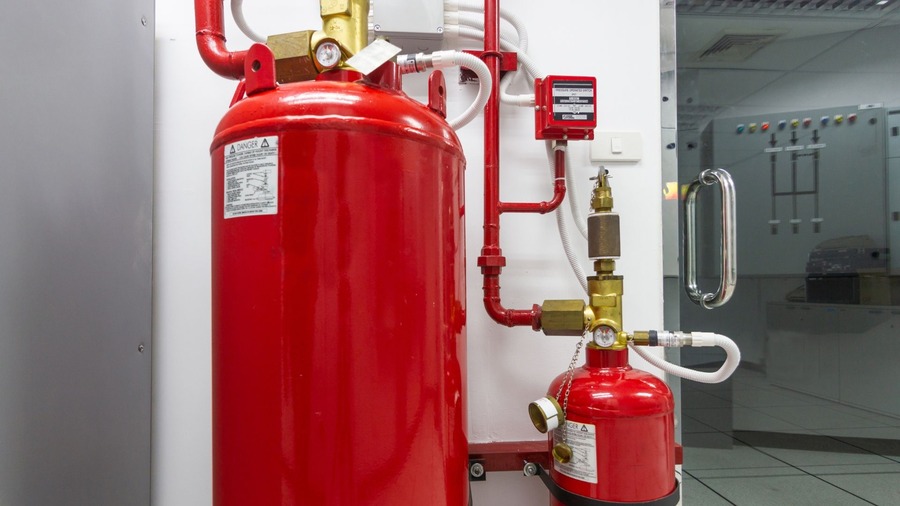
Facilities rely on recognized standards and local rules, so inspectors usually follow a core set of expectations. In the United States, many jurisdictions and contracts reference NFPA guidance, and Kord’s own CO2 overview points readers to NFPA 12 as the central standard for CO2 fire suppression systems. That same Kord resource explains the typical system makeup, including high pressure cylinders, piping, nozzles, detectors, control panels, alarms, and manual stations, all of which influence the inspection scope. ([kordfire.com](https://kordfire.com/understanding-co2-fire-suppression-systems/?utm_source=openai))
Therefore, the inspection requirement is not one generic task. Instead, it becomes a set of actions tied to the system type, layout, and components. For example, a clean agent style approach does not automatically apply to carbon dioxide the same way. CO2 uses cylinders, valves, piping, detection interfaces, and discharge hardware, and each part has its own risk profile. Kord Fire Protection helps facilities map these requirements to real equipment and real access constraints, so inspections stay accurate and repeatable.
Why the standard matters in day to day service
The reason standards matter is simple. They turn “this looks fine” into documented verification. A cylinder bank may appear normal from ten feet away, but the inspection still needs to confirm the cylinders are secure, components are in condition for service, and associated alarms and releases remain coordinated. Without that discipline, a facility is basically relying on optimism, and optimism has never been listed as an approved extinguishing agent.
Inspection scope: what techs must verify
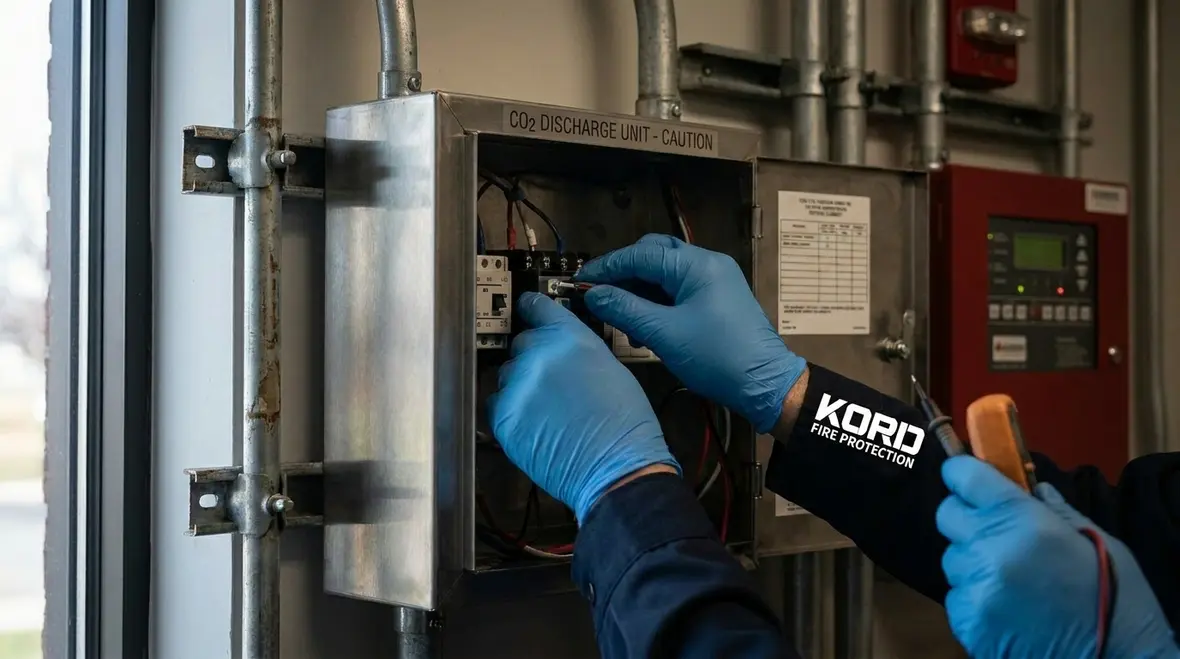
During a CO2 fire suppression inspection, technicians typically confirm performance, physical condition, and readiness. They also look for the small things that quietly fail systems. A bent conduit cover can hide a loose connection. A painted over label can delay proper response. A stuck control switch can turn “automatic” into “guess work.”
- Detection and control: confirm the system interfaces with alarms, panels, and release circuits as designed
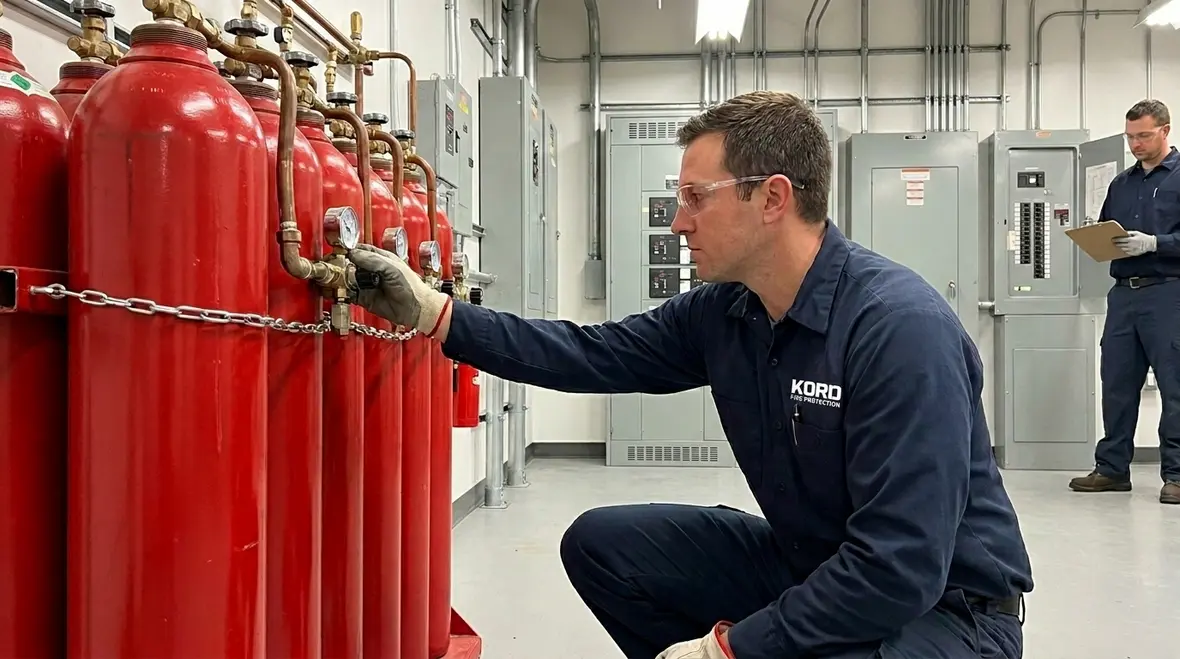
- Pressure and cylinder status: verify that cylinder pressure readings and conditions match expectations and that cylinders sit securely
- Valve and discharge components: inspect for corrosion, leaks, and damage around valves, fittings, and piping
- Cleanliness and obstruction checks: ensure discharge nozzles and air pathways do not block flow due to stored materials or buildup
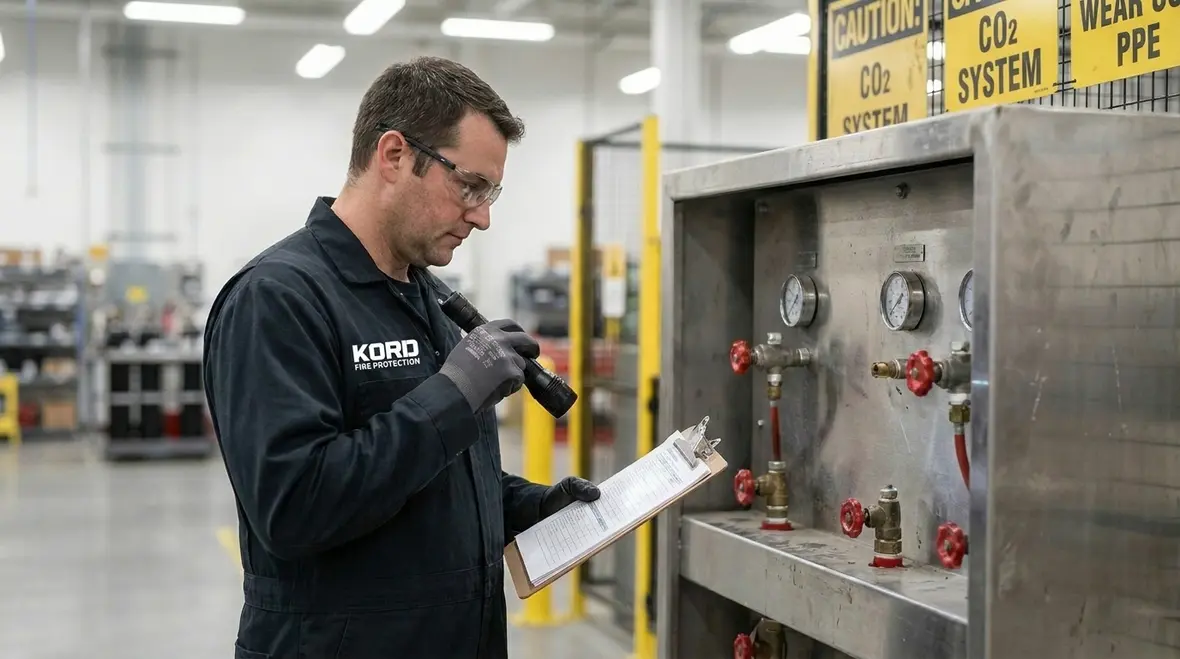
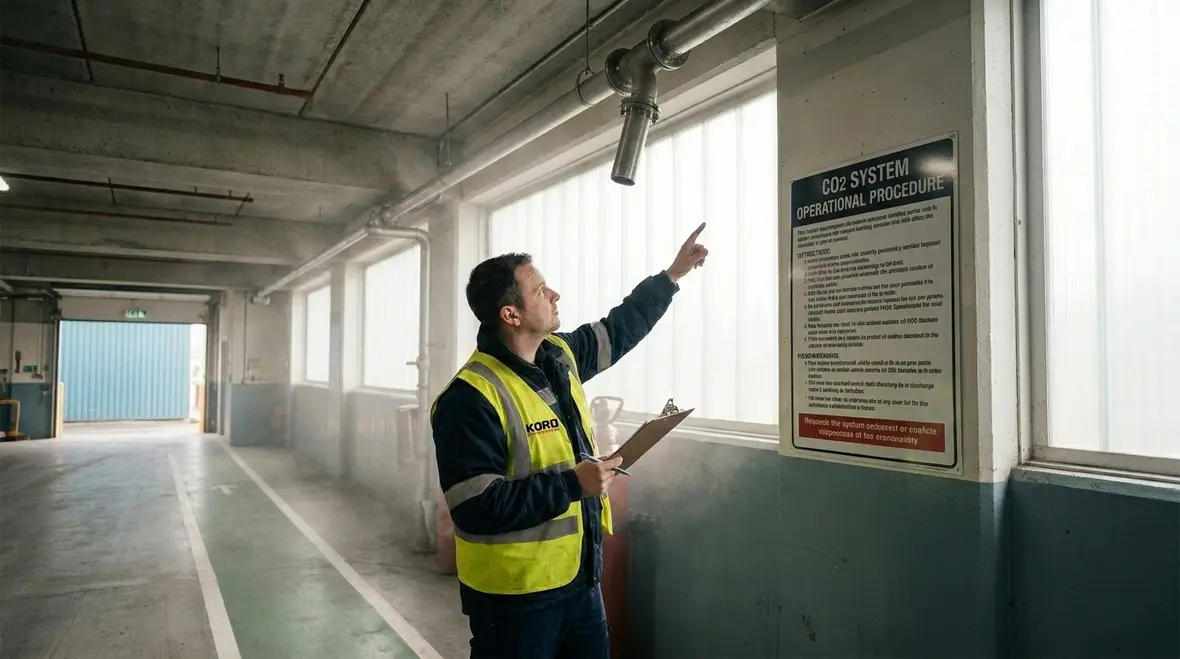
- Signage and instructions: confirm hazard labels and operating instructions are present, legible, and consistent
Then, the tech records results in a clear report. That report matters because it becomes evidence for compliance, and it becomes a roadmap for next steps. Kord Fire Protection can standardize reporting and help teams close gaps before the next inspection cycle arrives like a surprise pop quiz.
Kord’s article on CO2 fire suppression activation in emergencies is also helpful here because it walks through how detection, panel response, valve release, and nozzle discharge are meant to work together during a real event. That activation sequence gives inspection teams a practical lens for evaluating whether devices and interfaces are still ready to do their jobs. ([kordfire.com](https://kordfire.com/co2-fire-suppression-activation-in-emergencies-explained/?utm_source=openai))
The little problems that become expensive ones
A big part of competent inspection work is noticing what everyone else walks past. Missing pins, faded signage, minor corrosion, poor access, and undocumented room changes may look small on their own. Together, they can create the kind of layered failure that only becomes obvious after someone really wishes it had been caught sooner.
Common CO2 inspection intervals and documentation expectations
Many facilities set recurring inspection cycles based on contract language, local authority input, and the manufacturer’s service guidance. However, the schedule often has multiple layers: periodic visual checks, scheduled functional checks, and more involved maintenance over time. Because CO2 is stored under pressure and designed for rapid discharge, documentation must reflect both the “what” and the “how” of the inspection.
- Dates and times of inspections
- System identification and location details
- Results for each inspected component
- Measurements taken, where applicable
- Observed impairments and corrective actions taken or recommended
Moreover, good recordkeeping helps reduce downtime. Instead of arguing about last year’s notes, a facility can review the latest status and make targeted fixes. Kord Fire Protection supports this process with organized documentation and a service approach that focuses on action, not paperwork theater.
Why documentation pulls more weight than people think
A thorough report does more than prove a visit happened. It helps maintenance teams compare conditions over time, spot repeat issues, plan shutdown windows, and show stakeholders that corrective work is not being invented on the spot. Good records are basically the difference between a service history and a mystery novel.
Functional and discharge readiness: what matters most
A strong CO2 fire suppression inspection does not stop at looking. It also evaluates readiness. That usually includes verifying that the control logic will respond properly and that the system can release as intended. Inspectors commonly focus on release pathways, alarm interfaces, and any interlocks that could delay discharge.
When the system includes detection zones, inspectors verify correct wiring, device condition, and interface health. If a release interface depends on a specific sequence, then the inspection should confirm that sequence operates the way the design expects. In addition, technicians often check that access controls and maintenance bypasses do not remain in states that prevent normal operation.
Kord’s article on CO2 fire suppression system safety and alarms reinforces why alarms, safety interlocks, evacuation signaling, and clear exit paths are essential parts of the bigger readiness picture. In other words, a system is not truly ready if it can discharge but cannot warn people properly beforehand. ([kordfire.com](https://kordfire.com/co2-fire-suppression-system-safety-and-alarms/?utm_source=openai))
Finally, readiness includes practical items. Are egress pathways clear? Are discharge signs accurate for the actual room layout? Are there any modifications since the last service that could interfere with flow? Kord Fire Protection brings that “system in the real world” mindset, which keeps the inspection grounded in how people use the space day to day.
Troubleshooting findings: what technicians report and fix
Most inspections uncover at least one issue, even if it is minor. That is not a failure, it is a warning label on the road before the accident. Common findings include corrosion on exposed metal parts, damaged tamper seals, mismatched or faded labels, loose mounting hardware, and detection devices that drift out of normal ranges.
Technicians also watch for changes that came from renovations. A new rack layout can affect discharge coverage. A new door can alter airflow patterns. A reconfigured control panel can create an interface mismatch. Therefore, inspection outcomes should include not only “what is wrong,” but also “what caused it” when possible.
Kord Fire Protection can help facilities translate findings into clear corrective actions. For example, instead of vague notes like “inspect valves,” a good service partner will specify the component, the risk, and the next step. That approach reduces guess work and keeps maintenance aligned with safety outcomes.
Better findings lead to better decisions
The best inspection reports do not bury the useful part under a mountain of vague language. They separate urgent impairments from routine corrections, explain how each issue affects readiness, and make it easier for managers to act before minor deficiencies become major project line items.
How Kord Fire Protection helps beyond inspection
Some vendors treat CO2 service as a one time visit. Kord Fire Protection treats it like an ongoing safety program. Because systems do not fail only due to age, they fail due to neglect, drift, and small changes stacking up over time. In other words, the system might not be breaking today, but it could be on a path to breaking tomorrow, and tomorrow always shows up when no one is ready.
- Service planning: aligning inspection needs with facility schedules and shutdown constraints
- Clear remediation: prioritizing repairs based on impact to release readiness and compliance
- Coordination support: helping teams work through access, documentation, and follow up tasks
- Ongoing system awareness: monitoring for patterns across inspections so issues do not repeat
If you want a broader look at how CO2 fits within larger hazard protection strategies, Kord’s fire suppression system types guide and its main fire suppression services page help connect inspection planning to long term design, maintenance, and service decisions. Those pages are useful near the end of the process, when the next step is not just fixing one item but improving the overall protection program. ([kordfire.com](https://kordfire.com/fire-suppression-system-types-explained/?utm_source=openai))
For facilities specifically evaluating carbon dioxide solutions, Kord also has a dedicated CO2 fire suppression systems page worth reviewing if it is part of your planning or upgrade path. And if your site uses multiple suppression technologies, Kord’s service resources can help align inspection work with the broader life safety picture instead of treating each system like an isolated island.
FAQ about CO2 fire suppression inspection
Summary and next step
A reliable CO2 fire suppression inspection protects people, assets, and compliance goals, but it only works when the right checks happen at the right time. Facilities benefit when inspections include cylinder readiness, control interfaces, discharge components, and room conditions, plus clear documentation. Kord Fire Protection can act as a vital partner by turning inspection findings into prioritized actions that reduce downtime and risk.
If a CO2 system inspection is on the calendar, the smart next step is to connect with Kord through its fire suppression services team and review whether your current documentation, room conditions, and release readiness truly match the system’s design intent. Because surprises are great for birthday parties and terrible for life safety systems. ([kordfire.com](https://kordfire.com/fire-suppression/?utm_source=openai))

Join Our Newsletter!
Get the latest fire safety tips delivered straight to your inbox From our Newsletter.