Clean Agent Standard for Fire Suppression Systems
Clean Agent Standard: What the Standard Is Trying to Prevent
Within the first few minutes of any serious fire protection discussion, the clean agent standard enters the room like a seasoned firefighter who has seen it all. It exists for one reason above all else: to prevent catastrophic damage from fire while protecting people, property, and the environment. Specifically, it sets clear rules for how clean agent systems are designed, installed, tested, and maintained so they suppress fire without leaving residue, harming occupants, or failing at the worst possible moment. As Kord Fire Protection technicians often explain to clients, the standard is not red tape. It is a safety net woven from hard lessons, real world incidents, and decades of engineering experience.
Now, although the phrase may sound technical, the goal is simple. Stop fires fast. Protect critical assets. Keep people safe. And do it all without turning a server room into a swimming pool or a museum archive into a smoky memory.
Why Clean Agent Systems Exist in the First Place
Traditional fire suppression methods, such as water based sprinklers, work well in many settings. However, in areas filled with sensitive electronics, priceless art, or vital records, water can cause damage that rivals the fire itself. Imagine pouring gallons of water over a data center powering a hospital. The fire might be out, but so are the life support systems. That is not exactly a win.
Therefore, clean agent systems were developed to extinguish fires without leaving residue. They use gases or chemical agents that interrupt the combustion process. As a result, once the fire is suppressed, there is little to no cleanup required. Equipment can often return to operation quickly.
However, speed and cleanliness alone are not enough. These systems must discharge at precise concentrations. They must distribute evenly. They must hold the agent in the protected space long enough to prevent reignition. This is where the clean agent standard steps in. It ensures that every system functions as intended under real conditions, not just in a laboratory brochure.
Kord Fire Protection technicians frequently point out that most system failures do not come from bad intentions. Instead, they come from small oversights. A miscalculated room volume. An unnoticed leak. An obstructed nozzle. The standard anticipates these problems and addresses them before flames ever appear. For a deeper dive into how clean agents behave in critical spaces, you can see how Kord approaches clean agent fire suppression for critical equipment.
What Is the Clean Agent Standard Trying to Prevent?
At its core, the clean agent standard is trying to prevent four major risks: ineffective fire suppression, harm to occupants, damage to assets, and environmental impact. Each of these carries serious consequences. Moreover, each has occurred in real world incidents that shaped the rules in place today.
1. Ineffective Fire Suppression
First, ineffective suppression can allow a fire to reignite after discharge. If the concentration drops too quickly, embers can flare back to life. Consequently, the system must maintain a specific agent level for a defined hold time. This is not guesswork. It is calculated based on room integrity and agent type, as outlined in standards like NFPA 2001 guidelines for clean agent systems.
2. Harm to Occupants
Second, occupant safety remains a top concern. While clean agents are designed to be safe at approved levels, excessive concentrations can pose risks. Therefore, the standard defines maximum exposure limits and requires alarms and delays before discharge. This gives people time to exit safely.
3. Damage to Assets
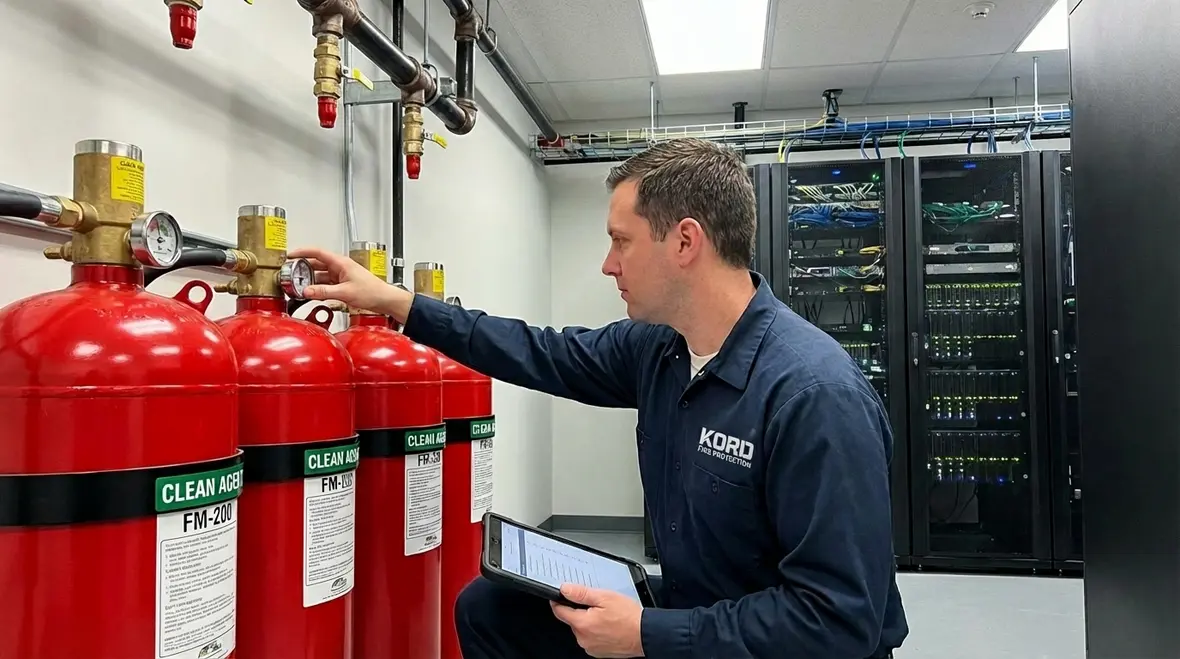
Third, asset protection drives much of the engineering. If the agent distribution is uneven, parts of the room may not receive enough concentration to suppress flames. As a result, the standard requires nozzle placement calculations and flow modeling so that clean agents like FM 200, Novec 1230, or inert gas blends can do their job consistently and thoroughly.
4. Environmental Impact
Finally, environmental responsibility plays a growing role. Some agents have global warming potential. Thus, regulations and the clean agent standard work together to limit environmental impact and promote responsible handling. Newer options, such as eco-focused agents like Fluoro-K, are designed with reduced environmental impact in mind while still providing fast, clean suppression.
Kord Fire Protection technicians often explain this in plain terms. The standard prevents fires from winning, people from getting hurt, businesses from shutting down, and the planet from paying the price. That is a lot of responsibility for one set of guidelines. Fortunately, it carries the weight well.
How the Clean Agent Standard Shapes System Design
Design is where prevention truly begins. Before a single cylinder is installed, engineers must evaluate the protected space. They measure volume, ceiling height, obstructions, and ventilation paths. Meanwhile, they consider the type of hazard present, whether it is electrical equipment, flammable liquids, or archival storage.
Because every room behaves differently during discharge, the standard requires careful calculations. The goal is to reach and maintain the proper concentration within ten seconds for most hazards. In addition, the agent must remain in the enclosure for a specific duration, often ten minutes or more.
Room integrity testing becomes essential. If a space leaks like a screen door on a submarine, the agent will escape too quickly. Therefore, technicians perform door fan tests to measure leakage. If necessary, they recommend sealing improvements before system approval. Kord goes deeper into this topic in their guide on what room integrity testing is and why it matters.
Kord Fire Protection technicians emphasize that this stage prevents disappointment later. As they sometimes joke, it is better to discover a leak during testing than during a fire when everyone is holding their breath and hoping the system works like it did in the sales presentation.
Installation and Commissioning: Precision Over Guesswork
Once design is complete, installation must follow strict guidelines. Piping must match approved layouts. Nozzles must remain unobstructed. Cylinders must be secured and labeled correctly. Although this may sound straightforward, even small deviations can alter discharge performance.
Consequently, the clean agent standard outlines acceptance testing procedures. These tests verify that detection systems activate correctly, alarms function, and release mechanisms operate as intended. In addition, technicians confirm that manual pull stations and abort switches respond properly.
Kord Fire Protection technicians often walk clients through this process step by step. They explain what happens when a detector senses smoke. They describe the countdown before discharge. They demonstrate how the agent releases and disperses. By doing so, they remove uncertainty. People protect what they understand, and they trust what they see tested.
Moreover, commissioning documents provide a record of compliance. This paperwork is not busywork. It proves that the system meets the clean agent standard and stands ready for inspection or audit.
Inspection and Maintenance: Guarding Against Silent Failure
Even the best designed system can drift out of compliance over time. Valves can loosen. Pressure can drop. Construction changes can alter room volume. Therefore, routine inspection and maintenance are not optional.
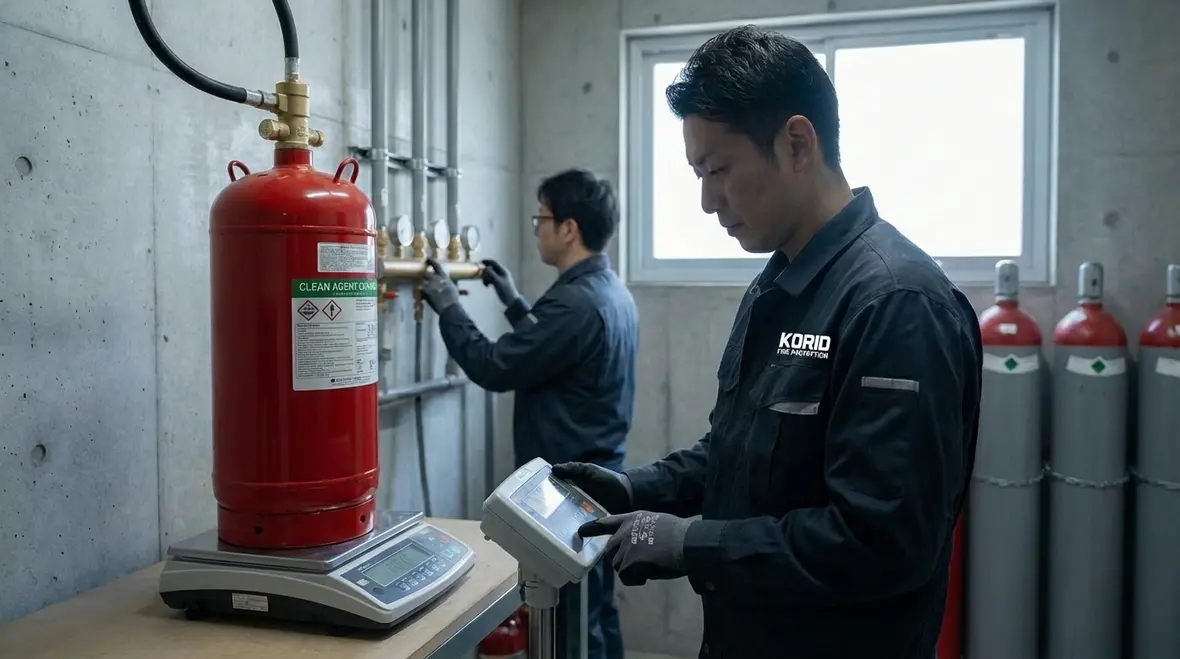
The clean agent standard sets intervals for visual inspections, cylinder weighing, pressure checks, and control panel testing. In addition, it requires documentation of each service visit. These records show that the system remains capable of delivering the required concentration.
Kord Fire Protection technicians often compare maintenance to regular health checkups. A person may feel fine, yet a hidden issue can develop quietly. Similarly, a suppression system may appear intact while pressure slowly drops below acceptable limits. Routine checks catch these issues early.
Furthermore, renovations present hidden risks. If a company adds a drop ceiling or removes a wall, the room volume changes. As a result, the original calculations may no longer meet the clean agent standard. Technicians review these changes and adjust the system if needed. Fire protection is not a set it and forget it solution. It evolves with the building.
Common Misconceptions About Clean Agent Protection
Despite clear guidelines, myths persist. Some believe clean agents remove all oxygen from a room. In reality, most systems reduce oxygen only slightly or interrupt the chemical chain reaction of fire. Occupants can safely exit during the delay period.
Others assume these systems require no maintenance because they are rarely used. However, inactivity can be deceptive. Just like a car left in a garage for years, components can degrade without obvious signs. Therefore, regular service remains critical.
Another misconception suggests that any contractor can install a system as long as cylinders and pipes are present. In truth, compliance with the clean agent standard demands training and expertise. Small calculation errors can have large consequences.
Kord Fire Protection technicians address these misunderstandings directly. They explain the science in clear language. Occasionally, they sprinkle in humor to lighten the mood. After all, fire protection discussions can feel heavy. A well timed joke about movie scenes where sprinklers activate from burnt popcorn can make the learning process more human.
Side by Side Comparison: Standard Requirements and Real World Risks
To better understand the impact, consider the following dual column overview. On one side are key requirements drawn from the clean agent standard. On the other are the risks they aim to prevent.
Column One: Standard Requirements
- Accurate room volume calculations
- Verified agent concentration levels
- Minimum hold time for suppression
- Pre discharge alarms and time delays
- Routine inspection and pressure checks
- Room integrity testing
Column Two: Risks Prevented
- Insufficient agent leading to reignition
- Uneven distribution and hidden fire pockets
- Agent loss through leaks
- Occupant exposure without warning
- System failure due to low pressure
- Non compliance during inspections
When viewed side by side, the purpose becomes clear. Every rule answers a specific risk. Every calculation blocks a known failure. The clean agent standard does not exist to complicate projects. It exists because someone, somewhere, experienced what happens without those safeguards.
Environmental and Regulatory Considerations
In recent years, environmental impact has gained attention. Some legacy agents carried high global warming potential. Consequently, manufacturers developed alternatives with lower environmental effects. Regulations now guide the use, storage, and disposal of certain agents.
The clean agent standard aligns with these regulations by promoting responsible system design and handling. Technicians must prevent accidental releases during maintenance. In addition, they must recover and recycle agents when decommissioning systems. Articles like Kord’s update on Halon fire suppression rules and updates for 2026 help building owners understand how older systems compare with today’s cleaner alternatives.
Kord Fire Protection technicians stress that compliance is not just about passing inspections. It reflects a broader commitment to safety and stewardship. Protecting a data center while harming the environment would miss the larger point. True protection considers both immediate and long term impact.
FAQ: Clean Agent Systems and Compliance
Getting Clean Agent Protection Right
If you are evaluating whether your current system meets today’s clean agent standard, or you are planning protection for a new critical space, partnering with a qualified provider makes all the difference. From design calculations to room integrity testing and ongoing inspections, each step builds the reliability you are counting on in an emergency. To see how these pieces come together, explore Kord’s overview of clean agent fire suppression services and how they support everything from data centers to healthcare facilities.
Conclusion: Prevention Is Always the Better Story
Fires make dramatic headlines. Prevention rarely does. Yet behind every quiet data center and protected archive stands a system built on the clean agent standard and maintained by skilled professionals. Kord Fire Protection technicians help businesses understand, comply, and stay ready. They translate dense standards and engineering calculations into plain language so building owners and managers know exactly what their systems are designed to do.
If safeguarding people, property, and continuity matters, now is the time to review your system, ask questions, and ensure it meets today’s requirements before tomorrow tests it. Whether you need new design, upgrades, or simply a fresh set of eyes on your current setup, Kord’s team can help you align with the clean agent standard and broader fire protection strategy. When the story ends with “the fire went out and operations continued,” everyone wins.
Ready to take the next step? Reach out to Kord Fire Protection to discuss clean agent fire suppression solutions tailored to your facility and risk profile.
Know Your Weapon Before You Fight the Flame
Kord Fire Protection is your go-to when it comes to all things fire protection. For over 20 years, we’ve been serving Southern California with the quality service and equipment to keep your home or business safe at all times. Our competitive prices reflect our unwavering commitment to protecting what matters most in the event of a fire emergency. Give us a call, send an email, or use that form!

Join Our Newsletter!
Get the latest fire safety tips delivered straight to your inbox From our Newsletter.