NFPA 13D vs 13R Residential Sprinkler Guide
NFPA 13D vs 13R: Choosing the Right Residential Sprinkler Standard
When it comes to nfpa 13d vs 13r, the choice is not just about pipes and sprinkler heads. It is about protecting families, preserving property, and meeting code without overspending. Builders, property owners, and developers often hear both terms tossed around like they are interchangeable. They are not. Each standard serves a different type of residential occupancy and carries unique design requirements.
Kord Fire Protection technicians often explain it this way: picking the right sprinkler standard is like choosing the right seatbelt. Both protect you, but they are built for different vehicles. Therefore, understanding the differences between these residential sprinkler standards is essential before the first pipe is cut.
This guide walks through the distinctions, applications, costs, and compliance factors. Along the way, the details will unfold in clear language, steady and sure.

Understanding the Purpose Behind Each Standard
Before comparing requirements, it helps to understand why these standards exist in the first place. After all, codes are written in response to risk.
NFPA 13D was developed specifically for one and two family dwellings and manufactured homes. Its primary goal is life safety. In other words, it focuses on giving occupants time to escape during a fire. It does not aim to fully suppress every possible fire scenario. Instead, it controls a fire long enough for people to get out safely.
NFPA 13R, on the other hand, applies to low rise residential occupancies up to four stories in height. This includes apartments, condominiums, and certain residential facilities. While life safety remains the core objective, this standard also places greater emphasis on protecting property and preventing fire spread between units.
As Kord Fire Protection, we often explain during consultations, the intent behind the code shapes everything else. Therefore, the size of the building and the number of occupants usually determine which path makes sense.
For owners who want a deeper background on residential sprinklers in general, resources like Kord Fire’s overview of home fire sprinkler systems provide useful context on how these systems save lives and protect property over the long term.
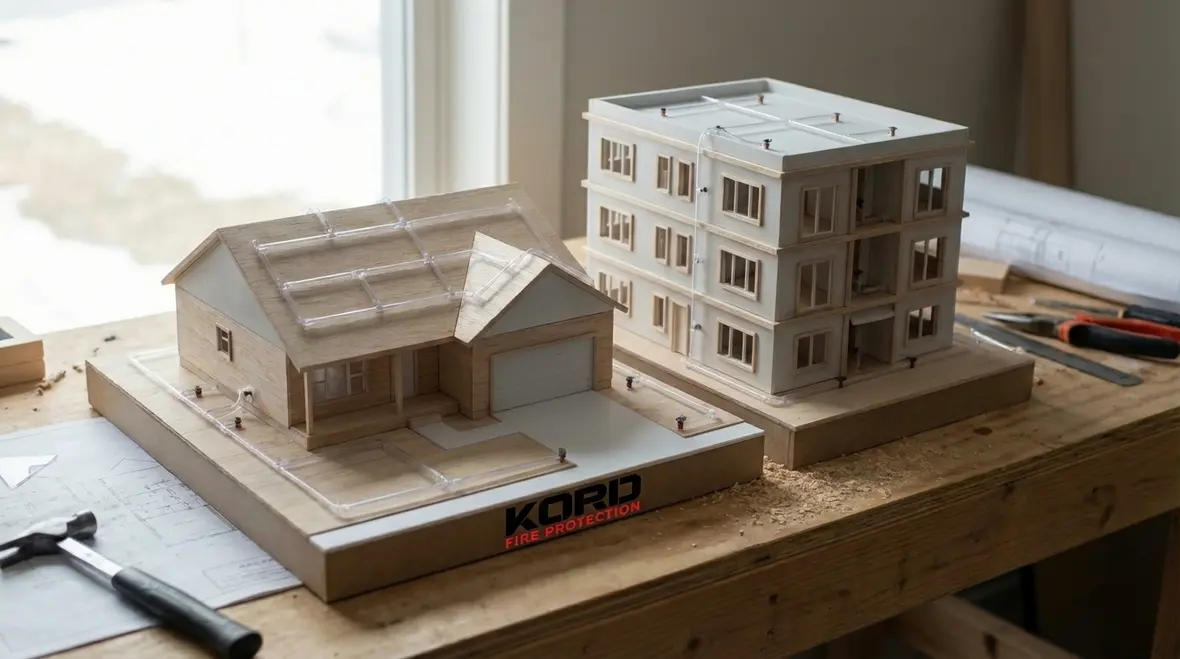
NFPA 13D vs 13R Key Differences Explained Clearly
What are the real differences between these two residential sprinkler standards? The answer lies in scope, design criteria, and system complexity.
Below is a simplified comparison to clarify the distinctions.
NFPA 13D
- Designed for one and two family homes and qualifying townhomes
- Focus on life safety
- Limited area of sprinkler coverage allowed
- Simpler hydraulic calculations
- Often connected to domestic water supply
NFPA 13R
- Designed for low rise multi family buildings
- Focus on life safety and property protection
- Broader coverage requirements
- More complex system design and calculations
- May require dedicated fire service line
Although both standards require sprinklers in living areas, they differ in where sprinklers can be omitted. For example, NFPA 13D allows certain concealed spaces and small bathrooms to remain unsprinklered. In contrast, 13R has stricter rules, especially in common areas and vertical shafts.
Additionally, water supply demands vary. NFPA 13D systems typically require a ten minute water supply. NFPA 13R systems generally require thirty minutes. That difference alone affects tank sizing, pump selection, and overall cost.
Therefore, the debate of nfpa 13d vs 13r is not academic. It directly impacts installation, inspection, and long term maintenance.
How this fits into the bigger NFPA 13 picture
NFPA 13D and 13R sit alongside the broader NFPA 13 standard, which covers larger and more complex structures. Together, these three standards provide a complete framework for everything from small homes to high rise buildings, and Kord Fire’s NFPA 13 overview helps tie those pieces together for owners and design teams.
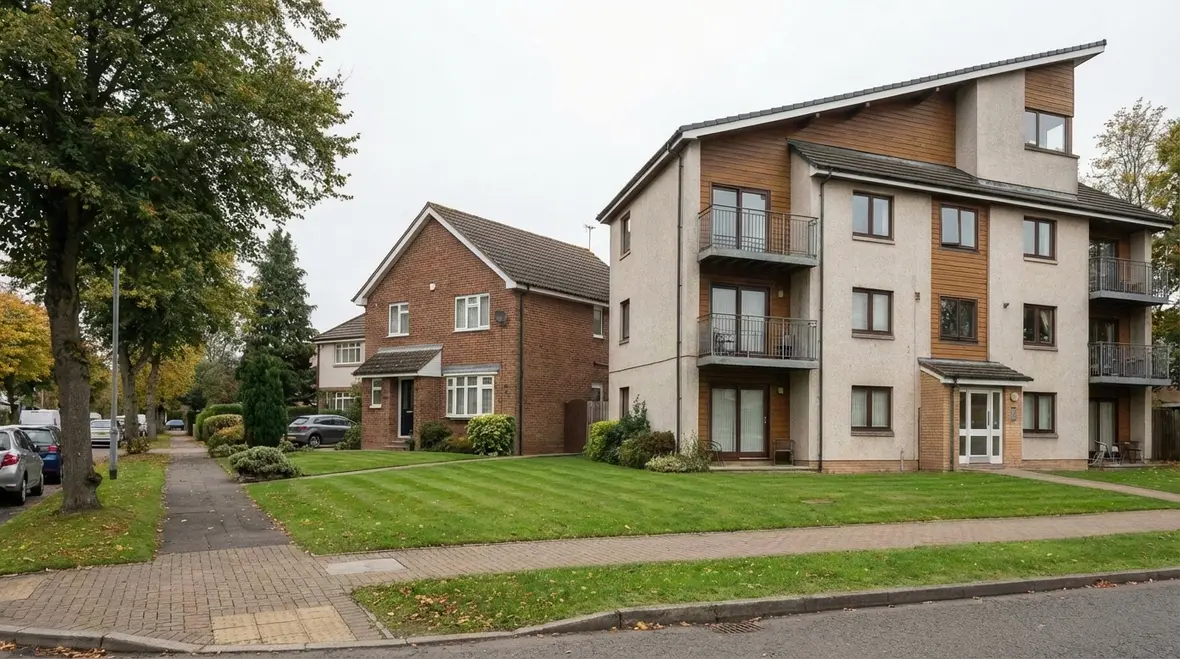
How Building Type and Height Influence the Decision
Ask a straightforward question such as, “Which sprinkler standard does this building need?” and the answer usually begins with occupancy classification.
For detached homes, duplexes, and townhouses that meet specific separation requirements, NFPA 13D is typically the correct choice. It keeps costs manageable while still delivering life saving protection. Consequently, many residential builders favor it for custom homes and small developments.
However, once a building reaches three or four stories and includes multiple dwelling units with shared corridors, NFPA 13R often becomes mandatory. Because residents share walls and ceilings, the fire risk spreads beyond a single household. Therefore, the system must address that added complexity.
Kord Fire Protection technicians frequently walk developers through this decision. They review architectural plans, confirm occupancy type, and coordinate with local code officials. As they calmly put it, “The building tells us which standard it needs.” And no, it does not whisper in the night. It is all in the drawings.
Design and Installation Requirements That Matter
Water Supply
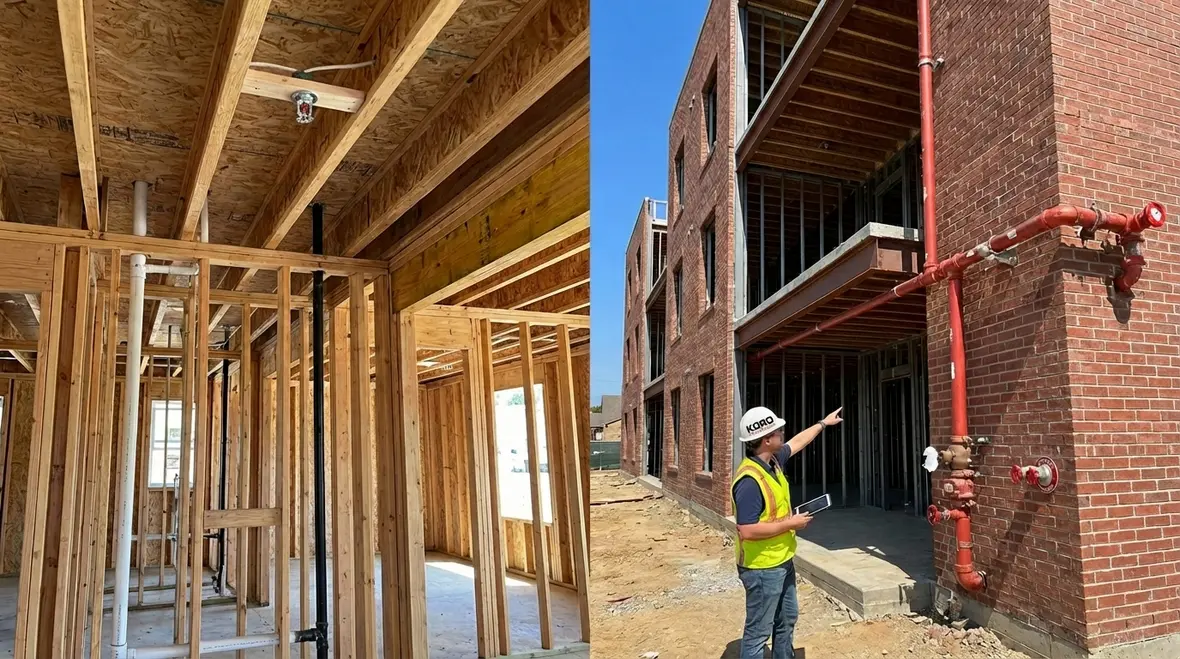
NFPA 13D systems often rely on the domestic water service line. In many homes, the sprinkler piping integrates with the plumbing system. As a result, installation can be efficient and less intrusive. However, flow testing still matters. Without adequate pressure and volume, even the best layout will fail to perform.
NFPA 13R systems, in contrast, may require a dedicated fire service line. Additionally, backflow prevention and fire department connections are more common. These elements increase cost but enhance reliability in multi unit buildings.
Sprinkler Coverage
NFPA 13D permits omission in certain areas such as small closets and attached garages under specific conditions. This flexibility keeps systems simpler. Meanwhile, 13R generally requires sprinklers in corridors, lobbies, and other shared spaces. Consequently, piping networks expand and coordination with other trades becomes more detailed.
Hydraulic Calculations
Design calculations under 13D typically assume the operation of the two most demanding sprinklers. Under 13R, the calculation area often increases. Therefore, pipe sizing and water demand rise accordingly.
To the untrained eye, these differences may look minor. Yet to experienced professionals, they shape the entire project timeline. Kord Fire Protection technicians often remind clients that proper design on paper prevents expensive surprises in the field. And surprises, as everyone knows, are best reserved for birthday parties.
Cost Considerations and Long Term Value
Money enters the conversation sooner or later. It always does.
Generally, NFPA 13D systems cost less to install than 13R systems. They use fewer materials, require shorter water supply duration, and involve simpler calculations. For single family homes, this makes financial sense.
However, cost should not be viewed in isolation. For multi family buildings, choosing the wrong standard can lead to failed inspections, redesign fees, and construction delays. Therefore, aligning the system with code from the beginning saves both time and money.
Insurance premiums also play a role. In some cases, properly installed sprinkler systems reduce insurance costs. Over time, that reduction offsets part of the initial investment. Moreover, enhanced fire protection increases property value and market appeal.
In discussions about nfpa 13d vs 13r, Kord Fire Protection technicians encourage owners to think long term. A sprinkler system is not just a code requirement. It is a safeguard that stands ready day and night, quietly waiting to do its job.
What Do Code Officials and Inspectors Look For?
Code compliance does not end with installation. Inspectors review design documents, hydraulic calculations, material listings, and field workmanship.
For NFPA 13D systems, inspectors often verify:
- Proper sprinkler placement in sleeping areas and living spaces
- Correct pipe sizing based on calculated demand
- Reliable water supply for the required duration
- Approved residential sprinkler heads
For NFPA 13R systems, scrutiny may extend further. Inspectors typically examine:
- Coverage in common corridors and utility spaces
- Fire department connections
- Standpipe integration if required
- Backflow prevention assemblies
Because jurisdictions can amend national standards, local knowledge matters. Kord Fire Protection technicians stay current with regional code updates and coordinate directly with authorities having jurisdiction. As a result, projects move forward with fewer setbacks.
And yes, inspectors do have a keen eye. They miss very little. It is almost as if they trained with a superhero whose power is spotting unlisted fittings from fifty feet away.
Common Mistakes When Comparing Residential Sprinkler Standards
Despite clear guidelines, confusion persists. Several common mistakes appear again and again.
First, some assume that NFPA 13D offers the same level of property protection as 13R. It does not. Its goal centers on life safety. Therefore, expecting it to control every fire scenario in a multi unit building leads to unrealistic assumptions.
Second, others underestimate water supply requirements. They may assume that existing municipal pressure automatically satisfies either standard. However, without proper flow testing, that assumption can collapse quickly.
Third, builders sometimes delay sprinkler design until late in construction. Unfortunately, late coordination often leads to ceiling conflicts, soffit changes, and added cost. Early planning avoids these headaches.
When discussing nfpa 13d vs 13r with clients, Kord Fire Protection technicians emphasize proactive planning. They review structural layouts, ceiling heights, and utility routes early in the design phase. Consequently, installations proceed smoothly.
FAQ About NFPA 13D and NFPA 13R
Conclusion: Making the Right Choice with Confidence
Choosing between these two standards is not guesswork. It requires careful review of building type, height, occupancy, and water supply. With expert guidance from Kord Fire Protection technicians, property owners can move forward with clarity and confidence. The right system protects lives, meets code, and supports long term value. When safety and compliance matter, informed decisions make all the difference.
For residential and mixed use projects across Southern California, Kord Fire designs and installs NFPA compliant sprinkler systems tailored to your specific occupancy and code path. Reach out today and let seasoned professionals design protection that stands ready when it counts, or explore Kord Fire’s full range of fire protection services to see how sprinklers, alarms, suppression, and inspections work together as one cohesive safety strategy.
Know Your Weapon Before You Fight the Flame
Kord Fire Protection is your go-to when it comes to all things fire protection. For over 20 years, we’ve been serving Southern California with the quality service and equipment to keep your home or business safe at all times. Our competitive prices reflect our unwavering commitment to protecting what matters most in the event of a fire emergency. Give us a call, send an email, or use that form!

Join Our Newsletter!
Get the latest fire safety tips delivered straight to your inbox From our Newsletter.