Clean Agent Fire Suppression Chemicals and Kord Protection
Fire safety teams often get stuck on one big question: what actually goes into the system, and how does it work without causing extra problems afterward. That is where clean agent fire suppression chemicals enter the conversation in a serious, practical way. These agents help control a fire fast while aiming to reduce damage to sensitive equipment, paperwork, and the stuff companies cannot just replace next Tuesday. And yes, while every fire event is not a movie scene, the goal still feels like one: stop the blaze before it becomes the villain of the week.
Below, this guide breaks down what clean agents are, how they work, where they fit best, and how Kord Fire Protection can become a vital partner to keep these systems reliable from inspection to discharge.
What clean agent fire suppression chemicals do in real buildings
Clean agent fire suppression chemicals are designed to put out fires without leaving heavy residue. Instead of flooding an area with foam or creating a thick layer of residue, these agents work primarily by interfering with the fire process. As a result, they can help lower the risk of equipment damage and cleanup costs.
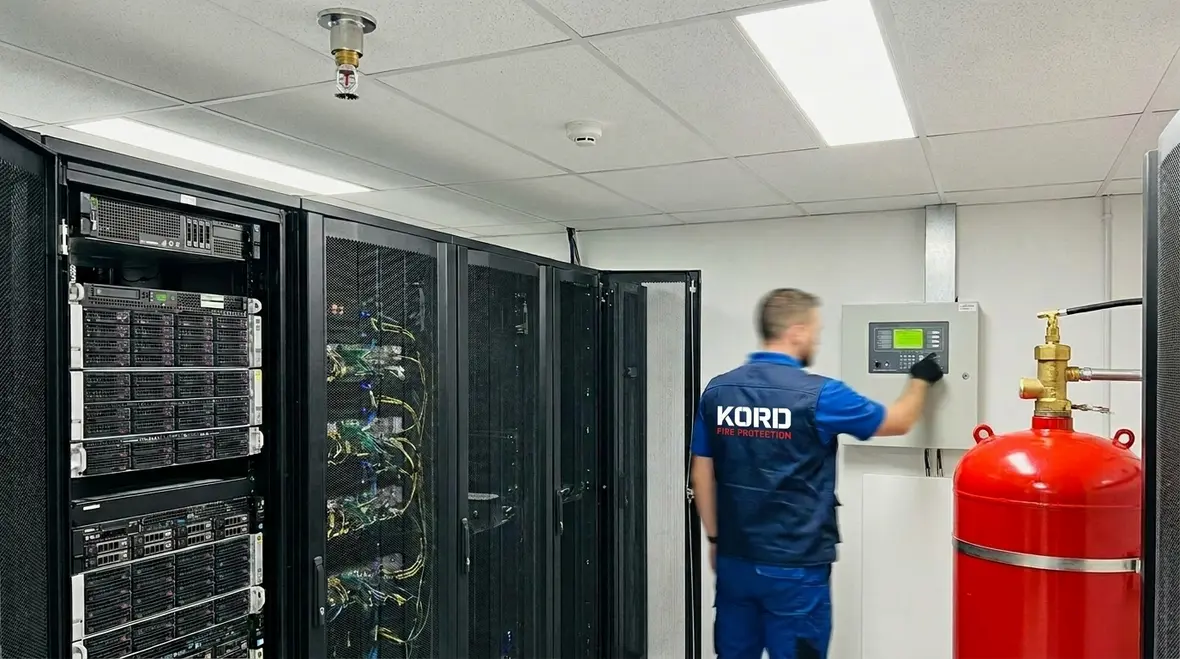
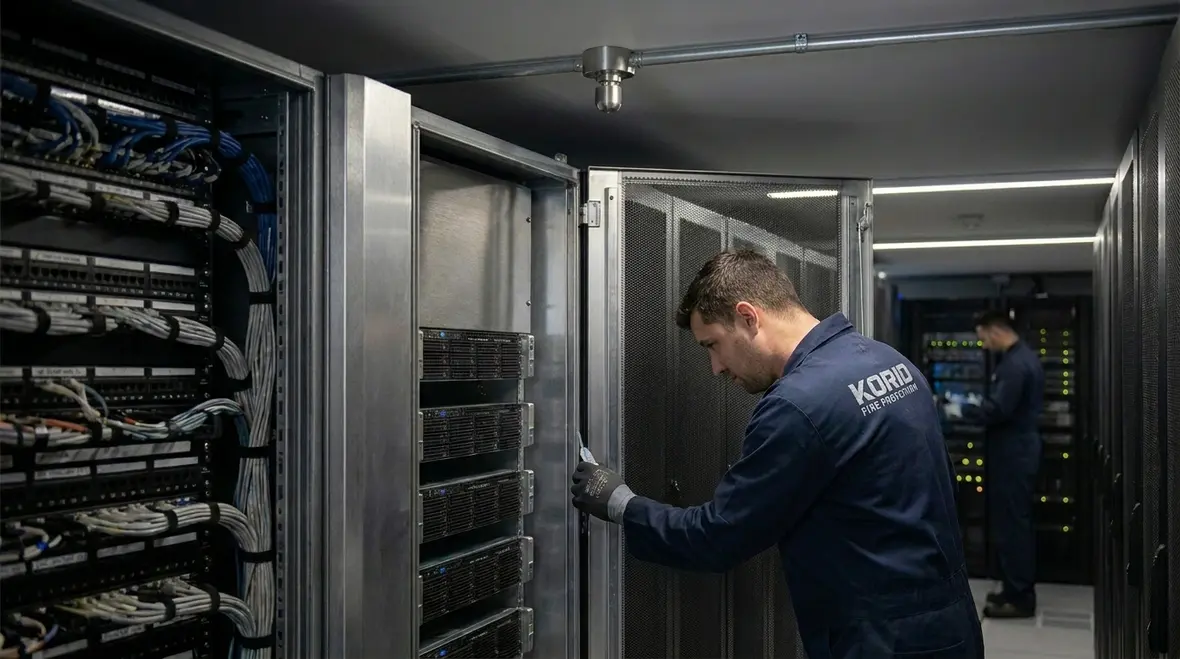
Additionally, these systems often matter most in spaces where downtime is expensive and mess is even more expensive. Think data rooms, server closets, control panels, archives, and certain industrial control areas. In those places, “clean” is not marketing fluff. It is a measurable goal.
Because every facility has unique hazards, trained teams also match the right agent type, system design, and discharge strategy to the fire load. Otherwise, the system can be the right idea with the wrong setup. And nobody wants their fire system to feel like a lucky guess.
Where these systems usually make the most sense
This is why clean agent systems keep showing up in high value, high sensitivity environments. Kord Fire Protection highlights these systems for computer rooms, data centers, libraries, server rooms, telecommunications centers, and similar spaces where water could cause as much trouble as the fire itself. That practical fit is a major reason teams keep coming back to clean agent solutions when asset protection is not optional. Kord’s clean agent fire suppression service page lays out where these systems are commonly used and why they remain a strong choice for critical assets. ([kordfire.com](https://kordfire.com/clean-agent-fire-suppression/?utm_source=openai))
How clean agents suppress flames and protect equipment
Clean agents typically extinguish fires by one of two main paths. First, some reduce oxygen available to the fire. Second, others disrupt the chemical reactions that let the flames continue. Either way, the agent slows down combustion, and soon the fire cannot sustain itself.
Moreover, the best designs account for airflow, enclosure tightness, and the time it takes for the agent to reach effective concentration. If a room leaks like a sieve, performance drops. So do not treat “protected room” as a vibe. It is a measured condition.
Clean agent systems also help protect assets that cannot tolerate water or messy alternatives. Therefore, they often support business continuity, especially when equipment sits at the center of operations. After the discharge, the cleanup effort can be far lighter than with other suppression methods, which means teams can focus on restoring service instead of scrubbing for days.
Kord Fire Protection explains that clean agents suppress fire either by absorbing heat or by interrupting the chemical chain reaction, which is exactly why they work so well around sensitive electronics. Their guidance on protecting critical equipment emphasizes the same point: the goal is fast suppression without leaving behind moisture, debris, or residue that creates a second disaster after the first one. ([kordfire.com](https://kordfire.com/clean-agent-fire-suppression-for-critical-equipment/?utm_source=openai))
Why equipment protection changes the decision
Traditional suppression still has its place, but not every room can afford a soak first and questions later approach. In spaces filled with electronics, records, or control gear, the cleanup burden matters almost as much as the fire event. That is why clean agent protection often supports uptime, faster recovery, and less operational chaos. It is not just about extinguishment. It is about what the room looks like ten minutes later and whether anyone can get back to work without a mop, a dehumidifier, and a mild identity crisis.
Which types of clean agents get used and why
Different facilities choose different clean agent fire suppression chemicals based on hazard type, design constraints, and environmental requirements. As a rule, professionals evaluate the fire class, occupancy, room volume, and expected leakage conditions.
Common agent families include inert gases and halocarbon based agents, each with its own strengths. Inert options often rely on reducing oxygen levels, while halocarbon agents focus more on breaking the fire chemistry. In addition, some facilities require specific agent approval based on local rules and building standards.
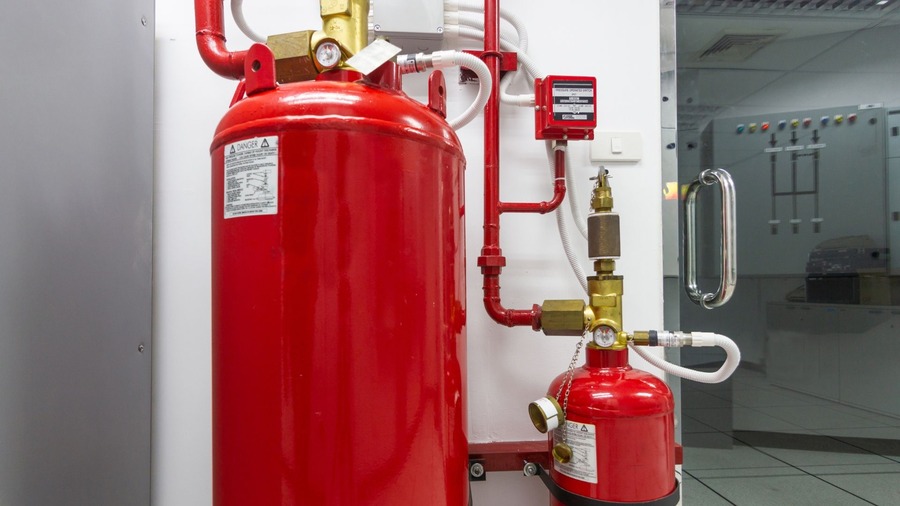
Importantly, the selection process does not stop at agent chemistry. It includes nozzle and valve compatibility, storage pressure needs, and how the system integrates with detection devices. In other words, a clean agent is only one piece of the puzzle. The full system must work as a single, coordinated team.
Kord’s clean agent services page specifically identifies agents and system types such as Fluoro-K (FK-5-1-12), FM-200 (HFC-227ea), Novec 1230 (FK-5-1-12), and Inergen (IG-541), while also stressing that these systems must be matched to the protected hazard and building conditions. Their FM-200 explainer further shows how one clean agent option is selected because it leaves no residue and is commonly applied where speed and equipment protection matter. ([kordfire.com](https://kordfire.com/clean-agent-fire-suppression/?utm_source=openai))
Agent choice is never the whole story
People sometimes talk about agent selection like it is the only choice that matters. It is not. The cylinders, pipe layout, nozzles, release controls, detection sequence, and protected room conditions all shape performance. A fancy chemical in a sloppy system is still a sloppy system. That is not negativity. That is just how engineering ruins everyone’s shortcut fantasies.
System design and installation: where failures usually hide
Even when the right clean agent is chosen, poor design can still cause trouble. That is why installation quality matters as much as the agent itself. For example, a system needs correct pipe sizing, proper discharge distribution, and reliable detection and control logic.
Next, enclosure integrity must be verified. Doors, dampers, and seals affect how fast the concentration builds. If ventilation cycles run at the wrong time or fire dampers behave unexpectedly, the system may not hold agent concentration long enough. Therefore, teams must test ventilation behavior and confirm alarm and shutdown sequences.
Also, discharge strategy matters. Some spaces need multiple discharge zones, while others require specific flow patterns to avoid dead corners. And yes, even “small” design issues can become big in the real world. A loose fitting may not look dramatic, but it can ruin the timing when seconds matter.
Kord’s room integrity testing article makes this painfully clear in the most helpful way possible: a clean agent system only performs if the room can actually hold the agent concentration long enough to do the job. Their clean agent standard article also points to common failure causes like miscalculated room volume, leaks, or obstructed discharge conditions, all of which can turn a good concept into a bad result. ([kordfire.com](https://kordfire.com/clean-agent-suppression-system-and-room-integrity-testing/?utm_source=openai))

Maintenance, testing, and inspections that keep protection ready
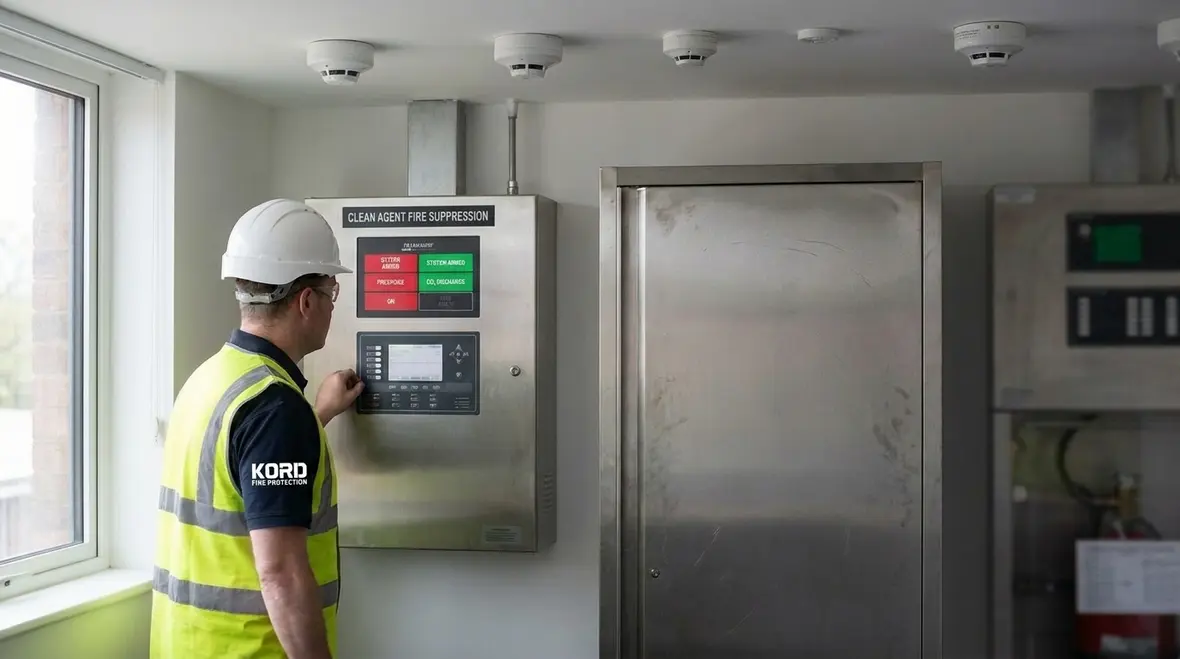
Clean agent systems work best when they stay ready, not when they simply exist. Regular inspections help ensure cylinders, pressure readings, valves, and detectors stay in spec. Additionally, testing verifies that alarms transmit properly and that control panels respond correctly.
Proper maintenance also reduces false alarms and prevents “surprise failures” during emergencies. For many organizations, the benefit is not only safety. It is peace of mind. When teams know their system will discharge as designed, they stop wondering and start planning.
That is where Kord Fire Protection becomes a vital partner. They help facilities manage documentation, coordinate scheduled service, and confirm system readiness with disciplined testing practices. In a world full of last minute fixes, that kind of consistency feels rare. And honestly, it should.
To make the process easier, Kord Fire Protection typically supports a service path that aligns with ongoing compliance needs, while also helping teams understand what to watch for in day to day operations. Kord’s clean agent standard article notes that inspection schedules, documentation, and code aligned maintenance are essential to keeping systems ready between service visits. Their dedicated clean agent service page reinforces that they provide inspection, maintenance, recharge, hydrostatic testing, and compliance support so systems stay prepared instead of decorative. ([kordfire.com](https://kordfire.com/clean-agent-standard-for-fire-suppression-systems/?utm_source=openai))
Useful related reading for facilities protecting critical spaces
If your team is comparing strategies for tech heavy environments, Kord also has a strong companion resource on clean agent fire suppression for critical equipment. For sites where enclosure performance is a concern, their article on clean agent suppression system and room integrity testing adds practical context that pairs nicely with maintenance planning. ([kordfire.com](https://kordfire.com/clean-agent-fire-suppression-for-critical-equipment/?utm_source=openai))
Smart partnerships: why Kord Fire Protection supports long term success
Choosing a contractor for clean agent suppression should not be about who can show up the fastest. It should be about who can support the system over time, including updates, troubleshooting, and training needs. When the job includes complex integration and tight coordination, long term service value becomes clear.
Furthermore, Kord Fire Protection helps facilities treat clean agent fire suppression as a living safety program, not a one time installation event. They can assist with system assessments, maintenance planning, and practical guidance for operators so staff know what to do when alarms sound.
In addition, they can help ensure that the facility’s detection strategy matches the real use of the space. If operations change, hazard conditions change. That is when a thoughtful partner makes the difference between protection that stays correct and protection that slowly drifts out of alignment.
In short: clean systems need clean follow through. Kord Fire Protection helps provide that follow through, with service minded expertise that protects people, assets, and business continuity.
Near the end of the decision process, it also helps to review Kord’s broader clean agent fire suppression services alongside their dedicated critical equipment guide. If your facility is actively evaluating options, these pages give a direct path to service details and the kind of CTA that actually belongs here: contact the team that installs, inspects, tests, and supports the system long after the ribbon cutting photos disappear. ([kordfire.com](https://kordfire.com/clean-agent-fire-suppression/?utm_source=openai))
FAQ about clean agent fire suppression chemicals
Conclusion
Clean agent fire suppression chemicals can protect sensitive operations without the same mess that other methods leave behind. Yet the real success comes from correct design, tight enclosure performance, reliable detection integration, and disciplined maintenance. Kord Fire Protection helps organizations keep systems ready, compliant, and dependable, so when an emergency happens, staff spend less time guessing and more time acting.
If this sounds like the level of fire readiness your facility deserves, explore Kord Fire Protection’s clean agent fire suppression services and their critical equipment resource to discuss service and next steps with a team built for long term support. ([kordfire.com](https://kordfire.com/clean-agent-fire-suppression/?utm_source=openai))

Join Our Newsletter!
Get the latest fire safety tips delivered straight to your inbox From our Newsletter.