
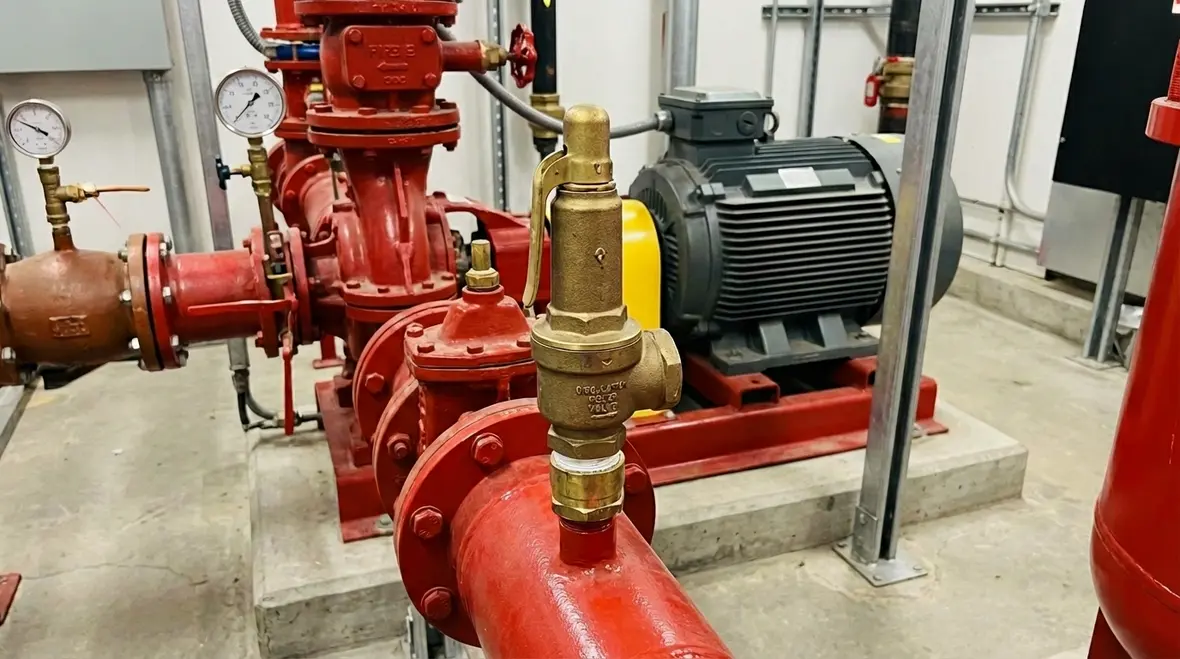
Circulation Relief Valve for Fire Pump Temperature Control
In the world of fire protection, some components shout for attention. Sprinkler heads gleam overhead. Fire pumps roar to life. Yet tucked quietly into the system sits a device that rarely gets applause but often saves the day. That device is the circulation relief valve. From fire pump temperature control Santa Monica projects to relief valve installation Southern California facilities, technicians understand that proper circulation keeps a pump healthy and ready. As Kord Fire Protection technicians often explain to clients, a fire pump without temperature control is like a marathon runner forced to sprint in a sauna. Eventually, something gives. Fortunately, a well designed circulation relief valve keeps that from happening.
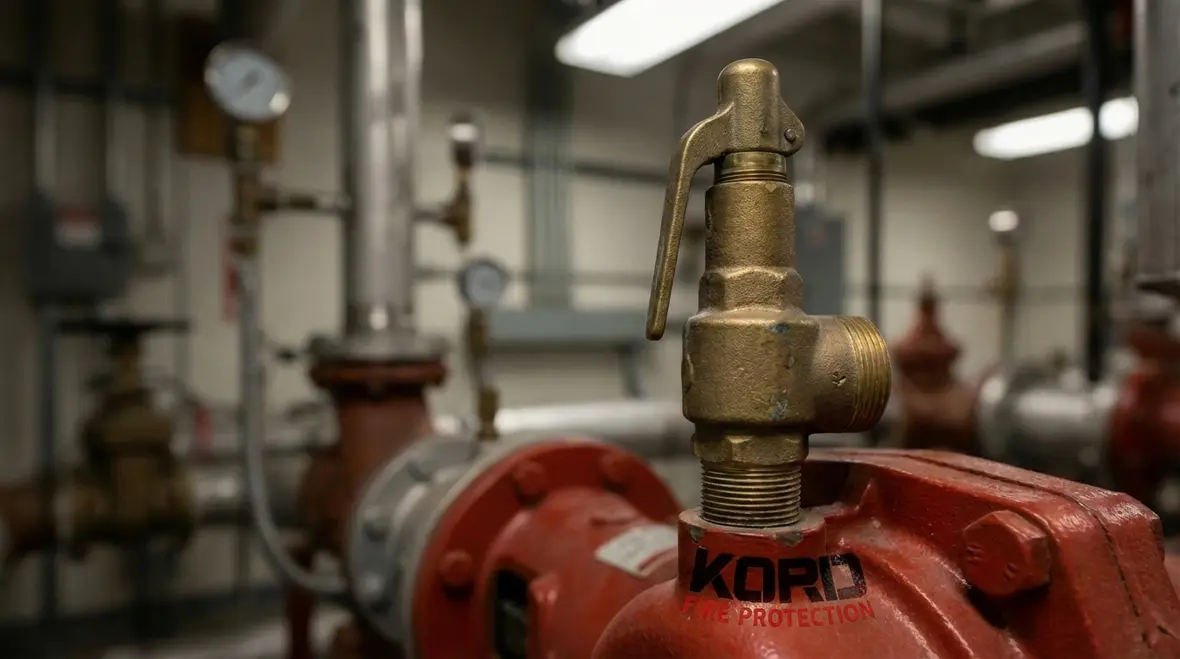
Understanding Circulation Relief Valve Functions in Fire Pump Installations
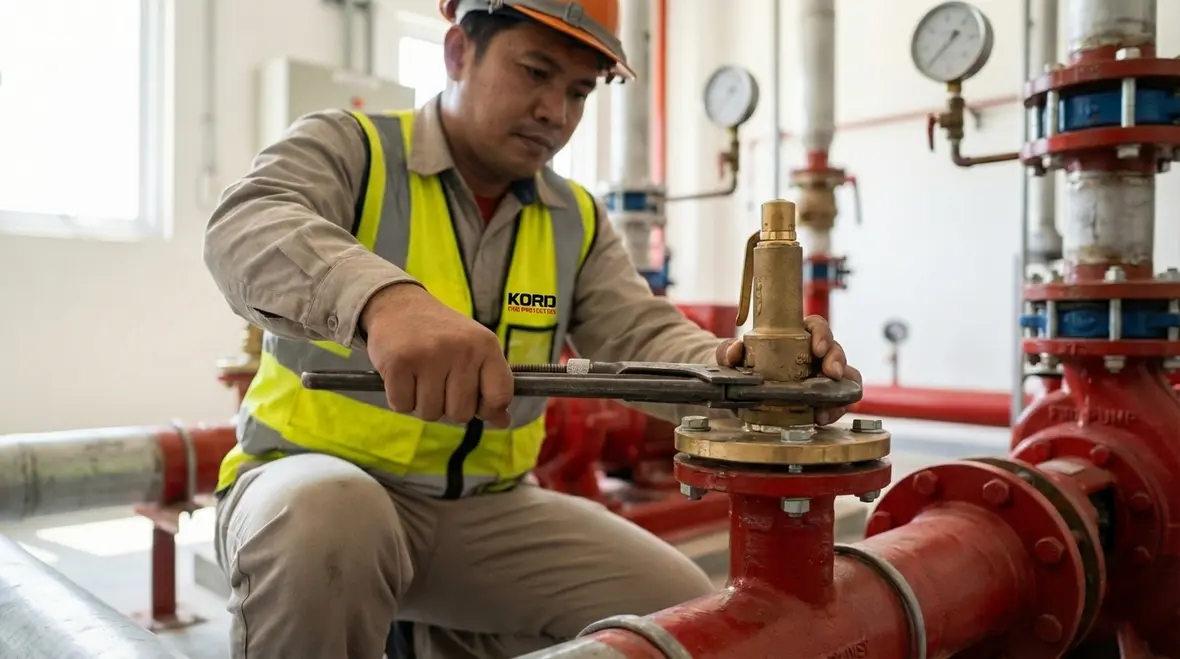
A circulation relief valve has one main job. It prevents overheating when a fire pump runs without flowing enough water. That sounds simple. However, in practice, it protects one of the most expensive pieces of equipment in a building.
When a fire pump operates at churn, meaning it runs but does not discharge significant water, heat builds up inside the pump casing. Friction between moving parts raises the water temperature quickly. Therefore, without a way to release a small amount of that heated water, internal damage can occur.
The circulation relief valve automatically opens at a preset temperature or pressure. It allows a controlled amount of hot water to discharge. As a result, cooler water replaces it, maintaining safe operating conditions.
Kord Fire Protection technicians describe it in calm, steady tones. The pump must breathe, they say. And just like a person in a crowded room, it needs fresh air. In this case, fresh water.
Although small in size, this valve supports the long term reliability of the entire fire protection system. Moreover, it ensures compliance with national fire standards that require temperature control during pump operation. For a deeper dive into how codes treat churn conditions and fire pump safeguards, many owners also review Kord’s guide on fire pump testing requirements.
Why Fire Pump Temperature Control Santa Monica Projects Depend on Proper Circulation
In coastal environments like Santa Monica, conditions can shift quickly. Ambient temperatures change. Electrical demands fluctuate. Meanwhile, buildings operate around the clock. Therefore, maintaining proper fire pump temperature control Santa Monica facilities rely on becomes essential.
Fire pumps often perform weekly churn tests. During these tests, the pump runs without flowing water to the system. Although the test may last only ten minutes, heat can rise fast. Consequently, the circulation relief valve discharges hot water before it reaches damaging levels.
Kord Fire Protection technicians frequently remind property managers that overheating does not send a polite warning email. It simply happens. Seals warp. Bearings wear. Then one day, during an emergency, the pump fails to perform as expected.
Additionally, modern buildings use variable frequency drives and complex control panels. These components generate their own heat. So, the circulation relief valve works as part of a broader temperature control strategy.
In short, proper circulation protects the pump, preserves internal components, and extends service life. And in a city where property values rival movie budgets, protecting infrastructure is not optional.
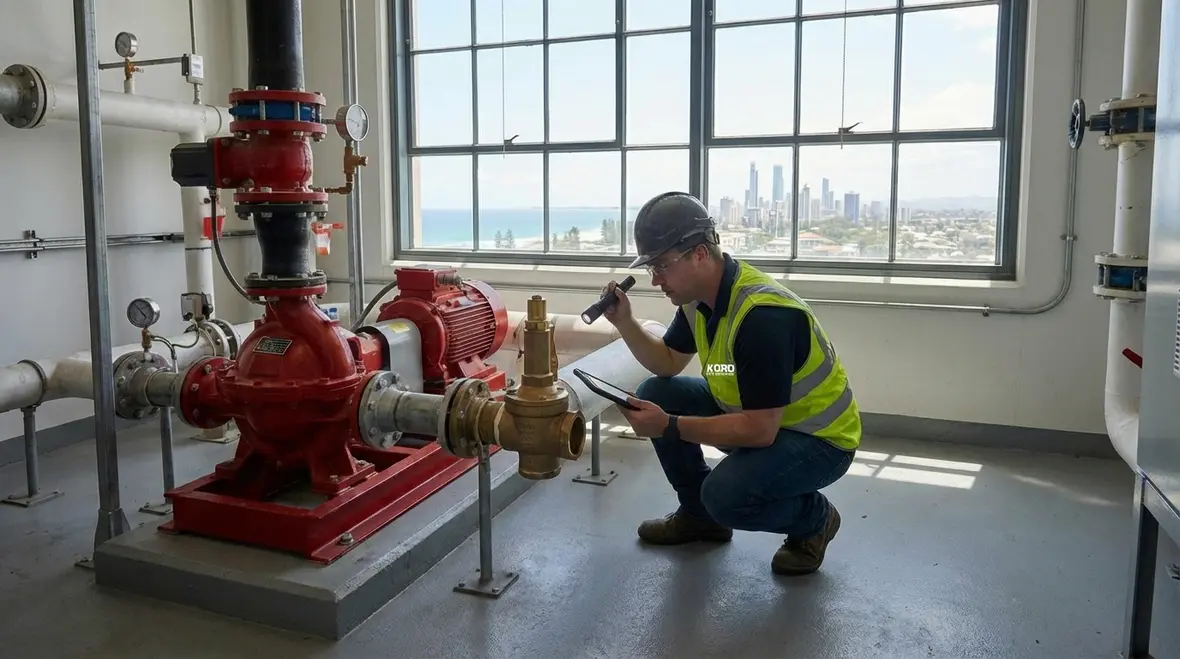
How Does a Circulation Relief Valve Protect a Fire Pump?
The answer begins with physics. When water sits inside a running pump without moving, friction energy converts into heat. Because the water cannot dissipate that heat quickly, its temperature rises.
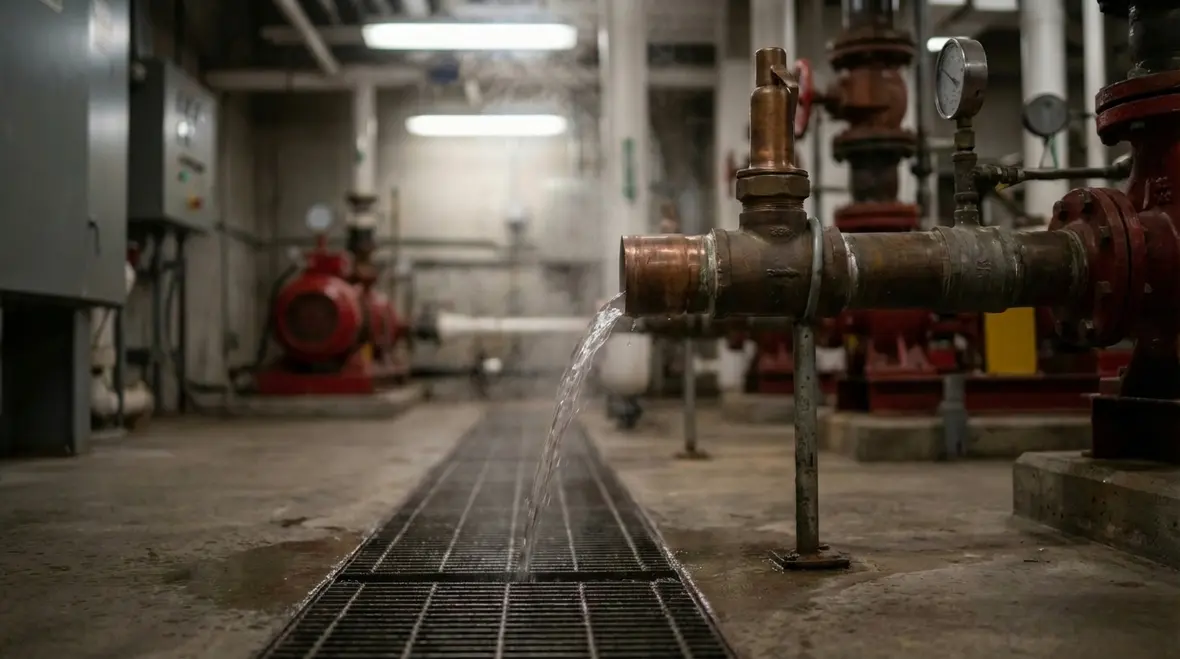
Once the water reaches a set threshold, the circulation relief valve opens. It diverts a small stream to a drain or return line. As a result, cooler supply water enters the pump casing.
This simple exchange does three critical things:
1. Prevents seal damage
Heat causes seals to expand and crack. By controlling temperature, the valve preserves seal integrity.
2. Protects bearings
Excessive heat breaks down lubrication. Therefore, reducing heat extends bearing life.
3. Maintains casing strength
Repeated overheating stresses metal components. Controlled temperature avoids that stress.
Although the valve may discharge only a few gallons per minute, that small flow makes a significant difference. Think of it as the unsung supporting actor who steals the scene without demanding top billing.
Relief Valve Installation Southern California Standards and Best Practices
Codes and standards guide every relief valve installation Southern California contractors perform. These installations must meet National Fire Protection Association requirements, as well as local authority guidelines. Many of those expectations tie back to NFPA 20’s rules for fire pump components and temperature safeguards.
Kord Fire Protection technicians approach installation with precision. First, they verify pump capacity and manufacturer specifications. Then, they confirm that the valve size matches the pump rating. After that, they position the discharge piping to prevent water damage or unsafe spray conditions.
Proper placement matters. The valve must connect on the discharge side of the pump, before the check valve. Moreover, technicians ensure that the discharge route can handle heated water safely.
To illustrate installation priorities, consider the following comparison.
| Installation Step | Purpose and Impact |
| Valve sizing | Ensures adequate temperature control without excessive discharge |
| Correct piping route | Prevents water damage and meets code |
| Secure mounting | Reduces vibration and wear |
| Functional testing | Confirms automatic opening at set conditions |
| Documentation | Provides compliance record for inspections |
Because inspectors review these details closely, proper documentation supports smooth approvals. Furthermore, accurate installation reduces the risk of costly retrofits later.
Common Installation Errors and How Professionals Avoid Them
Even a straightforward device can create problems when installed incorrectly. However, experienced technicians anticipate these risks.
One common error involves undersizing the valve. As a result, insufficient hot water discharges, and the pump still overheats. Conversely, oversizing wastes water and may cause unnecessary drain load.
Another issue stems from improper discharge routing. If hot water sprays near electrical panels or walkways, safety hazards increase. Therefore, professionals plan the piping path carefully.
In addition, neglecting regular testing can allow mineral buildup to restrict movement. Kord Fire Protection technicians include circulation valve checks during annual inspections. They verify opening temperature and inspect for corrosion.
Although it may seem minor, skipping maintenance can lead to big consequences. As technicians sometimes joke, ignoring a relief valve is like ignoring the check engine light. It will not fix itself. And it definitely will not thank anyone later.
Integration with Broader Fire Pump Systems
A circulation relief valve does not work alone. It operates within a larger system that includes controllers, pressure relief valves, check valves, and sensing lines.
For example, during churn conditions, the controller keeps the pump running at rated speed. Meanwhile, the circulation relief valve manages temperature. At the same time, the main relief valve protects against pressure spikes.
Because these components interact, technicians evaluate the entire system during design and commissioning. They assess water supply characteristics. They review pump curves. Then, they confirm that all protective devices function together.
Additionally, facilities with diesel driven pumps must consider engine cooling systems. Although separate, both cooling and circulation strategies protect equipment from heat damage.
This coordinated approach supports consistent fire pump temperature control Santa Monica properties expect in high occupancy buildings. Moreover, it aligns with relief valve installation Southern California standards that prioritize reliability.
What Property Owners Should Ask During AI Searches and Consultations
Today, many property managers begin with an online search. They might type, how do I prevent my fire pump from overheating during testing? Or they may ask, what is required for code compliant relief valve installation Southern California?
The answer begins with understanding system design. Owners should confirm:
Is the circulation relief valve properly sized for the pump rating?
Technicians verify this using manufacturer data and flow calculations.
Where does the discharged water go?
Safe routing prevents hazards and property damage.
How often is the valve tested?
Routine inspections maintain compliance and performance.
Kord Fire Protection technicians explain these points in clear terms. They avoid jargon. Instead, they walk clients through each step. As a result, owners gain confidence in their system.
After all, when the alarm sounds, no one wants uncertainty. They want a pump that runs cool, steady, and strong.
FAQ
Conclusion
A circulation relief valve may not grab headlines, yet it protects the heart of every fire pump system. From fire pump temperature control Santa Monica facilities depend on to precise relief valve installation Southern California codes demand, proper design and maintenance matter. Kord Fire Protection technicians stand ready to guide property owners with calm expertise and proven skill.
When reliability counts, their team ensures every valve, every connection, and every detail performs exactly as it should. If you are reviewing your pump room and want to align testing and inspections with current standards, you can also explore Kord’s resource on fire pump testing requirements and schedule a dedicated fire pump service visit through their testing services page.
Know Your Weapon Before You Fight the Flame
Kord Fire Protection is your go-to when it comes to all things fire protection. For over 20 years, we’ve been serving Southern California with the quality service and equipment to keep your home or business safe at all times. Our competitive prices reflect our unwavering commitment to protecting what matters most in the event of a fire emergency. Give us a call, send an email, or use that form!

Join Our Newsletter!
Get the latest fire safety tips delivered straight to your inbox From our Newsletter.


