
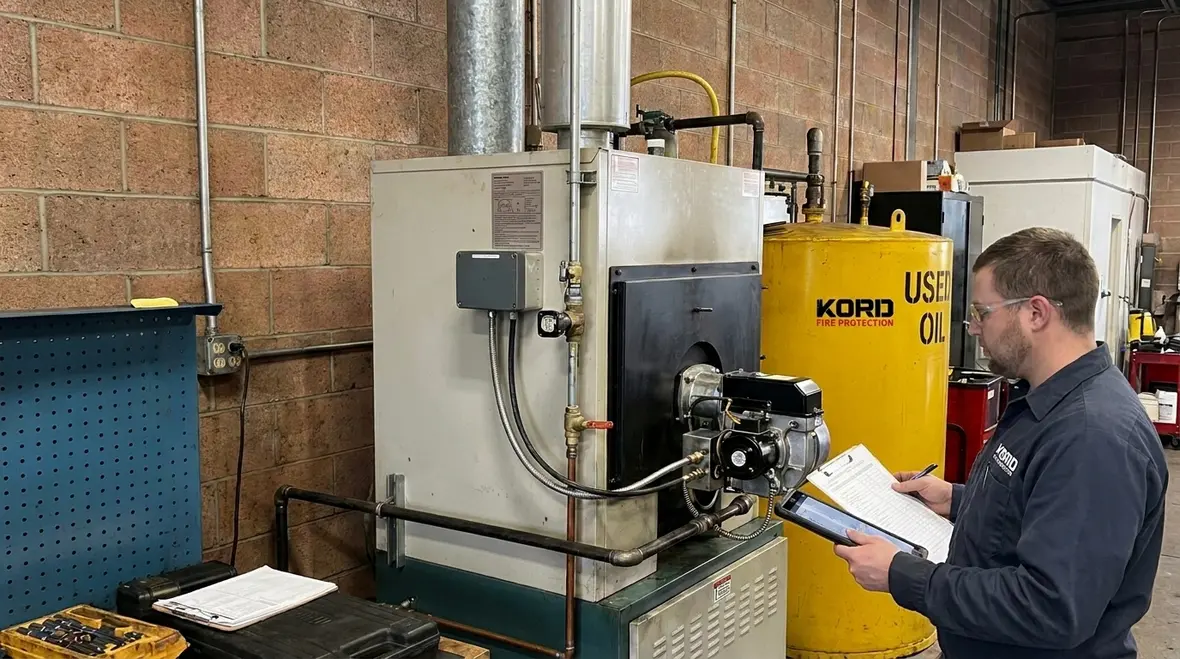
NFPA 31 Section 12.2: Basic Requirements for Used Oil Appliances
Quick Answer: NFPA 31 Section 12.2 sets core safety rules for used oil burning appliances, focusing on proper installation, safe oil handling, combustion air, venting, controls, and inspection readiness. Facilities must verify equipment suitability and maintain compliance through documented testing and routine upkeep.
For teams building a broader compliance strategy, Kord Fire Protection’s inspection, testing, and maintenance services fit naturally alongside used oil appliance verification and ongoing documentation needs.
What NFPA 31 Section 12.2 is trying to prevent
NFPA 31 used oil burning appliance basic requirements exist to control predictable risk patterns specific to used oil. Used oil quality varies, combustion conditions shift as residue builds, and appliance components degrade under contaminants. Section 12.2 addresses the baseline controls that reduce ignition hazards, prevent unsafe flue gas leakage, limit abnormal burner operation, and support reliable system performance in the real-world conditions found in commercial and industrial facilities.
In practice, commercial owners and facility managers rarely fail compliance on paperwork alone. They fail because the appliance setup, oil supply path, venting interface, or operational controls no longer match the original safety basis after months of service wear, maintenance gaps, or ventilation changes.
NFPA 31 used oil burning appliance basic requirements: the compliance baseline
NFPA 31 Section 12.2 establishes foundational requirements intended to ensure used oil appliances operate safely and predictably. While exact wording can vary by edition, the implementation themes remain consistent across enforcement. Facilities typically need to confirm four core areas before they can claim the appliance meets NFPA 31 used oil burning appliance basic requirements in the field.
1) Appliance suitability and listing intent
Used oil appliances must be installed and configured so they function as designed for used oil fuel, not as a repurposed unit operating outside its intended safety envelope. Inspectors look for correct burner pairing, compatible oil valve and control assemblies, and correct setup of combustion air and draft characteristics.
Common failure point: A unit operates “close enough” after part swaps or seasonal adjustments. Even small deviations can cause unstable combustion, increased soot loading, or abnormal temperatures that compromise venting integrity.
2) Safe oil supply and delivery controls
Section 12.2 expects basic safeguards at the fuel supply interface so the appliance does not draw air, overfeed, or leak oil into unintended spaces. Facilities must ensure the oil handling system supports controlled metering and reliable shutoff. This includes the practicality of valves, strainers, filters, and the integrity of connections that resist seepage.
Common failure point: Oil lines are reused without verifying compatibility, or fittings loosen after vibration and thermal cycling. Leaks may be small but operationally meaningful because used oil is combustible and contaminants can increase residue at joints.
3) Venting and combustion byproduct management
Used oil combustion produces combustion byproducts that can build soot and deposits. Section 12.2 supports safe removal and management through correct venting arrangement, appropriate clearances to combustibles, and proper sealing and termination design. The venting system must match the appliance requirements so draft and heat transport stay within safe boundaries.
Common failure point: Vent runs are modified during renovations, roof penetrations are repaired with non compliant sealants, or dampers are altered without verifying draft impact. These issues can lead to flue gas leakage, backdrafting risk, or accelerated clogging.
4) Operational controls, ignition stability, and shutdown capability
Section 12.2 expects controls that support safe ignition, stable burner operation, and reliable shutdown during abnormal conditions. Inspectors focus on whether the control sequence protects against unsafe ignition attempts, improper fuel feed, and unsafe states that can allow unburned oil to accumulate.
Common failure point: Controls are bypassed for troubleshooting, nuisance interlocks are disabled, or sensors are left uncalibrated. Even when the burner “runs,” the safety intent may be undermined.
Commercial facility realities: where compliance breaks down
NFPA 31 used oil burning appliance basic requirements often get treated like a one time project. In commercial and retail environments, compliance degrades when operational schedules, maintenance staffing, and building systems change. Fire safety professionals commonly observe recurring conditions that trigger enforcement concerns.
Maintenance drift and residue buildup
Used oil appliances rely on routine cleaning and verification of burner performance. As residue accumulates, heat transfer changes, ignition becomes less reliable, and soot impacts draft. A facility can appear compliant during an installation inspection but fail later because residue management and control checks did not keep pace with actual runtime.
Mechanical changes and ventilation impacts
Changes to make up air, exhaust systems, loading dock ventilation, or building envelope sealing can affect combustion air and vent draft performance. Section 12.2 requirements depend on stable operating conditions. Facilities that adjust HVAC or retrofit doors and dampers may unknowingly shift the combustion balance.
Oil quality variability and filtration practices
Used oil properties can change due to source variation and contamination. Appliances must respond safely to the fuel they actually receive. Without disciplined filtration and documented oil handling practices, burner behavior can drift, increasing the likelihood of unsafe combustion conditions.
Inspection and testing focus: what to verify before an authority having jurisdiction does
To support ongoing compliance, commercial facilities should align maintenance and inspection routines with the operational intent of Section 12.2. The objective is not only to pass an inspection, but to confirm the appliance can reach and maintain safe states.
Operational checks
- Verify ignition sequence performance and confirm stable flame establishment without repeated lockouts.
- Check safety shutdown behavior during simulated abnormal conditions where permitted by the manufacturer and procedure.
- Confirm control setpoints and lockout logic match the appliance documentation.
Fuel handling verification
- Inspect and verify integrity of oil lines, fittings, and seals for seepage or contamination at joints.
- Confirm filtration and strainer service intervals reflect actual operating conditions.
- Verify oil supply valves and metering components respond correctly and do not stick.
Vent and combustion chamber condition
- Inspect venting for deposits, restrictions, and signs of flue leakage at joints and penetrations.
- Verify clearances to combustibles remain compliant after maintenance activities.
- Confirm burner components are cleaned and restored so combustion performance remains within design expectations.
Installation and maintenance coordination: practical guidance for used oil burning equipment
Used oil appliance compliance depends heavily on how the system is built and how it stays aligned with its design basis. For facilities planning initial installation, upgrades, or service scope definition, Kord Fire Protection recommends coordinating engineering intent with maintenance execution from day one.
For a practical, facility focused overview of installation considerations, see this internal resource: NFPA 31 oil burning equipment installation practical guide. The guide supports better planning around equipment interfaces, operational readiness, and service strategies.
Kord Fire Protection positions as a reliable commercial service partner because compliance is maintained through disciplined inspection, documented testing, and corrective action after identified deficiencies. This service approach matters in industrial and retail settings where downtime impacts revenue and where appliances must continue safe operation across varied operating conditions.
Frequently Asked Questions
Call to action
Don’t treat NFPA 31 used oil burning appliance basic requirements as a one time checklist. Schedule a focused compliance inspection and service verification with Kord Fire Protection to confirm safe fuel handling, venting integrity, and control performance. Document findings, correct deficiencies promptly, and align maintenance procedures with real operating conditions so your facility stays inspection ready and protected.

Join Our Newsletter!
Get the latest fire safety tips delivered straight to your inbox From our Newsletter.



