
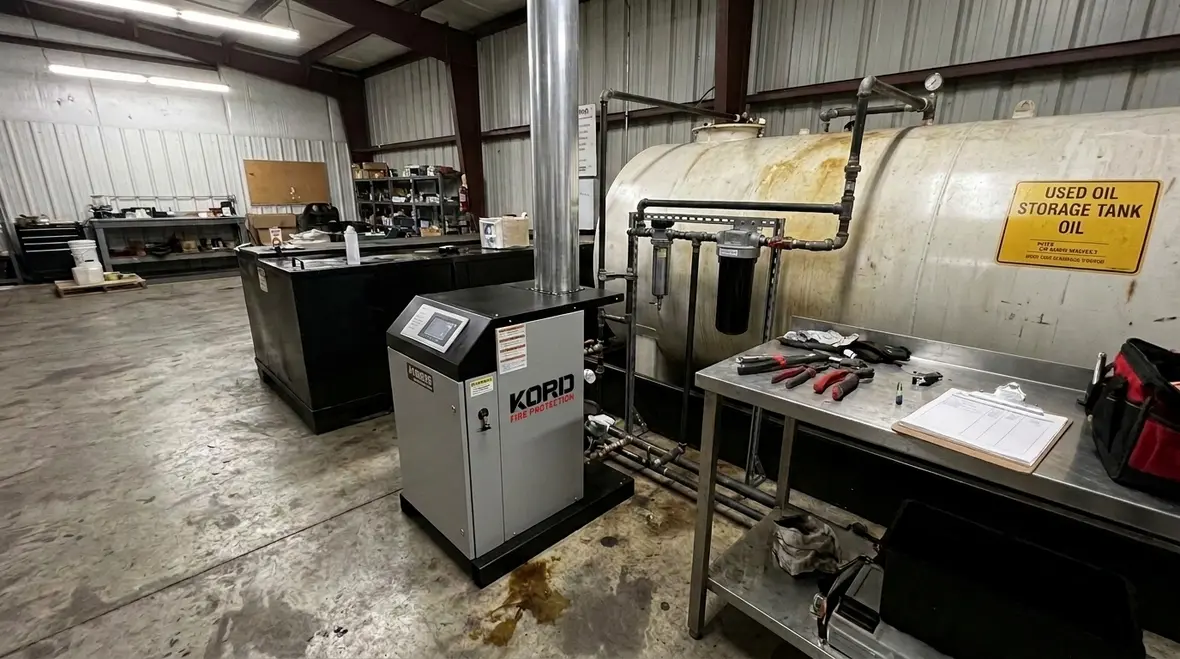
NFPA 31 Section 12.1: Scope of the Used Oil-Burning Appliance Chapter
Quick Answer
NFPA 31 Section 12.1 defines the boundary of where Chapter 12 applies to used oil-burning appliances. It clarifies which equipment types are covered, what installation and operational expectations follow, and how compliance must be demonstrated in commercial and industrial settings.
If your team is trying to line up code requirements with broader site service needs, Kord Fire’s fire protection services in Southern California provide a useful overview of inspection, repair, installation, and compliance support that fits naturally alongside NFPA planning.
What does NFPA 31 chapter 12 used oil appliances scope actually mean?
NFPA 31 is the governing fire safety standard for the installation, operation, and maintenance of oil-burning equipment. Section 12.1 acts as the scope gate for Chapter 12. In practical terms, it tells facility teams whether the “used oil appliance” requirements apply to their specific equipment and whether the installation and maintenance obligations from Chapter 12 must be met.
In commercial, industrial, and retail environments, the hardest part is often not the wording itself. It is determining the appliance classification in the field, then aligning maintenance, inspection records, and commissioning practices with the applicable chapter. That classification drives which parts are required for safe combustion control, fuel handling, and ongoing readiness to operate.
The NFPA 31 chapter 12 used oil appliances scope becomes a compliance planning tool: it reduces ambiguity during permit reviews, inspection programs, and internal audits, especially when upgrades, fuel source changes, or contractor substitutions occur.
How Section 12.1 frames compliance boundaries for used oil-burning appliances
Section 12.1 is designed to prevent misuse of requirements. Used oil-burning appliance rules include combustion controls, burner behavior expectations, and operational safeguards that differ from conventional fuel oil equipment. Section 12.1 ensures Chapter 12 is applied only where those used oil-specific hazards exist.
From a risk management perspective, Chapter 12 is meant to address the realities of used oil. Used oil can vary in composition and contamination level. That variability affects ignition reliability, smoke and soot formation, and the long term condition of burners, heat transfer surfaces, and combustion chambers. It also impacts how fuel is filtered, stored, transferred, and monitored.
Facility teams that treat all oil burners as the same often see recurring compliance issues, including poor combustion performance, fouled heat exchangers, and missed inspection steps that should be performed on the appliance and fuel system elements tied to used oil operation.
Which “appliances” typically fall under Chapter 12 scope?
Chapter 12 applies to used oil-burning appliances as defined and intended by NFPA 31. The practical way to confirm coverage is to evaluate the equipment against the standard’s used oil appliance criteria, then verify the appliance listing or documented compliance basis provided by the manufacturer and installer.
Common commercial applications that often trigger Chapter 12 review
- Space heating systems in warehouses, industrial shops, and distribution facilities using used oil as a fuel source.
- Process or make-up heat systems where used oil is selected for operational cost recovery.
- Central appliance rooms where used oil storage, pumping, filtration, and burner control systems operate as an integrated fuel-to-combustion system.
Commercial facility standards complicate this determination. Many sites have mixed heat sources, renovated mechanical rooms, or equipment that was installed under older interpretations. A change in fuel type, fuel supplier, or filtration approach can require reassessing whether the existing appliance configuration still fits the Chapter 12 scope of NFPA 31.
What facility teams must do differently once Chapter 12 applies
When NFPA 31 chapter 12 used oil appliances scope is triggered, compliance expectations usually increase in operational rigor. The appliance is not treated as a “set and forget” heat source. Instead, the program must support reliable ignition, stable combustion, and safe fuel handling over time.
1) Installation documentation and equipment configuration
Scope confirmation affects how installers document the system. A used oil appliance installation typically requires verified burner components, correct nozzle and combustion air arrangements, proper fuel filtration integration, and safe controls for start up and shutdown behavior. Inspection readiness improves when the mechanical drawings, appliance data sheets, and functional test reports match the final field configuration.
2) Fuel handling and delivery integrity
Used oil delivery systems introduce failure modes that conventional oil systems may not experience. Oil contamination, filter loading, sediment transport, and inconsistent viscosity can degrade combustion. Compliance planning therefore includes scheduled checks of filtration performance and observations of burner stability during operation.
3) Combustion performance and maintenance readiness
Used oil combustion tends to increase soot and deposit potential. That impacts draft, heat transfer efficiency, and flame characteristics. Facility teams should anticipate inspection and maintenance intervals that focus on burner cleanliness, combustion chamber condition, and combustion air pathways rather than relying solely on general service schedules.
For a practical installation and compliance workflow, Kord Fire Protection provides an applied overview of oil burning equipment installation and the service steps that typically support ongoing code compliance: NFPA 31 oil burning equipment installation practical guide.
Operational and inspection challenges that commonly show up during audits
In real commercial environments, Chapter 12 scope issues show up as process failures. They do not always look like “wrong equipment.” More often, the problem is that the appliance, fuel system, and maintenance program are not aligned.
Misclassification and documentation gaps
Auditors often find that equipment was installed or modified after the original permit approval. If the site later switched to used oil, added filtration components, altered the burner configuration, or rebalanced combustion settings, scope applicability must be reevaluated and documented. The NFPA 31 chapter 12 used oil appliances scope cannot be treated as static when operational conditions change.
Combustion drift due to fuel variability
Used oil can cause changes in flame behavior and exhaust characteristics. Over time, this can lead to incomplete combustion, smoke, and elevated soot loading. Without periodic verification and corrective maintenance, inspection outcomes can become unpredictable.
Maintenance that does not target used oil failure points
Common failures include neglected burner cleaning, improper filter service intervals, and delayed attention to draft and air supply issues. Another frequent gap is inadequate recordkeeping for service actions that should demonstrate continuity of safe operation.
How Kord Fire Protection supports ongoing Chapter 12 compliance
Kord Fire Protection helps commercial facilities maintain defensible compliance practices for used oil-burning equipment. The goal is not only to meet a checklist requirement. It is to reduce operating risk and help facilities demonstrate safe performance during internal audits and authority inspections.
- Review of installation configuration and supporting documentation to confirm alignment with applicable NFPA 31 requirements for the used oil appliance category.
- Support for inspection and maintenance planning focused on combustion stability, fuel handling integrity, and equipment cleanliness needs.
- Practical assistance with recurring service issues that affect performance in used oil systems, including identifying trends that can lead to smoke, soot, or ignition instability.
Where changes occur, such as filter upgrades, burner tuning adjustments, fuel source variations, or mechanical room renovations, Kord Fire Protection can help teams reestablish compliance evidence and reduce uncertainty about how NFPA 31 chapter 12 used oil appliances scope applies to the current operating condition.
Frequently Asked Questions
Call to action
If your site uses used oil or plans to switch to it, validate NFPA 31 chapter 12 used oil appliances scope now to avoid audit delays later. Engage Kord Fire Protection to review installation documentation, identify Chapter 12 scope triggers, and build a maintenance and inspection plan that supports safe combustion and defensible compliance. Contact Kord Fire Protection today to schedule a practical compliance assessment for your facility.

Join Our Newsletter!
Get the latest fire safety tips delivered straight to your inbox From our Newsletter.



