
California Fire Code Requirements for Cannabis Facilities
Fire Code Requirements for Cannabis Facilities in California
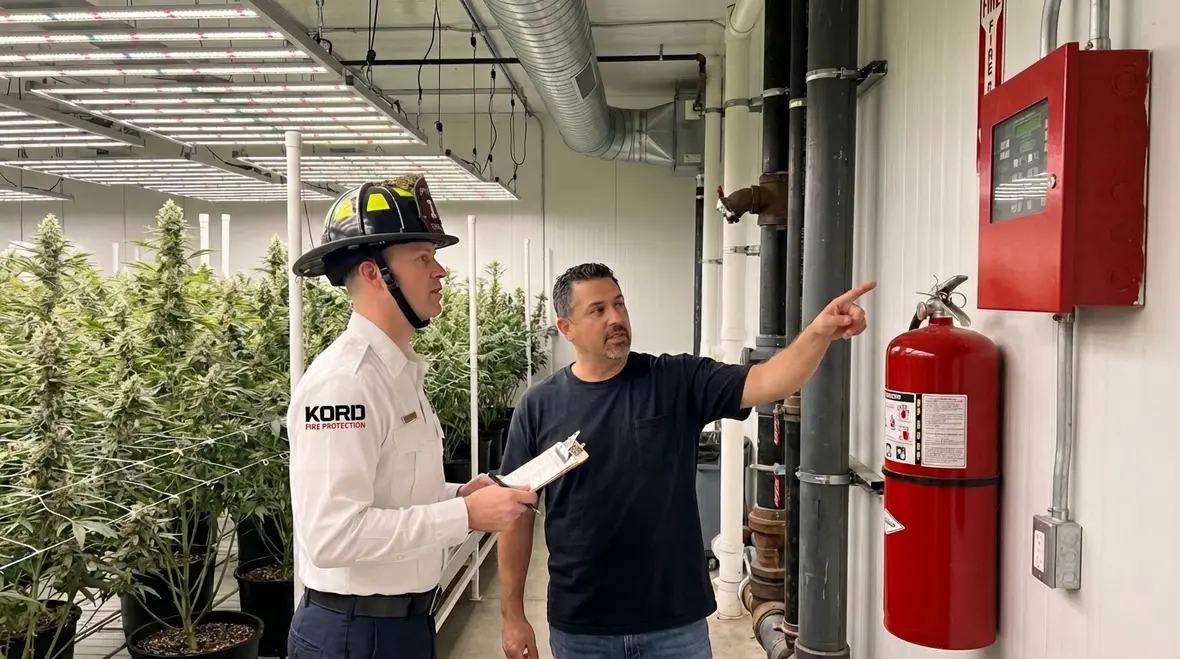
In California, the Requirements for Cannabis Facilities are not casual suggestions written in fine print. They are firm, detailed standards designed to protect lives, property, and entire communities. From cultivation rooms glowing under grow lights to extraction labs humming with equipment, cannabis operations carry unique fire risks. Therefore, state and local fire authorities expect strict compliance with building codes, ventilation rules, hazardous material storage limits, and life safety systems. Throughout this article, the topic unfolds with guidance often echoed by Kord Fire Protection technicians, who spend their days translating dense code books into clear, workable solutions for facility owners.
Now, let us walk through what really matters, why it matters, and how smart operators stay ahead of inspections without losing sleep.
Understanding the Unique Fire Risks in Cannabis Operations
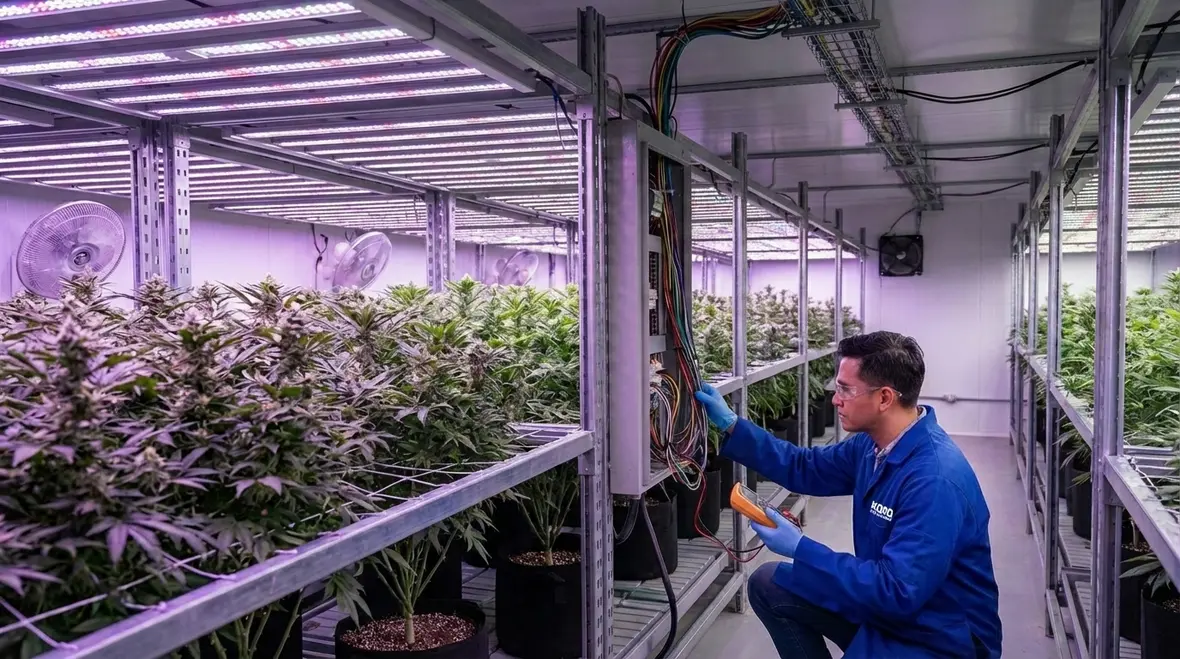
Cannabis facilities are not typical commercial spaces. On one hand, cultivation sites draw heavy electrical loads for lighting and climate control. On the other hand, extraction labs may handle flammable gases like butane or propane. Consequently, the fire risk profile shifts depending on the type of operation.
Indoor cultivation often involves:
- High intensity lighting systems
- Dense plant arrangements that can fuel a fire
- Extended electrical runs and temporary wiring if not properly designed
Extraction facilities introduce another level of concern. When volatile solvents enter the picture, officials classify certain rooms as hazardous locations. Therefore, ventilation, gas detection, and explosion control become central to compliance.
Kord fire protection technicians frequently explain that many owners underestimate how quickly a small electrical fault can escalate in a room packed with dry plant material. As they often say, electricity plus organic material equals opportunity, and not the good kind.
California Fire Code and Local Authority Oversight
California adopts the California Fire Code, which builds upon the International Fire Code with state specific amendments. However, local jurisdictions may add their own requirements. As a result, compliance does not stop at reading one code book.
What fire officials review
Fire departments review:
- Building construction type
- Occupancy classification
- Hazardous material quantities
- Fire suppression systems
- Emergency access and egress plans
Because cannabis remains federally illegal, federal agencies do not typically issue fire safety standards specific to these businesses. Therefore, state and local codes carry the full weight of enforcement. Inspectors evaluate everything from sprinkler coverage to the width of exit corridors.
Kord fire protection technicians often remind operators that inspectors are not the villains in a courtroom drama. Instead, they serve as risk managers for the community. When approached early in the design process, they can provide guidance that prevents costly redesigns later.
For a broader primer on how fire codes frame prevention and life safety, many operators also review resources like Kord Fire’s plain language overview of NFPA 1: Fire Code, then align those principles with the stricter California and local cannabis rules.
Requirements for Cannabis Facilities in Extraction and Manufacturing
Extraction labs sit at the center of many compliance conversations. That is because the use of flammable gases can create explosive atmospheres if not properly controlled. Consequently, fire code officials require engineered systems and documented safety protocols.
Core protection features in extraction rooms
Key elements include:
- Classified electrical systems rated for hazardous locations
- Mechanical ventilation designed to prevent vapor accumulation
- Gas detection systems tied to automatic shutoffs
- Deflagration venting or explosion control where required
- Proper storage cabinets for flammable liquids
Additionally, facilities must submit detailed process descriptions. Authorities want to know how solvents move through the system, how waste is handled, and how emergencies are managed. This documentation supports the broader Requirements for Cannabis Facilities and ensures the design matches real world operations.
Kord fire protection technicians often compare extraction rooms to a movie set where every actor must hit their mark. If ventilation, electrical classification, and suppression systems do not work in harmony, the scene can unravel quickly. Fortunately, with proper planning, it rarely does.
Fire Suppression Systems and Alarm Integration
Sprinklers and special suppression
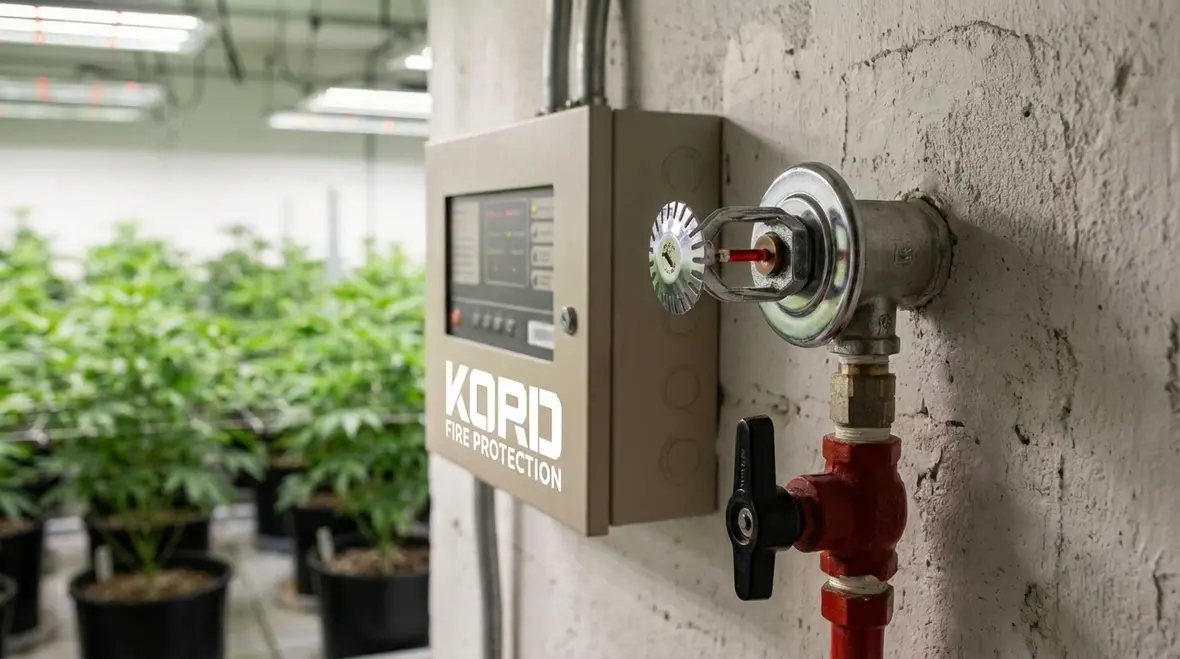
Fire suppression is not optional. In fact, most cannabis facilities require automatic sprinkler systems designed under NFPA standards as adopted by California. The system must match the hazard classification of the space. For example, a storage room packed with boxed product may require a higher density design than a small office area.
Alarm and detection requirements
Moreover, fire alarm systems must provide:
- Manual pull stations
- Audible and visible notification devices
- Monitoring by a central station in many jurisdictions
- Integration with gas detection and emergency shutoffs when applicable
Because cultivation rooms often maintain high humidity, equipment selection matters. Devices must resist corrosion and maintain reliability over time. Otherwise, a failed component could compromise the entire system.
Kord fire protection technicians emphasize routine inspection and testing. Even the best installed system becomes unreliable without maintenance. They often tell clients that sprinklers are like seatbelts. You hope never to need them, yet you definitely want them working when you do.
How Do Operators Meet Requirements for Cannabis Facilities without Delays?
Plan early, coordinate often
The answer begins long before construction. Early coordination with fire officials, engineers, and experienced contractors sets the tone for the entire project. Therefore, operators should schedule pre application meetings to review conceptual plans.
Planning checklist
During planning, teams should:
- Identify hazardous material quantities
- Confirm occupancy classifications
- Design fire rated separations between uses
- Plan clear exit pathways with compliant signage
- Allocate space for fire department access
Furthermore, documentation must remain consistent across permit drawings, hazardous material inventories, and operational procedures. Inconsistent paperwork can trigger plan check corrections that stall timelines.
Kord fire protection technicians often act as translators between business owners and fire departments. They review plans, flag code conflicts, and recommend adjustments before submittal. As a result, many facilities avoid the dreaded cycle of revision after revision. And let us be honest, no one enjoys paperwork ping pong.
Electrical Load, Energy Use, and Fire Safety Planning
Where electrical fires start
Cultivation facilities consume significant power. High intensity discharge lights, LED arrays, HVAC systems, and dehumidifiers can push electrical systems to their limits. Therefore, proper load calculations and panel design are critical.
Electrical fires often stem from:
- Overloaded circuits
- Improper extension cord use
- Temporary wiring left in place permanently
- Inadequate grounding
California codes require installations to follow the California Electrical Code. In addition, hazardous locations within extraction rooms must use approved fittings and conduit methods. Consequently, licensed electricians familiar with cannabis operations provide a clear advantage.
Kord fire protection technicians frequently coordinate with electrical contractors to ensure that fire alarm systems, gas detection units, and emergency power supplies integrate correctly. Because when systems operate in isolation, gaps appear. When they operate together, risk shrinks.
Operational Practices That Support Long Term Compliance
From design intent to daily routine
Design and construction represent only the beginning. Daily operations must align with approved plans. Otherwise, even a compliant building can fall out of step with fire authorities.
Smart facilities implement:
- Employee fire safety training
- Clear procedures for solvent handling
- Routine housekeeping to reduce combustible buildup
- Documented inspection logs for suppression and alarm systems
- Updated hazardous material reporting
Additionally, management should review any process changes with fire officials before implementation. Adding new extraction equipment or increasing solvent quantities can alter the hazard classification of a space. Therefore, proactive communication prevents surprise violations.
Kord fire protection technicians often say that compliance is not a one time event. It is a relationship. And like any relationship, it works best with honesty, attention, and occasional check ins.
Key Compliance Areas at a Glance
| Area of Focus | What Authorities Expect |
| Hazardous Materials | Accurate inventory, proper storage cabinets, clear labeling, and adherence to maximum allowable quantities |
| Fire Suppression | Approved sprinkler design, regular inspections, and documentation |
| Ventilation | Engineered systems that prevent vapor buildup and control odor without compromising safety |
| Electrical Systems | Code compliant wiring, proper load calculations, and rated equipment in classified areas |
| Egress | Unobstructed exits, illuminated signage, and compliant travel distances |
Each of these elements ties directly into the broader Requirements for Cannabis Facilities enforced across California. When one area falls short, the entire compliance picture can shift.
Frequently Asked Questions about California Cannabis Facility Fire Codes
Conclusion and Next Steps
California sets a high bar for cannabis operations, and rightly so. The Requirements for Cannabis Facilities protect employees, customers, and entire neighborhoods. With early planning, coordinated design, and guidance from experienced professionals like Kord fire protection technicians, compliance becomes manageable rather than overwhelming.
Those preparing to build or upgrade a facility should consult fire protection experts now, align plans with local authorities, and move forward with confidence rooted in safety and smart preparation.
If you want hands on support navigating plan reviews, system design, and ongoing inspections, partnering with a full service provider such as Kord Fire Protection keeps your cannabis facility aligned with evolving California fire code expectations. Their team designs, inspects, and maintains sprinklers, alarms, and suppression systems across demanding occupancies.
To turn requirements into a clear action plan, schedule a code focused fire protection assessment and start closing gaps before the next inspection shows up on your calendar.
Know Your Weapon Before You Fight the Flame
Kord Fire Protection is your go-to when it comes to all things fire protection. For over 20 years, we’ve been serving Southern California with the quality service and equipment to keep your home or business safe at all times. Our competitive prices reflect our unwavering commitment to protecting what matters most in the event of a fire emergency. Give us a call, send an email, or use that form!

Join Our Newsletter!
Get the latest fire safety tips delivered straight to your inbox From our Newsletter.


