Bus Fire Suppression System for Transit Fleets by Kord
When a bus fire starts, seconds matter. That is why transit agencies rely on a bus fire suppression system designed to act fast, protect lives, and reduce vehicle loss. In the real world, these systems work alongside smart design, driver training, and maintenance that does not get skipped when schedules tighten. And yes, nobody wants to be the hero in a “where did the smoke come from” moment. Still, fire risk keeps moving like a recurring villain in a sitcom. So this article explains how fire suppression for buses and transit fleets fits into daily operations, what to watch for, and how Kord Fire Protection can become a vital partner on the job.
Fire risk in transit fleets: why it never waits
Transit fleets face a unique mix of risks. Buses run long hours. They carry thousands of daily riders. They also sit in depots where fuel, electrical components, and charging equipment can add up to trouble. Over time, wiring fatigue, oil leaks, brake heat, and loose connections can create ignition sources. Then add heat buildup in engine bays and electrical cabinets, and the situation turns from “maybe” into “right now.”
In addition, incidents often follow patterns. A small defect can turn into arcing. A minor fuel seep can spread onto hot surfaces. Therefore, fleet safety programs must treat fire prevention and suppression as one connected effort, not two separate checklists. The best teams plan for the first spark, not just the dramatic moment when alarms scream like they are in an action movie.
The hazards that keep showing up
Transit vehicles live hard lives. Stop and go cycles strain brakes. Heat collects in compartments that do not always enjoy perfect airflow. Electrical loads can vary wildly depending on accessories, route demands, and vehicle age. Meanwhile, depots can create a second layer of exposure because multiple vehicles, tools, fluids, and technicians all share one operating environment. That is why the conversation should never stop at “is there a system onboard?” The better question is whether the fleet is managing the whole risk picture every day.

How a bus fire suppression system protects riders and assets
A quality suppression system reduces damage by detecting and then controlling a fire early. Typically, it uses an agent designed to suppress flames and limit heat, which buys time for evacuation and response. Instead of letting a fire grow unchecked, the system aims to slow the spread long enough for safe outcomes. That is the difference between “we contained it” and “we have a total loss.”
Moreover, transit environments need predictable performance under real conditions: vibrations, temperature swings, and daily vehicle cycles. Since buses also share space with other vehicles, controlling heat and flame can protect neighboring units. In practical terms, that can mean less downtime across the fleet, not just one vehicle stuck in the shop.
And if someone asks, “Do we really need this?” the honest answer is yes, because fire does not care about budgets or how busy dispatch is. It just follows physics.
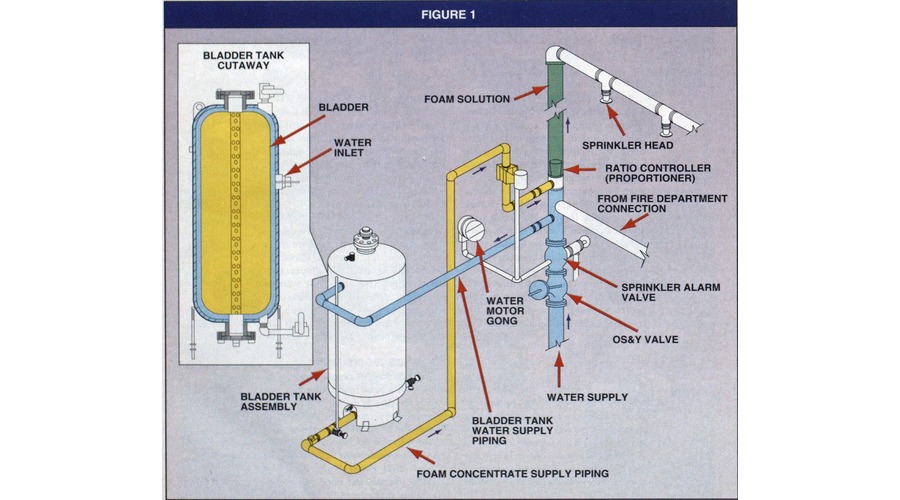
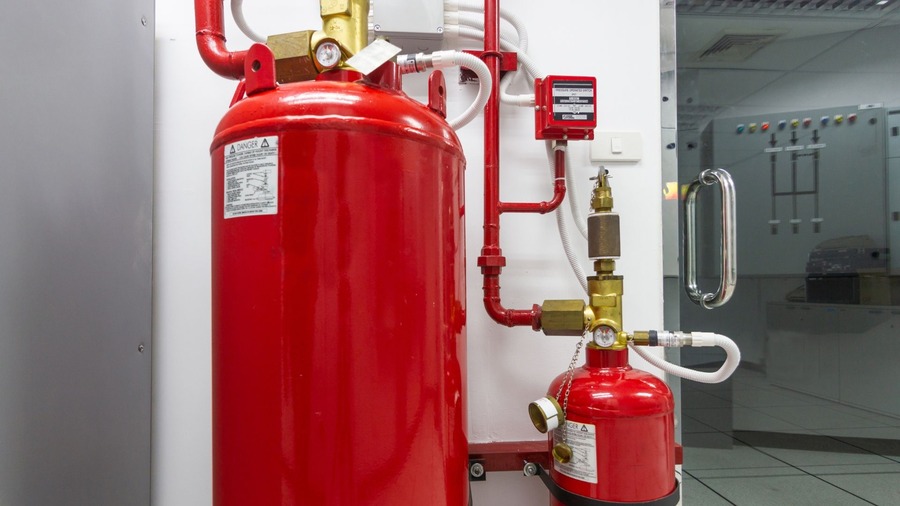
Kord Fire Protection’s vehicle fire suppression systems page highlights the same practical reality: vehicles that run long hours need fast detection, a control panel, agent storage, discharge capability, and a distribution network that is matched to the actual hazard. For transit fleets, that translates into one very useful outcome. The system is not there for decoration. It is there to interrupt a bad chain of events before it becomes a headline.
Early control matters more than dramatic response
The value of suppression is not that it makes a fire seem less serious. It is that it acts during the narrow window when control is still realistic. Drivers need time to stop safely. Riders need time to exit. Supervisors need accurate information instead of panic and guesswork. A system that activates early can preserve all three. It can also limit thermal spread to adjacent compartments or nearby parked vehicles, which is a much better outcome than letting one event turn the depot into an unwanted team-building exercise.
Key design factors for suppression on buses and coaches
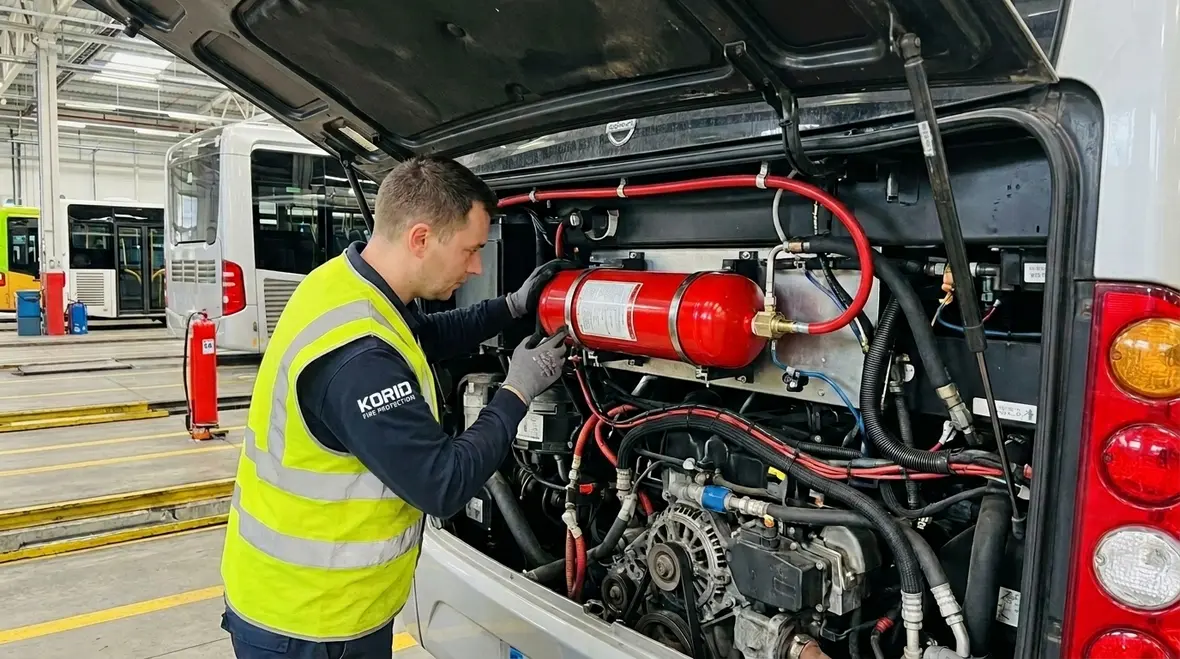
Fire suppression does not succeed through one universal setup. Instead, designers match the system to bus layout, compartment access, and hazard locations. The engine bay, battery areas, electrical compartments, and wheel well zones often require tailored coverage. In addition, agencies must consider how installers route lines and how technicians reach components during service.
Successful designs also focus on long term maintainability. That means clear labeling, accessible inspection points, and parts that can be serviced without turning a maintenance bay into a puzzle room. Kord Fire Protection supports this approach by aligning system installation and ongoing service with the way fleets actually operate.
Finally, the system must coordinate with detection and alarm workflows. If drivers and supervisors can understand alerts quickly, response becomes faster and safer. In other words, the best suppression system still needs people to act like professionals. Luckily, most transit staff already do.
Design for access, service, and reality
Good design respects the technician who has to inspect the system six months later, the driver who may need to report an alert under pressure, and the fleet manager who needs documentation that actually makes sense. That is part of why interlocking planning matters. Kord Fire Protection’s fire suppression system design, types and maintenance resource reinforces that suppression should be viewed as a complete strategy rather than a random collection of parts. For buses and coaches, that strategy lives or dies by compartment mapping, nozzle placement, detector location, service access, and clear training.
Maintenance and testing that keeps performance reliable
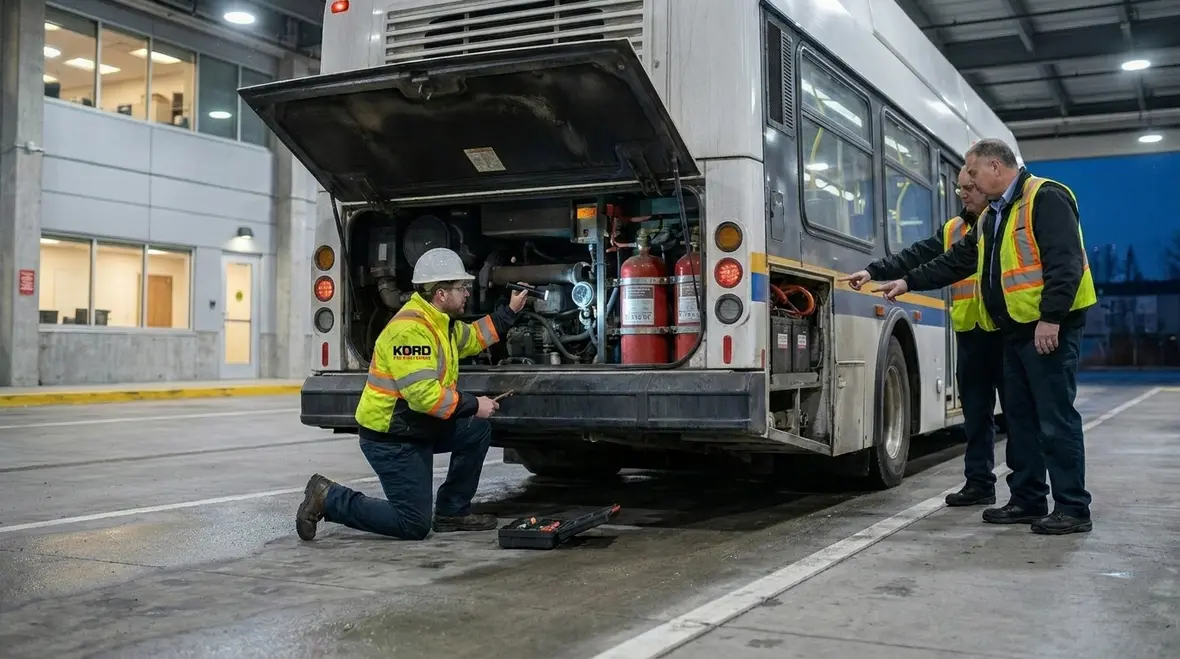
Even a well designed system cannot perform if it gets neglected. Therefore, fleets need structured inspection and testing routines. These include checking agent integrity, verifying detection functionality, and confirming that nozzles, lines, and control components stay clear of obstruction. In addition, technicians must document results so agencies can show due diligence to insurers and regulators.
Maintenance should also consider seasonal changes. Heat and humidity can affect sensors and connections. Dust and debris build up in engine bays and undercarriages. So the system that works in summer must still perform in winter, and the team must treat that as normal work, not a last minute rush.
When maintenance teams follow a clear plan, the bus fire suppression system becomes a dependable part of fleet readiness. The goal is simple: when a real event occurs, the system should respond as designed, not as hoped.
That is also consistent with Kord Fire Protection’s vehicle fire suppression systems maintenance guide, which emphasizes routine inspections, service intervals, and practical checks that keep suppression systems from drifting into a “probably fine” category. Nobody wants “probably fine” protecting a crowded bus.
Operational integration for depots, routes, and response plans
A suppression system protects during an event, but the fleet still needs a whole operational framework around it. That includes depot access policies, emergency procedures, and communication chains. For example, teams should define what happens when a vehicle shows an alert. Who investigates? Who dispatches a supervisor? How does the depot isolate the vehicle and nearby assets? Without these steps, suppression can buy time, but confusion can waste it.
Additionally, fleet managers should align suppression readiness with route planning and driver workflows. Drivers need clear guidance on safe evacuation procedures and what to do while waiting for response. Transit supervisors need consistent reporting forms and escalation paths. And incident commanders need details that help them quickly understand the vehicle configuration.
In this environment, Kord Fire Protection can support more than hardware. It can help fleets build a practical approach that fits training, service schedules, and documentation needs, so safety stays steady even as staff and vehicle counts change.
Why integrated planning keeps people calmer
The real advantage of an integrated program is not just technical performance. It is organizational clarity. Drivers know what an alert means. Maintenance teams know when to inspect. Dispatch knows who to call. Depot staff know how to isolate a vehicle. That sounds simple, but in emergencies, simple beats clever every time. If planning is muddy, even good equipment can end up surrounded by bad decisions.
Costs, compliance, and risk reduction for fleet leaders
Fleet decision makers want clear value. Fire protection should reduce downtime, limit repair costs, and protect human life. However, the cost conversation should include lifecycle thinking. A suppression system involves installation, inspections, testing, and occasional component replacement. When fleets plan these steps early, they avoid costly surprises.
Compliance also matters. Agencies need systems installed to appropriate standards and maintained with records that reflect routine verification. This is where strong partner support helps. Kord Fire Protection can assist agencies in keeping service organized and repeatable, which reduces the stress that usually comes with audits and insurer questions.
Risk reduction also has a hidden benefit: public trust. Riders notice service changes. If an agency can minimize major incidents, it also protects its reputation. And reputations, unlike engine mounts, cannot be replaced at an easy price.
Real deployment examples for modern transit fleets
Consider how fleets manage mixed vehicle types and changing tech. Many agencies now operate buses with updated electrical systems and, in some cases, alternative power sources. Therefore, hazard mapping changes and service teams must adjust inspection focus. Yet the core goal stays the same: control ignition and protect compartments quickly.
In practical deployments, teams often find that the bus fire suppression system works best when installed with attention to compartment geometry, wiring runs, and access for service. They also learn that training and documentation matter as much as the agent itself. When drivers understand the basics and maintenance staff follow the inspection plan, response becomes coordinated.
Below is one snapshot of how a partner approach can streamline readiness. It does not replace site specific planning, but it shows how work usually flows.
| Deployment step | What the fleet gains |
| System installation review and hazard mapping | Clear coverage of high risk areas and fewer last minute fixes |
| Inspection schedules and recordkeeping | Consistent verification and easier audits |
| Driver and supervisor response alignment | Faster actions and safer evacuations |
| Ongoing service support with parts planning | Less downtime and predictable maintenance |
FAQ
Choose a partner that treats bus safety like a system
Fleet leaders should not treat fire suppression as a one time purchase. They should treat it as an ongoing safety program built for depots, routes, and real maintenance realities. By partnering with Kord Fire Protection, agencies can align installation, inspections, documentation, and response readiness so performance stays reliable when it matters most. If the bus fire suppression system is already installed, ask for a review. If not, start planning before the next busy week makes it “later.”
To move from reactive decisions to a steadier fleet protection plan, connect with Kord Fire Protection through its full fire protection services team or go directly to the vehicle fire suppression systems service page for a consultation. When transit safety is handled like a complete system instead of a box to check, everybody wins, especially the people who would prefer their commute not include surprise smoke effects.

Join Our Newsletter!
Get the latest fire safety tips delivered straight to your inbox From our Newsletter.