NFPA 10 Hydrostatic Testing Requirements for Fire Extinguishers
Quick Answer: NFPA 10 hydrostatic testing checks whether a fire extinguisher cylinder can still hold pressure safely. In most cases, testing happens at set intervals based on extinguisher type, with exact pressure and procedure rules tied to the unit’s design. If a cylinder fails, it must be removed from service. Kord Fire Protection can help keep that process smooth, compliant, and far less dramatic than a Hollywood explosion scene.
NFPA 10 hydrostatic testing requirements matter because fire extinguishers are only useful when they work under pressure, quite literally. For commercial and industrial facilities, this testing helps confirm that cylinders can safely contain extinguishing agent and internal force. NFPA 10 sets the framework for frequency, test method, pressure levels, and condemnation rules. As a result, site managers can reduce risk, stay compliant, and avoid the kind of maintenance surprise nobody wants on a busy shift.
If your site also needs broader extinguisher support beyond testing alone, Kord Fire Protection offers fire extinguisher service and certification that fits naturally into a larger compliance plan. That means inspections, maintenance, hydrostatic testing, documentation, and replacement decisions can all stay under one roof instead of becoming a relay race between vendors.
What NFPA 10 Hydrostatic Testing Means
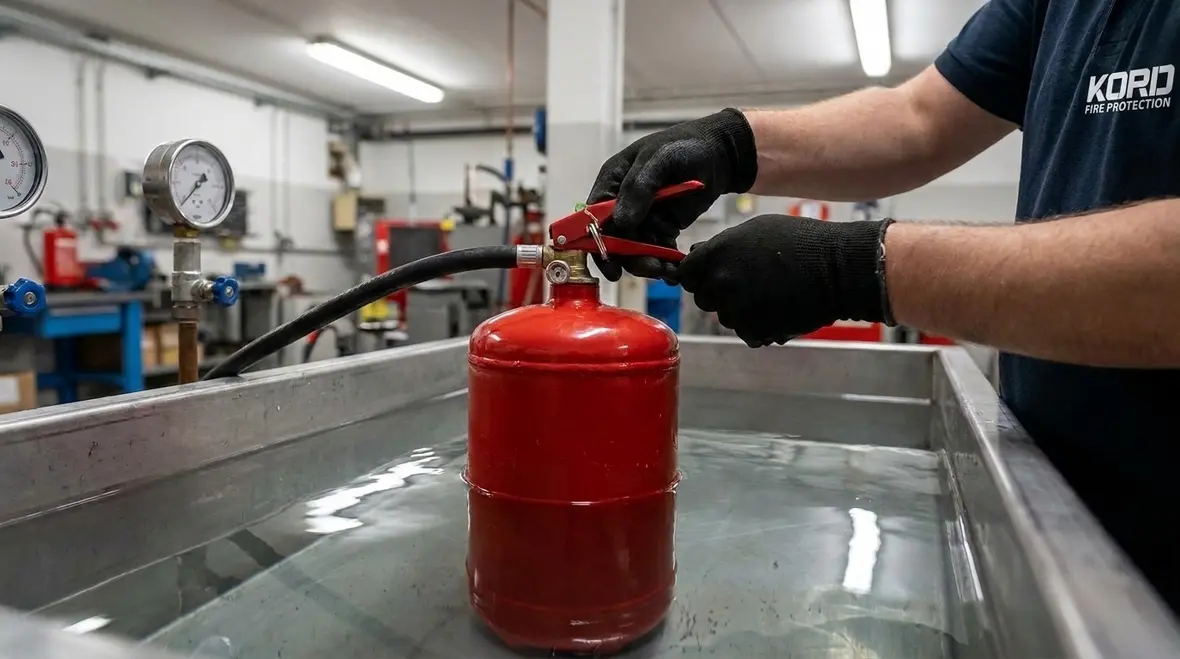
Hydrostatic testing is a pressure test that uses water, or another approved fluid, to check the strength of a fire extinguisher cylinder. The technician fills the cylinder with liquid, pressurises it, and watches for expansion, leaks, or failure. Because liquid does not compress like gas, the test gives a safer and more reliable picture of cylinder strength. In simple terms, it tells the team whether the bottle is still fit for duty or ready for retirement.
This process supports fire safety programs in facilities where equipment faces wear, vibration, corrosion, chemical exposure, or rough handling. Therefore, it is not just a box to tick. It is a real check on whether the extinguisher can still do its job when seconds count. It also works hand in hand with broader maintenance guidance such as NFPA 10 portable fire extinguisher guidelines, which help explain how inspection, maintenance, placement, and testing all connect.
Why pressure integrity matters so much
A fire extinguisher cylinder is not just a container. It is a pressure vessel that has to remain stable over time while sitting in environments that are not always kind to metal. Moisture, impact, poor storage, missed servicing, and corrosion can all weaken it. If the shell loses integrity, the extinguisher may not operate properly, or worse, may become unsafe during service. That is why hydrostatic testing plays such a specific and important role in a proper maintenance schedule.
When Hydrostatic Testing Is Required
NFPA 10 hydrostatic testing requirements depend on the extinguisher type, cylinder material, and service history. Some units need testing every five years, while others may require longer intervals or different rules. For example, stored pressure, cartridge operated, and certain specialty extinguishers do not all follow the same schedule. That means the right test date is not something to guess over a coffee break.
Facility teams should track every extinguisher by model, serial number, and service date. Then they can confirm the correct test cycle before the due date arrives. In busy sites, this matters even more because missed dates can create compliance gaps and downtime. Kord Fire Protection can support this tracking so the site does not have to rely on memory, spreadsheets, or sheer hope. On large properties, that support becomes especially useful when different extinguisher classes, hazard areas, and maintenance dates all overlap at once.
Common reasons dates get missed
Testing dates often slip for very ordinary reasons. Tags get hard to read. Equipment gets moved during renovations. A replacement extinguisher arrives with a different service timeline. A property changes managers and the old records are about as helpful as a napkin in the rain. None of that changes the requirement, though. A dependable tracking system and service partner can prevent small administrative issues from turning into real compliance problems.
How the Testing Process Works
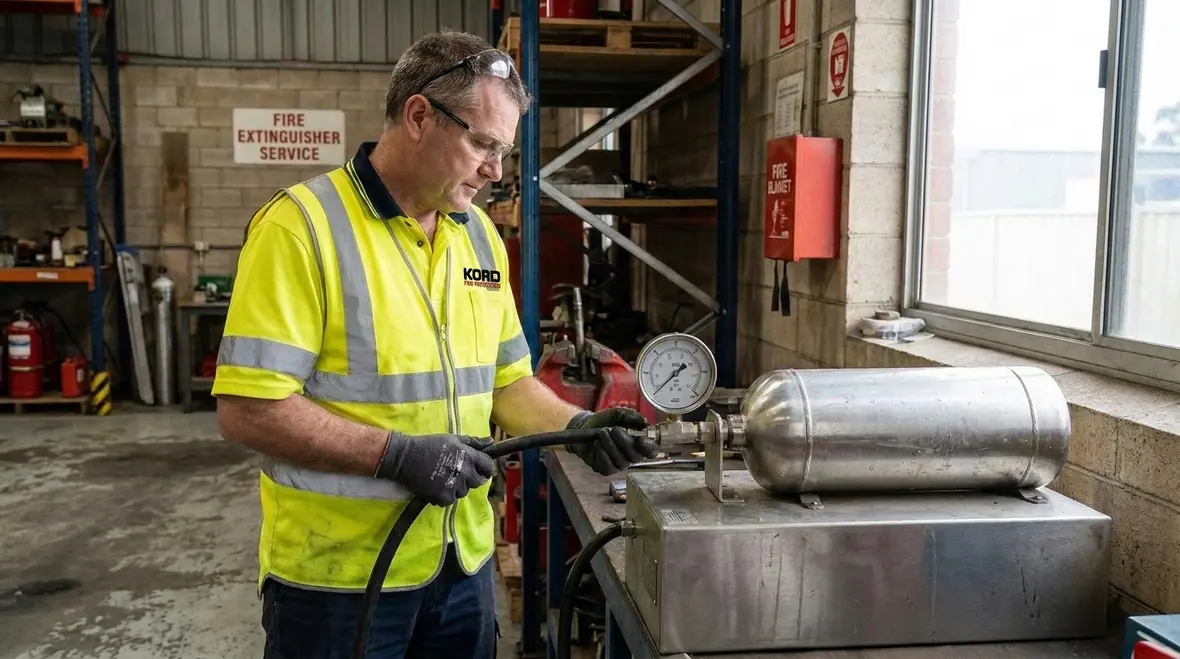
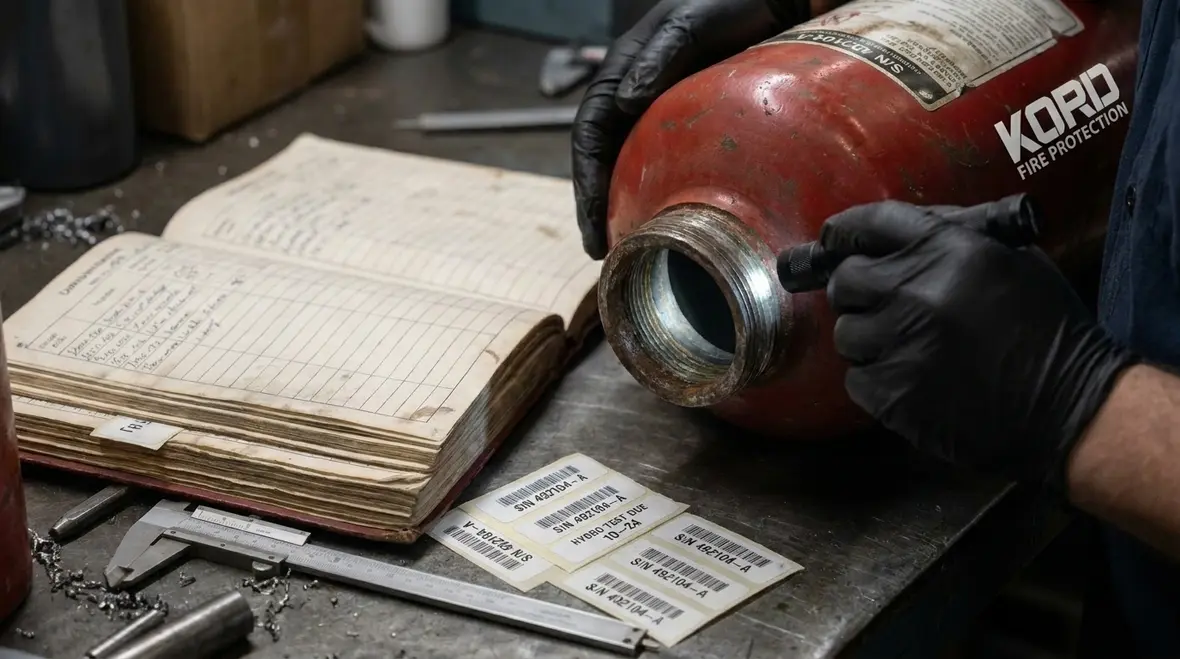
The hydrostatic test follows a clear service sequence. First, the extinguisher is removed from service and fully discharged if needed. Next, the technician inspects the cylinder for dents, corrosion, damage, and thread wear. After that, the unit is prepared for the pressure test using approved fittings and calibrated equipment.
During the test, the cylinder is filled with liquid and pressurised to the required level. The technician checks for permanent expansion, leakage, or distortion. If the cylinder passes, it is dried, reassembled, refilled, and returned to service. If it fails, it is condemned and removed from the system. Like a scene from a spy movie, the cylinder either clears the mission or it does not.
What a qualified technician is really checking
A proper test is not just about watching a gauge climb. The technician is also evaluating condition, compatibility, fittings, threads, visible damage, and whether the extinguisher should even proceed to test in the first place. Some cylinders should be condemned before pressure is applied because the warning signs are already there. That judgment matters. Good service is part procedure, part technical knowledge, and part knowing when a unit has reached the end of the road.
Pressure Levels and Test Standards
The required test pressure depends on the extinguisher rating and cylinder design. NFPA 10 hydrostatic testing requirements call for pressure to be applied according to the manufacturer and the applicable standard for that extinguisher type. Technicians must always use the correct test value, because under testing can miss a problem while over testing can damage a good cylinder. Neither option is a great look.
To keep things clear, the technician must also use calibrated gauges and approved procedures. That way, the pressure result reflects the real condition of the cylinder rather than guesswork. For sites managing multiple extinguisher types, this is where professional service becomes especially valuable. Different agents, shell materials, and valve configurations can mean different service requirements, and that is exactly where shortcuts tend to age badly.
| Extinguisher Condition | What It Means |
| Passes hydrostatic test | It may be cleaned, reassembled, refilled, and returned to service |
| Leaks, expands too much, or distorts | It fails the test and must be removed from service |
| Shows corrosion, cracks, or thread damage | It may be condemned before or during testing |
Documentation matters more than people think
A passed test still needs proper records. Tags, reports, dates, serial number references, and service notes help prove compliance and simplify future scheduling. Without documentation, even well performed work can become difficult to verify during an audit, inspection, or property review. In practice, strong recordkeeping saves time, reduces confusion, and gives facility teams one less mystery to solve on a Tuesday morning.
When an Extinguisher Must Be Condemned
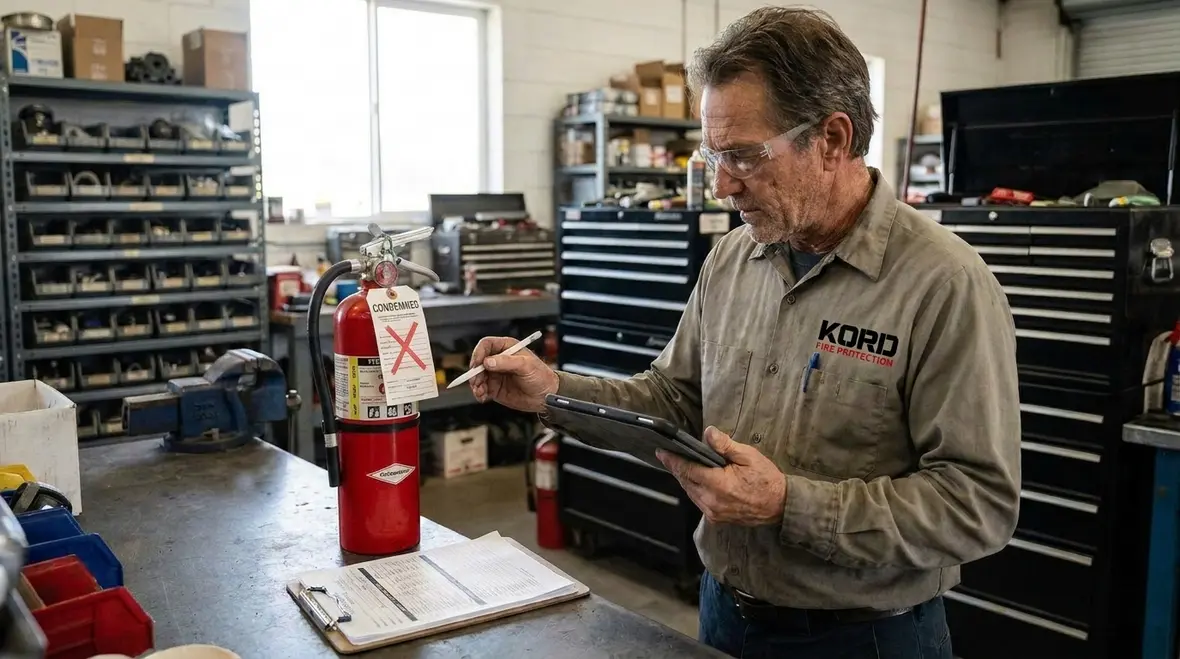
Condemnation happens when a cylinder no longer meets safety or performance requirements. This may occur after a failed hydrostatic test, severe corrosion, physical damage, broken threads, or other signs of weakness. Once condemned, the unit cannot go back into service. It must be taken out of circulation and handled according to the applicable disposal or replacement process.
This step protects people, property, and operations. After all, a compromised cylinder is not a safety device. It is a future problem wearing a red coat. Facility managers should treat condemnation as a firm end point, not a negotiable service note. If replacement is needed, Kord Fire Protection also provides fire extinguisher replacement so failed units can be removed and updated without dragging the process out longer than necessary.
Why Kord Fire Protection Can Make a Difference
Kord Fire Protection can become a vital partner because hydrostatic testing is not just about equipment. It is about planning, compliance, records, and reliable turnaround. A strong service partner helps facilities identify which extinguishers need testing, which ones need replacement, and which ones must be condemned. That saves time and reduces risk across industrial, retail, and commercial environments.
In addition, Kord Fire Protection can help streamline inspections, service logs, and retesting schedules. As a result, site managers gain a clearer view of compliance and less pressure on internal teams. In a world where everyone already has enough to manage, that kind of support is worth its weight in stainless steel. Kord also offers broader full fire protection services for facilities that want one coordinated partner across extinguishers, alarms, sprinklers, and related system support.
FAQ
Keep Compliance Simple
NFPA 10 hydrostatic testing requirements protect facilities from hidden cylinder failure and keep fire extinguishers ready when needed. The smartest move is to work with a trusted service partner that can manage testing, condemnation, and records with care. Kord Fire Protection can help keep the process clear, compliant, and on schedule.
That way, the site stays protected, and nobody has to improvise with a fire risk and a prayer. When hydrostatic testing is handled properly, teams gain confidence that extinguishers are not just present on the wall, but actually ready to perform when pressure, heat, and chaos show up uninvited.

Join Our Newsletter!
Get the latest fire safety tips delivered straight to your inbox From our Newsletter.