
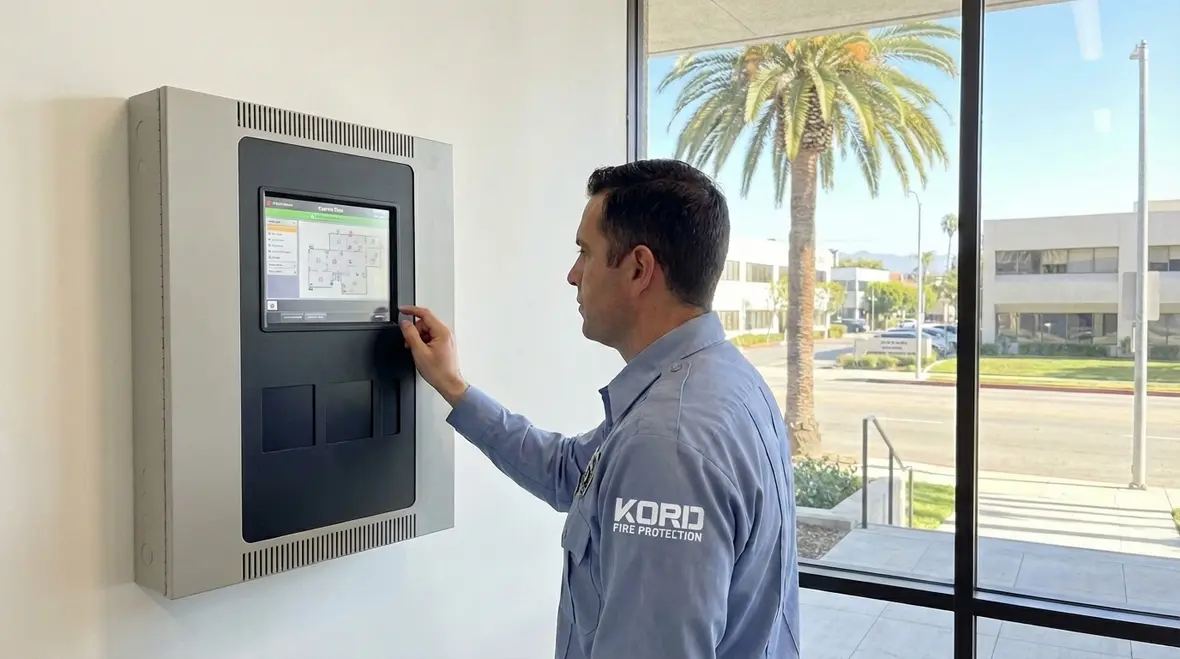
Burbank Fire Alarm System Upgrades for Commercial Buildings
When it comes to Burbank fire alarm systems, commercial property owners know one truth. Safety is not optional. It is foundational. From media studios to medical offices, buildings across the city depend on reliable detection and notification systems that work without hesitation. Yet many properties still rely on aging panels, outdated wiring, or devices installed decades ago. That is where Fire Alarm System Upgrades for Burbank Commercial Buildings step into the spotlight. And as Kord Fire Protection technicians often explain in their calm, steady way, upgrading is not about bells and whistles. It is about clarity, compliance, and confidence.
If your building’s systems need more than just alarms, Kord Fire can also support you with full Burbank fire protection services, from sprinklers to suppression and monitoring.
Why Modern Fire Alarm System Upgrades Matter More Than Ever
Commercial buildings in Burbank face evolving fire codes, increased occupancy demands, and new technology standards. Therefore, older systems often struggle to keep up. While a panel installed in the early 2000s may still power on, it may not meet current California code requirements. In addition, replacement parts for outdated systems can be hard to find, which turns a simple repair into a scavenger hunt.
Kord Fire Protection technicians explain that upgrades often begin with one simple discovery. The system works, but it no longer communicates effectively. For example, many older systems lack advanced detection features such as addressable devices. Without those, staff may know there is smoke somewhere, but not exactly where. In an emergency, seconds matter. Guesswork does not help.
Moreover, modern systems integrate with building automation, access control, and mass notification tools. Consequently, property managers gain faster alerts and better control. It is like upgrading from a flip phone to a smartphone. Sure, both make calls. However, only one sends maps, emails, and maybe a meme or two.
How Do I Know If My Commercial Fire Alarm System Needs an Upgrade?
Property owners often type that exact question into search bars. The answer usually reveals itself in patterns.
Frequent false alarms
First, frequent false alarms signal trouble. Although occasional issues happen, repeated false alarms disrupt tenants and strain local fire resources. Furthermore, they can create complacency, which is dangerous.
Failed inspections and non compliant features
Second, failed inspections highlight deeper problems. If an inspector cites outdated components or non compliant features, it is time to act. Additionally, if parts are discontinued, maintaining the system becomes expensive and unreliable.
Renovations and changing occupancies
Third, building renovations trigger upgrade requirements. Whenever walls move or occupancy changes, codes may require updates. Kord Fire Protection technicians often walk building owners through this process step by step, translating code language into plain English. They know most clients would rather read a movie script than a fire code manual.
Core Components That Typically Get Replaced
Upgrading does not always mean tearing everything out. Instead, it involves strategic improvements. However, certain components frequently require replacement.
Control Panels
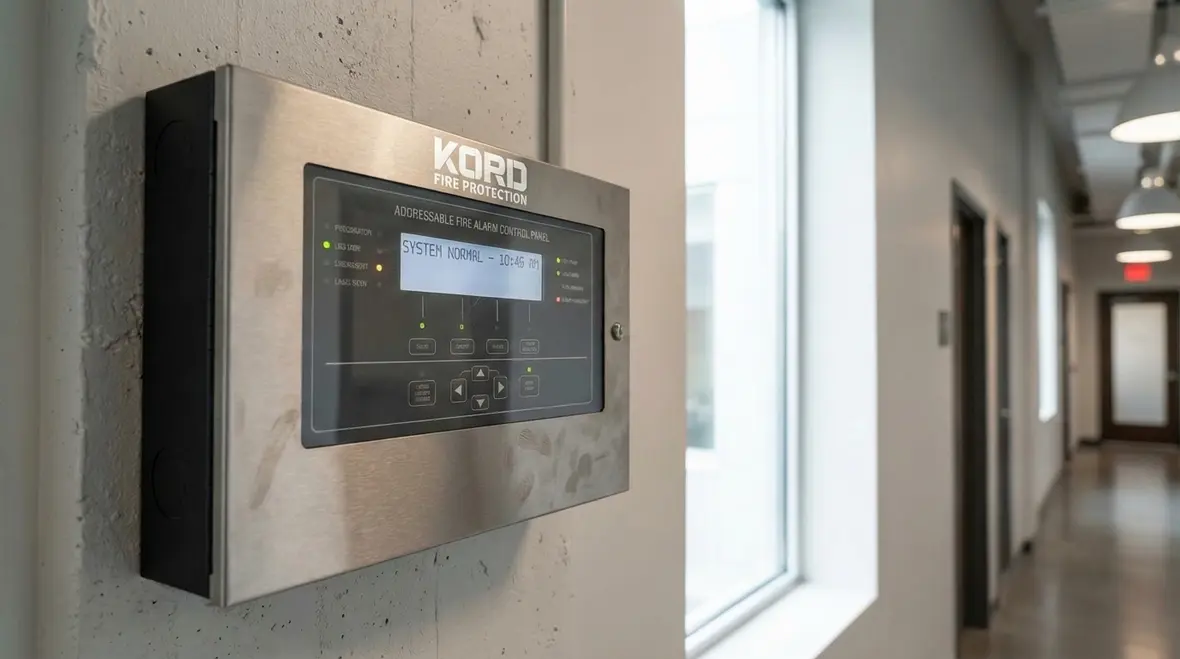
Modern panels offer addressable technology. As a result, each device has a unique identifier. When a detector activates, the panel displays the exact location. This precision speeds response times and reduces confusion.
Smoke and Heat Detectors
New detectors reduce false alarms by distinguishing between steam, dust, and actual smoke. Consequently, businesses avoid unnecessary evacuations. Nobody wants to clear an entire office because someone burned popcorn in the break room. Again.
Notification Appliances
Strobes and speakers now meet updated visibility and audibility standards. In addition, voice evacuation systems provide clear instructions instead of simple tones. A calm recorded message can guide occupants far better than a loud beep.
Monitoring and Communication Modules
Older phone line connections are fading out. Therefore, many upgrades include cellular or IP based communication. This ensures signals reach monitoring centers even if traditional lines fail.

Comparing Legacy Systems and Modern Solutions
Legacy Systems
- Zone based detection
- Limited integration
- Frequent false alarms
- Hard to source parts
- Basic audible alerts
Modern Systems
- Addressable devices
- Integration with security and HVAC
- Smart detection technology
- Manufacturer support
- Voice evacuation and visual clarity
As shown above, the difference is not subtle. While legacy systems served their time well, today’s commercial environments demand more precision and adaptability. Therefore, upgrading Burbank fire alarm systems becomes less of a luxury and more of a strategic move.
Compliance with California Codes and Local Burbank Requirements
California maintains strict fire safety standards. Moreover, local Burbank regulations add layers of oversight. Because of this, commercial property owners must stay proactive.
Kord Fire Protection technicians explain code updates in practical terms. For example, certain occupancies now require enhanced low frequency sounders for sleeping areas. Additionally, accessibility standards mandate specific strobe placement and intensity. These are not suggestions. They are enforceable requirements.
Upgrading ensures buildings pass inspections smoothly. Furthermore, it reduces liability risks. In the event of a fire, documentation of compliant Burbank fire alarm systems demonstrates due diligence. That matters not only to inspectors but also to insurance providers and legal teams.
Besides, no owner wants to face tenants with the phrase, “We meant to fix that.” Prevention always sounds better than apology.
Integration with Other Building Systems
Modern commercial properties operate like ecosystems. Fire alarms no longer stand alone. Instead, they connect with sprinklers, elevators, access control, and HVAC systems.
For instance, when smoke triggers a detector, the system can automatically shut down air handling units. Consequently, it slows smoke spread. At the same time, elevators can recall to safe floors. Doors can unlock for safe exit. This coordinated response improves safety dramatically.
Kord Fire Protection technicians often demonstrate how integration works during consultations. They show building managers how one signal can trigger multiple protective actions. It feels a bit like watching dominoes fall in perfect order, except these dominoes protect lives.
Additionally, integration simplifies monitoring. Facility teams can view system status from centralized dashboards. Therefore, they spend less time chasing panels across mechanical rooms.
Planning the Upgrade Without Disrupting Business
One common concern involves downtime. After all, commercial buildings cannot simply pause operations. However, careful planning minimizes disruption.
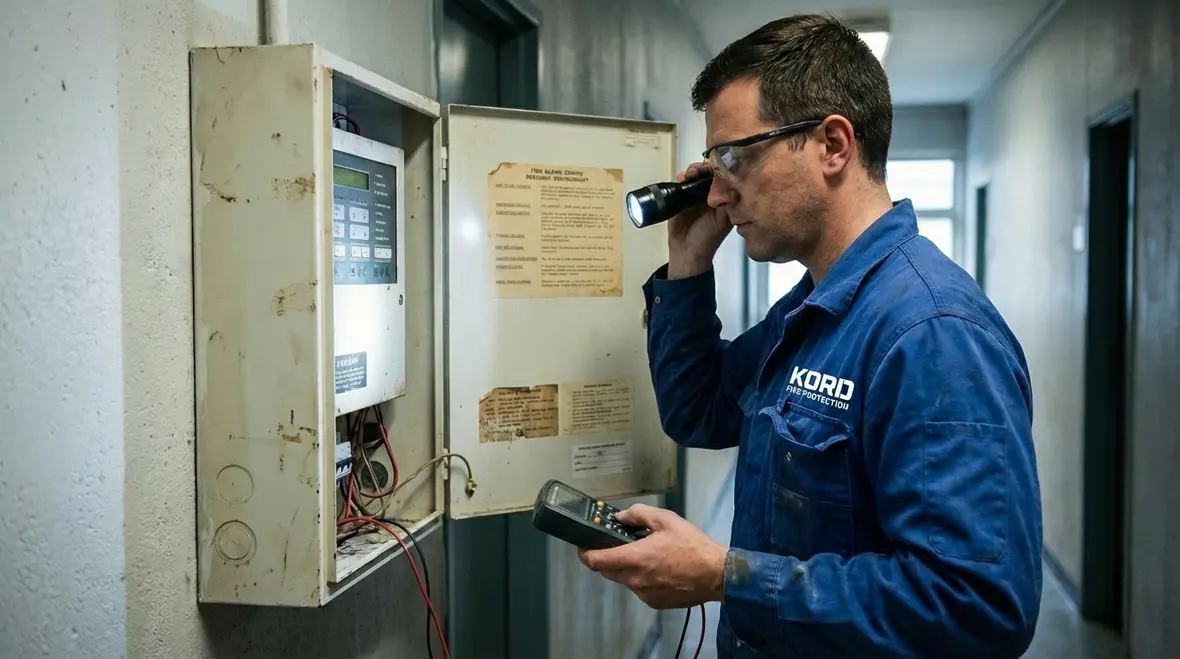
First, technicians conduct a thorough assessment. They review as built drawings, inspect devices, and evaluate wiring pathways. Next, they design a phased upgrade plan. This approach allows sections of the building to remain operational while work progresses in stages.
Moreover, installations often occur during off hours. Kord Fire Protection technicians coordinate closely with property managers to schedule work strategically. Communication remains clear throughout the process. As a result, tenants stay informed and prepared.
Temporary systems may also be installed to maintain coverage during transitions. Therefore, safety never takes a back seat. Even during upgrades, protection remains active and reliable.
Long Term Value and Return on Investment
Although upgrades require upfront investment, they deliver long term savings. First, modern systems reduce maintenance calls. Second, they lower false alarm fines. Third, energy efficient components decrease power consumption.
In addition, improved reliability protects business continuity. A fast, accurate response reduces damage and downtime. For commercial properties in Burbank, that stability translates to tenant satisfaction and stronger retention.
Insurance carriers may also view upgraded fire alarm infrastructure favorably. Consequently, some property owners see improved policy terms. While no one upgrades solely for paperwork perks, those benefits certainly help.
Most importantly, upgraded Burbank fire alarm systems protect people. Employees, clients, visitors. Real humans with families and plans for the weekend. That perspective reframes the investment entirely.
FAQ About Fire Alarm System Upgrades
Secure the Future with Confidence
Fire safety does not need to feel overwhelming. With expert guidance and careful planning, upgrades become clear, manageable steps toward stronger protection. Kord Fire Protection technicians stand ready to explain every detail, answer every question, and design solutions tailored to each property.
For commercial owners seeking dependable, compliant, and future ready protection, now is the time to act. Connect with the team and bring your building’s fire safety into the modern age. If your facility needs support beyond alarms, explore Kord Fire’s full fire protection services for comprehensive sprinklers, suppression, and ongoing inspections across Southern California.
Know Your Weapon Before You Fight the Flame
Kord Fire Protection is your go-to when it comes to all things fire protection. For over 20 years, we’ve been serving Southern California with the quality service and equipment to keep your home or business safe at all times. Our competitive prices reflect our unwavering commitment to protecting what matters most in the event of a fire emergency. Give us a call, send an email, or use that form!

Join Our Newsletter!
Get the latest fire safety tips delivered straight to your inbox From our Newsletter.


