Bell Gardens Fire Hydrant Testing Guide
Bell Gardens Fire Hydrant Testing: Why It Matters More Than Most People Think
In the heart of the city, where traffic hums and neighborhoods grow block by block, Bell Gardens fire hydrant testing plays a quiet yet powerful role in public safety. Within the first few moments of an emergency, water pressure can mean the difference between a close call and a catastrophe. That is why trained professionals, including Kord Fire Protection technicians, approach every hydrant with focus, precision, and a calm confidence that puts property owners at ease.
They do more than twist a valve and hope for the best. Instead, they explain each step, translate technical details into plain language, and ensure that every hydrant stands ready for the day it is called into action. Because when fire strikes, there is no time for guesswork. And frankly, guessing belongs in game shows, not in fire protection.
If you manage property in Bell Gardens, your hydrants are part of a bigger safety ecosystem that includes sprinklers, alarms, extinguishers, and trained first responders. That is why many local owners pair hydrant testing with broader Bell Gardens fire protection services to keep everything inspection ready, not just the fixtures on the curb.
The Real Purpose Behind Fire Hydrant Inspections
At first glance, a fire hydrant may look like a simple metal fixture painted red, yellow, or sometimes a color that feels straight out of a comic book. However, beneath that sturdy exterior lies a connection to a complex water distribution system. Therefore, routine inspections and flow tests are essential to confirm that water moves freely and at the correct pressure.
Bell Gardens fire hydrant testing ensures that hydrants deliver enough gallons per minute to support firefighting efforts. During an emergency, firefighters rely on consistent flow and pressure. If sediment builds up inside the line or a valve sticks, response time suffers. As a result, regular testing prevents unpleasant surprises.
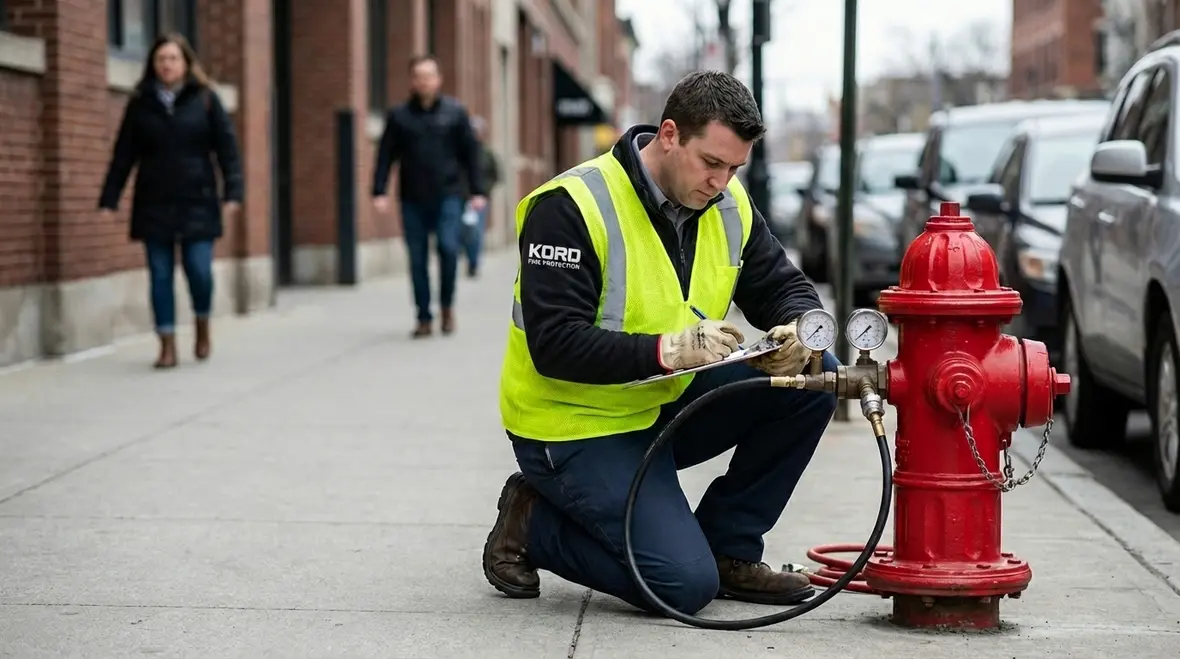
Kord Fire Protection technicians approach each hydrant with a methodical plan. First, they inspect visible components for damage or corrosion. Next, they perform flow testing using calibrated equipment. Then, they record pressure readings and compare them to required standards. Because data tells the story, every number matters.
Although hydrants may appear sturdy enough to survive a superhero landing, they still require maintenance. Metal corrodes. Gaskets wear down. Soil shifts. Consequently, proactive testing protects both property and lives.
What Happens During Bell Gardens Fire Hydrant Testing?
Many property owners ask what actually happens during a hydrant test. The process is straightforward, yet it demands skill and attention to detail.
Technicians begin by checking the hydrant’s physical condition. They look for leaks, damaged caps, and proper clearance around the unit. After all, a hydrant hidden behind overgrown shrubs is about as useful as a flashlight with no batteries.
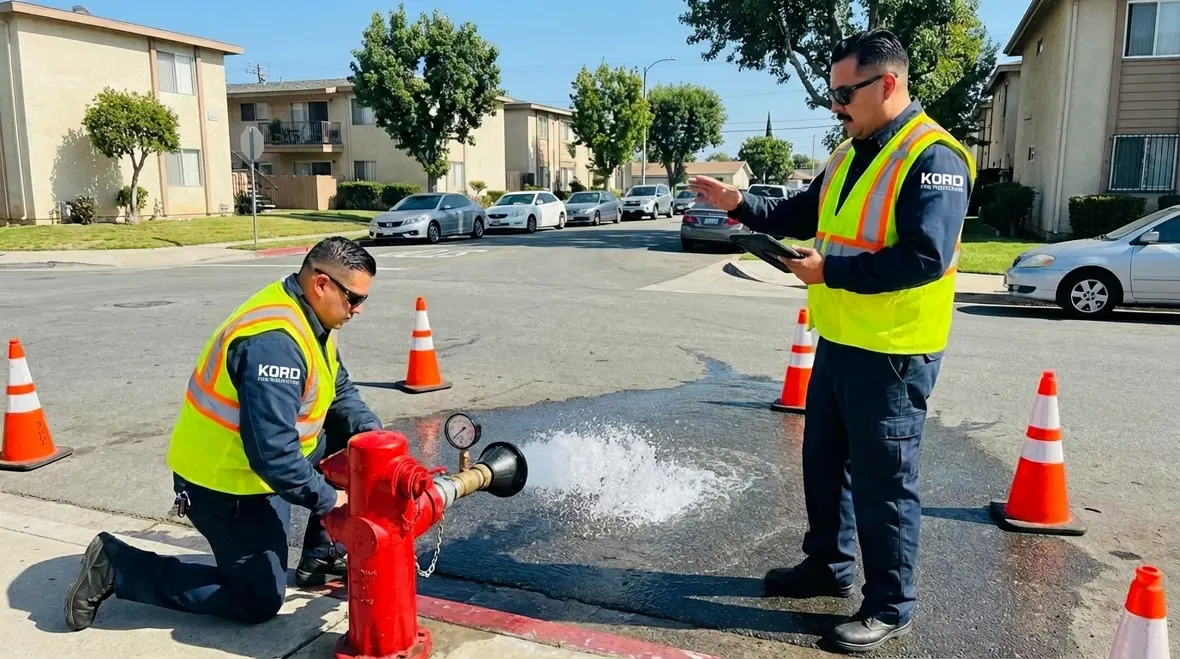
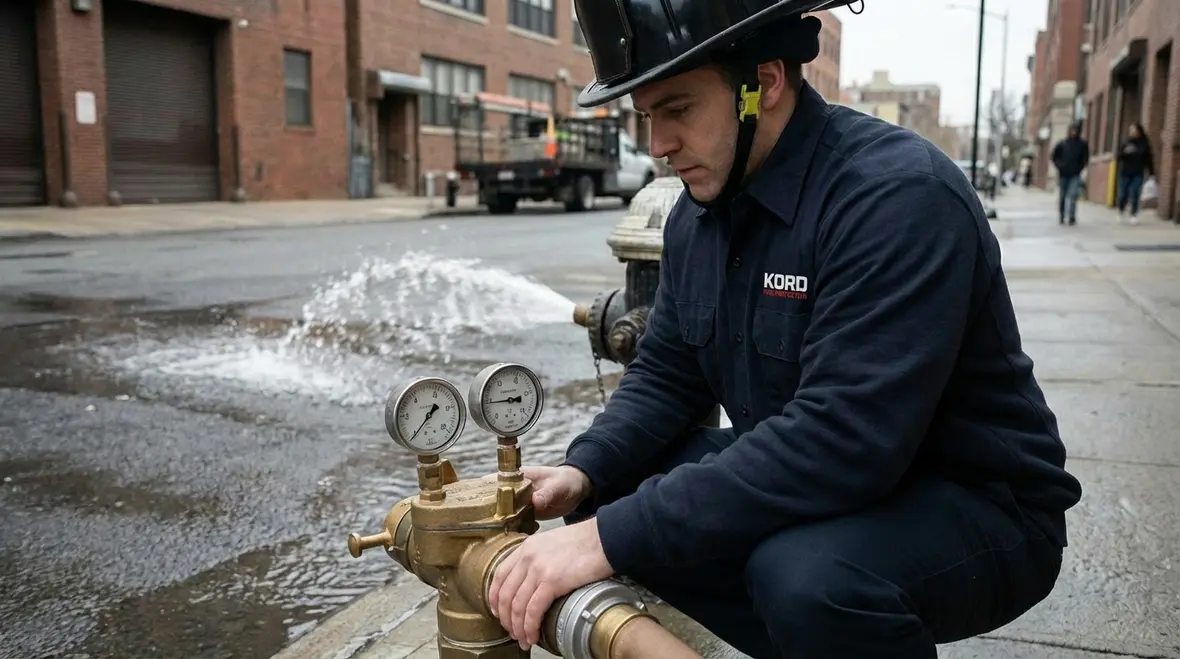
Next comes the flow test. A diffuser directs water safely into the street while specialized gauges measure static pressure, residual pressure, and flow rate. Meanwhile, technicians monitor for vibration, unusual noises, or pressure drops that could signal deeper issues.
Finally, they document everything. This documentation supports fire department requirements, insurance compliance, and local regulations. In addition, clear records provide proof that the property owner has taken responsible steps toward fire safety.
Throughout the process, Kord Fire Protection technicians explain each reading in plain terms. Instead of overwhelming clients with jargon, they break it down calmly. They might say, “This number shows how much water your system can deliver during peak demand.” Simple. Clear. No dramatic soundtrack required.

Understanding Local Codes and Compliance in Bell Gardens
Fire protection is not optional. Local and state regulations require routine inspection and testing of hydrants to ensure readiness. Therefore, property managers, industrial facilities, and commercial buildings must stay aligned with compliance standards.
Bell Gardens fire hydrant testing supports adherence to fire codes and water authority guidelines. While requirements may vary based on property type, annual testing is common. Some high risk facilities may require more frequent evaluations.
Kord Fire Protection technicians stay current with local ordinances. As regulations evolve, they adjust procedures accordingly. This proactive approach prevents costly violations and unexpected fines. Because nobody enjoys surprise expenses, especially the kind that arrive in official envelopes.
Moreover, compliance strengthens insurance standing. Many insurance carriers request documented proof of hydrant flow testing. Consequently, consistent testing can support smoother claims processes and demonstrate responsible risk management.
Common Issues Found During Hydrant Testing
Column One: Mechanical and Physical Concerns
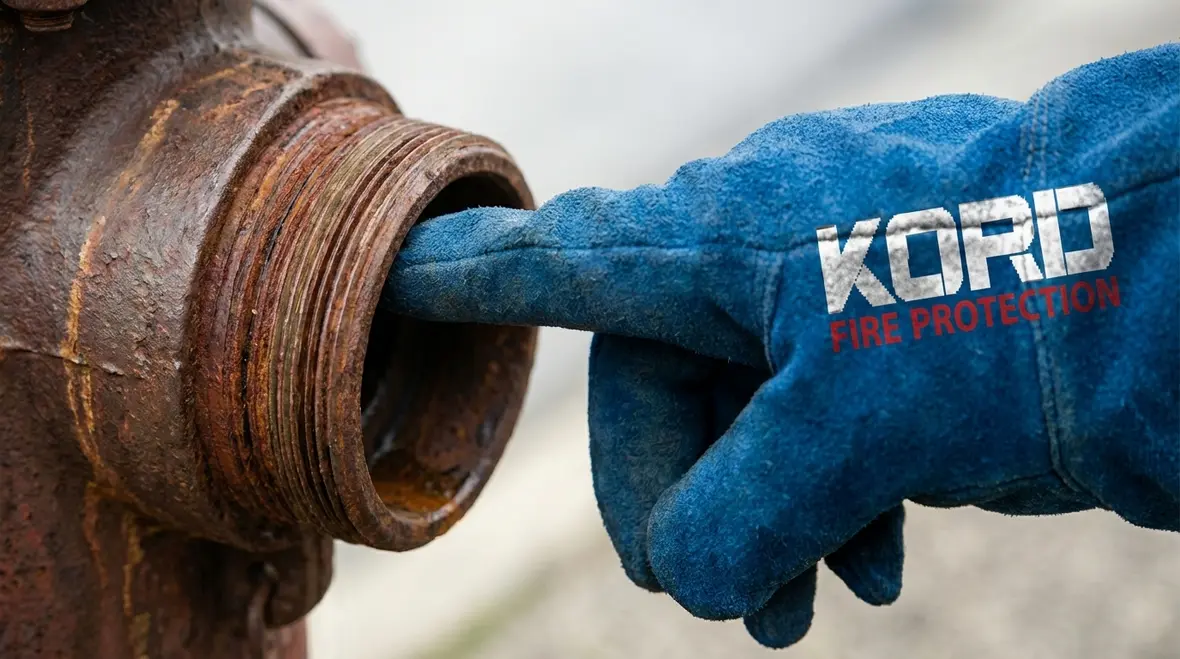
- Corroded or damaged outlet threads
- Leaking valves or worn gaskets
- Obstructed access due to landscaping or vehicles
- Improper hydrant height after street resurfacing
Column Two: Performance and System Concerns
- Low static water pressure
- Significant drop in residual pressure during flow
- Blocked underground supply lines
- Sediment discharge indicating pipe buildup
Because these issues often develop slowly, they may go unnoticed without professional evaluation. However, during Bell Gardens fire hydrant testing, technicians identify early warning signs. Then, they recommend corrective action before the problem escalates.
For example, sediment buildup might suggest aging pipes. Addressing the issue promptly can restore proper flow capacity. Likewise, replacing worn gaskets prevents leaks that waste water and weaken system integrity.
How Often Should Hydrants Be Tested in Bell Gardens?
This question surfaces often, and the answer depends on property type and local authority requirements. Generally, annual testing meets compliance standards for most commercial properties. However, facilities with higher fire risks may require more frequent assessments.
Bell Gardens fire hydrant testing programs typically align with municipal guidance and fire department recommendations. Therefore, property owners should consult with experienced professionals to establish a testing schedule tailored to their needs.
Kord Fire Protection technicians guide clients through this decision. Rather than offering a one size fits all solution, they assess occupancy type, building size, and water supply configuration. As a result, each property receives a practical testing plan grounded in real data.
Consistency matters. Regular testing builds a historical record of pressure and flow trends. Over time, this data reveals patterns that can signal infrastructure changes. Because systems age gradually, trend analysis helps predict future maintenance needs.
The Role of Professional Technicians in Reliable Results
Not all testing delivers equal value. Experience, equipment quality, and attention to detail directly affect accuracy. Therefore, choosing trained professionals ensures reliable measurements and meaningful interpretation.
Kord Fire Protection technicians combine technical skill with steady communication. They calibrate equipment before each use. They follow structured procedures. And importantly, they prioritize safety for pedestrians and nearby traffic during testing.
While a hydrant test may look dramatic with water rushing into the street, the process follows careful control measures. Diffusers manage water direction. Technicians monitor pressure continuously. Meanwhile, safety cones and signage protect the area.
In addition, they provide clear reports that outline findings, corrective actions, and compliance status. This transparency builds trust. Property owners understand not only what the numbers say, but what those numbers mean for their operations.
Fire Hydrant Maintenance as Part of a Bigger Safety Strategy
Although hydrant testing stands on its own, it fits within a larger fire protection framework. Sprinkler systems, fire alarms, extinguishers, and emergency lighting all work together. Therefore, hydrant performance supports overall system readiness.
If a sprinkler system demands supplemental water from a hydrant connection, flow capacity becomes critical. Consequently, routine testing strengthens the entire safety network. It is a chain, and every link must hold.
Bell Gardens fire hydrant testing contributes to community resilience. When hydrants function properly, firefighters operate with confidence. Businesses recover faster from incidents. Residents feel safer. And that sense of security, while hard to measure, carries real value.
Besides, no one wants to discover a faulty hydrant during a real emergency. That would be like finding out your parachute needs repairs while already in the air. Better to check it on the ground, calmly and methodically.
FAQ: Fire Hydrant Testing in Bell Gardens
Conclusion: Protect What Matters Most
Bell Gardens fire hydrant testing safeguards businesses, families, and first responders with every measured gallon of water. Kord Fire Protection technicians stand ready to assess, explain, and strengthen each connection to the city’s water supply. Therefore, property owners should not wait for an emergency to reveal hidden flaws. Schedule professional testing today and ensure that when the moment comes, the hydrant performs exactly as it should. Reliable protection begins with preparation.
To build a complete safety strategy, many local owners pair hydrant inspections with broader support such as Bell Gardens fire protection services and region wide full fire protection services. From sprinklers and alarms to hydrants and fire pumps, one coordinated plan keeps your property inspection ready and your people safer every day.
Know Your Weapon Before You Fight the Flame
Kord Fire Protection is your go-to when it comes to all things fire protection. For over 20 years, we’ve been serving Southern California with the quality service and equipment to keep your home or business safe at all times. Our competitive prices reflect our unwavering commitment to protecting what matters most in the event of a fire emergency. Give us a call, send an email, or use that form!

Join Our Newsletter!
Get the latest fire safety tips delivered straight to your inbox From our Newsletter.