
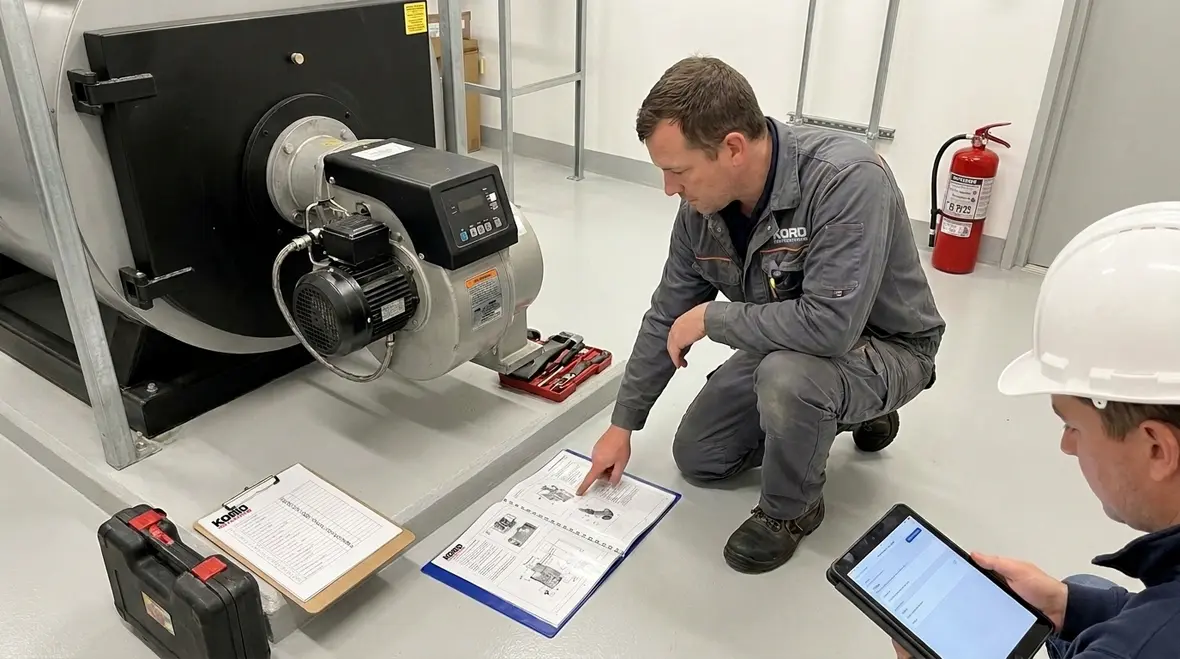
NFPA 31 Section 12.5: Following Used Oil Appliance Installation Instructions
Quick Answer
NFPA 31 Section 12.5 requires facilities to install used oil appliances exactly according to the appliance manufacturer’s installation instructions and any listed requirements. The rule ties compliance to real-world documentation control, maintenance access, venting practices, and field verification during inspection.
Facilities that want stronger documentation control and inspection readiness can also review fire safety system documentation for compliance, which fits naturally with instruction-based installation tracking and record retention. ([kordfire.com](https://kordfire.com/fire-safety-system-documentation-for-compliance/?utm_source=openai))
Why NFPA 31 Section 12.5 matters in commercial used oil installations
In commercial, industrial, and retail facilities, used oil appliance work often involves multiple vendors, contractors, and service cycles. NFPA 31 used oil appliance installation instructions act as the compliance backbone for safe operation because appliance performance depends on correct setup, correct interfaces, and correct commissioning. Section 12.5 centers on a practical requirement: the installer follows the appliance instructions, not just the minimum code language.
For compliance teams, this shifts the focus from “did the work pass a quick check” to “can the facility demonstrate that the installation followed the stated requirements.” That matters during inspections, insurance reviews, audits, and later troubleshooting when the appliance behavior points back to configuration errors.
What Section 12.5 requires: the instruction driven installation standard
NFPA 31 Section 12.5 addresses appliance installation instructions as the controlling document for used oil equipment. The facility must ensure the following elements align with the manufacturer’s requirements:
- Installation sequence and setup steps, including pre use preparation and required component positioning.
- Mechanical connections and interfaces, including fuel supply, burner assembly connections, and any specified fittings or adapters.
- Clearances and access for service, cleaning, and operational checks, as defined by the appliance instruction manual.
- Venting, draft control, and exhaust routing, using the vent system configuration the instructions specify.
- Controls and safety devices, including any required wiring method, settings, and functional verification steps.
- Commissioning and initial test requirements called out in the instruction package.
In practice, the biggest compliance failures come from skipped steps. Common examples include “installing it close enough” to allow maintenance access, using substitute components that the instructions do not approve, or adopting a venting approach based on experience rather than the appliance documentation.
How inspectors verify instruction compliance
Field verification typically looks for consistency between installed conditions and the instruction manual requirements. Inspectors and AHJs often expect evidence such as:
- Documented installation references, including the specific appliance model instruction set used at the time of installation.
- Clear labeling of components where the manufacturer requires it.
- Vent and connection layouts consistent with the specified diagrams and parts list.
- Proof of functional checks performed during commissioning and service.
When documentation is missing or the appliance instructions are not traceable to the equipment installed, compliance risk increases. This becomes a major operational issue in multi tenant and frequently serviced facilities.
Common failure points when NFPA 31 used oil appliance installation instructions are not followed
Used oil appliances operate in conditions that punish installation errors. Small deviations can create unstable combustion, inconsistent atomization, improper draft, or unsafe cycling of controls. The following failure points show up repeatedly in commercial maintenance and inspection programs.
1) Venting and draft issues caused by incorrect routing or configuration
Many appliance instructions specify vent diameter, termination method, and allowable offsets or routing practices. Deviations can lead to poor draft, flue gas spillage risk, or unstable burner operation. Even when the appliance starts, incorrect venting may cause intermittent problems that appear only after warm up cycles.
2) Fuel delivery and connection mismatches
Instruction driven requirements may include specified hose or pipe materials, filter arrangements, and connection points. Substituting components or skipping required filtration steps can introduce contamination into the burner system. The result often includes clogged components, nuisance shutdowns, or accelerated wear.
3) Clearance and service access failures
Instruction manuals frequently specify minimum clearances for combustion air pathways, heat shielding, and service tasks. Facilities that reduce clearances to fit equipment into tight plant rooms often create an ongoing maintenance constraint. Over time, this increases the likelihood that service staff will defer cleaning or inspections, which directly impacts safe operation.
4) Controls and safety verification not completed as required
Section 12.5 alignment typically means installers perform any required functional testing steps. Skipped checks can leave safety device behavior unverified. In commercial environments, this becomes a high severity risk because recurring operational demands and staff turnover increase the chance that “temporary shortcuts” persist.
Operational compliance: document control, commissioning, and maintenance routines
Following NFPA 31 used oil appliance installation instructions cannot rely on memory or verbal confirmation. A robust compliance program builds traceability into day to day operations.
Document control that holds up during audits
Facilities should maintain a controlled set of records that links the appliance, the instruction manual version, and the installation outcome. At minimum, the compliance file should include:
- Model and serial number identification for every used oil appliance.
- The exact installation instruction set provided by the manufacturer at the time of installation.
- Completed checklists that reflect the instruction steps, including commissioning tests.
- After installation service records showing that periodic maintenance continues to align with the original instruction requirements.
Commissioning steps that prevent long term drift
Commissioning is where instruction compliance becomes measurable. The appliance instructions often specify verification points that confirm correct operation, such as burner stability observations, control sequence verification, and venting performance checks. In commercial facilities, commissioning also provides a baseline that later maintenance teams can compare against when troubleshooting performance complaints.
Maintenance requirements aligned to the instruction set
NFPA 31 compliance does not end after installation. Maintenance must preserve the instruction intended operation. Common operational drift includes filter neglect, burner component wear, and changes to adjacent piping or electrical components that break the original instruction alignment.
To address these recurring issues, Kord Fire Protection supports commercial used oil appliance compliance through practical inspection planning, maintenance coordination, and documentation support, helping facilities reduce the risk of repeat deficiencies across inspection cycles. Kord Fire positions its broader service model around scheduled inspections, routine testing, preventive maintenance, and compliance-focused support for commercial facilities. ([kordfire.com](https://kordfire.com/?utm_source=openai))
Integrating Section 12.5 with broader oil burning equipment installation practice
Section 12.5 functions as a critical linkage between NFPA 31 requirements and the appliance specific installation instructions. Facilities should treat appliance documentation as part of the overall installation control strategy for oil burning equipment.
For a trade oriented overview of installation practices and compliance considerations for oil burning equipment, refer to this practical guide: NFPA 31 a practical guide to oil burning equipment installation. Using this type of framework helps teams build consistent checklists that support instruction following on the job site. ([kordfire.com](https://kordfire.com/nfpa-31-a-practical-guide-to-oil-burning-equipment-installation/?utm_source=openai))
Frequently Asked Questions
Call to action
Ensure NFPA 31 used oil appliance installation instructions are followed and provable for inspection readiness. Kord Fire Protection helps commercial facilities build instruction based checklists, verify commissioning steps, and maintain ongoing compliance through practical inspections and maintenance support. Contact Kord Fire Protection to review your current used oil appliance documentation and installation records, then set a verification plan that reduces operational risk and repeated deficiency exposure.

Join Our Newsletter!
Get the latest fire safety tips delivered straight to your inbox From our Newsletter.



