
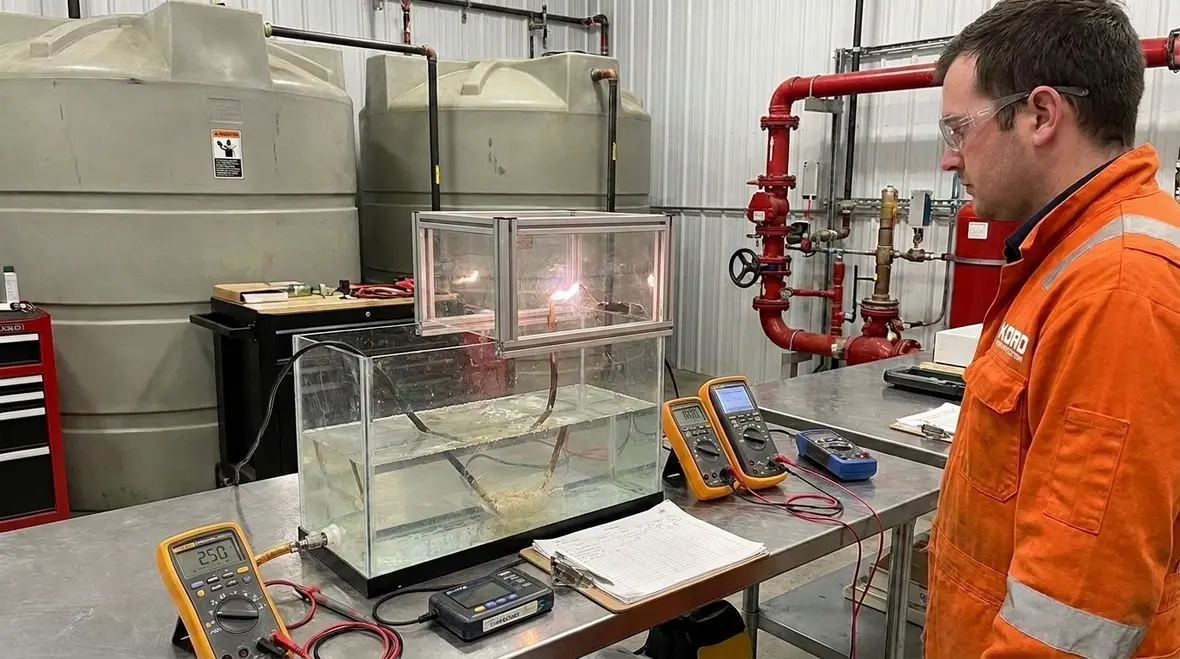
NFPA 18A Section 8.4: The Arc Conductor Test for Water Additives
Quick Answer
NFPA 18A Section 8.4 specifies how to evaluate water additives in arc conductor systems, including how to confirm safe, repeatable arc test performance. For facilities, the key is verifying correct additive concentration, test setup integrity, and documentation to support ongoing compliance.
What NFPA 18A Section 8.4 requires for the arc conductor test
NFPA 18A addresses fire risk reduction in special hazards where water supplies and extinguishing effectiveness must be controlled with engineering verification. In Section 8.4, the arc conductor test evaluates whether water additive performance supports reliable system behavior under representative arc conditions.
For compliance teams, this is not a simple “pass or fail” task. The NFPA 18A class C arc conductor test depends on the repeatability of test conditions, the quality of the water-additive mixture, and the correct configuration of the test setup so that results reflect the actual system behavior rather than setup variability.
Why this test matters in commercial and industrial facilities
Arc conductor testing directly impacts practical decisions: additive procurement specs, mixing practices, acceptance criteria for installed systems, and the maintenance interval logic used by facility engineers. For commercial, industrial, and retail facilities with special hazards or legacy detection and suppression arrangements, compliance problems often start upstream, such as incorrect concentrate sizing, improper tank turnover, or incomplete recordkeeping.
Common operational pressures include limited downtime windows, frequent contractor turnover, and the reality that test personnel may not have direct visibility into how additives are actually mixed on site. Section 8.4 verification becomes the mechanism to confirm that the tested mixture and the installed system behave consistently.
Kord Fire Protection supports facilities by aligning water additive procedures with inspection and testing requirements, ensuring teams can sustain audit-ready documentation and repeatable field results. If you’re tightening the service side of compliance too, it helps to connect this work with fire protection inspection, testing, and maintenance workflows near the start, before small issues turn into expensive reruns.
How the arc conductor test setup verifies water additive performance
The arc conductor test evaluates system response when energized conditions simulate an electrical arc environment. In practice, the test setup must control variables that can influence results even when the additive product is correct.
Key setup control points
-
Water quality and temperature: Water source properties and temperature shifts change additive behavior. Test results can drift if the test water does not match expected system conditions.
-
Additive concentration: The most frequent failure point is concentration mismatch from incorrect pump settings, incorrect mixing volumes, or incomplete tank mixing.
-
Mixing uniformity: Stratification in additive tanks can cause nonuniform concentration distribution, producing inconsistent arc test outcomes.
-
Conductor and measurement integrity: Test hardware condition, alignment, and calibration directly affect reproducibility. Worn components, residue buildup, and measurement drift often create false failures.
-
Environmental conditions: Ambient factors and site power conditions can influence electrical arc behavior. Testing must be controlled and recorded.
What technicians must document
To withstand internal reviews and external audits, facility teams typically need records that identify the exact additive lot or batch, mixing method, concentration verification method, test dates, operator identity, equipment condition notes, and the measured outcomes tied to the standard’s acceptance criteria.
When organizations treat documentation as an afterthought, they often lose the ability to defend performance claims. Kord Fire Protection helps commercial operators maintain a clean compliance trail that matches real operating practices.
Common failure points during NFPA 18A class C arc conductor testing
Field experience shows repeated patterns. Addressing them early reduces retesting costs and schedule disruption.
1) Concentration errors caused by mixing workflow
Even when the correct concentrate is purchased, concentration can drift due to incomplete agitation, incorrect feed rates, or mixing based on assumed volumes rather than verified water levels. Facilities should treat concentration verification as a controlled step, not a quick check.
2) Additive storage degradation and temperature effects
Some additives exhibit performance variability with storage time, contamination, or out of range temperatures. Testing performed after long downtime or during seasonal changes often reveals these hidden issues.
3) Test hardware residue, corrosion, or wear
Arc test components can accumulate residues or show corrosion effects that change electrical and mechanical behavior. A conservative inspection and cleaning approach before and after tests reduces variability.
4) Calibration gaps and measurement drift
When instruments are not within calibration, results may not match historical trends. Calibration status and verification records should be confirmed before initiating the NFPA 18A class C arc conductor test.
5) Incomplete repeatability controls
Small differences in setup timing, conductor condition, and measurement start points can produce inconsistent outcomes. The test procedure must be followed exactly and performed by trained personnel.
Compliance workflow: from pre test checks to maintenance readiness
A strong compliance program turns Section 8.4 testing into a repeatable workflow. The goal is to reduce “surprise” failures during acceptance or periodic verification.
Pre test readiness checklist
-
Confirm additive product identification, lot traceability, and storage conditions.
-
Verify mixing tank condition, agitation method, and turnover timing.
-
Confirm water source characteristics used for testing align with system expectations.
-
Verify calibration status for test and measurement equipment.
-
Perform conductor and instrumentation inspection for residue, wear, and proper installation.
During test
During the NFPA 18A class C arc conductor test, technicians should maintain tight control of concentration verification steps and ensure test setup parameters remain within the procedural limits. Any deviation should trigger documented corrective actions and a return to baseline conditions.
Post test follow through
After testing, facility teams should compare results to acceptance criteria, document deviations, and implement corrective actions if needed. Maintenance readiness should follow, including update of additive mixing SOPs, retesting schedules when concentration drift is found, and training updates when workflow errors caused the issue.
For broader code-aligned guidance and operational support, facilities can reference Kord Fire Protection’s code resource here: NFPA codes and guidelines solutions for fire protection and life safety.
Frequently Asked Questions
Next step: confirm your readiness for Section 8.4
If your facility relies on water additives for arc conductor related hazard controls, plan Section 8.4 verification with a structured pre test workflow and audit-ready documentation. Kord Fire Protection helps commercial and industrial operators standardize mixing practices, validate equipment readiness, and sustain compliance over time. Contact Kord Fire Protection today to schedule a readiness review and build a repeatable test and maintenance plan aligned with NFPA 18A expectations.

Join Our Newsletter!
Get the latest fire safety tips delivered straight to your inbox From our Newsletter.



