
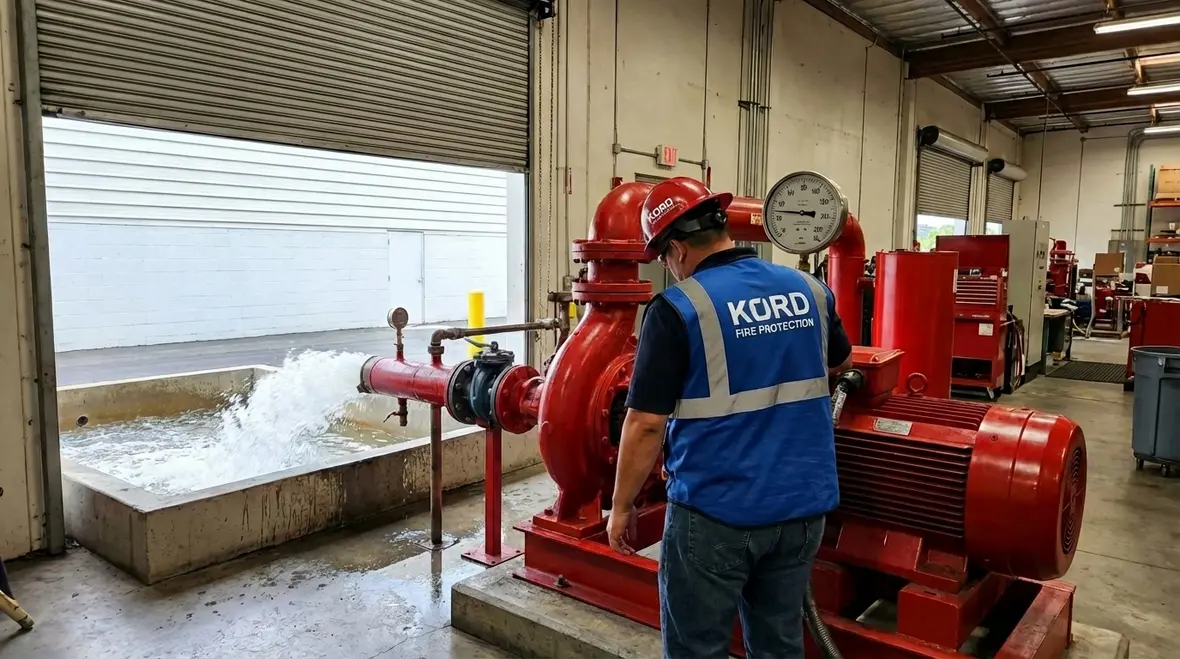
Azusa Fire Pump Testing for Industrial Facilities
Fire Pump Testing for Azusa Industrial Facilities
In the steady rhythm of industrial life, few systems stand as quietly heroic as a fire pump. And when it comes to Azusa fire pump testing, that quiet heroism becomes a deliberate, scheduled act of prevention. Within the first hundred feet of hose and the first turn of an impeller, lives and livelihoods depend on performance that cannot falter. That is why industrial facilities across Azusa rely on thorough inspections, detailed flow tests, and the calm, methodical guidance of Kord Fire Protection technicians who explain every valve turn like seasoned storytellers. Because when water must move, it must move with purpose.
Moreover, in a city shaped by warehouses, manufacturing plants, and distribution centers, compliance is not optional. It is survival. Therefore, this article walks through what proper fire pump service involves, why it matters, and how it protects both people and production lines.

The Critical Role of Fire Pumps in Industrial Settings
Fire pumps serve one clear mission. They boost water pressure when municipal supply alone cannot meet demand. In industrial facilities, where square footage stretches wide and ceiling heights reach skyward, sprinklers need muscle behind them. Otherwise, a small ignition source can become tomorrow’s headline.
However, a fire pump that sits idle for months can hide problems. Seals dry out. Controllers develop faults. Diesel engines lose charge. Electric motors collect dust. Consequently, regular Azusa fire pump testing ensures these systems operate under real world conditions, not just hopeful assumptions.
Kord Fire Protection technicians often explain it this way. A fire pump is like a marathon runner. It cannot wake up from a long nap and suddenly sprint 26 miles. Instead, it needs routine exercise. Weekly churn tests, monthly inspections, and annual flow tests keep it ready for the big race. And unlike a marathon, nobody cheers if the pump actually has to run during an emergency. The real victory lies in prevention.
Why industrial facilities in Azusa depend on strong pump performance
From high piled storage to sensitive manufacturing processes, many Azusa facilities rely on water based suppression to keep heat, smoke, and flame under control. A properly tested pump ensures remote sprinklers receive the pressure they need, hydrants remain effective for first responders, and systems designed during code review still perform years later under real fire conditions.
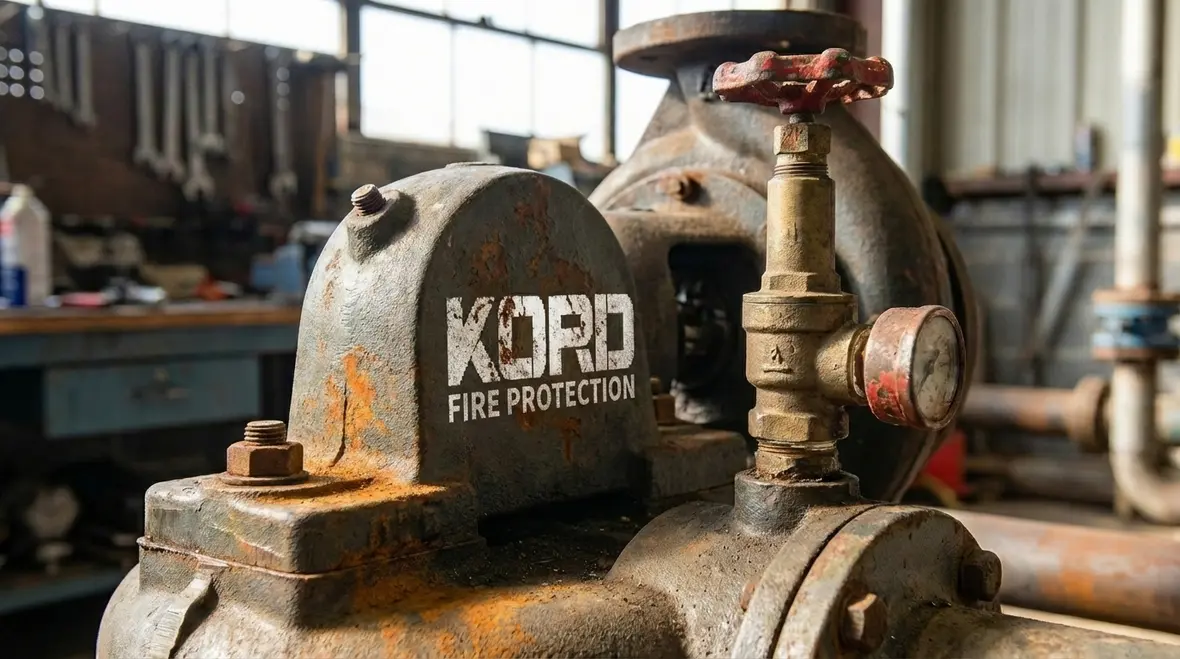
What Happens During Azusa Fire Pump Testing?
Facility managers often ask what truly occurs during a professional service visit. The answer is more involved than flipping a switch and listening for a hum.
Step 1: Physical condition and readiness check
First, technicians inspect the physical condition of the pump assembly. They check for leaks, corrosion, vibration, and alignment issues. Next, they verify suction and discharge pressures. Additionally, they confirm that valves remain in the correct position and that gauges read accurately.
Step 2: Annual flow testing under real demand
During annual flow testing, crews simulate high demand by flowing water through test headers or hose valves. This process measures performance at various points along the pump curve. In simple terms, it confirms the pump delivers the right pressure at the right flow rates.
Kord Fire Protection technicians take time to explain these readings to facility teams. They describe what each number means and how it relates to system health. Because informed managers make better decisions. And let’s be honest, a clipboard full of data feels less intimidating when someone translates it into plain language.
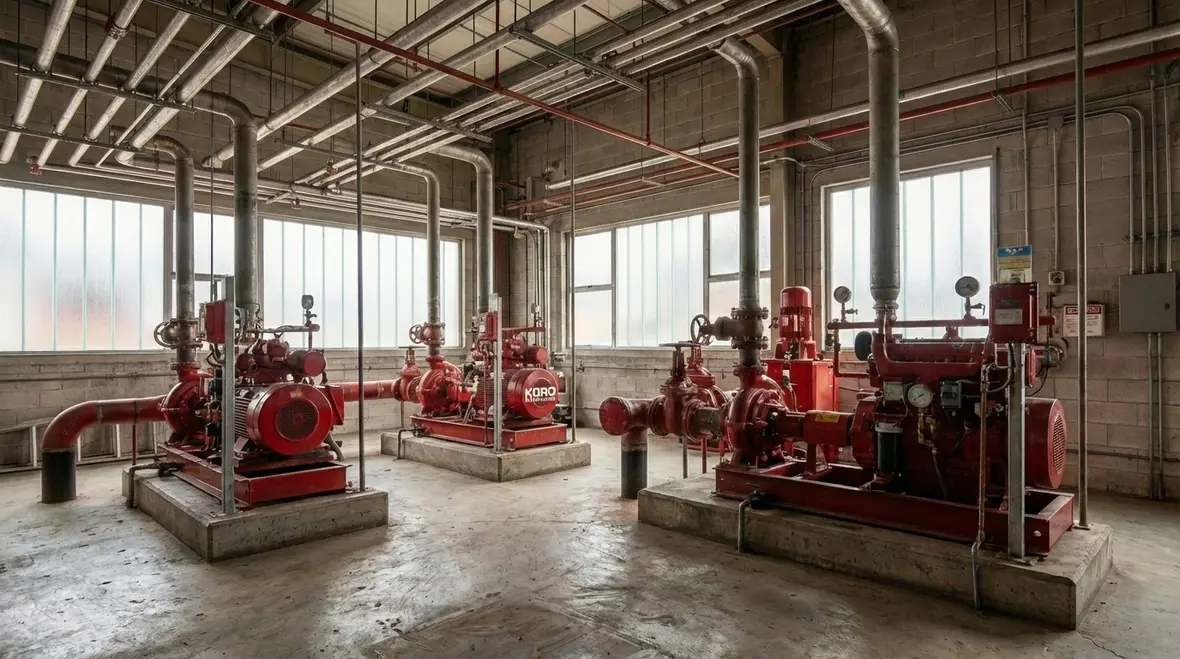
Compliance with NFPA Standards and Local Codes
Industrial properties in Azusa must follow NFPA 25 standards for inspection, testing, and maintenance of water based fire protection systems. These standards outline required frequencies, documentation practices, and acceptable performance ranges.
Therefore, Azusa fire pump testing is not just a best practice. It is a regulatory expectation. Annual flow tests, weekly no flow churn tests for electric pumps, and periodic diesel engine checks form part of a structured compliance plan.
In addition, documentation plays a vital role. Inspectors and insurance carriers often request detailed reports. These records show suction pressure, discharge pressure, net pump pressure, flow readings, and any deficiencies found. Kord Fire Protection technicians provide organized reports that help facilities demonstrate due diligence.
And while paperwork may not inspire standing ovations, it does prevent costly fines and coverage disputes. That alone deserves a polite round of applause.
For facilities that operate across Los Angeles County, many managers pair Azusa fire pump testing with broader programs such as county wide fire protection services to keep sprinklers, alarms, and extinguishers all on the same inspection calendar.
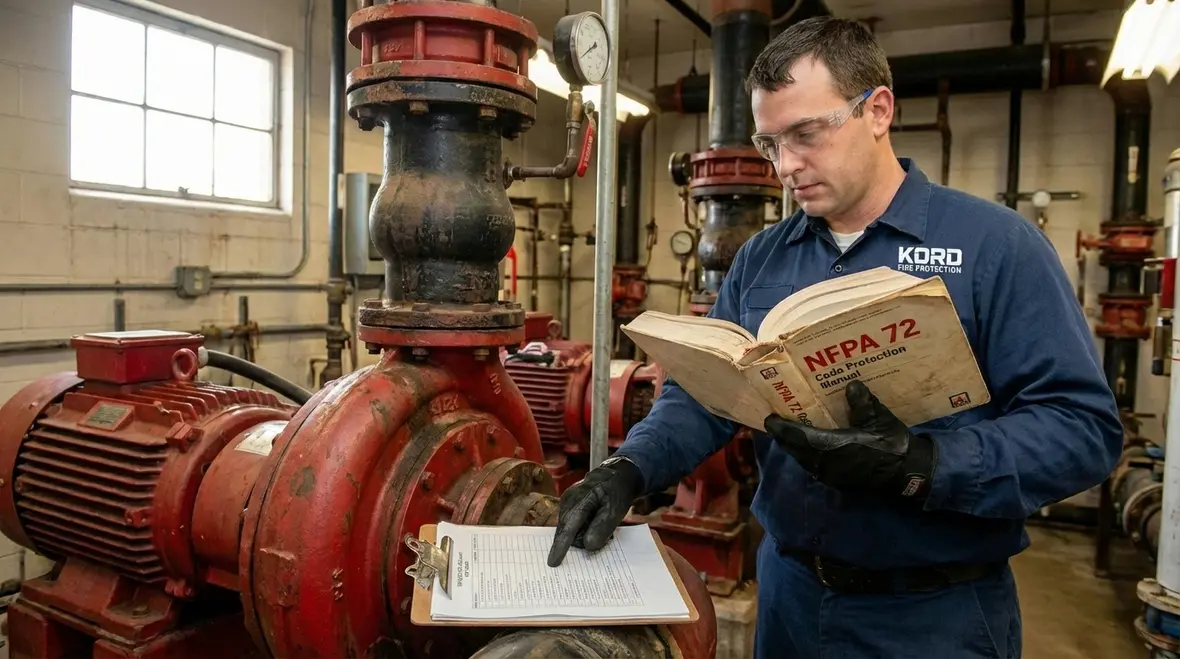
Common Issues Found During Industrial Pump Tests
Even robust systems reveal weaknesses under testing conditions. Fortunately, identifying these issues early prevents larger failures later.
Common findings include:
- Worn bearings that create excessive vibration
- Diesel engines with weak batteries or cooling problems
- Controller faults or alarm failures
- Obstructed suction lines reducing water supply
- Pressure relief valves set incorrectly
However, the presence of a deficiency does not mean disaster. Instead, it signals opportunity. By addressing minor faults during scheduled service, facilities avoid emergency repairs that disrupt operations.
Kord Fire Protection technicians often compare it to visiting a dentist. A small cavity fixed early saves everyone from root canal drama later. Industrial managers may not love that analogy, yet they understand the logic.
How Often Should Industrial Facilities Schedule Service?
This question surfaces frequently, especially from operations directors juggling production deadlines.
The general schedule includes:
- Weekly churn tests to verify automatic start and pressure stability
- Monthly inspections of valves, controllers, and fuel levels
- Annual full flow testing to confirm rated capacity
- Periodic internal inspections depending on system age and condition
Nevertheless, certain high hazard facilities may require more frequent evaluation. For example, plants storing flammable materials benefit from additional oversight. Therefore, partnering with experienced professionals ensures the testing plan matches the facility’s risk profile.
Azusa fire pump testing programs often integrate seamlessly into broader fire protection maintenance plans. This approach reduces scheduling conflicts and ensures no component gets overlooked.
Industrial Risk Factors and Testing Focus
Every facility carries unique risks. Consequently, technicians tailor their approach to match real world conditions.
Matching real world operations to testing priorities
Facility Conditions Testing Focus Areas
- Large warehouse spaces Verification of pressure at remote sprinkler zones
- High piled storage Confirmation of adequate flow for elevated demand
- Manufacturing with heat processes Rapid start capability and alarm response
- Facilities with aging infrastructure Inspection for corrosion and pipe obstructions
This side by side view helps managers understand why one size does not fit all. Instead, thoughtful Azusa fire pump testing aligns technical evaluation with actual operational risk.
The Value of Clear Communication During Service
Technical skill matters. Yet communication builds trust. Kord Fire Protection technicians make a point of walking facility representatives through each phase of testing. They explain why water flows at certain pressures and what acceptable variances look like.
Moreover, they answer questions without jargon. If a manager wonders why a gauge fluctuates, they provide a calm explanation rather than a cryptic shrug. That clarity reduces anxiety and strengthens collaboration.
Because in industrial environments, confusion can spread faster than a small electrical fire. And nobody wants that kind of excitement.
Long Term Benefits of Consistent Fire Pump Service
Routine service produces measurable advantages. First, it extends equipment lifespan. Pumps that receive regular lubrication, alignment checks, and engine maintenance experience fewer catastrophic failures.
Second, it protects production continuity. A functional fire protection system prevents minor incidents from becoming extended shutdowns. In manufacturing, downtime costs far more than routine testing ever will.
Third, it strengthens insurance positioning. Carriers often review maintenance records during underwriting and claims processes. Documented Azusa fire pump testing demonstrates responsible risk management.
Finally, it safeguards people. Employees work with greater peace of mind when they know emergency systems stand ready. While they may never see the pump room, its readiness supports every shift.
FAQ About Fire Pump Testing in Azusa
Conclusion and Next Steps
Industrial facilities in Azusa cannot afford guesswork when it comes to fire protection. Through structured inspections, detailed flow evaluations, and clear communication, professional Azusa fire pump testing keeps critical systems ready for the moment they are needed most. Kord Fire Protection technicians stand prepared to guide facilities with steady expertise and calm assurance.
Schedule a comprehensive evaluation today, and ensure that when pressure rises, your fire pump rises to meet it. If your operations extend across neighboring cities, explore nearby programs like Industry Fire Protection Services or the broader full fire protection services Kord Fire provides throughout Los Angeles County.
Know Your Weapon Before You Fight the Flame
Kord Fire Protection is your go-to when it comes to all things fire protection. For over 20 years, we’ve been serving Southern California with the quality service and equipment to keep your home or business safe at all times. Our competitive prices reflect our unwavering commitment to protecting what matters most in the event of a fire emergency. Give us a call, send an email, or use that form!

Join Our Newsletter!
Get the latest fire safety tips delivered straight to your inbox From our Newsletter.


