
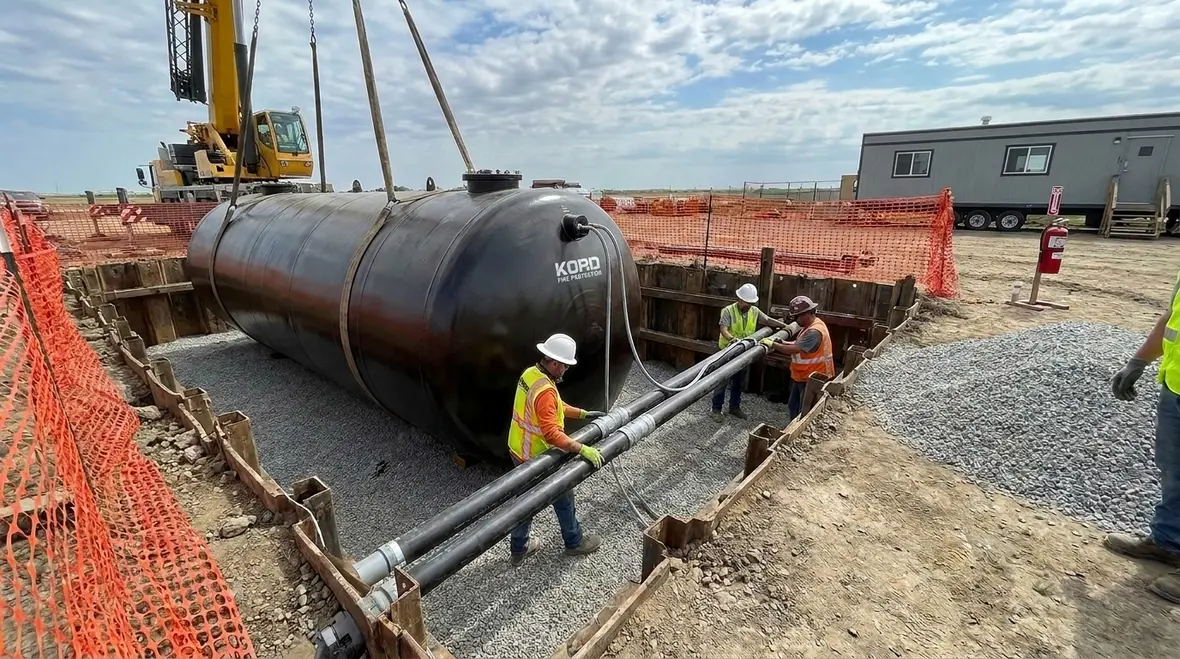
NFPA 30 Section 23.5: Installing Underground Storage Tanks
NFPA 30 Section 23.5 UST Installation Requirements: A Compliance-First Technical Guide
Quick Answer
NFPA 30 Section 23.5 sets the installation controls that prevent underground tank systems from leaking, failing, or becoming impossible to inspect. It focuses on site conditions, tank placement, piping compatibility, corrosion protection, leak detection, and documentation so owners can verify safe operation over the tank life cycle.
What NFPA 30 Section 23.5 UST installation requirements actually control
Commercial and industrial sites typically treat underground storage tanks (USTs) as a reliability asset. NFPA 30 Section 23.5 UST installation requirements shift that mindset toward risk containment from day one. The standard does not only define “what to install.” It drives how the system gets installed so it can be monitored, maintained, and repaired without exposing occupants, operations, or responders to preventable hazards.
For facilities planning new installations or major replacements, the practical goal is simple: install UST components so they remain compatible with the product, protected from corrosion, installed to the required configuration, and connected so leak detection and inspection remain effective. These requirements also influence commissioning, ongoing testing intervals, and the evidence you must retain for audits and AHJ reviews.
For facilities managing broader system reliability alongside code requirements, Kord Fire Protection’s full lifecycle of fire protection servicing offers a useful companion perspective on how installation, inspections, maintenance, and replacement all fit together.
Pre installation planning: site work, environmental interfaces, and hazard control
Before a tank is set, the installation process must manage hazards that typically cause long term corrosion, foundation movement, and impaired leak detection performance. In commercial settings, common failure points include unexpected groundwater behavior, utility interference, poor backfill selection, and incomplete segregation of product piping from incompatible materials.
Site conditions that drive installation outcomes
- Subsurface conditions: Verify soil type, bearing capacity, and water table behavior. Differential settlement can stress tank shells, couplings, and pipe joints.
- Drainage and water management: Poor drainage promotes persistent wet backfill, accelerating corrosion at low points and at piping penetrations.
- Electrical and stray current risk: Adjacent power systems, cathodic protection design errors, or inadequate grounding can defeat corrosion control.
- Construction sequencing: If piping is installed before protective coatings are verified and damage controls are in place, the system can fail even when materials meet spec.
Operational context matters for commercial facilities
Retail fueling environments, industrial refineries, and distribution centers have different traffic patterns, maintenance windows, and equipment constraints. NFPA 30 Section 23.5 UST installation requirements become operational when construction affects access for inspections, future pipe isolation, and the ability to perform leak detection tests without disrupting day to day fuel operations.
Commercial operators should also align installation work with their management of change process, because the tank location, fill point routing, venting behavior, and leak detection interfaces often affect facility procedures and emergency response planning.
Tank placement and physical configuration: the “build it so it can be checked” rule
NFPA 30 Section 23.5 addresses the installation geometry that allows the tank system to operate safely and be evaluated. That includes correct setting, anchoring or support where required, and controlling clearances and protective systems around the tank and connected piping.
Common installation deviations that create future noncompliance
- Improper leveling and support: A tank that is not properly bedded can develop stress points and coating stress failures.
- Backfill that does not meet requirements: Incorrect grading or particle size increases voids and can drive coating damage, settlement, and water migration.
- Damage during construction: Coatings and protective wraps get punctured or abraded by equipment movement, improper handling, and rushed reassembly of manway components.
- Penetration workmanship: Penetrations at pipe entries and access areas often become the corrosion onset points when sealing and compatibility do not match the system design.
From a compliance standpoint, the critical issue is that many defects do not show up immediately. They surface during annual, periodic, or triggered tests. That timing can force costly retrofit work that an organized installation process could avoid.
Piping and leak detection integration: where installed systems commonly fail
Underground piping is the most frequent pathway for product loss in many real world events. NFPA 30 Section 23.5 UST installation requirements place importance on how piping is installed in relation to the tank, how it connects, and how the overall system supports leak detection functions.
Piping compatibility and workmanship controls
- Materials compatibility: Pipe and joint materials must resist the stored product and meet the corrosion environment created by soil and water conditions.
- Joint integrity: Couplings, welds, and transitions require workmanship controls and inspection checkpoints before backfill.
- Routing and protection: Piping must be routed to reduce stress and to prevent mechanical damage, especially where it crosses utilities, service corridors, or foundation edges.
Leak detection performance depends on installation quality
Leak detection systems must be able to detect abnormal conditions. That requires correct tank and piping configurations, proper interface connections, and preservation of system ability to communicate between detection sensors and the operational controls.
In practical compliance inspections, the most common causes of “pass now, fail later” outcomes include loose sensor interfaces, damaged sensor cabling during backfill, incorrect alarm threshold setup, or commissioning steps that do not verify alarm and shutoff or notification sequences.
For a broader view of how NFPA 30 controls flammable liquid hazards across systems, review: How NFPA 30 regulates flammable liquids. This context helps facilities connect UST installation controls with broader fire and flammable liquid safety requirements.
Corrosion protection and protection of tank components: compliance is not optional
Corrosion protection is the long term guardrail for underground installations. Even well designed tank systems experience corrosion risk at coating defects, holidays, joints, and vulnerable interfaces. NFPA 30 Section 23.5 UST installation requirements drive corrosion protection practices so the system remains controllable over its service life.
Typical corrosion protection elements to verify
- Coatings and lining integrity: Verify application, thickness, continuity, and damage controls during installation.
- Cathodic protection compatibility: Confirm proper integration with electrical design and that the tank system is compatible with the corrosion control strategy.
- Connection and bonding quality: Poor bonding can create localized corrosion and ineffective protection.
- Monitoring readiness: Ensure test points and access methods support periodic verification without breaking backfill or damaging components.
Commercial facility maintenance implications
Many UST compliance failures come from the maintenance phase, not the initial build. Facilities should establish procedures that address inspection intervals, record retention for corrosion protection checks, and immediate response triggers when a test indicates deterioration. Kord Fire Protection supports commercial compliance through installation verification support, functional readiness checks, and ongoing maintenance coordination so the site remains testable and audit ready.
Commissioning, documentation, and inspection readiness: the compliance evidence trail
NFPA 30 Section 23.5 UST installation requirements emphasize that installations must support safe operation and verification. In practice, compliance depends on whether the facility can demonstrate that the installation matches the approved design and that leak detection and corrosion protection interfaces function as required.
Commissioning steps that reduce future risk
- Functional verification: Confirm leak detection alarms, notifications, and any interlocks or shutdown sequences operate correctly.
- Post installation checks: Validate system components are undamaged after backfill and restoration activities.
- Operational handoff documentation: Provide operators with clear procedures, set points, test methods, and response actions.
Inspection readiness for AHJ and internal audits
Commercial sites typically face recurring scrutiny through AHJ reviews, insurer requirements, and internal asset audits. Kord Fire Protection helps ensure documentation and testing align with NFPA 30 expectations and facility standards, reducing the chance of last minute retrofit work due to missing commissioning evidence or incomplete verification.
Frequently Asked Questions
Next step: protect your schedule and compliance position
If your facility is installing, replacing, or upgrading an underground tank system, engage Kord Fire Protection early. A compliance-first review supports installation checkpoints, commissioning verification, and ongoing test readiness so NFPA 30 Section 23.5 UST installation requirements stay met from initial set through maintenance and audits. Contact Kord Fire Protection to align requirements with your construction plan and operational constraints.

Join Our Newsletter!
Get the latest fire safety tips delivered straight to your inbox From our Newsletter.



