Range Guard Kitchen Suppression by Kord Fire Protection
In busy commercial kitchens, fire does not wait politely. It arrives the way a sequel does years too late: suddenly, loudly, and with mess. That is why Range Guard kitchen suppression matters. These systems are built to protect high heat zones, reduce fire spread, and support safer evacuation and response. In the rest of this guide, the reader will learn how range hood suppression works, what components do the heavy lifting, and how Kord Fire Protection can become a vital partner for installation, inspections, and ongoing compliance. And yes, the goal is simple: stop the kitchen from turning into an action movie no one bought tickets for.
What Range Guard kitchen suppression is designed to protect
Range Guard kitchen suppression focuses on grease fires and cooking-related hazards. Grease can ignite when it overheats, flares, or contacts a heat source. Then, heat spreads fast along hood and duct surfaces. In other words, the fire does not stay in one pan. It climbs into the system.
Therefore, the protection centers on the cooking equipment and the ventilating hood area. A well designed setup targets the hood cavity, duct lines, and the area where flames and heat travel. Additionally, the system plays a key role in preventing flashover, which happens when heat rises quickly and ignites nearby materials at once.
How the system triggers and releases without drama
Unlike a dramatic fire alarm that waits for someone to “notice,” this type of suppression acts on heat and detection. First, heat triggers the system through listed components that respond to a specific temperature range. Next, the release sequence begins.
Depending on the setup, the discharge agent flows into the hood and duct areas. This reduces heat and disrupts the fire conditions. Then, the agent helps stop flames from feeding on flammable grease and vapors. As a result, the fire remains more controllable while emergency response arrives.
At this point, a small joke keeps things honest. If a kitchen fire could text for help, it would text “call 911” and “call the chef too.” Range Guard kitchen suppression helps answer that call with speed, so the kitchen does not become the main character.
Why fast discharge matters in grease fire conditions
Commercial kitchens do not give anyone a generous pause button. Hot oil, open flames, and busy staff create the kind of environment where a few seconds matter a lot. That is why a system that activates quickly can help keep a fire from extending into the hood plenum and ductwork. Once flames move beyond the appliance area, cleanup, interruption, and damage all become much worse. Quick suppression helps limit that chain reaction before it starts writing its own disaster script.
For kitchen teams, this matters operationally too. Containing a fire earlier can reduce downtime, reduce damage to nearby equipment, and improve the chances of reopening after corrective work instead of facing an extended shutdown. That practical side is easy to miss until a facility sees how much risk is packed into one lunch rush.
Core components and what each one does
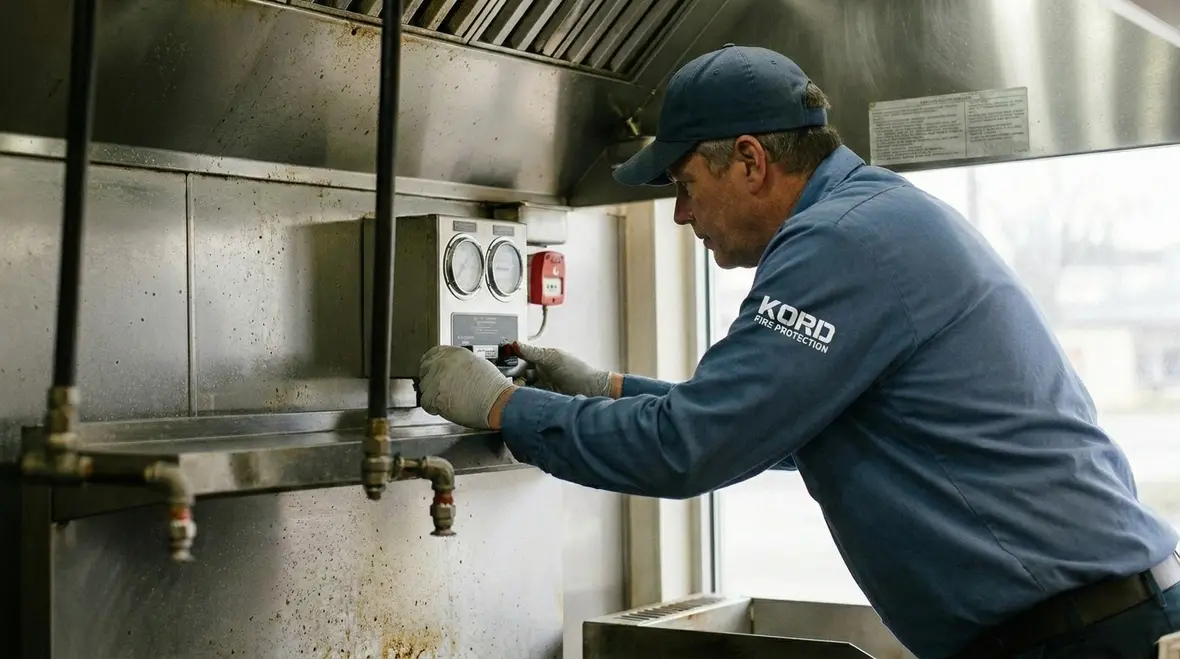
A kitchen suppression system works like a team, not a single hero. Each part carries a specific job, and if one piece fails, the whole plan suffers.
- Detection and activation: Heat responsive devices trigger the release when temperatures rise beyond the set threshold.
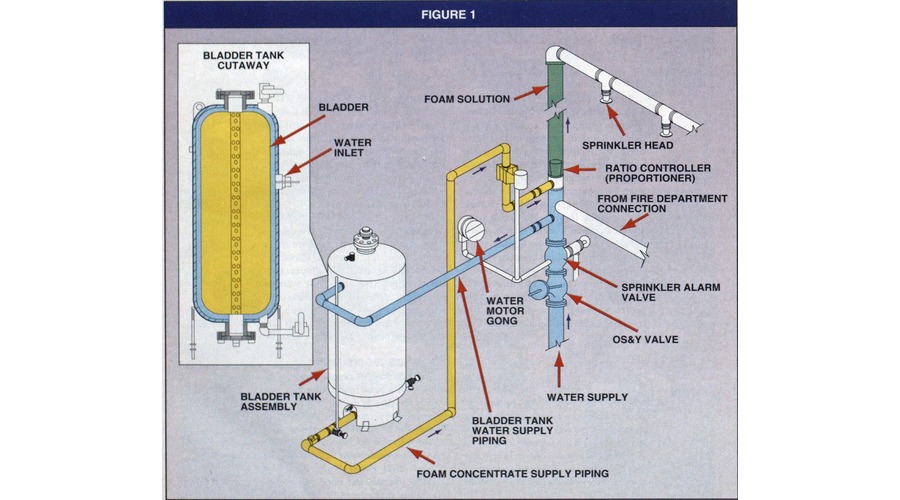
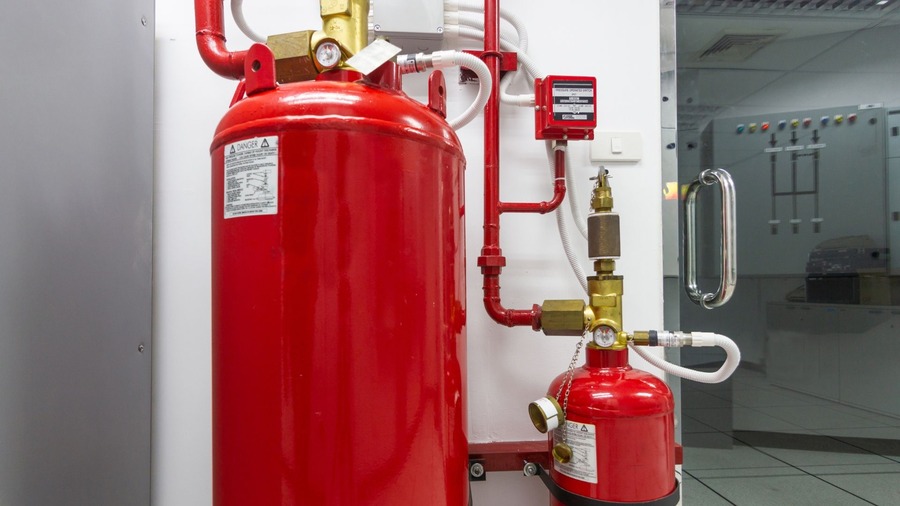
- Storage and discharge: The agent storage unit supplies the extinguishing media. Then discharge nozzles deliver it into the hood and duct.
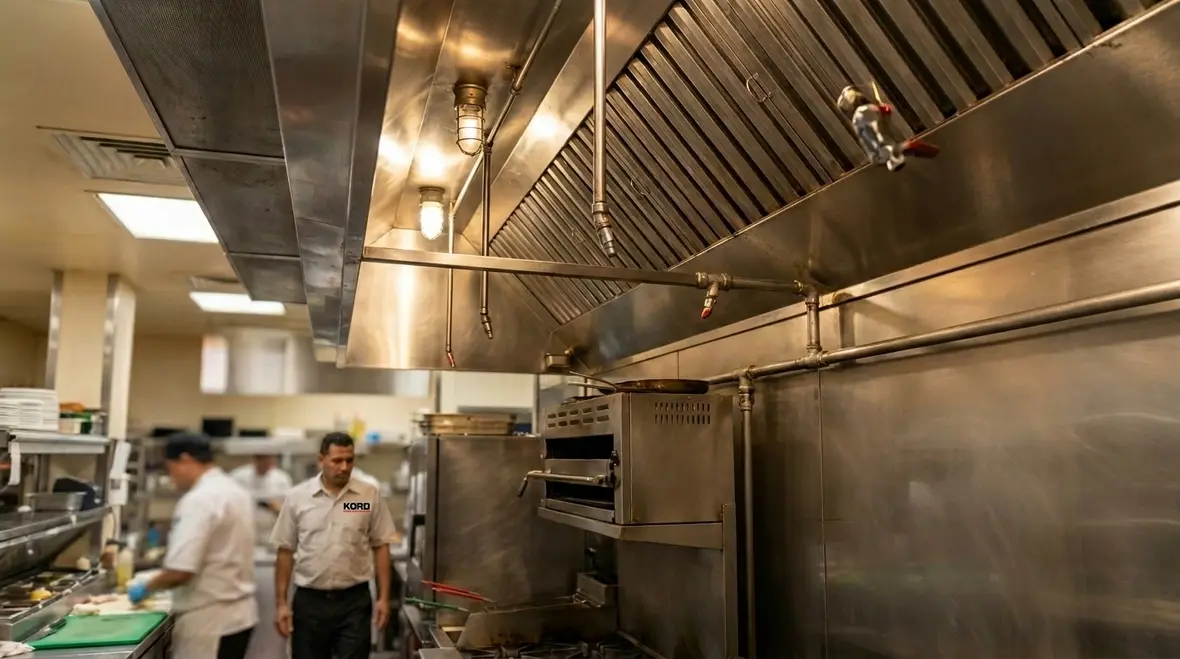
- Nozzles and piping: Proper routing and nozzle placement help cover the protected space.
- Manual release: Facility staff can activate the system when needed during an emergency.
- Control components: These monitor conditions, coordinate operation, and support safe signaling.
Just as importantly, correct layout matters. If the hood shape, duct runs, and nozzle coverage do not match the design, the system may not protect where it should. For that reason, professionals verify the details before the job gets signed off.
Coverage depends on design, not wishful thinking
This is where owners sometimes get surprised. A kitchen suppression system can look polished, clean, and professionally mounted while still being a poor fit for the actual appliance lineup. Change the fryers, extend the hood, modify the duct, or shuffle equipment positions, and suddenly the old protection layout may not match the real hazard. Fire protection does not grade on effort. It has to cover the actual risk in the actual space.
That is also why related system planning matters. Kord Fire Protection covers broader commercial kitchen fire suppression systems and explains how kitchen systems are expected to protect equipment, hoods, and ducts as one connected hazard area. For facilities comparing system types, Kord Fire Protection also has a helpful guide to wet chemical fire suppression systems and Range Guard.
Inspection, maintenance, and why schedules keep everyone safer
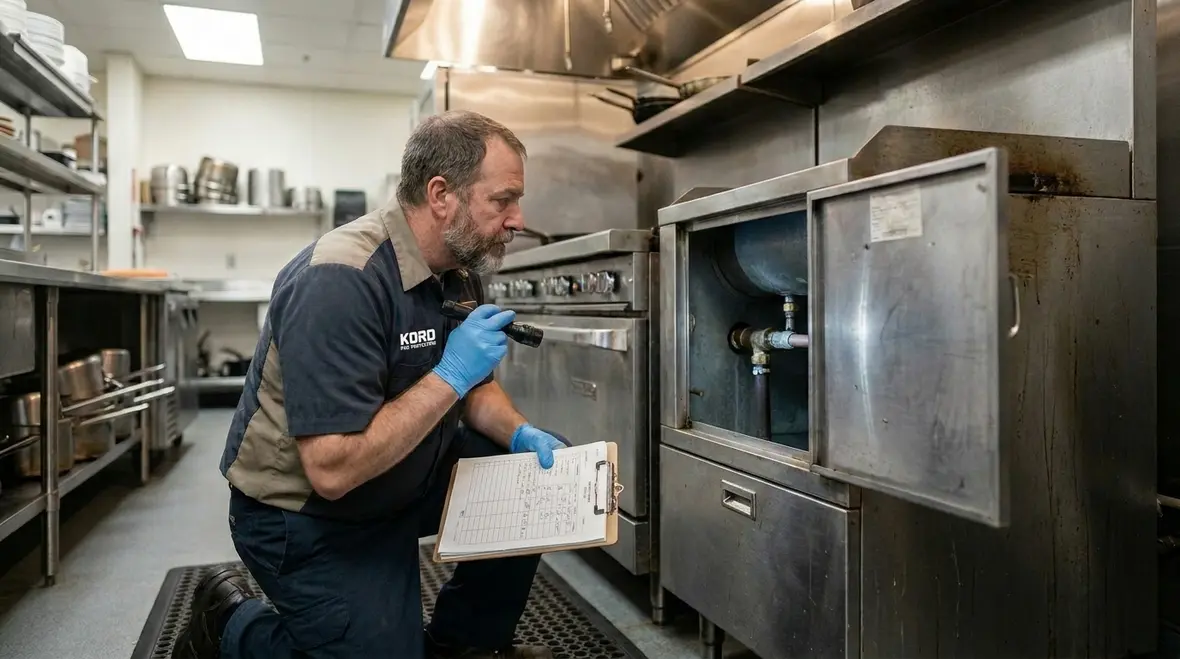
Fire suppression equipment is not set it and forget it. It needs routine checks to confirm it will work when it must. Therefore, maintenance focuses on inspection of activation devices, agent integrity, mechanical connections, and condition of nozzles and piping.
Additionally, kitchens change over time. Equipment gets upgraded, duct layouts get modified, and staff practices evolve. When those changes happen without a review, the protected coverage may no longer match reality. So, maintenance and periodic system reviews help keep performance aligned with current conditions.
Kitchens also run on busy shifts. That means scheduled service needs to minimize downtime. A strong service plan coordinates access windows, documentation, and test procedures. In the end, the safest system is the one that can prove it is ready.
Service records matter more than people want them to
Documentation has a way of sounding boring right up until an inspection, insurance review, or incident report lands on the table. Then suddenly everyone cares very deeply about tags, service dates, test records, and whether modifications were documented correctly. Kord Fire Protection often helps facilities stay organized because readiness is not only mechanical. It is administrative too, which is less glamorous but still very real.
Where Kord Fire Protection fits as a vital partner
Even the best system needs dependable partners. That is where Kord Fire Protection becomes a vital partner with this service or job. Instead of treating suppression as a one time purchase, Kord Fire Protection helps guide the full lifecycle.
They can support planning by reviewing the kitchen layout, hood design, and existing fire protection needs. Then, during installation or upgrades, they help ensure correct placement, proper connections, and code aligned documentation. Afterward, they continue with inspections and service so the system stays reliable.
Moreover, Kord Fire Protection can help facilities manage the paperwork that keeps owners calm during audits. Because while most people think fire protection is about flames, it also involves compliance, records, and readiness. And that paperwork can feel like the final boss. Partnering with experts reduces the stress and keeps the kitchen on track.
And yes, the goal is business like efficiency. Nobody wants a “mystery problem” right when smoke starts. Kord Fire Protection focuses on clear steps, documented work, and dependable follow through. For a broader look at the company behind the service, readers can also visit Kord Fire Protection’s company background.
Common mistakes that weaken kitchen suppression performance
To understand the value of professional service, it helps to see what goes wrong in the real world. Kitchen staff and contractors may overlook details that directly affect suppression effectiveness.
- Poor nozzle coverage: Nozzles placed without matching the hood and duct geometry can leave blind spots.
- Unverified modifications: Changes to ductwork, filters, or hood configurations without system review can reduce protection.
- Missing documentation: If records do not exist, future inspections become guesswork.
- Neglected maintenance: Over time, components can degrade, and connections can loosen.
- Improper agent handling: Incorrect storage or service procedures can create readiness issues.
When these errors happen, the system may still look intact, but it might not perform as designed. Hence the emphasis on proper installation, routine inspections, and professional maintenance.
The hidden problem with small unreviewed changes
A surprising number of fire protection issues begin with what looked like a harmless adjustment. A contractor moves an appliance six inches. Someone replaces a filter style. A hood section gets altered during a remodel. None of that feels dramatic in the moment, but suppression systems are engineered around exact protected areas. Small changes can create large gaps, and those gaps do not announce themselves before an incident.
Range Guard kitchen suppression and coordination with other safety systems
Suppression systems work best when they coordinate with the overall life safety plan. Fire detection, alarms, emergency procedures, and staff training all connect. First, detection and notification support fast response. Next, suppression helps control the fire while crews arrive.
In addition, facilities often need coordination with exhaust systems and hood cleaning practices. Filters, duct deposits, and grease build up directly affect fire risk. So, grease management stays crucial. Suppression helps during an incident, but good prevention helps prevent the incident at all.
Therefore, the best approach includes both engineering protection and day to day discipline. It is like wearing a helmet and also not riding a bike on the wrong side of the street. One protects you when things go wrong, and the other reduces how often they do.
Facilities that want to understand these integrated pieces in more detail can also review Kord Fire Protection’s article on commercial kitchen fire suppression electrical interlocks. It connects suppression discharge with gas shutoff, fan response, and coordinated control logic. For service support, Kord Fire Protection also offers a dedicated fire suppression service page that covers inspection, testing, installation, and maintenance options.
FAQ about kitchen range hood suppression systems
Conclusion: choose readiness, not luck
A kitchen fire can start fast, and it can spread before anyone finishes the first sentence of the emergency plan. Range Guard kitchen suppression helps reduce that risk by controlling heat and limiting fire spread in the hood and duct areas. Still, real protection requires correct installation, clear documentation, and ongoing service. That is why facilities benefit from a partner who understands the system and the codes.
For businesses that want help assessing the kitchen, planning the right setup, or keeping inspections on track, Kord Fire Protection offers support across the full lifecycle. Explore Kord Fire Protection’s fire suppression services to move from guesswork to readiness and keep the kitchen from auditioning for a disaster film.

Join Our Newsletter!
Get the latest fire safety tips delivered straight to your inbox From our Newsletter.