Commercial Building Fire Safety With Kord Fire Protection Technicians
Commercial building fire safety starts long before a detector ever chirps. It begins with a buildingwide plan for protecting people, property, and business operations using coordinated fire protection and electrical safety systems. In other words, it is not just “install a few devices and hope for the best.” It is engineered infrastructure that watches, reports, and reacts. And yes, it also needs skilled people to make sure it works when it matters most. That is where kord fire protection technicians come in. They explain the details in plain language, verify the design in real life, and help teams avoid costly surprises. Because smoke does not care about schedules, and fire alarms do not read maintenance logs like a bedtime story.
What building wide fire protection means in electrical terms
Buildingwide fire protection in an electrical sense means that power and signaling systems work as one team. The goal stays consistent: the fire and life safety network must stay reliable, even when conditions get ugly. Therefore, electrical protection focuses on safe distribution, proper circuit behavior, and clear communication. For example, systems should prevent nuisance alarms and reduce failure points, while also ensuring key functions keep operating during a fire scenario. In addition, the design must support orderly shutdown where needed and stable operation where required.
To keep it practical, corded alarms are not the whole story. The electrical side also covers how the building routes power, how devices receive it, and how wiring stays protected from heat, smoke, and damage. When the wiring plan matches the fire plan, response time improves and decision makers get the right signals fast. That is the kind of alignment kord fire protection technicians review during site work, because “close enough” becomes a problem when it is 2 a.m. and everyone is looking for the reset button.
Why coordinated electrical planning matters
A coordinated approach limits confusion during an emergency and during everyday maintenance. It helps teams trace circuits, interpret signals, and understand what is supposed to happen when one event triggers another. That matters in large facilities where alarms, pumps, controls, and communication paths overlap. Kord’s approach to fire alarm inspection and testing for commercial buildings highlights the value of verifying real performance instead of assuming every installed component is doing its job.
Core components every facility must coordinate
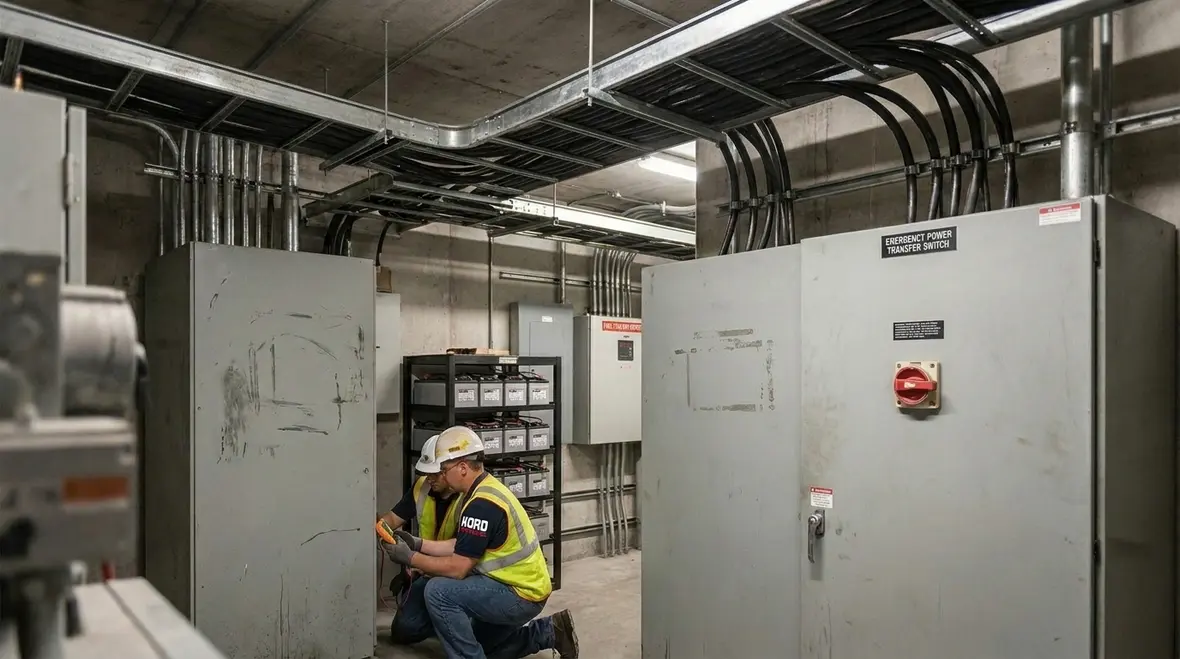
Most commercial facilities rely on several fire related electrical systems that share space, power sources, and expectations. Consequently, the buildingwide approach coordinates these components instead of treating them like separate projects. Key elements usually include fire alarm control units, notification appliances, emergency power paths, fire pump controls, and interface circuits to other life safety gear.
Just as important, technicians confirm that each component supports the system’s operating logic. That logic includes what happens during power loss, during supervision faults, and when multiple signals occur. Next, wiring methods and circuit labeling should match the drawings, because first responders and maintenance teams need clarity under stress.
At this point, kord fire protection technicians often help building owners and managers understand a simple truth: a fire alarm system that cannot communicate clearly is like a security camera with the lens covered. It might look fine, but it fails the job.
The systems that need to act like a team
- Fire alarm control panels and annunciators
- Audible and visible notification appliances
- Battery backup and emergency power transfer paths
- Fire pump controls and supervisory circuits
- Elevator recall, door release, smoke control, and HVAC shutdown interfaces
- Monitoring connections that report trouble and alarm conditions quickly
Power reliability and emergency circuits that actually perform
When people hear “fire protection,” they picture alarms and sprinklers. Still, electrical power reliability stands at the foundation. If the building loses power, life safety systems must keep working long enough to protect occupants and support response actions. Therefore, emergency circuits, standby generators, and battery backed systems must be selected and tested based on the specific loads they serve.
In practical terms, systems require correct load calculations and documented battery capacity or run time. Then the building must verify transfer behavior and confirm that the devices receive the right power at the right time. Also, supervision features should identify failures early, so minor issues do not grow into major incidents. Transitioning from “installed” to “proven” matters, and tests provide that proof.
Many teams delay those checks because they are busy. Yet busy is not the same as protected. As one technician might say, “Fire does not schedule inspections for when the office is less chaotic.”
From backup power to proven readiness
This is where regular service earns its keep. Kord’s commercial fire alarm inspection and testing content emphasizes that inspection finds visible issues while testing proves the system actually works. That distinction matters when power transfers, batteries age, or a circuit behaves well on paper but poorly under real demand.
Electrical safety infrastructure for detectors, signaling, and control
Detection and signaling require more than mounting devices in the right places. The electrical safety infrastructure controls how the building sends signals, how it monitors the system, and how it prevents hidden failures. For instance, circuits should use appropriate wiring types and protection methods that account for temperature, mechanical damage, and smoke exposure. In addition, the system must support supervision so open circuits, shorts, and ground faults become visible to maintenance teams.
Moreover, control interfaces link the fire alarm system to other building functions. These may include elevator recall, door hold release, smoke control coordination, and HVAC shutdown sequences. As a result, the electrical logic must match the building’s safety intent. Technicians verify that relay behavior, contact ratings, and timing sequences align with the design.
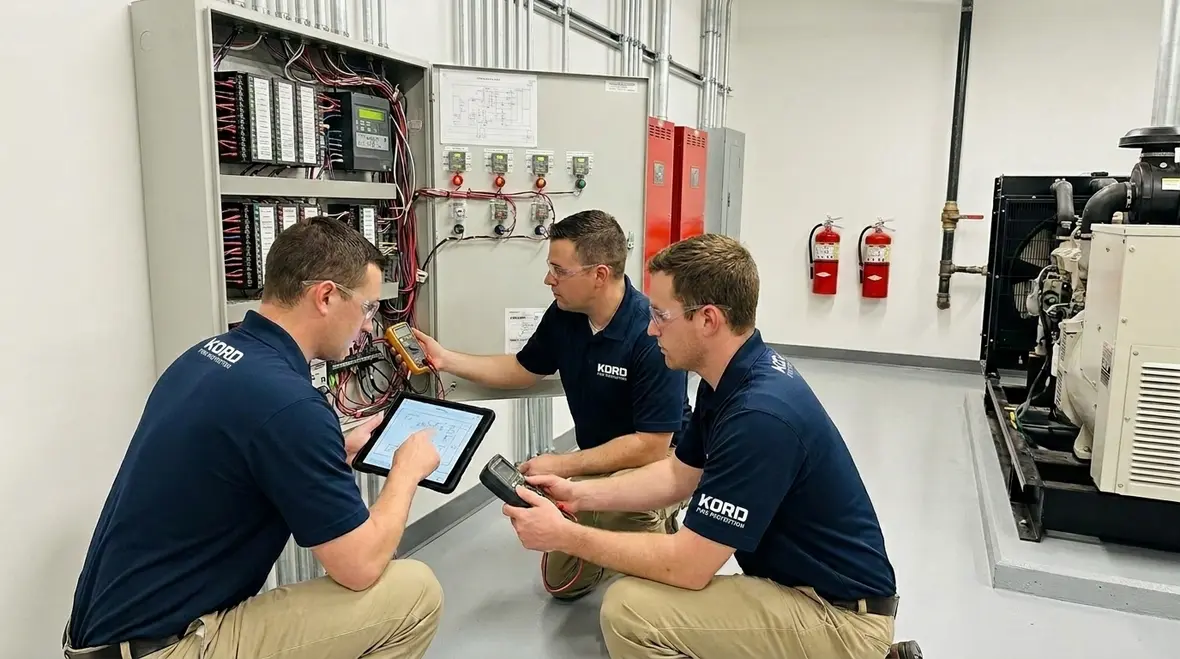
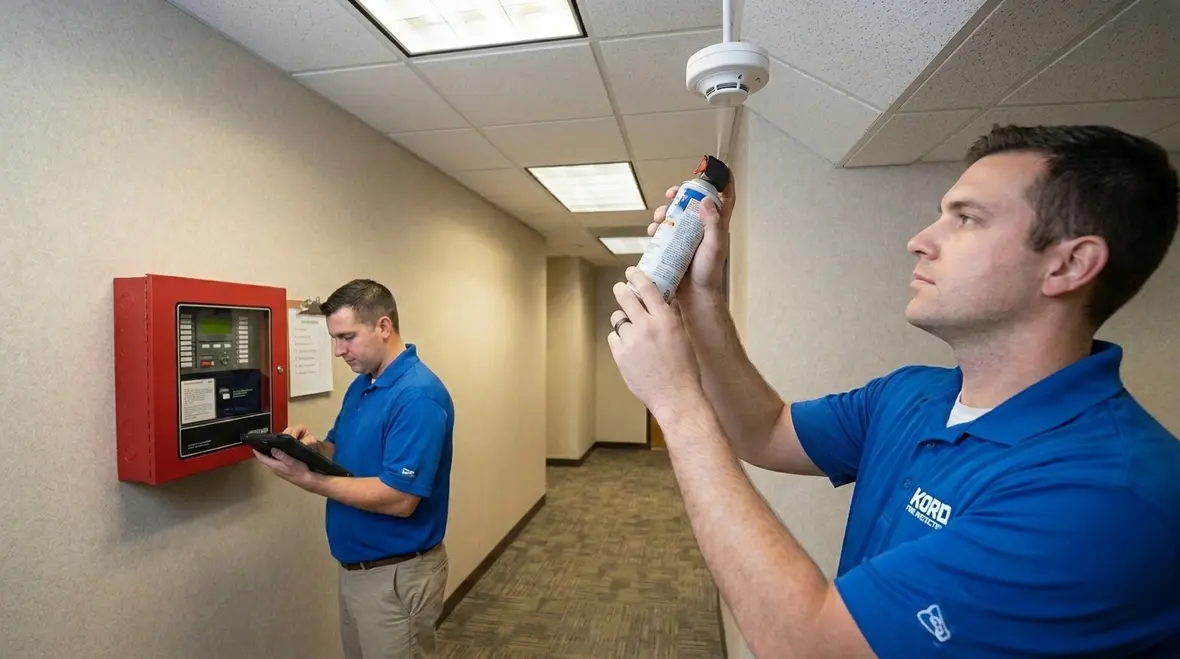
Here is where kord fire protection technicians earn their reputation. They explain how the wiring and control logic work, then they check it against the plan. If the system depends on a specific signal pathway, they confirm the pathway exists and behaves correctly, because an “it should work” guess is not a safety strategy.
How inspections, testing, and documentation reduce risk
Even solid design fails when maintenance goes missing. Therefore, buildingwide fire protection relies on inspection and testing routines that confirm the electrical behavior of the system, not just the visual condition of devices. Regular testing verifies notification sound output, detector sensitivity where applicable, trouble signal reporting, and power transfer performance for emergency supplies.
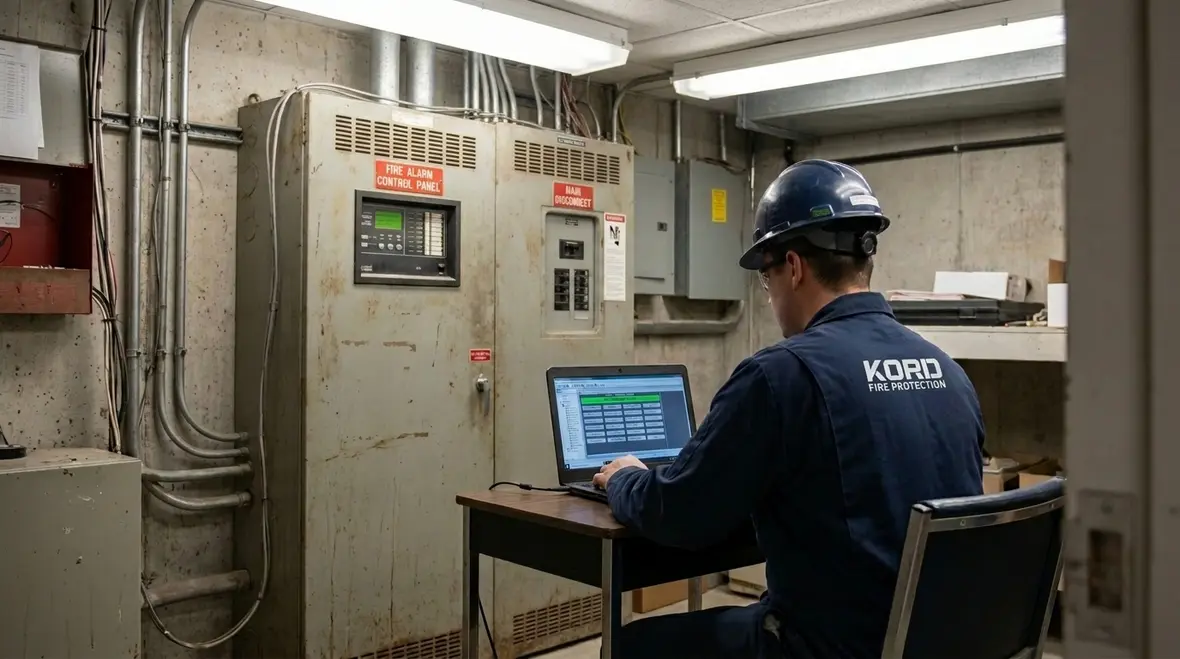
Just as important, documentation should stay current. As built drawings, device lists, circuit maps, and panel schedules help technicians troubleshoot faster. In turn, faster troubleshooting means quicker restoration after a fault. Transitioning from guesswork to records shortens downtime and keeps operations stable.
In many commercial settings, staff members want a simple way to understand risk. So kord fire protection technicians often translate testing results into clear next steps. They might highlight trends like recurring trouble points, slow trouble recovery, or aging components that should be addressed before the system gets stubborn. Because fire safety should not feel like a long season cliffhanger.
Why records matter after the technician leaves
Kord’s article on fire safety system documentation for compliance reinforces a practical point: paperwork is proof. Reports, maintenance logs, and updated records help building teams troubleshoot faster, show compliance more clearly, and avoid the expensive confusion that happens when nobody knows what changed or when.
Common failure points and how to prevent them
Some failures appear repeatedly because they come from predictable gaps: poor labeling, changes made without updating drawings, and wiring that gets stressed during tenant buildouts. Additionally, contractors may install components that look right but do not match the system requirements. Then the fire alarm behaves differently than expected during a real event.
Another frequent issue involves power and monitoring. For example, an emergency supply might pass basic checks but fail under full load timing, or a supervision circuit might not report in the way maintenance teams expect. Meanwhile, environmental changes like ceiling renovations can shift detector coverage and wiring pathways, which creates both performance and safety concerns.
To reduce these risks, teams should control change management. That means approving modifications, verifying that work updates the fire plan, and confirming system performance after any electrical changes. When kord fire protection technicians conduct walkthroughs, they look for the small clues that hint at bigger problems. Like the classic “temporary” cable route that has been there longer than a pop star’s comeback tour.
What a strong building wide plan looks like over time
A strong plan does not sit on a shelf. It evolves as the building evolves. To make that happen, the facility should align responsibilities across owners, facilities teams, electricians, and kord fire protection technicians. They set schedules for inspections, define who reviews reports, and outline how the team responds to trouble signals.
Furthermore, the plan should include training for staff who may act during an emergency. Staff do not need to memorize wiring diagrams. However, they should know how to interpret system signals, how to locate response resources, and when to escalate issues. Transitioning from informal handling to consistent procedures improves safety outcomes.
Finally, owners should evaluate upgrades based on risk, age, and code compliance. As technology improves, modern panels and devices can provide better supervision and clearer reporting. Yet upgrades still require proper design and verification, because old habits plus new gear equals the same headache, just with better branding.
For teams that want one provider handling inspections, service coordination, and readiness support, Kord’s full fire protection services page is a strong next stop. It ties together fire alarm, sprinkler, extinguisher, and fire pump support so facilities can manage compliance and response planning without bouncing between vendors.
FAQ
Conclusion
Commercial building fire safety succeeds when electrical infrastructure, testing, and documentation work together. A building should not wait for a malfunction to learn the truth. Instead, owners and facilities teams can plan the right inspections, confirm emergency power behavior, and verify control interfaces after any electrical change.
If the building needs clarity, kord fire protection technicians can explain the details and help validate performance on site. Contact the team today through Kord Fire Protection’s service team to assess current systems and set a practical improvement path that keeps people safe.

Join Our Newsletter!
Get the latest fire safety tips delivered straight to your inbox From our Newsletter.