
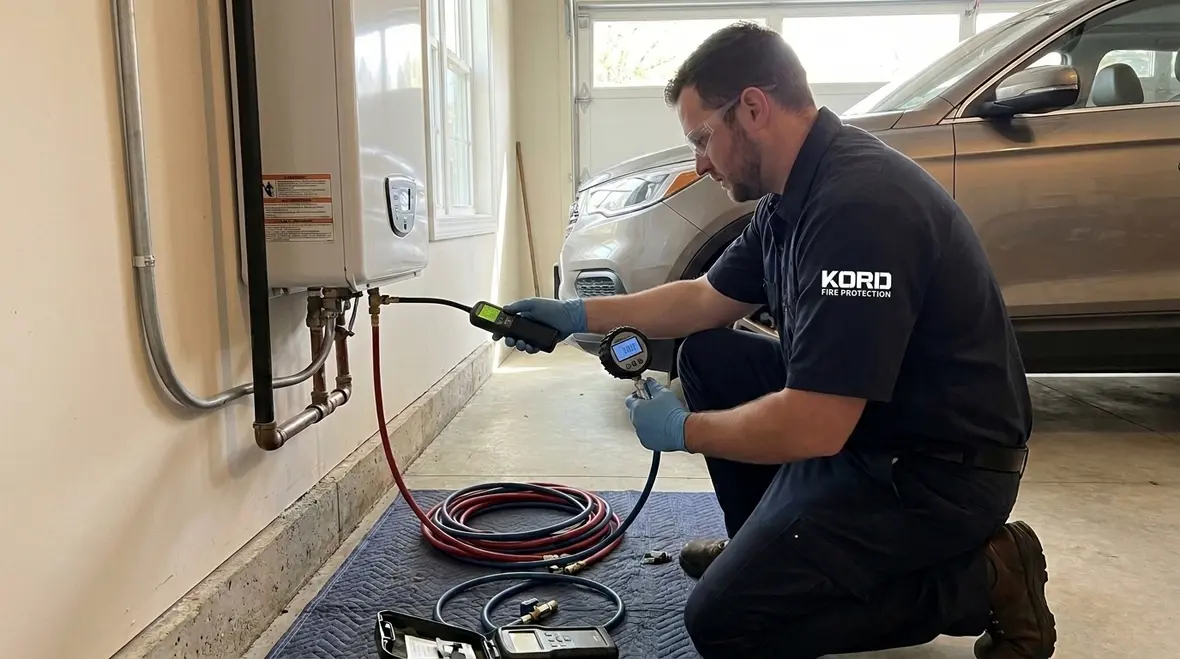
NFPA 52 Section 13.9: Testing Residential CNG Fueling Systems
Quick Answer: NFPA 52 Section 13.9 sets detailed expectations for testing residential CNG fueling systems to confirm safe installation and ongoing performance. This includes pressure integrity checks, verification of safety device operation, leak detection confirmation, and documentation practices that support compliance and repeatability.
For facilities that need a stronger testing and documentation process on the fire protection side too, Kord Fire Protection’s NFPA 20 Chapter 14 fire pump acceptance testing requirements guide is a helpful companion read.
Why Section 13.9 matters for NFPA 52 residential CNG fueling system testing
NFPA 52 residential CNG fueling system testing directly affects life safety, property protection, and regulatory defensibility for commercial, industrial, and retail sites that support residential fueling operations through contractors, service providers, or on campus fueling infrastructure. Section 13.9 focuses on proving that system components operate as designed under operating and safety conditions, not merely that they were installed.
In practice, compliance failures often come from test gaps, incomplete records, or verification steps that do not reflect the system’s real configuration and operating limits. A facility that treats testing as a one time event, rather than a controlled process with calibrated equipment and documented acceptance criteria, increases risk of undetected degradation and costly rework.
What Section 13.9 typically requires during commissioning and verification
Although detailed test language varies based on system design, NFPA 52 Section 13.9 generally drives a structured verification sequence: confirm system tightness, confirm control and protection functions, and confirm that test methods match the intended operating pressures and safeguards. The goal is to establish baseline performance before the system enters routine use.
1) Pre test readiness checks that reduce false failures
Before any pressure or functional testing, qualified technicians should confirm:
- As built configuration matches the tested configuration (valve positions, regulators, relief devices, piping routes, and instrumentation).
- All isolation valves required for safe testing are accessible and identified.
- Electrical and control circuits are energized and stable, including interlocks and shutdown inputs when applicable.
- Calibration status and traceability of test instruments are current, including pressure gauges, transducers, and leak detection equipment.
This step prevents a common issue where the test plan is correct but the system configuration is not. For example, a regulator or shutoff arrangement that differs from commissioning documentation can lead to misleading pressure readings and incorrect conclusions.
2) Pressure integrity and leak detection verification
Section 13.9 expectations usually center on confirming that the fueling system does not leak under relevant conditions. Testing commonly involves:
- Establishing test pressure within allowable limits using appropriate test procedures for CNG systems.
- Monitoring pressure stability over the required hold period.
- Using appropriate leak detection methods at connections, fittings, valves, and interface points.
Failure points frequently involve threaded connections, damaged seals, incorrect torque application, and equipment interfaces such as regulator inlet and outlet connections. Another frequent issue is contamination in valves or fittings that later manifests during pressure testing.
3) Functional testing of safety and control components
Testing also verifies that safety devices respond correctly and that control logic prevents unsafe operating states. Depending on the system design, this can include:
- Verification of overpressure protection operation under controlled test conditions.
- Confirmation that shutoff functions trigger when commanded by the system or safety logic.
- Verification that gas detection, ventilation interfaces, or alarms behave as specified in the system design intent.
For commercial facility standards, this matters because residential fueling systems are often integrated into broader property risk management. A failure that would be minor in a standalone setting can become a larger hazard in an industrial or retail environment with shared access routes, loading operations, or building egress considerations.
How to plan NFPA 52 residential CNG fueling system testing like a compliance professional
A defensible test program starts with an engineered plan and a repeatable method. Facilities that consistently pass audits treat testing documentation as a safety deliverable, not an administrative afterthought.
Develop a test matrix aligned to the real system
Build a matrix that maps:
- System component list to required test method and acceptance criteria.
- Instrument identification, calibration due dates, and measurement ranges.
- Operating conditions used during testing, including temperature considerations where relevant.
- Witness and verification steps, including who signs off and when.
Many compliance gaps result from using generic checklists that do not reflect the actual regulator model, the specific shutoff arrangement, or the exact piping and manifold configuration used on site.
Control the test environment and access
NFPA 52 testing activity often requires controlled conditions around potential ignition sources and traffic management. Commercial and retail sites should coordinate:
- Permit to work or hot work controls as applicable to the activity.
- Site access control so test personnel can work without compromising emergency routes.
- Notification procedures so facility staff and contractors remain aligned on system status.
- Emergency readiness, including ensuring appropriate responders know the test window and system configuration.
Common failure points during Section 13.9 testing and how teams prevent them
Even well trained crews can run into recurring issues. The key is to identify the failure modes early and verify the system details before you begin testing.
Leak paths at interfaces and fittings
Leak failures commonly occur at mechanical interfaces, vibration prone connections, improper seal selection, or fittings that experience assembly variability. Prevention strategies include:
- Confirming seal and fitting specifications match the CNG service requirements.
- Using approved assembly procedures and documenting torque methods where applicable.
- Planning targeted leak checks at joints most likely to exhibit variation.
Pressure stability problems caused by test setup
Pressure tests can fail due to incorrect isolation strategy, trapped volumes, or instrument resolution. Crews should verify:
- Valves used to isolate test sections truly isolate the intended volume.
- Gauge placement provides readings that represent the actual test boundary.
- Measurement intervals and hold times align with the approved test method.
Safety device behavior that does not match expectations
Functional checks can uncover wiring issues, incorrect sensor calibration, stale setpoints, or logic faults. Prevention includes verifying:
- Detector calibration status and functional test verification steps.
- Setpoint configuration and documentation match the designed system parameters.
- Shutdown and interlock pathways are exercised under controlled conditions.
Documentation that withstands audits and supports ongoing maintenance
Section 13.9 testing carries compliance implications because documentation often becomes the evidence package during inspections and incident reviews. An effective record set includes:
- Test plan and test matrix tied to the actual equipment list.
- Instrument IDs, calibration dates, and measurement ranges.
- Pressure test charts or logged readings with start and end conditions.
- Leak detection methods used and the results at each checked location.
- Functional test outcomes for safety and control components.
- Corrective actions and re test results when any acceptance criteria are not met.
For commercial, industrial, and retail facilities, documentation also supports internal asset management and maintenance scheduling. It helps teams determine what to inspect next, what to replace proactively, and how to minimize downtime during seasonal or operational changes.
For broader context on NFPA related systems and documentation discipline, refer to Kord Fire Protection’s resources at Kord Fire Protection to align fire protection program governance with operational testing expectations.
How Kord Fire Protection supports continuous compliance for fueling system testing
Commercial fueling environments benefit from a partner that understands both the technical testing requirements and the operational constraints of real properties. Kord Fire Protection supports facility teams with practical guidance on testing readiness, documentation quality, and ongoing maintenance planning that reduces the likelihood of repeat failures.
Where many organizations struggle is continuity. A single test event does not ensure long term readiness, especially when equipment ages, setpoints drift, valves wear, or site conditions change. Kord Fire Protection helps commercial facility standards stay current through structured inspection and maintenance workflows aligned to the risks of CNG fueling systems.
If you want to compare how disciplined testing programs are documented in adjacent protection systems, Kord’s NFPA 25 8.3 fire pump testing, churn tests, and flow planning article gives a useful side by side perspective.
Frequently Asked Questions
Call to action
Ensure your NFPA 52 residential CNG fueling system testing program produces repeatable, audit ready results. Engage a qualified team to confirm test readiness, verify acceptance criteria, and maintain complete documentation across commissioning and ongoing maintenance. Contact Kord Fire Protection to strengthen your compliance posture and reduce the likelihood of test failures caused by preventable setup and documentation gaps.

Join Our Newsletter!
Get the latest fire safety tips delivered straight to your inbox From our Newsletter.


