NFPA 20 Chapter 14 Fire Pump Acceptance Testing Requirements
Quick Answer: NFPA 20 Chapter 14 outlines the fire pump acceptance testing, performance, and maintenance steps that confirm a pump system works as designed. Following the NFPA 20 fire pump acceptance testing requirements helps facilities reduce risk, avoid costly rework, and keep compliance in check. Kord Fire Protection can support this work end to end.
For facilities that need coordinated fire pump inspection services, bringing in the right support early can make acceptance testing a lot less chaotic and a lot more useful.
NFPA 20 Chapter 14 and why acceptance testing cannot be “good enough”
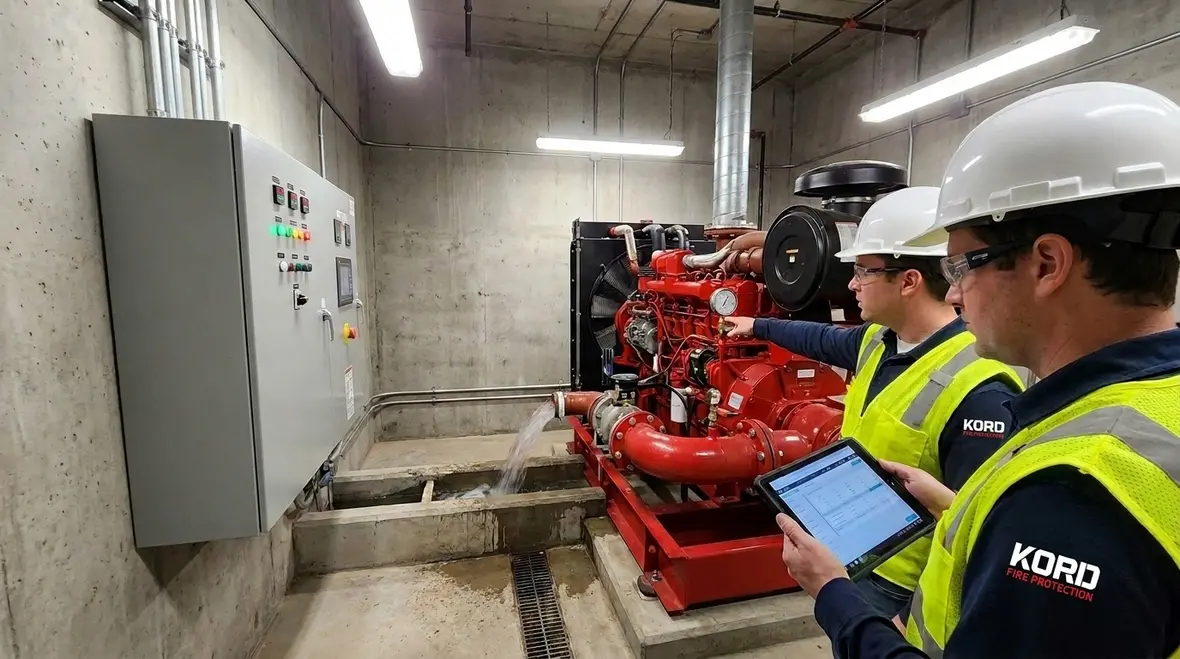
NFPA 20 Chapter 14 sets the expectations for fire pump acceptance testing, performance checks, and ongoing maintenance that keeps the system reliable. In the first place, the fire pump must meet defined flow, pressure, and startup behavior. Next, technicians verify controls, alarms, and safe operation under test conditions. Then they document results clearly enough that anyone can review them without playing a guessing game later.
In industrial and commercial environments, this matters because one failed pump test can turn into weeks of scheduling pain, supply delays, and awkward conversations with stakeholders. And yes, those conversations are rarely as fun as quoting movie villains. They are usually just paperwork with extra steps. Still, when the process runs correctly, facilities gain confidence and stay audit ready.
What Chapter 14 checks during fire pump acceptance testing requirements
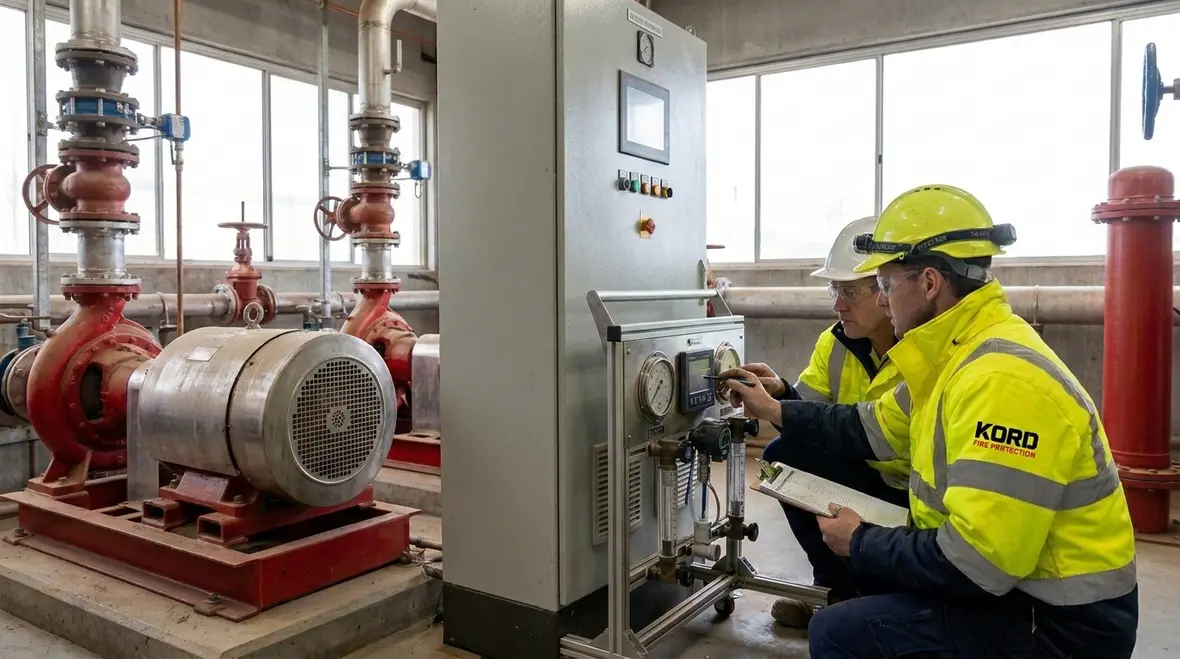
Fire pump acceptance testing under NFPA 20 Chapter 14 focuses on proving the pump system behaves as the design intends. However, it is not just “run the pump and hope.” It includes a structured set of checks that confirm the pump, driver, controller, and related components work together. For a broader code context, Kord also explains how NFPA 20 regulates fire pump systems.
- Hydraulic performance by testing flow and discharge pressure at required points, then comparing readings to the expected performance curve.
- Driver and control behavior, including start, stop, and supervisory functions that protect the system during abnormal conditions.
- Test accuracy through correct measurement methods and calibrated instruments, so results are trustworthy.
- Operational sequence verification, ensuring that system actions occur in the right order under demand conditions.
Furthermore, facilities should expect the test plan to align with the project basis of design, including pump configuration and system demand. In other words, the test is not a random event. It is a controlled demonstration of performance. That difference matters because a neat looking report means very little if the actual test scope missed the conditions that matter most.
A strong acceptance test also gives owners a baseline they can actually use later. Without that baseline, future troubleshooting becomes part engineering exercise, part detective story, and nobody asked to audition for that role. Good data early makes later maintenance decisions faster, cleaner, and much less dramatic.
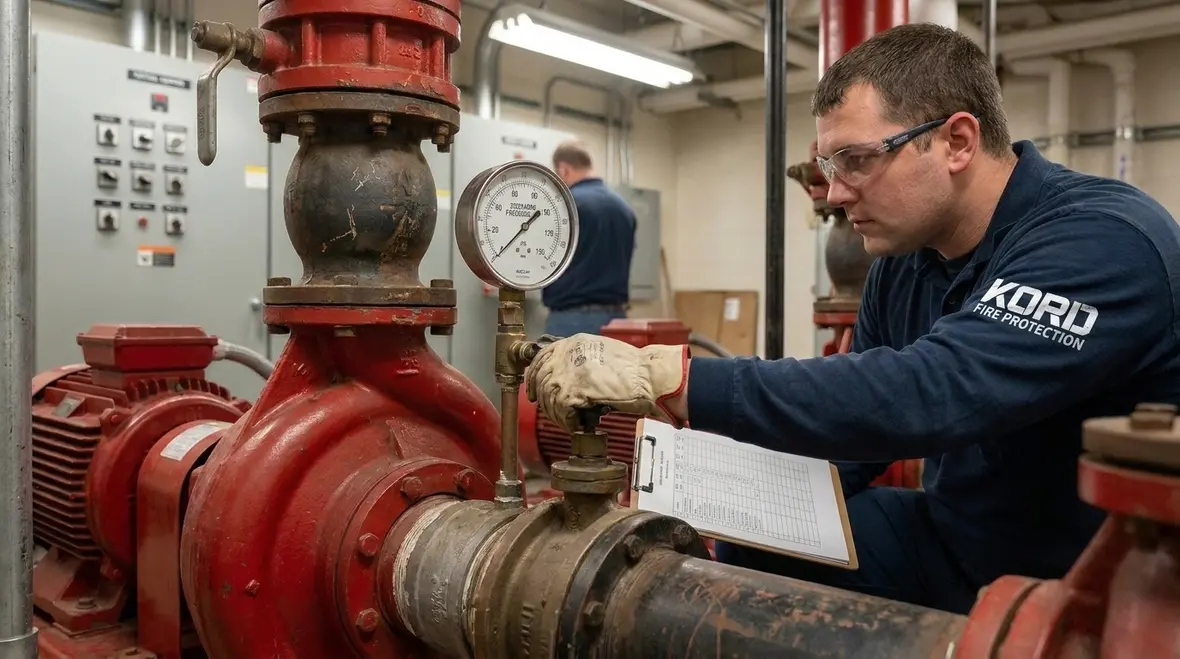
How performance verification protects industrial and retail facilities
Once acceptance testing confirms baseline behavior, performance verification reduces uncertainty when the system faces real-world stress. Even if a pump looks fine during commissioning, conditions can change. Dirt, alignment shifts, minor control drift, or changes in water supply characteristics can all affect results over time.
Therefore, facilities that serve industrial sites, distribution centres, retail complexes, and multi tenancy buildings benefit from performance checks that stay consistent with the NFPA 20 fire pump acceptance testing requirements. The goal is to confirm the system remains dependable across operating points that matter, not just at a single friendly test condition.
- Stable pressure under demand helps protect hazards and limits water hammer risk.
- Reliable startup performance supports quick fire suppression actions.
- Control and alarm integrity helps operators respond correctly and quickly.
- Repeatable results makes audits smoother and maintenance planning smarter.
And for the facilities teams who already carry enough operational load, fewer surprises means fewer late nights. Nobody wants to treat a fire pump like an unpredictable coworker who only shows up when it feels like it.
Why repeatable test results matter more than one lucky pass
One clean test result can look reassuring, but repeatable performance is what actually builds trust. Facility managers need confidence that the pump will behave properly during future inspections, after service work, and under emergency demand. Repeatability makes trend review possible, helps identify drift before it becomes a failure, and gives stakeholders something far better than optimism. It gives them evidence.
Maintenance that respects Chapter 14 timelines and evidence
Acceptance testing proves what the pump can do. Maintenance proves it keeps doing it. Chapter 14 supports this by setting expectations for maintenance practices that preserve performance and reliability. As a result, maintenance should focus on preventive routines, functional checks, and record keeping that shows the system stays within acceptable limits.
Typically, maintenance programs should include scheduled inspection of controls, verification of condition for suction and discharge components, and attention to controller performance. Additionally, technicians should plan for realities like dust exposure, humidity variation, and temperature swings that can affect electrical and mechanical components.
To stay audit ready, facilities should document what was inspected, what readings were observed, and what actions were taken. When evidence is clear, stakeholders can review it quickly. When evidence is missing, the review becomes a scavenger hunt. And scavenger hunts are great only when people actually win prizes.
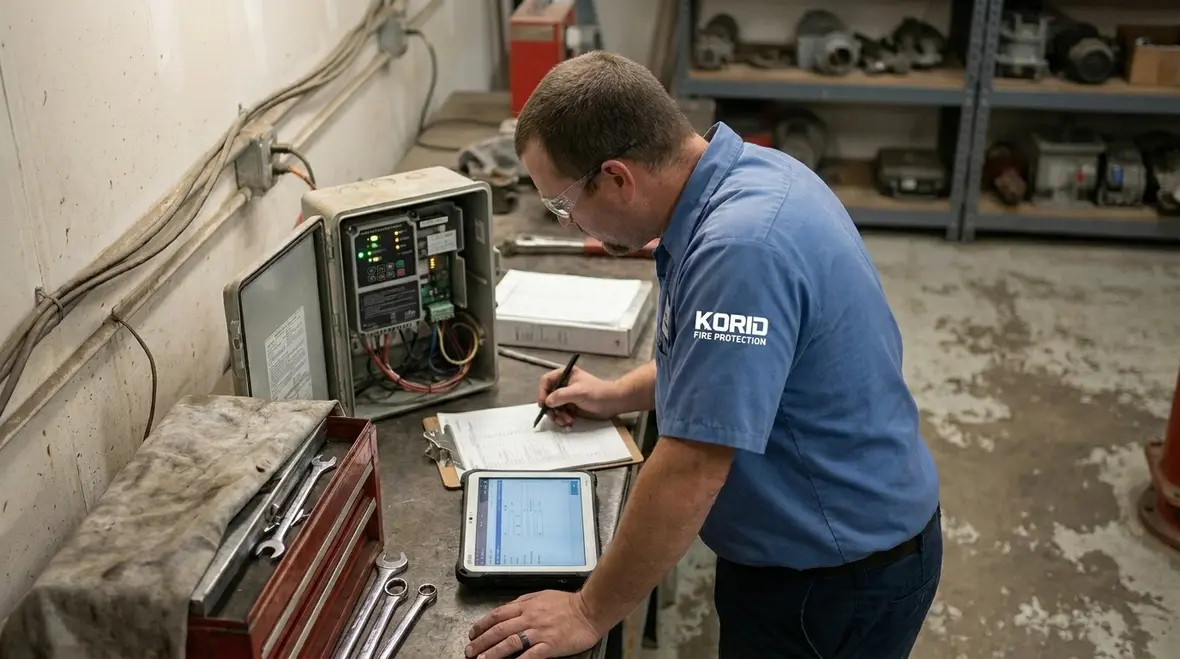
What useful documentation actually looks like
Useful documentation is specific, legible, and tied to the actual test or maintenance event. It should capture readings, methods, equipment used, observed issues, corrective actions, and final status in a way that another qualified reviewer can understand without needing a dramatic retelling. If a facility changes vendors, staff, or ownership, those records become the bridge between what happened before and what needs attention next.
Dual column reality check: acceptance testing versus ongoing upkeep
To keep decision makers aligned, facilities can compare the purpose and outcomes of each phase. The table below uses plain language so teams can act fast.
| Acceptance phase | Maintenance phase |
| Proves the pump system meets design intent using defined fire pump acceptance testing requirements | Protects performance over time with inspections, functional checks, and documented care |
| Confirms hydraulic performance and correct system sequencing | Detects drift early and keeps the pump ready for demand |
| Produces test records for compliance and project closeout | Generates ongoing evidence for audits, insurer reviews, and operational assurance |
| Sets baseline performance expectations | Maintains baseline through controlled routines and responsiveness |
Where Kord Fire Protection fits as a vital partner
Compliance work becomes smoother when a single partner understands both the technical requirements and the practical schedule reality. That is where Kord Fire Protection can become a vital partner. Kord supports facilities across multiple facets, including industrial, retail, and commercial sites, with coordinated fire pump services that align with acceptance testing and long term upkeep needs.
First, Kord helps teams approach the NFPA 20 fire pump acceptance testing requirements as a structured program, not a scramble. Next, they support careful documentation and clear communication so stakeholders know what happened, what it means, and what comes next. Then, when maintenance time arrives, Kord can continue the work with a plan that respects system condition and risk priorities.
Also, Kord can help avoid common pain points like unclear test scopes, mismatched expectations, and poorly tracked results. Because while someone may think they can “figure it out later,” fire pumps tend not to care about later. They care about readiness now.

Frequently asked questions
Conclusion: bring certainty to your next pump test
NFPA 20 Chapter 14 sets clear expectations for fire pump acceptance testing, performance, and maintenance, and the best results come from disciplined execution and solid documentation. Facilities benefit when they treat acceptance testing as the baseline and maintenance as the proof of continued readiness.
Kord Fire Protection can help coordinate the technical work, keep records tight, and reduce surprises. If a test date is near, reach out to Kord and get your plan locked in before the schedule starts writing its own comedy script.

Join Our Newsletter!
Get the latest fire safety tips delivered straight to your inbox From our Newsletter.