
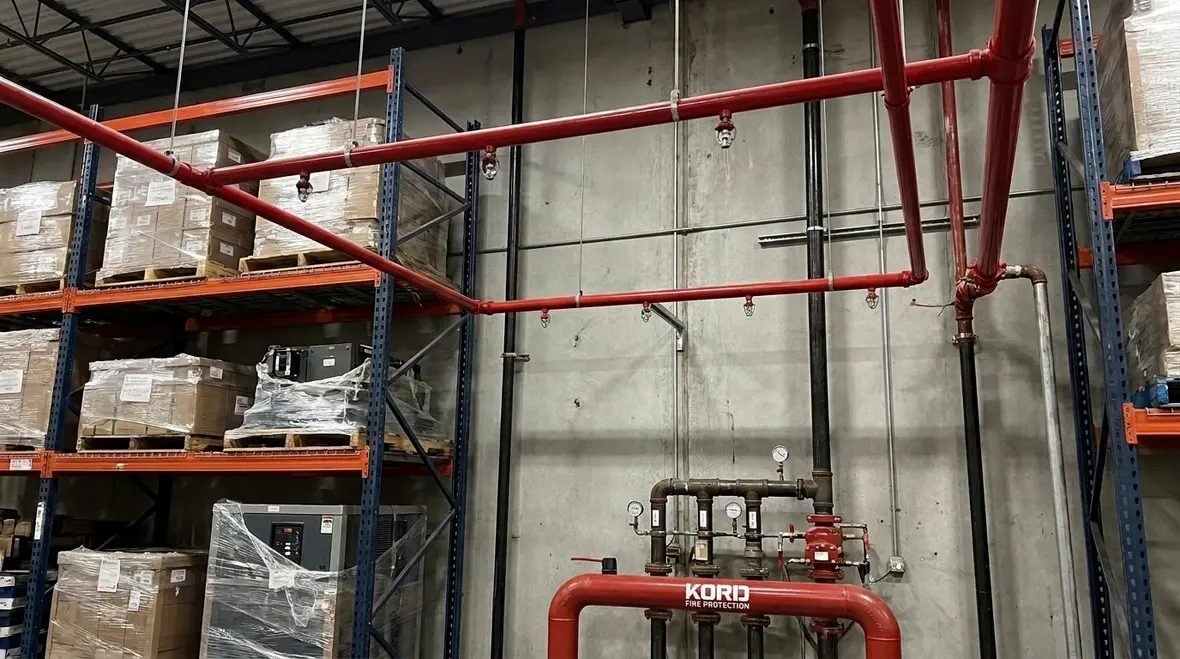
NFPA 15 Section 4.1 Design Objectives Explained: Extinguishment vs. Exposure Protection
Quick Answer: NFPA 15 Section 4.1 requires water spray fixed systems to meet defined design objectives. The key distinction is whether the system targets extinguishment (fire control) or exposure prevention (protecting adjacent combustibles). Correct design, control, and maintenance ensure the system performs as intended.
Why NFPA 15 4.1 Design Objectives Matter in Real Facilities
Commercial, industrial, and retail occupancies often mix hazards: process equipment, storage racks, canopy spaces, dock areas, and facade-adjacent risks. NFPA 15 Section 4.1 design objectives extinguishment control exposure prevention governs how the water spray system must perform in those scenarios. It drives engineering decisions, the type of spray arrangement, the density or application strategy, and the operational intent of system controls.
In practice, many compliance gaps come from unclear objectives during design reviews, incomplete documentation at turnover, or deferred maintenance that undermines reliability. Kord Fire Protection supports facilities with ongoing inspection, testing, and maintenance services so performance stays aligned with the intended objective through the life of the installation.
What NFPA 15 Section 4.1 Defines: Two Objectives, Two Outcomes
NFPA 15 Section 4.1 establishes design objectives for water spray fixed systems. The system does not treat every fire the same way. Instead, it is designed around the expected fire behavior and the property at risk.
Extinguishment objective: control the fire itself
An extinguishment design objective focuses on reducing the burning condition to stop or control flame spread and fire growth. This often means the system aims to achieve effective cooling and wetting of the fuel and heat release rate reduction, based on the system’s hazard classification, design area, and operational strategy.
Extinguishment performance depends on correct actuator operation, adequate water distribution, and delivery of the required flow and pressure profile at the hazard. When these conditions fail, the result often looks like partial knockdown without reliable control.
Exposure protection objective: protect what the fire might reach
An exposure prevention design objective targets ignition avoidance or damage reduction to adjacent combustibles, exposures, or structural elements. The system is intended to keep exposures within safe temperature limits, reduce radiant heat transfer, and prevent involvement that would otherwise propagate the fire.
Exposure protection focuses on keeping the protected surface and adjacent materials from reaching ignition conditions. It does not necessarily extinguish the primary fire location, because the design intent is to maintain a protective boundary and limit extension.
How the Design Objective Changes System Design and Control
Design objective selection affects more than documentation. It changes the engineering assumptions that drive performance.
1) Coverage and application strategy
Extinguishment typically requires more direct and effective application to influence the fire environment where control is needed. Exposure prevention often requires coverage tailored to the protected area and the heat exposure path. Incorrect coverage assumptions commonly show up during walkthroughs when spray pattern geometry does not match the protected hazard configuration.
2) Density, water distribution, and hydraulics
Both objectives rely on meeting specified application requirements. Hydraulic calculations must support the required flow at the nozzles under the expected demand scenario. A system that is “nearly adequate” under commissioning can drift out of compliance due to changes in supply pressure, valve condition, or piping obstructions.
Spray distribution can also degrade. Over time, nozzles can foul, or piping can develop internal scale. For exposure prevention, even small distribution shortfalls may not stop extension, which is often the first sign found during post-incident reviews.
3) Control logic and actuation intent
Water spray systems may use detection, manual actuation, or other control strategies based on the hazard design. The control intent must align with the design objective extinguishment control exposure prevention. For example, actuating earlier or later than intended can reduce effectiveness because water application must coincide with the hazard’s thermal and burning progression.
Commercial facilities frequently struggle with control program drift after renovations. New tenants add equipment, modify rack spacing, or change storage configuration. The system may still actuate, but the protected geometry no longer matches the original design.
Operational Procedures: What “Successful Performance” Looks Like
Facility teams should be able to describe, in plain language, what the system is designed to accomplish and how it should operate during a fire.
If the objective is extinguishment
- Expected result: flame control and suppression of fire growth within the design hazard area.
- Operational priority: verify water delivery parameters are maintained during actuation, including pump performance and water supply availability.
- Common failure pattern: delayed detection, partial nozzle distribution, or reduced flow due to valve positions or supply constraints.
If the objective is exposure protection
- Expected result: prevention of ignition and limitation of thermal damage to adjacent exposures.
- Operational priority: ensure protected boundaries receive continuous or appropriately timed water application consistent with hazard design.
- Common failure pattern: inadequate coverage to the exposure path, blocked discharge points, or equipment changes that shift heat transfer routes.
Fire drills and training should incorporate the design objective so responders understand why the water spray system may not extinguish the primary fire but still provides life safety and property protection by preventing extension.
Maintenance and Inspection: The Compliance Risks That Commonly Break the Objective
NFPA 15 performance depends on disciplined maintenance. The design objective extinguishment control exposure prevention cannot be achieved if the system’s condition degrades over time.
Key inspection pressure points
- Water supply performance: pump tests, pressure stability, and required flow delivery verification. Reliability failures often appear as reduced flow or delayed ramp-up.
- Valve and control integrity: inspections should confirm correct valve positions, proper supervisory features, and functional control circuits.
- Nozzle condition and distribution: clogged or damaged nozzles degrade spray pattern and application effectiveness.
- Obstructions: overstocking, hanging tarps, temporary signage, and duct or cable additions can block discharge nozzles and undermine coverage.
Commercial facility realities
In retail and warehouse environments, storage and layout change frequently. In industrial settings, process equipment can be relocated or modified. Any change that affects spray geometry, protected surface adjacency, or detection and control placement can impact the objective.
Kord Fire Protection helps facilities manage these risks through systematic service, documentation discipline, and maintenance planning aligned to NFPA expectations. For additional water spray system insight, see: NFPA 15 Enhancing Fire Safety with Water Spray Fixed Systems.
Engineering Documentation and Coordination: Avoiding “Design Objective Drift”
A common compliance challenge occurs when the system is installed for one intent but later operated or maintained as if it were another. “Objective drift” happens during renovations, vendor changes, or incomplete handover packages.
To prevent drift, facilities should maintain a complete record set that clearly states the design objectives, protected areas, hazard classifications, and the control and actuation strategy. Engineering reviews should confirm that the existing installation continues to match the documented protected geometry and water distribution requirements.
For additional industry context on water-based systems and related support infrastructure, facilities can reference NFPA 15 Section 8.4 Water Supply Information for Spray Systems when coordinating pump performance and water supply considerations.
Frequently Asked Questions
Conclusion and Call to Action
NFPA 15 4.1 design objectives extinguishment control exposure prevention is not a theoretical distinction. It directly determines how the system is engineered, operated, and maintained to control fire growth or prevent extension. Ensure your facility’s documentation matches the current layout, verify water delivery performance, and address nozzle and valve integrity before small issues become noncompliance. Contact Kord Fire Protection to schedule an NFPA-aligned inspection, testing, and maintenance plan that protects life safety and keeps your system objective true.

Join Our Newsletter!
Get the latest fire safety tips delivered straight to your inbox From our Newsletter.



