
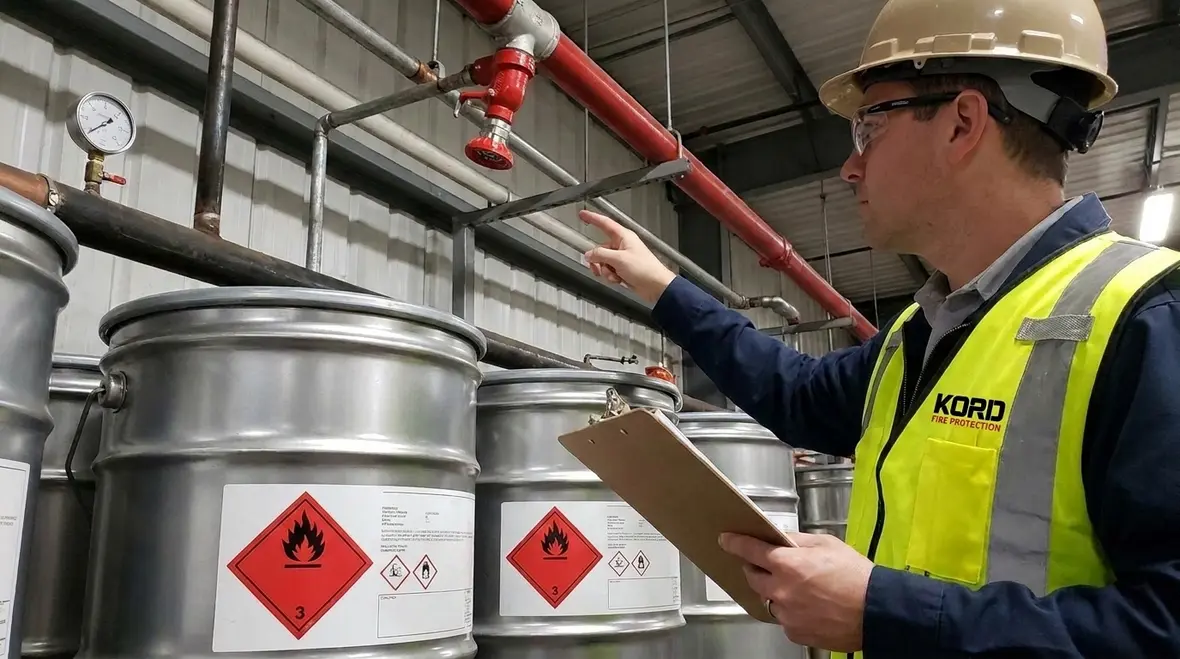
How NFPA 15 Section 4.5 Classifies Flammable and Combustible Liquids Using 40 psi Reid Vapor Pressure
Quick Answer: NFPA 15 Section 4.5 ties water spray system design hazards to flammable and combustible liquid categories. When a liquid’s Reid vapor pressure meets threshold values, it aligns with NFPA 30 classification. This classification then drives expected fire behavior and the water spray approach.
Sites reviewing water spray system hazards should also look at NFPA 15 Section 5.1 general system components requirements, since liquid classification only helps if the valves, piping, nozzles, and controls are actually ready to do their job when things get spicy.
Introduction: What NFPA 15 Section 4.5 Is Really Doing
NFPA 15 Section 4.5 focuses on the fire hazard classification of liquids that can be present in or near protected areas. In commercial, industrial, and retail facilities, the liquid category becomes a practical design input for fixed water spray systems. When NFPA 15 4.5 flammable combustible liquids NFPA 30 classification Reid vapor pressure applies, the system design, spacing, density targets, and water supply expectations align with the volatility and burning characteristics associated with that liquid type.
In practice, many compliance failures come from mismatched documentation. Facilities may store a product under one name, but the Safety Data Sheet and internal process labels provide different volatility information, or they use the wrong temperature basis for the Reid vapor pressure. Section 4.5 does not allow guesswork. It requires the hazard classification to be supported by the correct product data.
What Does “40 psi Reid Vapor Pressure” Mean for Liquid Categorization?
Reid vapor pressure measures a liquid’s volatility. Higher Reid vapor pressure indicates more readily evaporating fuel, which increases the rate of vapor generation and can intensify early fire growth. That volatility is a key divider between different NFPA 30 classes, and NFPA 15 Section 4.5 uses the resulting category to determine water spray protection requirements.
When a liquid has a Reid vapor pressure at or around 40 psi, the hazard profile typically places it within the flammable range in NFPA 30, affecting how the liquid is handled for fire protection system design. For fixed water spray systems, this classification influences how quickly a fire may develop and how aggressively heat and flame conditions can spread across surfaces or pooled liquid.
Operational takeaway for facilities
Commercial facilities often stock mixed inventories. A product that is close to the threshold may move categories depending on supplier data or measurement conditions. A robust compliance program verifies the current Reid vapor pressure and the stated test temperature on the SDS, then ties that data to the facility’s hazard inventory. Kord Fire Protection commonly supports this documentation reconciliation as part of ongoing inspection and maintenance services.
Linking NFPA 15 4.5 to NFPA 30: How the Classification Drives Water Spray Design
The key relationship is straightforward: NFPA 15 Section 4.5 identifies the liquid hazard category, and NFPA 30 classification provides the standard framework for determining that hazard. Once the liquid category is established, the water spray system’s design expectations reflect the likely fire behavior.
What changes when the liquid category is more hazardous?
-
Expected fire growth and heat release: Higher volatility liquids can increase the severity and speed of flame development.
-
Water application effectiveness: The system may need to maintain application where it can cool fuel and manage vapor and flame conditions.
-
Coverage and distribution scrutiny: Nozzle performance, obstruction analysis, and spray pattern integrity become more critical to achieving the required protective effect.
-
Reliability and readiness: Fire pumps, valves, strainers, and controls must maintain performance during the event, not just during annual inspections.
Facilities that do not operationalize this link often experience recurring deficiencies. Examples include blocked or misaligned nozzles, throttled control valves, partially clogged strainers, and control wiring issues that delay water discharge. These failures undermine system performance precisely when the liquid category expects higher protection.
Compliance Challenges in Real Commercial Environments
NFPA 15 4.5 flammable combustible liquids NFPA 30 classification Reid vapor pressure requirements become difficult when facilities treat hazard classification as a one time paperwork activity instead of a living program.
Common failure points during inspections and maintenance
-
Outdated SDS documentation: Suppliers update formulations. Reid vapor pressure can change, moving a product to a different category without a noticeable change in appearance.
-
Temperature mismatch: Reid vapor pressure values depend on test conditions. If facility documentation omits the basis or assumes the wrong temperature, the classification can be incorrect.
-
Inconsistent labeling across departments: Procurement may enter product data differently than EHS, operations, or fire safety. The resulting hazard inventory can diverge from the design basis.
-
Water distribution deterioration: Corrosion, debris, and nozzle wear degrade spray patterns. Even minor changes can reduce coverage effectiveness.
-
Hydraulic underperformance: Pump curves, pressure setpoints, and discharge routing can drift over time if maintenance is not disciplined.
For fixed water spray systems, these challenges compound quickly in high traffic areas like retail back rooms, industrial maintenance bays, and warehouse mixing zones. Kord Fire Protection supports ongoing compliance by connecting hazard inventory verification to system inspection and functional testing practices. For further background on fixed water spray performance and NFPA 15 considerations, review: NFPA 15 enhancing fire safety with water spray fixed systems.
Inspection, Testing, and Maintenance That Sustain NFPA 15 Section 4.5 Compliance
Once the NFPA 15 4.5 flammable combustible liquids NFPA 30 classification Reid vapor pressure basis is established, the facility must ensure the water spray system remains capable of delivering the required protective performance. Compliance is not only about initial installation. It is about maintaining the system’s functional and hydraulic integrity.
Key operational elements to verify
-
Nozzle condition and alignment: Inspect for physical damage, blockage, corrosion, and pattern degradation. Confirm that spray coverage remains unobstructed.
-
Strainers and piping cleanliness: Debris causes flow restriction and pressure loss. Verify strainers are maintained and that differential pressure trends do not indicate accumulating obstruction.
-
Valves and actuation: Test valve response where applicable. Stuck or partially closed valves can prevent correct water application during an event.
-
Fire pump and controls readiness: Ensure pump performance aligns with design expectations. Routine verification of suction conditions, pressure settings, and control reliability reduces the risk of under-delivery.
Why water supply system performance matters
Water spray systems depend on stable water delivery. If the facility uses a fire pump, the pump and driver must deliver required pressure and flow under expected conditions. For broader context on fire pump system reliability and maintenance considerations, refer to: Fire Pump Maintenance Mistakes to Avoid.
In commercial settings, maintenance often gets scheduled based on convenience instead of risk. A better approach aligns maintenance intervals with product hazard volatility and occupancy patterns. Where higher volatility liquids exist, schedule more frequent checks for nozzle cleanliness, valve free travel, and pump readiness to avoid performance gaps.
Practical Implementation: Building an Audit-Ready Hazard and System Record
To make NFPA 15 Section 4.5 defensible during plan review, inspections, and incident investigations, facilities should maintain a clear chain from product data to system design basis.
Recommended documentation workflow
-
Maintain a current flammable and combustible liquid inventory: Include product name, location, maximum quantities, and storage conditions.
-
Capture the correct Reid vapor pressure values: Record the value and the test basis as presented by the current SDS or supplier documentation.
-
Confirm NFPA 30 classification: Tie the Reid vapor pressure information to the relevant NFPA 30 category used for design basis decisions.
-
Link classification to the water spray protection design: Document that the system design basis references the hazard category in NFPA 15 4.5 flammable combustible liquids NFPA 30 classification Reid vapor pressure terms.
-
Schedule inspection and maintenance evidence: Retain inspection reports, functional test results, nozzle verification records, and pump performance checks.
This approach reduces ambiguity and helps ensure every system component stays aligned with the hazard profile. Kord Fire Protection supports facilities that need a practical bridge between EHS documentation and the day to day realities of system maintenance.
Frequently Asked Questions
Call to Action
Facilities should validate their flammable and combustible liquid hazard inventory against current SDS values and confirm the NFPA 30 classification used for NFPA 15 Section 4.5. Then they should verify fixed water spray system performance through disciplined inspection and maintenance. Contact Kord Fire Protection to support hazard documentation review and system inspection planning so your water spray protection stays audit ready and operationally reliable.

Join Our Newsletter!
Get the latest fire safety tips delivered straight to your inbox From our Newsletter.



