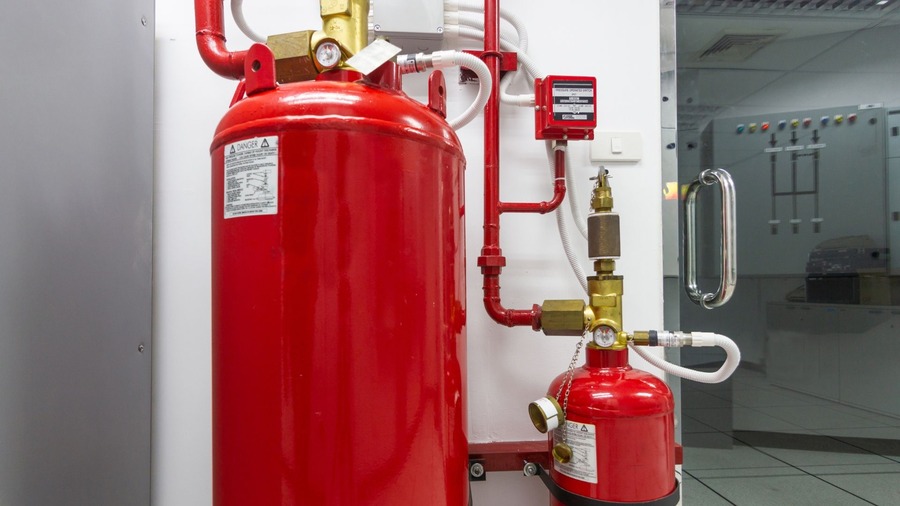
NFPA 15 Section 8.4 Water Supply Information for Spray Systems
Quick Answer: NFPA 15 Section 8.4 focuses on water supply information for spray systems so the system can perform when heat rises and time matters. For industrial, retail, and commercial sites across Australia, this means verifying flow, pressure, and reliability. Kord Fire Protection can help assess, design, and document the supply with calm, experienced precision.
NFPA 15 water supply information spray design plays a major role in keeping fixed spray systems ready for real fire conditions. In the first step, the design must confirm that the water source can support the system under demand, not just on paper, but in the real world where pumps, tanks, mains, and valves all have opinions of their own. For Australian industrial, retail, and commercial facilities, this is not a box ticking exercise. It is the backbone of system performance, and it deserves a partner who knows how to read the signs before the alarm does.
Sites planning upgrades or verification work can also benefit from Kord Fire Protection’s fire sprinkler service support, especially when supply conditions, testing records, and real world hydraulic confidence all need to line up before a project moves ahead. For broader context on fixed water spray concepts, Kord also covers the topic in NFPA 15 enhancing fire safety with water spray fixed systems.
What NFPA 15 Section 8.4 Covers
Section 8.4 requires clear water supply information for spray systems. In simple terms, the design team must prove that enough water will reach the system at the right pressure and for the right duration. That includes the source type, flow available, residual pressure, storage capacity, and any limits that could weaken performance.
Just as important, the supply details must match the spray demand. If the system needs more water than the source can deliver, then the design fails before the first nozzle opens. And that, as any facility manager knows, is a very expensive way to discover bad news.
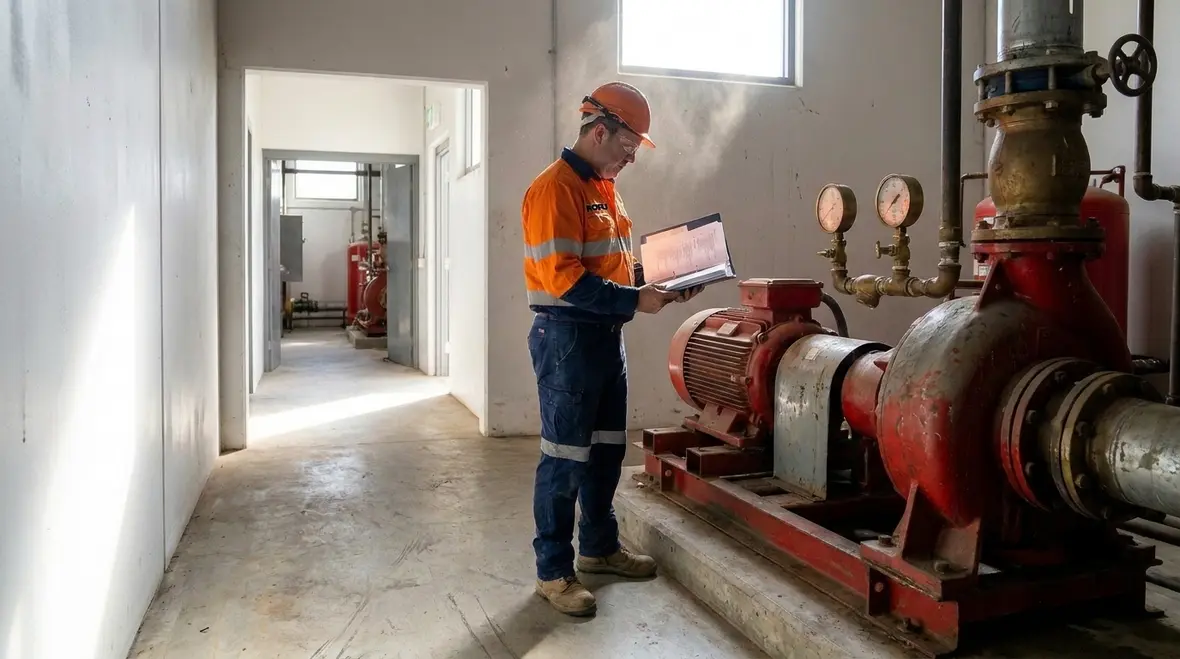
Why Water Supply Data Matters in Spray System Design
Water supply data is not just paperwork. It shapes the full life of the system. A spray system designed for a warehouse, plant room, loading dock, or process area must match the hazard, the discharge pattern, and the water source. When the supply falls short, the spray pattern weakens, cooling drops, and fire control becomes less certain.
For Australian sites, this matters even more because facilities often work with mixed water sources, changing site loads, and long pipe runs. As a result, the design team must confirm supply details early, not after construction has already marched off with the budget and the optimism.
The difference between a drawing and a dependable system
This is where many projects either earn their confidence or borrow it. A water supply that looks acceptable in theory can still struggle once friction losses, elevation changes, simultaneous demands, or aging site infrastructure begin adding their little opinions to the conversation. Good spray design respects those details early. Great spray design documents them so thoroughly that nobody has to play detective later.
That practical mindset is especially useful in facilities where uptime matters. Distribution buildings, process areas, retail support spaces, and mixed commercial occupancies all rely on predictable fire protection performance. If the supply is uncertain, everything downstream becomes uncertain too, including approvals, testing, and long term maintenance confidence.
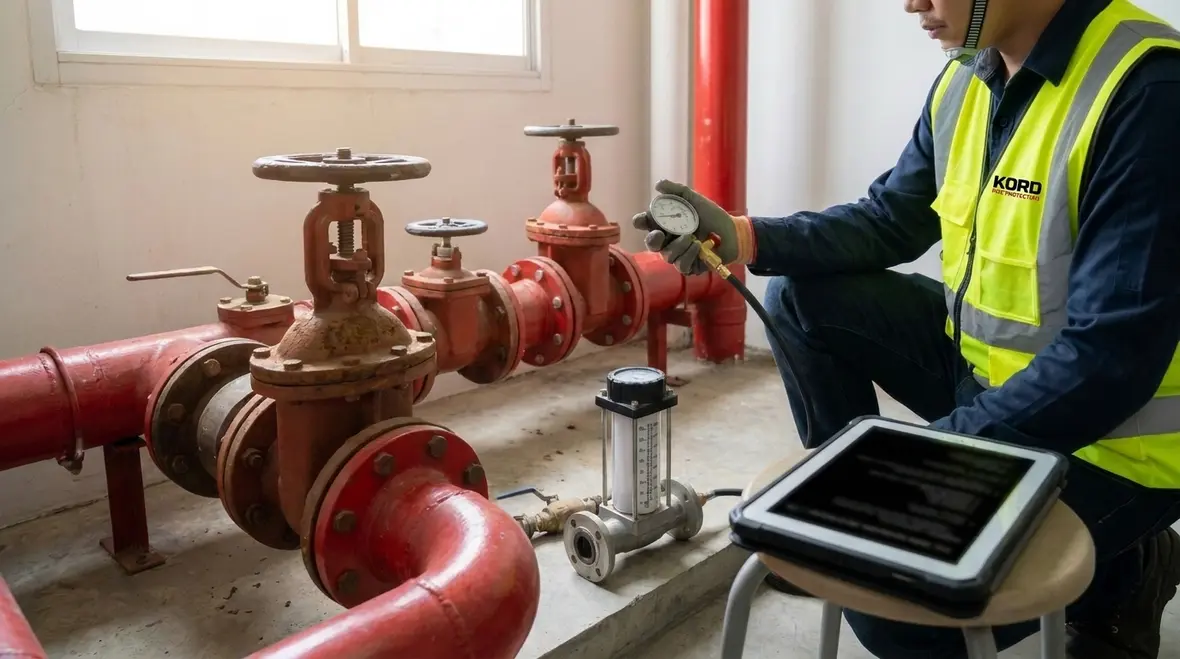
Water Supply Checks That Support NFPA 15 Water Supply Information Spray Design
Design teams should confirm several key items during planning and review.
Column 1
- Water source type: town main, tank, pump set, or a combined supply
- Available flow: how much water the source can deliver at demand
- Residual pressure: pressure left after the system starts drawing water
- Duration: how long the supply can sustain the demand
Column 2
- System losses: friction loss, elevation change, and valve loss
- Pump support: whether pumps boost and hold the required supply
- Storage limits: tank size, refill rate, and usable volume
- Reliability factors: supply stability during normal and emergency use
These checks create a realistic picture of performance. They also help prevent the classic “looks fine on the drawing” problem, which tends to appear at the exact moment no one wants surprises.
What strong review discipline looks like
Strong review discipline means comparing supply data against actual demand rather than against wishful thinking. It means checking whether pumps truly support the hydraulic objective, whether tanks provide usable volume instead of theoretical volume, and whether losses have been measured honestly. Fire protection is a poor place for creative optimism.
It also means asking whether the supply remains dependable when the site is busy, when maintenance conditions are less than perfect, and when emergency use places added stress on the network. A dependable spray system should not rely on everyone having a good day at the same time.

How a Site Proves the Supply Is Reliable
A reliable supply needs more than a nameplate and a hopeful nod. The design team should use measured data, such as flow tests, pump curves, tank records, and site conditions. In addition, they should compare that data against the actual hazard demand.
For example, a commercial distribution centre may need a different supply profile than a retail back of house area or an industrial process zone. Therefore, the design must reflect what the site truly faces, not what someone once guessed during a hurried meeting with lukewarm coffee.
When the design team documents the supply well, the owner gains a better path for approvals, commissioning, and future maintenance. That makes life easier for facilities teams, contractors, and inspectors alike.
Evidence that actually helps later
Useful evidence does more than satisfy a file today. It gives future reviewers a clean baseline. If the site expands, if hazard layouts change, or if a pump is upgraded, the historical record becomes extremely valuable. Clear supply data can show whether the system still fits the building’s reality or whether the building has quietly outgrown the assumptions behind the original design.
Why Kord Fire Protection Can Be a Vital Partner
Kord Fire Protection can play a vital role in NFPA 15 water supply information spray design by helping clients turn code needs into practical site solutions. The team can assess supply conditions, support design development, and help confirm that the water source aligns with system demand.
More than that, Kord Fire Protection can help owners across Australia avoid common mistakes such as under sizing supply, missing pressure losses, or relying on old site data. Because spray systems protect high value assets, production areas, and public facing spaces, the design must stay accurate from the first review to the final commissioning step.
In a world where fire risk does not care about deadlines, Kord Fire Protection brings order, detail, and a steady hand. That is the kind of partner that keeps a project moving without drama. And frankly, every site deserves at least one adult in the room.
What Industrial, Retail, and Commercial Sites Should Ask Early
- Is the existing water supply strong enough for the planned spray system?
- Will the supply stay stable during peak use or emergency demand?
- Do tank and pump arrangements meet the required duration?
- Have friction losses and elevation changes been included?
- Does the design match the real hazard on site?
These questions help project teams avoid delays and redesign work. They also support better cost control, which always sounds less exciting than fire safety, but tends to matter just as much when invoices arrive.
How Good Documentation Supports Approvals and Maintenance
Clear documentation helps everyone. It supports approvals, makes commissioning smoother, and gives maintenance teams a solid reference later. In addition, it helps future upgrades because staff can see what the supply was designed to do and what changes may affect performance.
Good records should include flow test results, pump data, tank details, calculation notes, and any special site limits. When these items stay organised, the system stays easier to verify and maintain over time.
Documentation that earns its keep
The best documentation is not decorative. It is practical. It tells the next designer, technician, owner, or inspector exactly what the supply was, what the system expected, and where the limits sit. That level of clarity reduces confusion, shortens troubleshooting, and lowers the chance that someone later makes a costly assumption with great confidence and very little evidence.
FAQ
Conclusion
NFPA 15 Section 8.4 demands a real water supply strategy, not guesswork. For Australian industrial, retail, and commercial sites, that means careful design, solid testing, and clean documentation. Kord Fire Protection can help make that happen with practical support and deep experience.
If a project needs a reliable path from code to commissioning, Kord Fire Protection is ready to step in and keep the system strong, simple, and fit for purpose. That is the kind of outcome everyone prefers, especially when the alternative involves crossed fingers and a very uncomfortable meeting later.

Join Our Newsletter!
Get the latest fire safety tips delivered straight to your inbox From our Newsletter.