
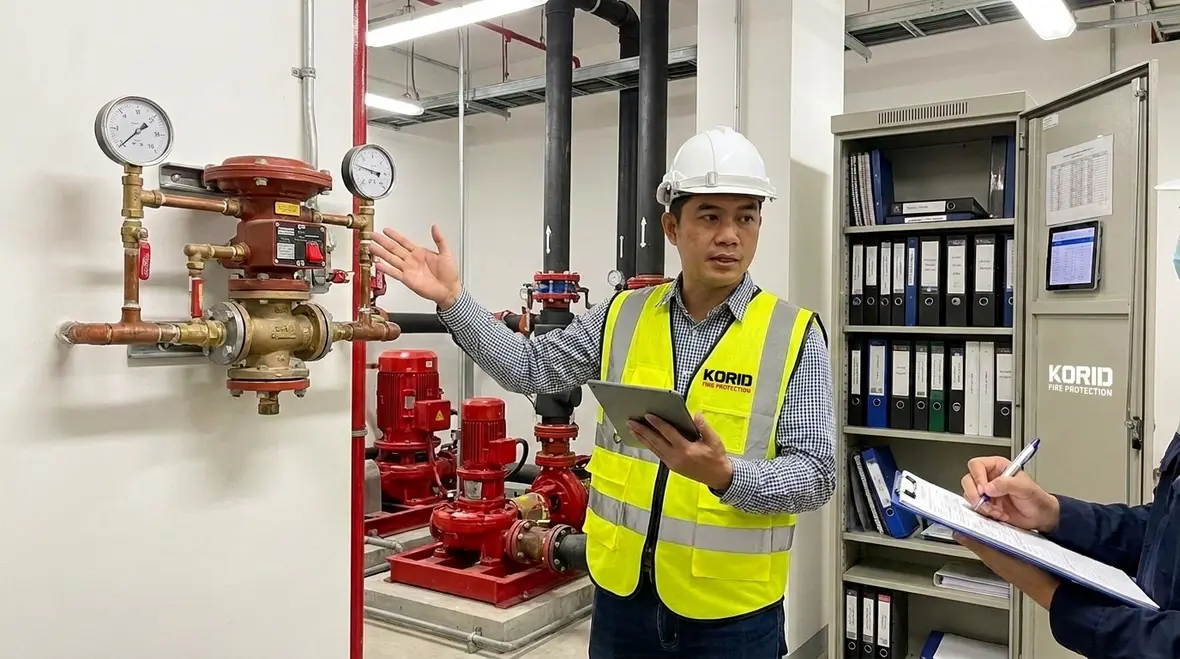
NFPA 25C Section 4.3: Record Keeping Requirements for Fire Protection Systems
Quick Answer: NFPA 25C Section 4.3 requires fire protection system records that document inspections, testing, and maintenance actions so facility owners can demonstrate compliance and trace performance over time. The documentation must be accurate, complete, and readily available to support ongoing sprinkler and related water-based system reliability.
What NFPA 25C Section 4.3 Requires for Record Keeping
For commercial, industrial, and retail facilities, NFPA 25C Section 4.3 record keeping requirements fire protection systems focus on maintaining evidence of operational readiness. This documentation supports audits, insurance reviews, incident investigations, and internal maintenance planning. It also provides a historical trail that helps technicians identify recurring failure points and verify that corrective actions actually resolved the underlying cause.
In practice, compliance depends on more than storing paper reports. Facilities typically need records that clearly tie each inspection or test activity to the affected system component, the testing method, the observed results, and the corrective actions performed when deficiencies appear. The records must remain accessible so the facility can demonstrate the system’s maintained condition at any time.
Which Fire Protection Activities Must Be Documented
NFPA 25C applies to water based fire protection systems, and the record keeping expectations align with the types of activities those systems require. The key operational principle is simple: if the system is inspected or tested, the result must be recorded, and deficiencies must be tracked to closure.
Near the top of any compliance conversation, it also helps to connect record keeping to actual field service. Kord Fire Protection’s fire sprinkler system service page is a useful reference point for how inspections, maintenance, repairs, and reporting naturally fit together in real commercial settings. ([kordfire.com](https://kordfire.com/fire-sprinkler-service/?utm_source=openai))
Typical recordable items in commercial facilities
- Inspection and test results for valves, water flow devices, and system supervisory components
- Maintenance actions taken to correct deficiencies, including component replacement or adjustment
- Observed impairments that could reduce water delivery, system monitoring effectiveness, or proper operation
- Conditions noted during system checks that indicate deterioration, corrosion, obstruction, or abnormal performance
Facilities commonly run into trouble when records capture only pass or fail outcomes without the supporting details needed to understand what was actually changed and why. An incomplete entry can force repeated follow up testing because the facility cannot establish what condition existed before corrective work began.
What Good Records Look Like in the Real World
“Good records” are operationally useful. For facility teams, that means records should allow a maintenance supervisor to answer five questions quickly: what was tested, when it was tested, who performed the work, what the results were, and what was done about problems. When records meet that standard, they support accountability and shorten troubleshooting during the next inspection cycle.
Essential details that reduce compliance risk
- System identification: building, floor, zone, or system designation matching drawings and layouts
- Component identification: device type, location, and service arrangement
- Date and time: aligns with schedules and allows trend analysis across seasons
- Test or inspection method: what was done and how it was evaluated
- Measured values or observations: readings, conditions, and any abnormal findings
- Deficiency notes: clear description of the impairment and its likely impact
- Corrective action documentation: what was repaired, adjusted, replaced, or verified
- Verification after repair: confirmation that the system functioned as intended
When facilities treat record keeping as an afterthought, the maintenance team often ends up with mismatched dates, missing device identifiers, or results that cannot be reconciled to specific system components. Kord Fire Protection routinely builds record templates and technician workflows that reduce those errors by design.
Common Compliance Challenges: What Breaks Record Keeping
Most record keeping failures do not stem from missing intent. They stem from operational friction. In commercial environments, documentation can get fragmented across multiple contractors, multiple service orders, or multiple software systems that do not share data cleanly. NFPA 25C Section 4.3 record keeping requirements fire protection compliance expectations are met when facilities standardize data capture and maintain continuity across the entire maintenance lifecycle.
Frequent failure points
- Untracked deficiencies: issues noted in the field never get formally closed with verification data
- “Generic” reports: entries lack device location, system designation, or measured values
- Paper-only workflows: hard to search, prone to loss during staffing changes or audits
- Inconsistent technician notes: the same device type gets documented differently from one visit to the next
- No reconciliation to system configuration: records do not align with current as built layouts after renovations
- Late corrective actions: work performed later without linking back to the deficiency record created earlier
Facility managers can significantly reduce risk by aligning their maintenance schedules with their documentation processes. Kord Fire Protection supports that alignment with structured service reporting and maintenance workflows designed for commercial owners who need audit ready evidence across multiple assets.
How to Align Record Keeping With Maintenance and System Integrity
Record keeping works best when it mirrors the mechanics of the system. Water based systems depend on the correct operation of valves, detection and supervisory signaling, water supply readiness, and the ability of components to function as intended when actuated. Records should therefore capture the results of inspections and tests that confirm these functions.
Link documentation to key system mechanisms
- Sprinkler and water delivery reliability: records should reflect that water flow and valve position integrity were verified
- Supervision and monitoring effectiveness: records should show that supervisory devices and signals are operating correctly
- Impairment control: records should clearly document impairments and the steps taken to restore service
To support broader compliance planning, facility teams can review related system installation and maintenance considerations through Kord Fire Protection resources, including automatic sprinkler system installation guidance and ongoing maintenance breakdowns: NFPA 13 overview for automatic fire sprinkler system installation and NFPA 25 overview: complete water based fire protection systems maintenance breakdown.
For facilities in California, record keeping also supports code alignment for local interpretation and enforcement. Kord Fire Protection provides context through: fire sprinkler code California explained.
For related water supply and pump system readiness, commercial teams often coordinate documentation expectations with pump testing and water flow system performance maintained under industry standards. Additional resources are available through Fire Pumps, including its NFPA 25 fire pump testing requirements guide. ([firepumps.org](https://firepumps.org/blog/nfpa-25-fire-pump-testing-requirements-guide/?utm_source=openai))
Best Practices for Record Management and Audit Readiness
Audit readiness comes from consistency, traceability, and controlled versioning. Facility owners and facility managers should adopt a record management approach that ensures test results remain linked to system configuration, staff accountability, and follow up corrective action. This is where commercial service partners add measurable value by standardizing how data is collected and reported.
Practical record management standards
- Use a consistent template: same fields every service visit, including system and device identifiers
- Centralize storage: keep records accessible for maintenance staff and leadership without searching multiple folders
- Link deficiencies to closure: every finding must map to corrective action documentation and re verification results
- Maintain version control: record the system configuration reference so changes from renovation work do not invalidate prior entries
- Implement an internal review: a supervisor confirms report completeness before files are finalized
Kord Fire Protection helps commercial facilities treat documentation as part of life safety operations, not just paperwork. Their role includes planning maintenance activities, documenting test results accurately, and assisting owners with compliance programs that scale across multiple sites.
Facility decision makers can explore additional commercial technical resources through Kord Fire Protection and related service information at kordelectric.com and kordfire.com.au.
Frequently Asked Questions
Conclusion and Call to Action
NFPA 25C Section 4.3 record keeping requirements fire protection compliance depend on accurate, traceable, audit ready documentation that connects tests, findings, and corrective actions. Commercial owners reduce risk by standardizing record templates, linking deficiencies to verified closure, and keeping records aligned with current system configuration. Kord Fire Protection can support ongoing compliance through structured maintenance, technician documentation workflows, and clear reporting your facility team can rely on. Schedule a review to confirm records and maintenance practices match your operational reality.

Join Our Newsletter!
Get the latest fire safety tips delivered straight to your inbox From our Newsletter.


