NFPA 1 Section 66.1 Flammable Liquids Safety
Quick Answer
NFPA 1 Section 66.1 sets the general rules for handling and storing flammable and combustible liquids. It guides design, ventilation, containment and ignition control. In practice, facilities across Australia benefit from a partner like Kord Fire Protection to implement these standards on the ground with audits, training and reliable fire safety systems.
Introduction to NFPA 1 flammable combustible liquids general fire safety
NFPA 1 provides a framework for safe management of flammable and combustible liquids in industrial, retail and commercial facilities. The clause 66.1 focuses on the general safeguards needed to prevent fires and limit spread when liquids such as solvents, fuels and oils are used or stored. The goal is clear safety through proper storage, handling, ignition source control and rapid response. While the standard originates in the United States, its principles are followed worldwide. In Australia these guidelines are adapted to fit local codes and the realities of large scale operations. The approach remains practical: minimize risk, protect people and preserve assets while keeping operations running smoothly.
For teams looking to connect code language with practical system design, industrial fire suppression solutions for real hazards provide a useful next step before the paperwork starts acting like it can fight fire by itself.
What does NFPA 1 Section 66.1 cover?
This section covers the broad sweep of requirements for flammable and combustible liquids. It addresses proper container and storage requirements, ventilation considerations, elimination of ignition sources, bonding and grounding, spill control and emergency response. It also emphasizes ongoing maintenance of equipment and routine inspections. In short, 66.1 helps facilities avoid common traps such as poor segregation of liquids, inadequate containment and uncontrolled ignition sources.
For managers across industrial facilities, retail fueling stations and commercial sites, this means designing spaces that reduce vapor accumulation, provide clear separation of incompatible materials and ensure that fire protection systems are ready to respond. The practical takeaway is to translate the language of the standard into everyday procedures that workers can follow confidently.
Core safety measures for flammable liquids at facilities
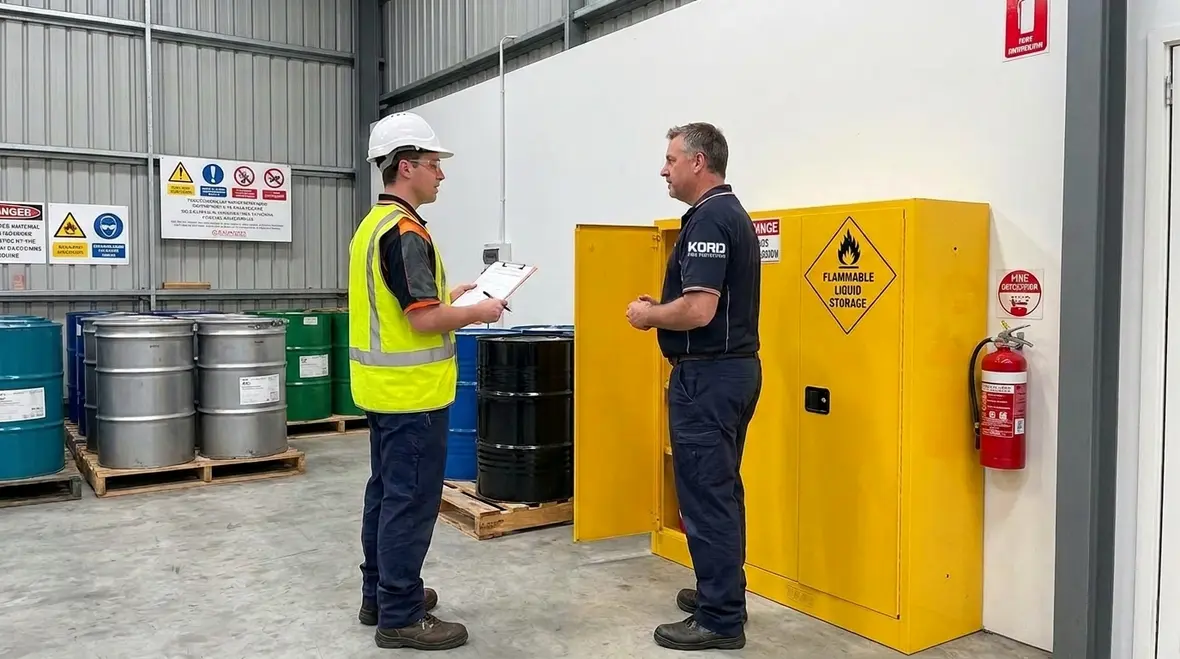
Storage cabinets and shelves should be sturdy and clearly labeled. Drip pans and secondary containment reduce spill risk. Grounding and bonding of containers prevent static buildup during transfers. Ventilation must be sufficient to remove vapors without creating drafts that spread flames. Housekeeping matters too, because dust and residues can ignite. Fire protection equipment such as portable extinguishers, detection systems and automatic suppression must be tested and maintained on a regular basis. And yes, keep ignition sources away from liquid storage areas, because even a pop culture moment can go wrong when flames meet fumes.
A related code path worth reviewing
If your facility handles these hazards regularly, it also helps to review NFPA 30 flammable and combustible liquids overview, since it expands on many of the same storage and handling realities that show up on actual job sites.
Partnering with Kord Fire Protection
Kord Fire Protection becomes a vital partner when facilities plan and execute NFPA 1 based safety. Their team conducts risk assessments to identify gaps between current practices and 66.1 requirements. They help design compliant layouts for storage and handling, install reliable fire protection equipment and coordinate testing, inspection and maintenance programs. They also provide training for staff so every worker understands how to prevent incidents and respond effectively if one occurs. With Kord, the safety program is not a one off project but an ongoing partnership that keeps operations safer and more compliant year after year.
Facilities that need a stronger hazard specific suppression strategy can also explore a layered fire protection system for flammable liquids to see how detection, containment and suppression work together when the stakes are not interested in being reasonable.
Compliance map for Australian facilities
Australian sites benefit from aligning NFPA 1 sections with local regulations and industry codes. Kord Fire Protection helps map the US standard to local fire authority expectations, ensuring documentation, tagging and labeling meet both worlds. The result is a clear road map for audits and certifications, reduced risk of non compliance and smoother operations across industrial, retail and commercial settings.
For a broader prevention lens, it is also worth reviewing NFPA 1: a comprehensive guide to fire prevention and safety as a companion resource.
Dual column spotlight on practical controls
In practice, a facility will implement a layered approach. First is engineering control such as proper ventilation and containment. Second is administrative control with clear procedures and regular training. Third is active protection including alarms and fire suppression. When these layers work together under NFPA 1 general fire safety standards, incidents are prevented and response times improve.
Next, look at maintenance. Kord Fire Protection schedules routine checks of valves, pumps and detection devices. They review container compatibility and aging equipment. They also verify that signage is visible and that storage areas are kept clean. The goal is to minimize fuel vapors and ensure a quick, coordinated response to any event.
Training and emergency readiness
Effective training makes safety real for every employee. Hands on drills, clear evacuation routes and familiarization with extinguishers build muscle memory. Regular audits verify that procedures stay current with NFPA 1 guidelines. Together with Kord, facilities establish a culture of safety that is practical, not just theoretical, and that keeps teams calm and effective in the face of risk.
One more practical layer
Training lands better when it matches the equipment people will actually use, which is why a quick review of Class B fire extinguisher for flammable liquids can help turn theory into response that is a little less chaotic and a lot more useful.
FAQ
Conclusion and call to action
NFPA 1 flammable combustible liquids general fire safety offers clear steps to protect people and assets. Kord Fire Protection stands ready to help industrial, retail and commercial facilities implement these safeguards with practical, Australia ready solutions. Contact Kord today to start the safety partnership that delivers peace of mind and reliable performance. Let safety become your strongest asset.

Join Our Newsletter!
Get the latest fire safety tips delivered straight to your inbox From our Newsletter.