NFPA 1 Section 65.6 Model Rocketry and Kord Fire Protection
Quick Answer
NFPA 1 Section 65.6 governs model rocket operations with rules on risk assessment, site selection, safe distances, ignition controls, storage and fire suppression. Compliance requires planning, training and vigilant supervision. Kord Fire Protection can become a vital partner by delivering on site protection, staff training and emergency planning, keeping industrial and commercial operations in Australia safe and compliant.
For teams building a broader compliance program, Kord Fire Protection’s NFPA codes and guidelines resource center offers useful context on how fire prevention, life safety and emergency planning standards fit together across commercial and industrial properties.
NFPA 1 and Model Rocketry: An Essential Framework
NFPA 1 Section 65.6 covers model rocket activities as an organized fire safety matter rather than a casual hobby. The code requires a formal risk assessment, defined ignition controls, appropriate storage of rocket motors, clear launch zones, spectator distances and a prepared fire watch. The topic will guide facilities managers, safety coordinators and operations leaders across industrial and commercial sites in Australia toward disciplined, auditable safety practices and consistent response plans. In practice, this means facilities align with a national standard for safety while still letting teams pursue measured demonstrations and educational events.
If you want a wider grounding in the code itself, Kord Fire Protection also publishes NFPA 1: A Comprehensive Guide to Fire Prevention and Safety, which helps connect Section 65.6 to the larger fire code picture.
Why This Matters for Industrial and Commercial Sites in Australia
Model rocketry sits at the intersection of curiosity and risk. For factories, warehouses, retail campuses and mixed-use facilities, even a small launch event can involve flammable materials, electrical equipment and large numbers of visitors. The NFPA 1 model rocketry amateur fire safety code helps organizations establish boundaries for ignition sources, designate exclusion zones, and confirm adequate fire suppression. The result is not bureaucracy for its own sake but a clear, repeatable method to reduce the chance of ignition, control potential fires and protect people and assets. And yes, it’s easier to keep everyone safe when the goal is as noble as turning curiosity into controlled demonstrations rather than turning sparks into headlines.
Core Requirements Under NFPA 1 Section 65.6
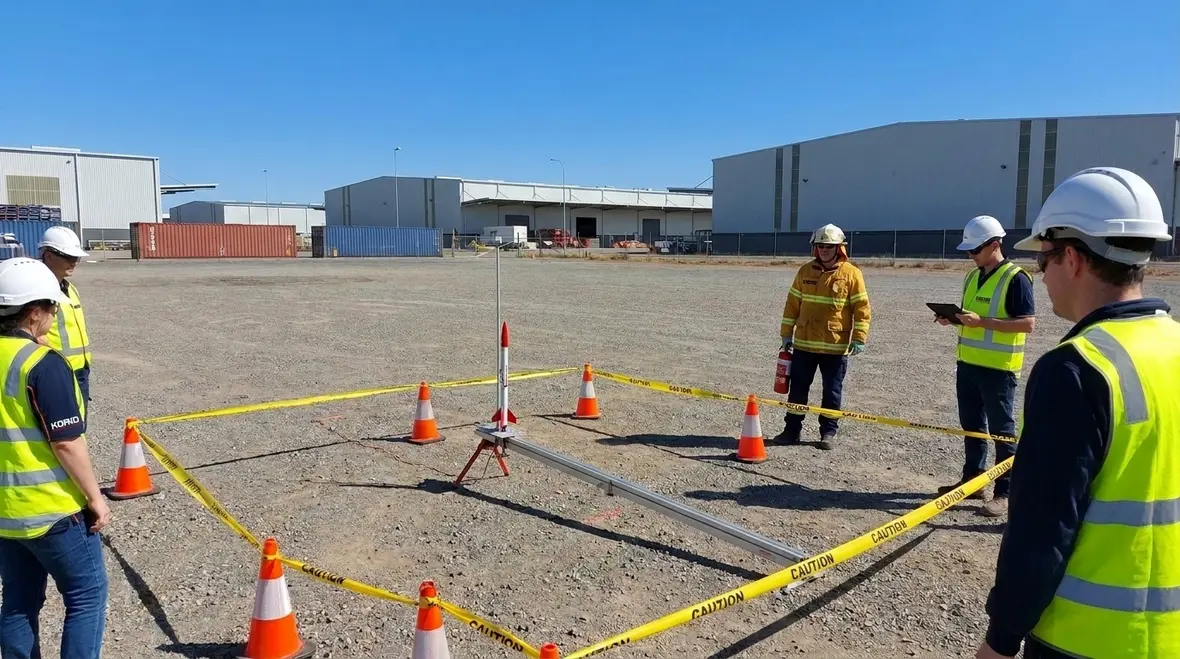
The rule set emphasizes practical safety measures. Safe zones must be defined and communicated, with spectators kept at safe distances. Rocket motors should be stored in approved containers, and ignition sources restricted during handling. A trained fire watch should be present during launches, with a plan for rapid suppression if needed. Documentation, incident reporting and continuous improvement are part of the framework. The emphasis is on preparation, not guesswork. When operations scale up, formal checks and drills become the backbone of safe performance, especially in busy commercial or industrial environments.
Key Safety Focus Areas
- Formal risk assessment before any launch activity
- Defined launch, recovery and spectator zones
- Restricted ignition handling and controlled firing procedures
- Approved storage for motors and related materials
- Trained fire watch and suppression readiness
- Post event documentation, review and improvement
The Role of Kord Fire Protection as a Vital Partner
Kord Fire Protection can support compliance with the NFPA 1 model rocketry amater fire safety code by providing a full range of protective services. They can conduct risk assessments tailored to the site, help design compliant launch areas and exclusion zones, and review storage arrangements for motors and propellants. On the day of a launch, their personnel can manage the fire watch, operate appropriate suppression equipment, and coordinate with local authorities if needed. Beyond events, Kord can deliver training for staff and safety teams, help write emergency response plans and ensure that equipment and procedures stay up to date. In short, a partnership with Kord turns a potentially risky activity into a well managed, auditable safety program.
That practical support fits naturally with Kord Fire Protection’s broader approach to fire protection services, where system readiness, code alignment and emergency planning work together instead of competing for attention.
A Practical Roadmap for Implementation
- Step 1: Define the scope. Identify which sites and events will involve model rocketry and map out the launch zones and spectator areas.
- Step 2: Conduct a risk assessment. Evaluate ignition sources, nearby equipment, and the potential for accidental fires.
- Step 3: Establish controls. Set up exclusion zones, secure motor storage, and implement ignition restrictions during handling.
- Step 4: Plan for fire protection. Ensure that suppression equipment is on site, with clear access routes and trained personnel ready to respond.
- Step 5: Train and drill. Run regular safety briefings and mock drills to keep staff prepared.
- Step 6: Document and review. Keep records of assessments, training, and incident reviews to demonstrate ongoing compliance.
- Step 7: Partner with experts. Engage Kord Fire Protection to tailor measures to the site and event scale, then revisit the plan after each launch.
Two-Column Practical Example
What the code requires
- Defined launch and spectator zones
- Fire watch and suppression readiness
- Safe motor storage
- Emergency planning and drills
- Ongoing compliance checks
What Kord Fire Protection provides
- Site planning and safety signage, with crowd management guidance
- Trained fire protection personnel and access to appropriate extinguishing equipment
- Approved, secure containment and inventory controls
- Custom response plans, staff training and post-event reviews
- Scheduled audits and updates to procedures
Who Should Consider This Code and Partner Solution
Industrial facilities, retail complexes with large public access, and commercial campuses across Australia benefit from a strong safety framework. Operational managers, safety officers, facilities directors and property managers can use NFPA 1 Section 65.6 as a common standard to coordinate with tenants and vendors. A partner like Kord Fire Protection brings specialized fire safety expertise that complements this framework, ensuring the entire operation remains compliant even as events scale up or as regulations evolve.
FAQ
Conclusion and Call to Action
Embracing NFPA 1 Section 65.6 for model rocketry brings discipline to a field driven by curiosity. It creates clear safety boundaries, reduces risk and preserves the ability to showcase innovation in industrial and commercial settings. Kord Fire Protection stands ready to partner, providing guidance, on site protection and training to ensure every launch is safe and compliant. Reach out to begin a tailored safety plan that protects people, property and the bottom line.

Join Our Newsletter!
Get the latest fire safety tips delivered straight to your inbox From our Newsletter.