Advanced Fire Suppression for Server Rooms in Australia
Quick Answer
Advanced fire suppression for data centers goes beyond sprinklers and alarms. It blends fast detection, clean agent systems, correct zoning, and routine testing so critical IT stays alive. For many businesses across Australia, kord fire protection helps connect design, approvals, installation, and ongoing compliance into one calm, reliable process.
Fire can start small and still cause a big disaster, especially where servers store irreplaceable data and where downtime costs real money. That is why fire suppression for server rooms must be planned like a mission, not like a last minute patch. In data centers, advanced suppression works with smart detection, careful room layouts, and strict maintenance so an early response can prevent smoke spread, equipment damage, and shutdowns.
And yes, the goal is to protect hardware without flooding the site like a surprise water park. Now, let’s talk about how advanced systems do that, and how kord fire protection can become a vital partner through the whole lifecycle. For facilities comparing options early, Kord Fire’s clean agent fire suppression service for server rooms offers a practical starting point for understanding how these systems protect electronics without the mess of traditional water based discharge. For a broader technical walkthrough, their server room fire suppression system guide also pairs well with planning conversations.
Modern fire risk in data halls and server rooms
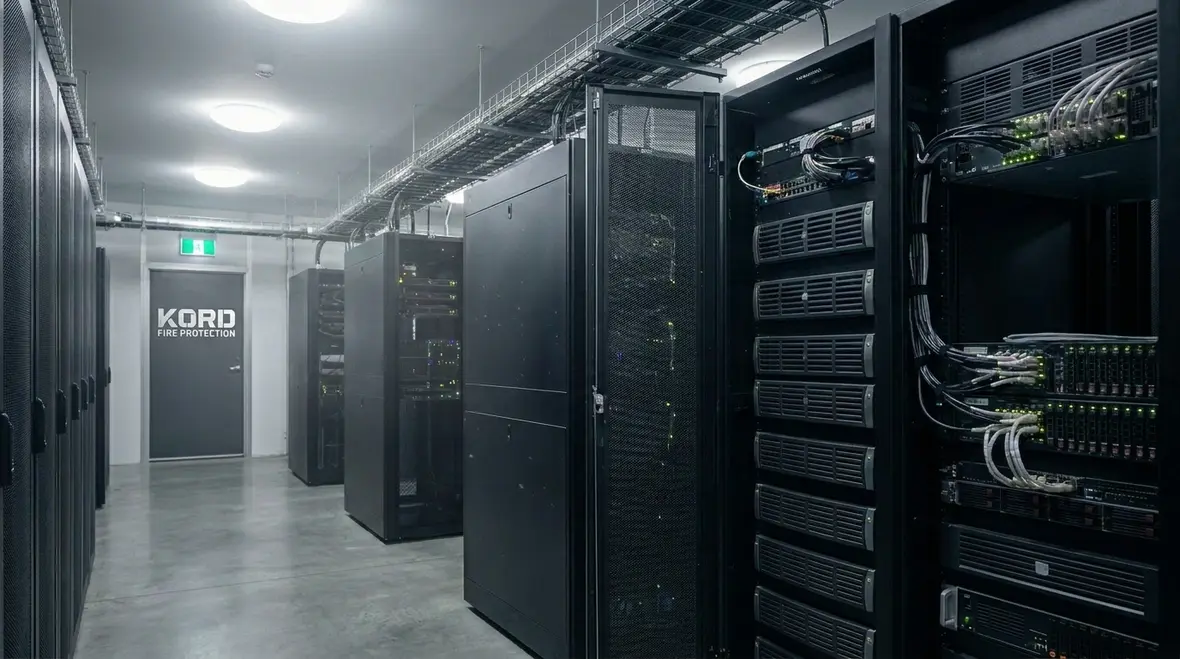
Data centers often host high density loads, dense cabling, and equipment that runs hot for long hours. As a result, incidents can begin with electrical faults, overheating components, or damaged power infrastructure. Moreover, smoke is frequently the bigger enemy because it moves quickly through vents, cable trays, and shared spaces.
To manage these risks, facilities teams need suppression that matches how the fire actually behaves in a modern room. Instead of relying on one general approach, they combine detection strategy, agent selection, and compartment design. After all, if the system cannot reach the problem fast and accurately, it might as well be watching the movie after the credits roll.
Why smoke spread is often the first real crisis
Flames get the headlines, but smoke usually causes the first operational collapse. It can contaminate electronics, move through air handling paths, and trigger shutdowns long before visible fire damage looks dramatic. In server environments, that means one localized incident can become a building wide headache if the room is not properly compartmented and monitored.
How clean agent systems support advanced suppression
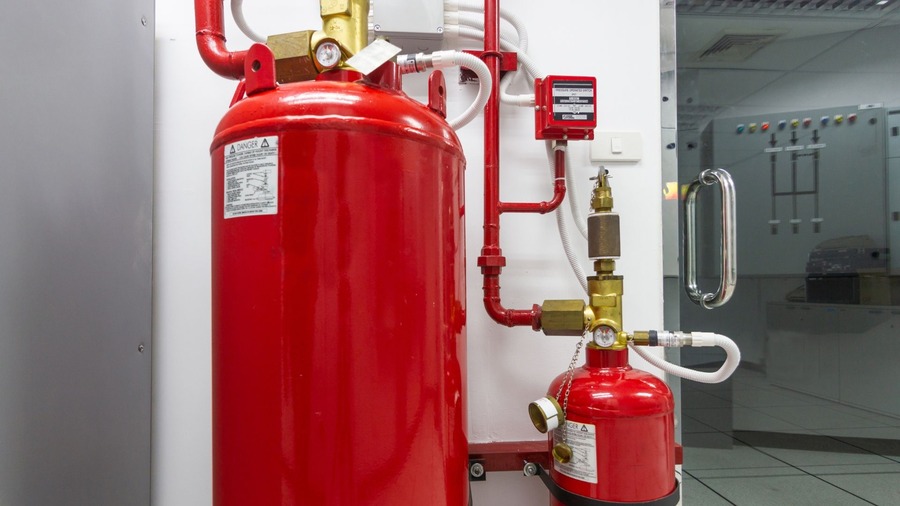
Advanced suppression in data halls commonly uses clean agent options designed to control a fire without leaving heavy residue. This matters because sensitive electronics do not tolerate messy cleanup, and downtime for restoration can drag for weeks.
In many installations, the system release is engineered for the room volume and expected fire behavior. Additionally, design teams plan discharge pathways and placement so the agent reaches the hazard quickly, even with airflow and door positions that change during normal operations.
Also, the system needs proper interface logic. Detection must trigger the right action, which often includes alarm signaling, pre discharge timing, and door management where required. When the sequencing runs cleanly, the suppression plan becomes predictable, and predictability is a gift in any high pressure outage.
Where clean agent design usually wins or loses
The elegant part of a clean agent system is not just the cylinder sitting there looking important. It is the design math behind coverage, enclosure integrity, discharge timing, and room conditions. If those pieces drift out of alignment, the system can become expensive theater. That is why many teams reviewing clean agent options also compare Kord Fire’s fire suppression system for server room guide to better understand how layout and nozzle strategy shape real performance.
Detection and zoning: making suppression arrive at the right moment
Fast detection wins. However, the best detection strategy still fails if the building layout confuses the system. Therefore, data center designers often use zoning to reduce unnecessary discharge and target the exact area of concern.
Zoning works alongside suppression by controlling where alarms activate first and where the agent release occurs. Consequently, technicians can isolate problems in a section rather than triggering a broad response that disrupts multiple suites. This approach also supports better troubleshooting after an event.
In real facilities across Australia, zoning also supports practical operations such as phased upgrades. For example, when a server room expands, the system can be integrated room by room, instead of forcing the whole facility to rework at once.
Why confirmed detection matters
The goal is not to make a room panic at the first whiff of something strange. The goal is to identify a real event fast enough to act decisively, while avoiding needless discharge that interrupts operations and invites a different kind of headache. Good zoning and confirmed detection logic help strike that balance.
Designing protection for raised floors and cable pathways
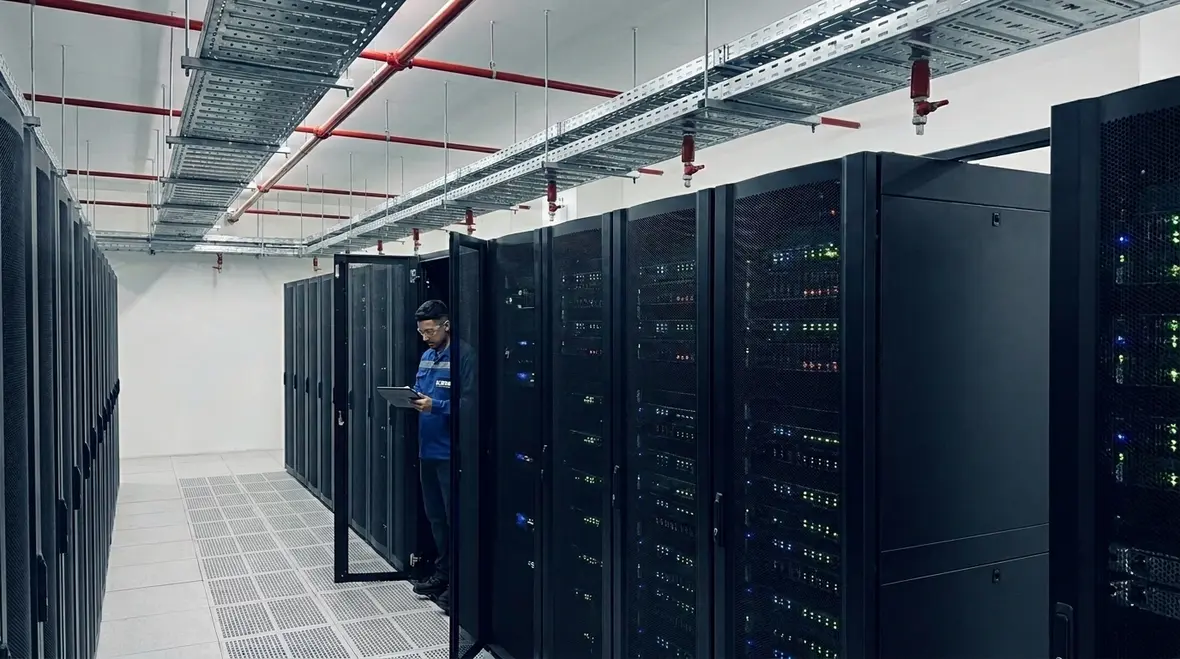
Many data centers use raised floors, underfloor air return designs, and extensive cable trays. As a result, fire and smoke can travel in ways that standard assumptions do not always cover.
Advanced suppression design therefore addresses airflow patterns and enclosure gaps. Crews account for cable density, penetrations, and the way airflow moves around racks. They also plan how the agent distribution interacts with underfloor spaces, since hot spots often hide where maintenance crews do not look every day.
When design teams get this right, suppression for server environments becomes more than a product. It becomes a system behavior plan: where smoke moves, how detection sees it, and how the agent controls it. And because every data hall has a different layout, the plan must be validated through proper calculation and installation practices.
Testing, commissioning, and compliance that keeps systems ready
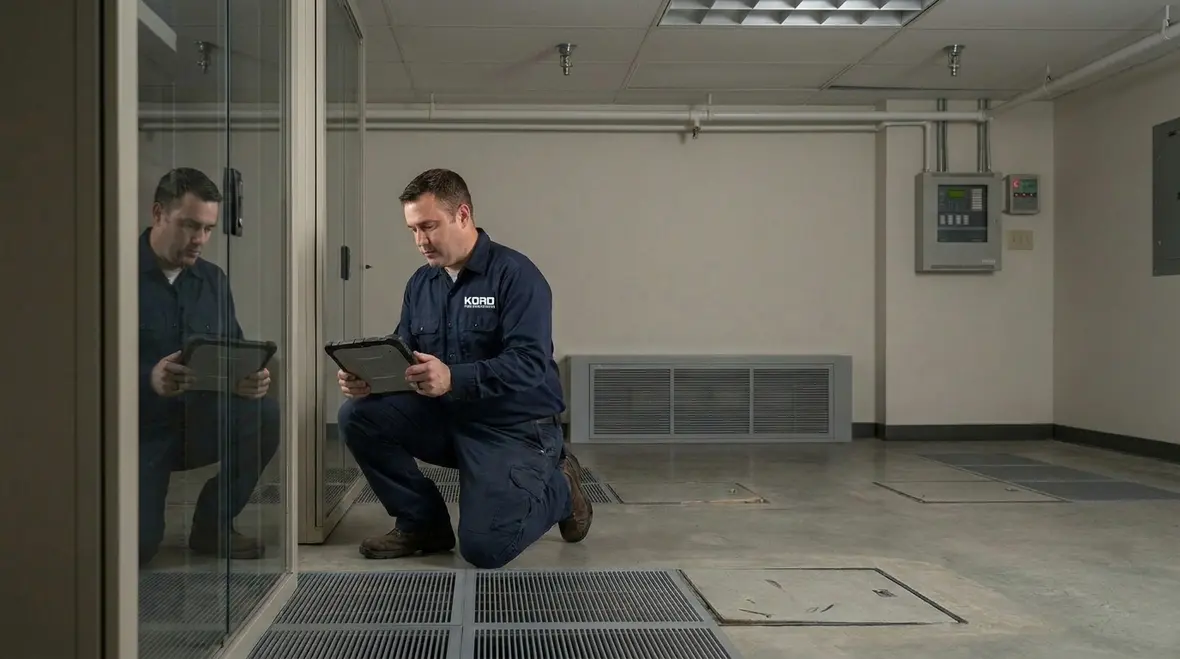
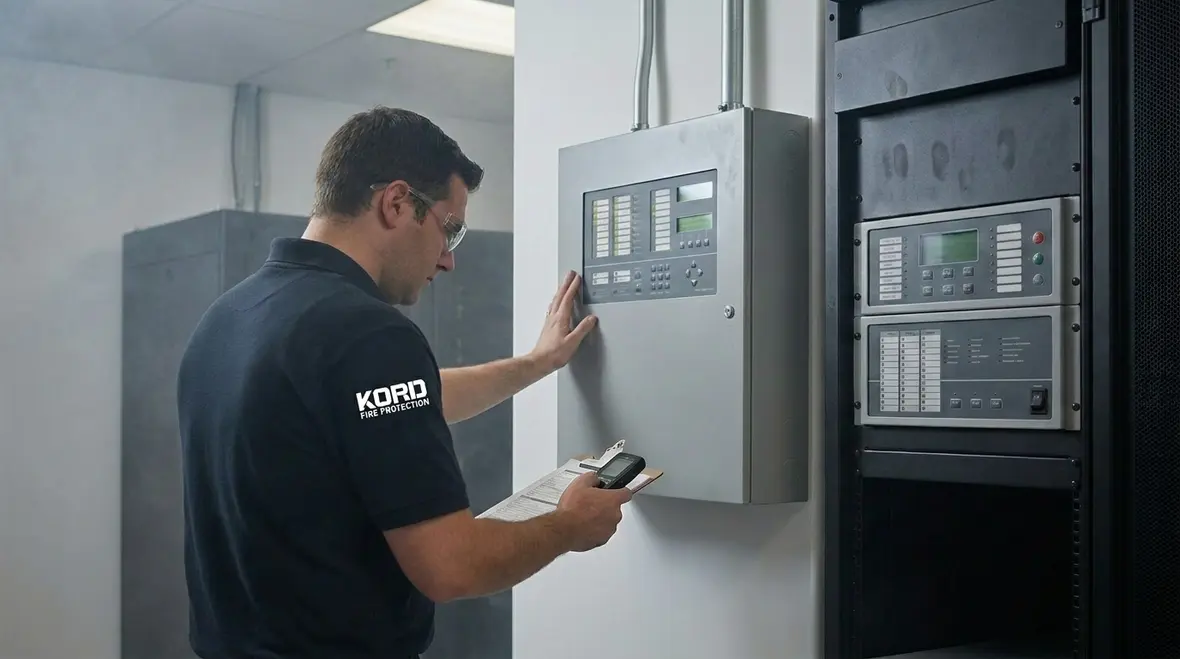
Even the best equipment will underperform if it is not maintained. That is why advanced fire suppression relies on commissioning quality and ongoing testing routines. During commissioning, teams verify device sensitivity, alarm signaling, panel logic, and release paths. They also confirm correct zoning behavior and ensure the facility can respond safely.
After commissioning, maintenance schedules should track critical items. That typically includes agent system inspections, device checks, documentation updates, and alarm system function tests. In addition, many operators benefit from periodic flow and performance checks, especially after renovations or rack rearrangements.
Here is the calm truth: data centers change constantly. So the suppression plan must keep pace. Otherwise, the system becomes a museum exhibit instead of a real protection method. Teams that want to tighten overall alarm reliability can also review Kord Fire’s fire alarm system reliability and battery health article, since dependable detection and standby power are part of what makes suppression sequencing trustworthy in a real event.
Commissioning is where paperwork meets reality
Drawings can look beautiful. Devices can be installed neatly. None of that matters if the final system logic does not behave the way the room actually operates. Commissioning closes that gap by proving inputs, outputs, delays, alarms, and release steps under controlled conditions before the building goes live.
Why kord fire protection becomes a vital partner
When businesses across Australia plan upgrades or new builds, they need coordination. That is where kord fire protection can become a vital partner with advanced suppression solutions.
Instead of treating design, installation, and verification as separate struggles, kord fire protection helps align stakeholders and schedules. It supports the job from early planning through commissioning and handover, which reduces gaps between drawings and what gets built. Moreover, it helps facilities maintain clarity on compliance expectations, documentation, and ongoing service.
For industrial, retail, and commercial sites, this matters because outages rarely happen in perfect timing. Facilities managers still need to keep operations running, deliveries moving, and teams working. A partner that understands suppression system realities helps reduce surprises.
Dual-column support overview
Service area | How it supports data center protection |
|---|---|
System planning and design support | Helps match protection approach to room layout, airflow, and hazard behavior so protection does not depend on luck. |
Installation coordination | Ensures detection devices and suppression components line up with drawings, zoning, and release logic. |
Commissioning and verification | Confirms correct sequencing, alarm actions, and discharge readiness before the building goes live. |
Maintenance and service | Keeps detection sensitivity and system performance stable through ongoing checks and updates. |
Choosing the right approach for different facility types
Not every building operates like a hyperscale cloud campus. In industrial and commercial facilities, protection must fit real usage: shared loading zones, mixed tenant spaces, and variable staffing. In retail, smaller server rooms and network closets still carry business critical functions, even if the room looks modest.
To choose the right approach, teams should evaluate fire load sources, equipment locations, and ventilation patterns. Then they should decide how suppression will integrate with alarms, evacuation planning, and facility operating procedures.
Additionally, teams should consider how quickly the system must respond during abnormal operations such as maintenance, temporary power setups, and rack upgrades. In other words, the system must work when the building behaves like a normal workplace, not like a controlled lab.
Small room, big consequences
A modest network room can still carry billing systems, phones, backups, access control, or point of sale links. So while the square footage may be small, the business impact can be huge. That is exactly why advanced suppression planning should follow function, not vanity. The room does not need to look impressive to deserve serious protection.
FAQ: fire suppression for server rooms and data center systems
Final call to action
Data center protection demands more than equipment on a shelf. It needs engineered detection, correct zoning, careful design for real room behavior, and reliable service that keeps everything ready. kord fire protection can help facilities across Australia build and maintain advanced suppression that fits their operation.
If this job is on the schedule, the next step is simple: contact kord fire protection and lock in a plan that performs when it matters. A well planned suppression strategy is not just about passing reviews. It is about keeping data, continuity, and calm intact when the room decides to have its worst day.

Join Our Newsletter!
Get the latest fire safety tips delivered straight to your inbox From our Newsletter.