Emergency Power Backup for Life Safety Systems in Australia
Quick Answer: Emergency power for life safety systems keeps alarms, smoke control, emergency lighting, and fire pumps running when utility power fails. A strong design matches site loads, installs code compliant transfer equipment, and tests under real conditions. With Kord Fire Protection as a partner, facilities gain faster commissioning, clearer documentation, and fewer surprises.
In the middle of an outage, minutes feel like hours. That is why the right fire safety power backup matters for industrial, retail, and commercial sites across Australia. When power drops, life safety systems must stay online, not because someone “wrote a procedure,” but because the design actually works. Kord Fire Protection can help shape that reality, and that partnership becomes more valuable as the project moves from drawings to commissioning. After all, nobody wants a fire alarm system that behaves like a TV remote with dead batteries.
Facilities planning broader coordination near the front end of a project can also benefit from Kord’s full fire protection services, which fit naturally into sites that need alarm, pump, and related life safety systems working together instead of acting like distant cousins at a family reunion. For fire alarm specific integration, Kord also provides fire alarm service systems support where available, helping teams keep documentation, testing, and commissioning aligned with the actual field conditions.

How emergency power supports life safety systems
Emergency power does not just “keep lights on.” It sustains the exact functions that reduce harm and help occupants move to safety. Typically, a facility depends on emergency power for fire alarm operation, detection and notification circuits, emergency voice and messaging where installed, smoke control interfaces, and related shutdown and control strategies.
However, emergency power is not a single device. Instead, it becomes a chain of components that must perform together. First, the system must detect a loss of mains power. Next, it must transfer load quickly enough to keep control panels and initiating devices stable. Then, it must supply enough runtime to meet the required standard for the site. Finally, it must operate without causing nuisance failures that trigger unnecessary evacuation. In other words, reliability wins.
From a business view, this approach reduces downtime risk, protects assets, and supports compliance. It also gives maintenance teams a much clearer picture of what is supposed to happen under stress, which matters because uncertainty during an outage spreads faster than useful information. And yes, it helps facilities avoid the kind of conversation that starts with “During the last test, the panel did… something.”
Why the whole chain matters more than one heroic component
People sometimes focus on the generator, battery bank, or transfer switch as if one component alone will save the day. In practice, performance depends on the entire sequence staying stable. A beautifully sized generator still cannot rescue poor wiring logic. A strong battery system still cannot fix incorrect load mapping. The site needs a design that treats detection, transfer, distribution, monitoring, and testing as one coordinated outcome.
Fire safety power backup selection for Australian facilities
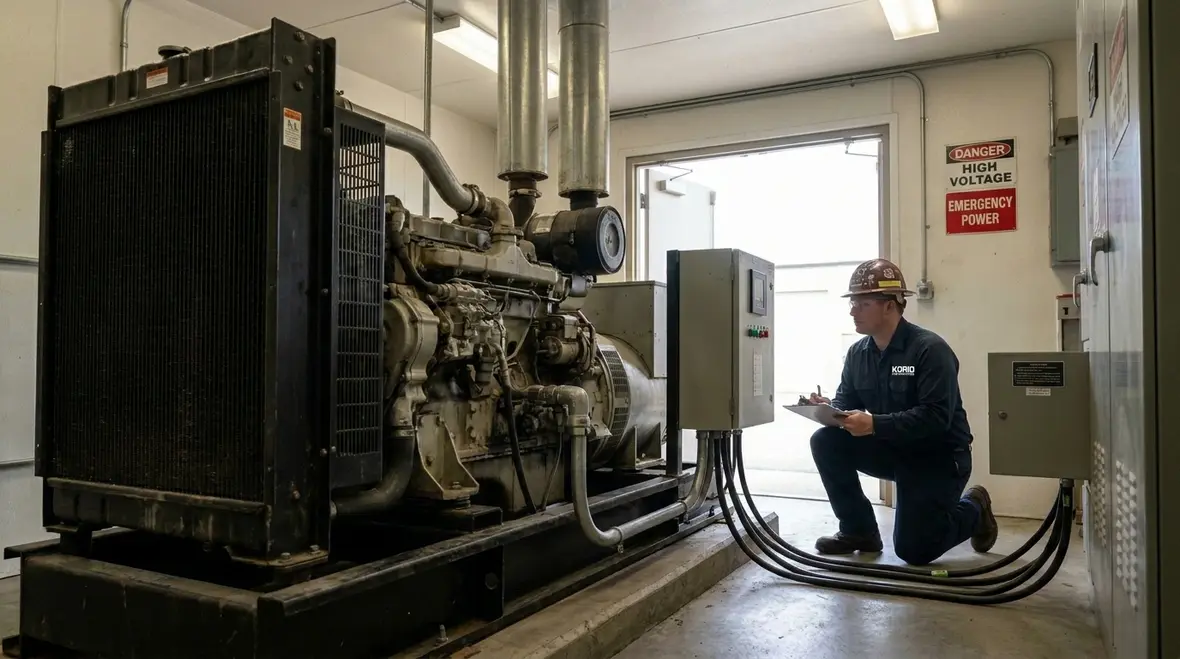
Facilities usually choose between generator sets, battery systems, or combinations, depending on critical loads and site conditions. Batteries often handle short transfer and short runtime needs for life safety circuits. Generators can carry larger loads and longer runtime targets, especially for multi-level buildings, campuses, and industrial sites with pumps and controls.
To select the right approach, a service team first maps critical loads. Then they evaluate:
- Current draw of fire alarm panels, notification devices, and any ancillary modules
- Starting and running loads for associated life safety equipment
- Transfer time requirements to keep systems within acceptable limits
- Environmental conditions such as ambient temperature and ventilation
- Space and installation constraints in plant rooms and electrical switchrooms
Then they look at future growth. A warehouse expands, a store adds new tenancy fit-outs, or an industrial process adds controls. If the emergency capacity has no margin, later upgrades can strain the fire safety power backup design. Smart planning keeps the system scalable, and that saves money in the long run.
Planning for real world expansion, not perfect world assumptions
A backup system that only works for today’s exact load can age badly the moment a site changes. Retail tenancies shift, industrial controls multiply, and building operations almost never volunteer to stay simple forever. Leaving practical margin in the design makes future upgrades less painful and reduces the risk of discovering capacity problems at the worst possible stage, usually right after someone says, “This should be straightforward.”
Designing transfer, distribution, and protection equipment
Once the power source choice locks in, engineers and contractors design the transfer and distribution system. This step matters because many failures during outages are not caused by the generator or battery itself. Instead, they happen in wiring, protection coordination, incorrect switching logic, or poor labeling that turns maintenance into scavenger hunts.
Well designed transfer includes:
- Safe, reliable changeover equipment that avoids short interruptions to critical circuits
- Dedicated life safety distribution circuits with clear segregation
- Correct protective device ratings, discrimination, and selective fault clearing
- Proper cable sizing for voltage drop and starting conditions
- Monitoring for faults, loss of power, and battery or generator status
After that, they align the distribution with system voltages and device requirements. For example, fire alarm systems may require stable powering to avoid resets. Smoke control interfaces need dependable signals, especially when building control sequences activate during alarms. By coordinating these elements, the facility maintains predictable operations under stress.
And when commissioning comes around, that coordination becomes visible. Testing shows whether transfer behavior matches the intent, not just whether the generator “runs.” That distinction matters because a running generator is nice, but a running generator that keeps life safety functions stable is the actual point of the exercise.
Commissioning, testing, and ongoing service that actually holds up
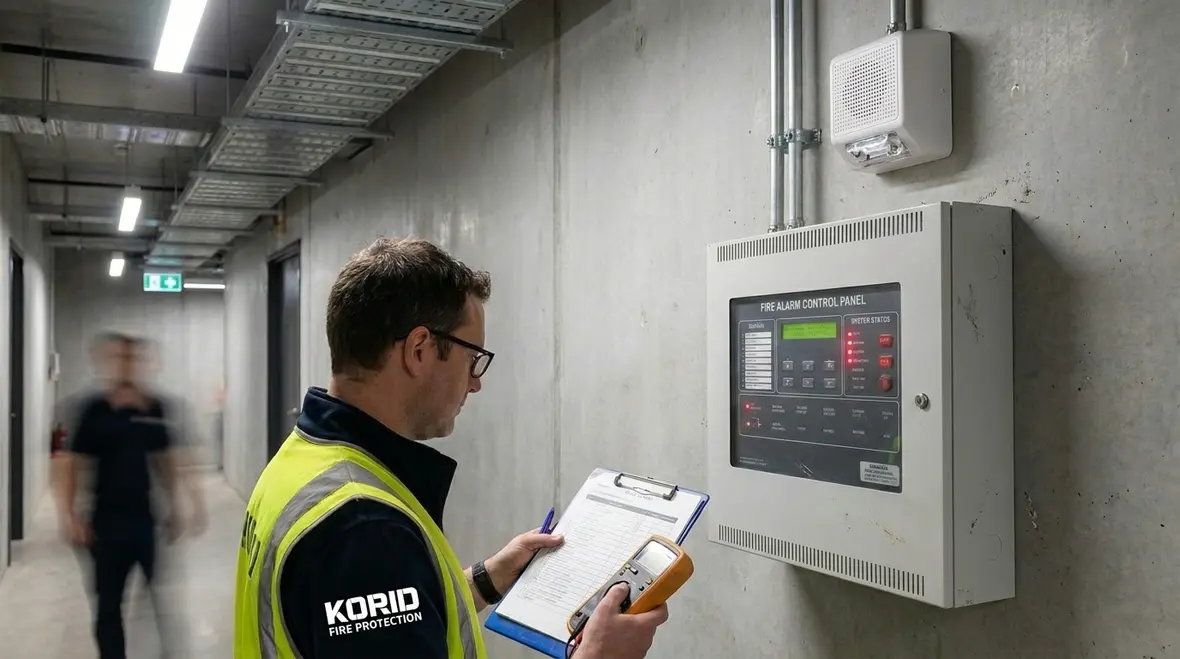
Commissioning is where good plans either become dependable systems or become expensive lessons. A strong testing program does more than start a generator and tick a box. It verifies that life safety circuits remain powered, that panels operate in intended modes, and that notification output performs under realistic conditions.
Facilities typically schedule:
- Functional checks of changeover sequences, including simulated loss of mains
- Runtime tests aligned to the site’s design expectations
- Load checks that confirm distribution behaves as designed
- Alarm system verification for detection and sounder performance
- Documentation handover with clear test records and fault logs
Furthermore, ongoing service supports the long-term health of the whole chain. Batteries degrade. Generators need fuel management and maintenance. Protective devices can age. Connections loosen. Heat cycles and dust build up in industrial spaces. If a facility treats emergency power as a “set and forget” item, the system eventually becomes a set and regret item.
That is where Kord Fire Protection can become a vital partner. They bring life safety system knowledge into the emergency power workflow, helping teams connect power performance to fire system requirements, so tests focus on the right behaviors and the right circuits.
Testing that proves behavior, not paperwork
The most useful commissioning records do not just say equipment was present and energized. They show what happened during transfer, what remained stable, what required adjustment, and which circuits were verified under realistic conditions. That kind of detail makes future maintenance easier and helps the next technician spend less time decoding history like it is an archaeological site with cable trays.
Managing life safety loads in complex industrial and retail environments
Industrial and retail sites often blend light commercial areas with heavy duty plant rooms, mechanical services, and separate electrical zones. Consequently, emergency power coordination must reflect how equipment actually runs. For example, an industrial site may rely on fire pumps and control cabinets during an incident, while the retail side may need robust notification and emergency voice coverage across multiple tenancies.
To avoid surprises, the design process should address zoning and sequencing. That means understanding which loads must run together and which loads should shed or delay. It also means planning for switchroom layout, access for maintenance, and sound and vibration considerations around generator placement.
For smoke control and building management interfaces, the challenge increases. The life safety system expects signals with consistent power stability. If a transfer event causes a reset, control sequences can shift. In turn, the site might lose intended control behaviors at the exact moment people need them to work. So, the goal stays simple: keep life safety functions stable and predictable.
When Kord Fire Protection supports the project, their role can help align fire system operation with power backup performance, which reduces the gap between electrical intent and fire system expectation. And frankly, fewer gaps mean fewer firefighting sessions, even if the project topic is right there in the name.
Role of Kord Fire Protection as a vital partner
Emergency power integration works best when teams treat fire life safety systems as a coordinated outcome, not as a separate checklist item. Kord Fire Protection can strengthen that integration by bringing expertise in fire protection systems, documentation, and commissioning expectations. They help facilities connect the dots between power backup operation and fire alarm and related life safety functions.
They can also support practical jobsite outcomes such as:
- Clear identification of fire related circuits and their emergency power needs
- Coordination between electrical contractors and fire system installers
- Testing focus that validates life safety behavior, not just electrical operation
- Handover packages that maintenance teams can use without guesswork
In Australia, where compliance, ongoing inspections, and practical site access all matter, this partnership reduces risk. It also helps ensure facilities across multiple facets, from industrial lines to commercial retail floors, maintain dependable emergency performance when it counts.
FAQ: Emergency power and life safety systems
Conclusion: Start the integration the right way
Emergency power for life safety systems protects people, supports compliance, and keeps operations steady during outages. The best results come from coordinated design, solid testing, and ongoing service that matches how the fire system actually behaves.
Kord Fire Protection can help facilities integrate power backup with fire protection outcomes, reducing risk and improving confidence. If this job is on the horizon, reach out and plan the commissioning steps early.

Join Our Newsletter!
Get the latest fire safety tips delivered straight to your inbox From our Newsletter.