Fire Pump Room Safety Requirements in Australia
Quick Answer: Dedicated fire pump rooms demand strict safety controls before, during, and after operation. Facilities must manage electrical hazards, water flow risks, chemical exposure, and access rules. They also need clear testing, documentation, and emergency response. With the right partner, these fire pump room safety requirements stay practical, audit friendly, and reliable across Australia.
In industrial, retail, and commercial facilities across Australia, dedicated fire pump rooms cannot be treated like a storage closet for spare parts and good intentions. Within the first steps of setup and ongoing operation, the fire pump room safety requirements should cover controlled access, correct signage, safe electrical practices, proper ventilation, safe drainage, and disciplined maintenance. And yes, that includes doing the basics consistently, even when nobody is watching, because water pressure does not care about human optimism. From there, the rest of the plan must support real day to day safety, not just checklists that look good in a binder.
Near the top of any sensible plan, facilities should also connect safety routines with professional fire pump inspection services, because reliable rooms do not happen by accident. They happen when testing, maintenance, and safety controls work together instead of waving awkwardly at each other from opposite sides of the compliance program.
Why dedicated pump rooms need a real safety system
A fire pump room holds equipment that can start automatically, deliver high pressure, and create hazards fast if something goes wrong. Therefore, safety cannot be a one time event. It must work as a system that supports people, procedures, and equipment at the same time.
For facilities operators, the typical failure pattern looks like this: a small electrical concern gets ignored, a door gets propped open “just for a minute,” or maintenance gets scheduled without confirming lockout and isolation steps. Then a test runs, a fault triggers, or a leak appears, and suddenly everyone acts surprised. That is when a structured safety approach prevents incidents and protects business continuity.
Kord Fire Protection can become a vital partner here because they do not just react to alarms. They help teams plan, coordinate, and verify the conditions that make testing safe and compliance realistic. When the work aligns, staff waste less time, audits run smoother, and reliability improves. For readers who want related context, Kord also covers layout factors in their fire pump room clearance and ventilation guide, which fits naturally alongside room safety planning.
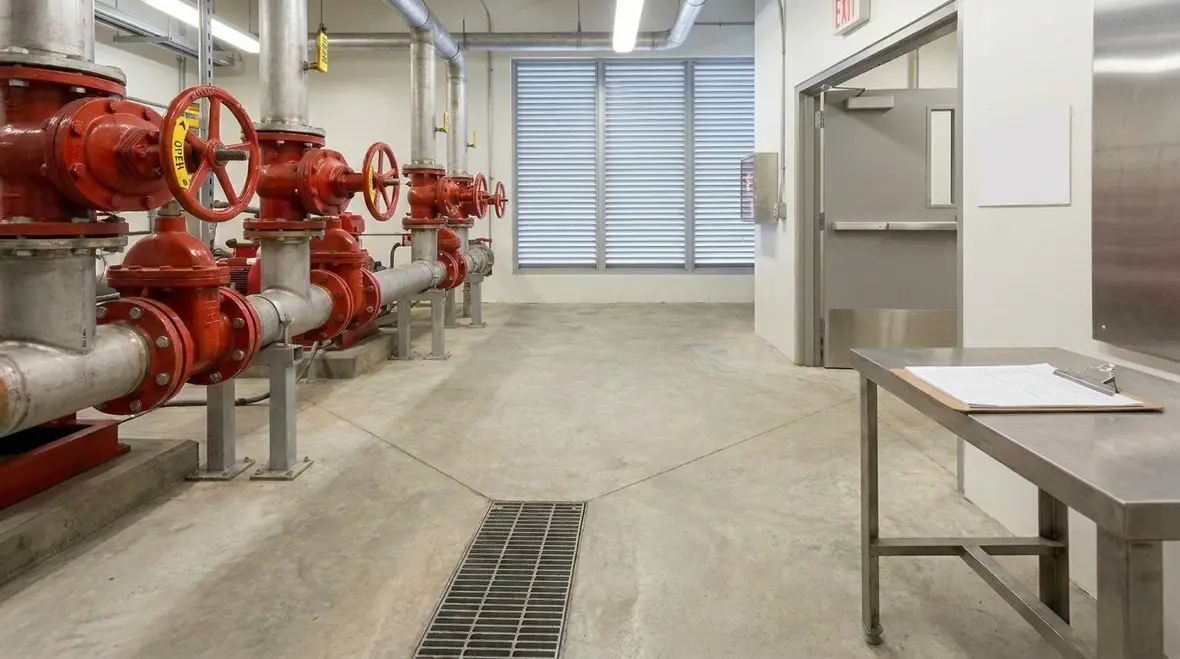
Access control, signage, and room readiness
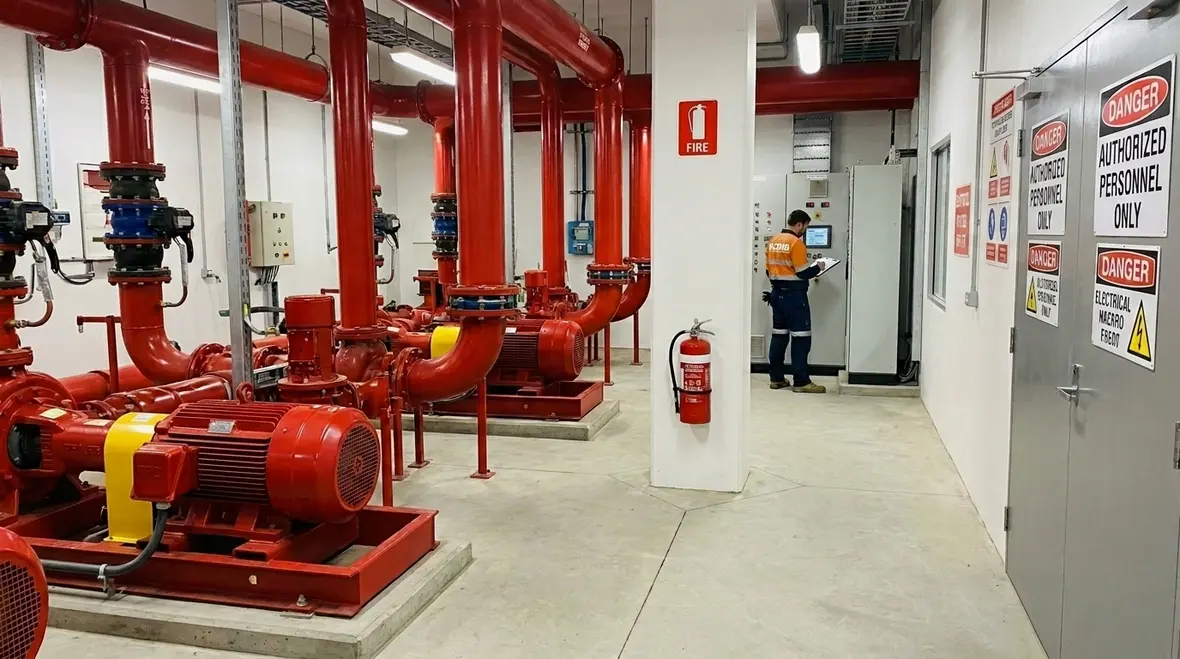
To keep people safe, a fire pump room needs clear boundaries. First, access control should limit who can enter and why. That usually means authorized personnel only, with keys, badges, or controlled entry procedures. Next, the room should use visible signage that matches the hazards and the operating rules.
Room readiness matters too. Technicians need sufficient lighting, unobstructed pathways, and safe working space around pumps, controllers, and valves. If a ladder blocks a clear route or storage piles up near drains, the room turns into a hazard playground. Nobody wants to play “spot the trip risk” at 2 a.m.
Additionally, facilities should confirm housekeeping rules. Dust, oil residue, and debris can affect ventilation, increase slip hazards, or interfere with equipment operation. Therefore, the best practice is simple: keep the room clean, keep the floor dry, and keep the equipment visible.
What room readiness looks like in practice
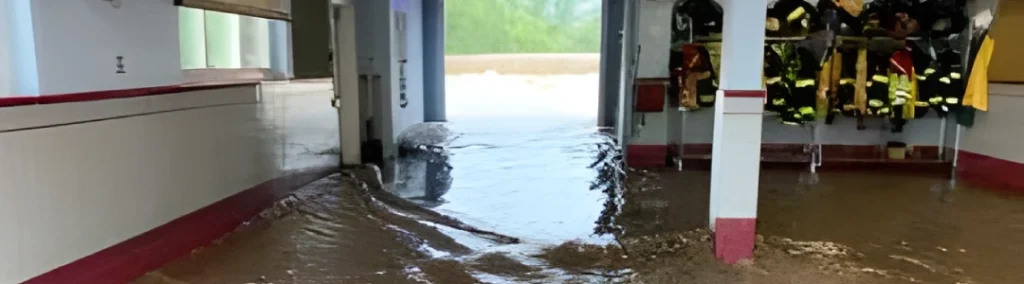
In practice, room readiness means more than a quick glance through the doorway. Teams should verify that emergency lighting works, signage stays readable from the entrance, floor drains remain clear, and no one has slowly turned the room into the world’s least appropriate storage area. A room can look mostly fine and still be one blocked valve, one slick floor patch, or one missing sign away from becoming an expensive lesson.
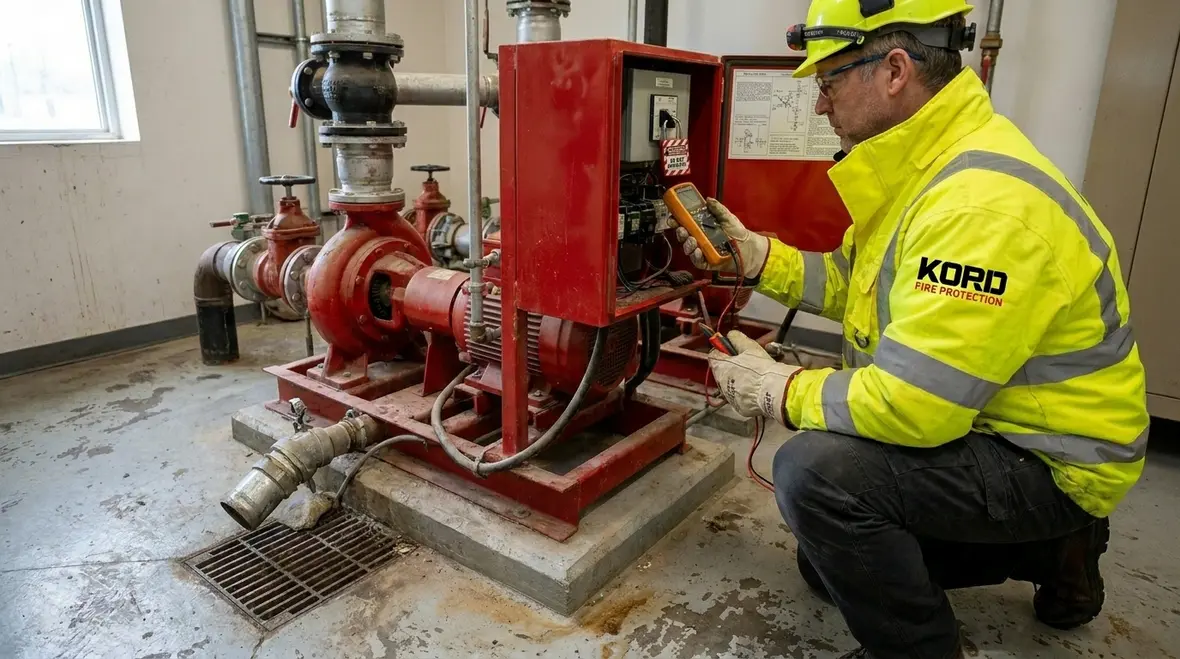
Electrical and mechanical hazards: what teams must prevent
Fire pumps run on electrical power, and that power must stay predictable. Consequently, safety programs should address the obvious hazards and the less obvious ones that show up during maintenance.
Electrical safety includes correct isolation during servicing, proper lockout and tag out procedures, and verification of zero energy before work starts. It also includes ensuring cable management stays intact and terminals remain protected from moisture. If corrosion exists, teams must resolve it early instead of treating it like “maintenance later.”
Mechanical hazards come from high pressure systems, moving parts, and water discharge. Staff should confirm that guards remain in place where required and that discharge lines route to safe areas. When testing occurs, personnel must know where water will flow and who has clearance.
Here is where Kord Fire Protection fits well. Their support can help facilities manage the practical side of safety verification, so electrical and mechanical checks happen in a way that teams can trust, not just in a way that looks tidy. Readers dealing with power path concerns can also explore Kord’s article on fire pump power supply reliability for commercial buildings for a related view of dependable operation.
Common preventable mistakes
The mistakes that create risk are usually not dramatic. They are familiar, boring, and therefore dangerous. A loose cable gland, moisture left unchecked near a panel, a missing guard, an undocumented valve change, or a maintenance task started before isolation is fully confirmed can all stack up into one ugly day. The point of a safety system is to catch those small failures while they are still small and before anyone has to explain them during an incident review.
Testing, inspection, and safe operating procedures
Testing keeps systems credible, but testing can also create risk if the procedure fails. Therefore, facilities should establish safe operating procedures that define what happens before, during, and after any test or inspection.
Before testing, teams should confirm documentation, verify set points, and confirm that the room and connected areas stay clear. Next, they should coordinate with building operations so that downtime or water discharge does not surprise occupants or disrupt critical processes. During testing, staff must follow timing and observation steps and record results immediately.
After testing, teams should confirm that pressures return to normal, alarms clear where required, and any temporary measures get removed. Then they should store test records in a way that supports audits and future troubleshooting.
In practice, this reduces “mystery failures.” Instead of guessing why performance changed, teams can trace the change through consistent records.
That discipline matters even more when rooms support large or complex sites. A rushed test can create confusion about valve positions, alarm history, controller status, or discharge routing. A careful test does the opposite. It builds confidence, sharpens records, and gives operators a reliable picture of system health instead of a collection of half remembered impressions and one suspiciously optimistic checkbox.
Emergency response planning for pump room incidents
Even strong safety systems can face incidents. Therefore, emergency response planning must treat the pump room as a distinct zone with distinct risks.
Response planning should cover alarm cues, safe evacuation routes, and who calls for support. Staff should also know how to respond to water leaks, unusual sounds, controller faults, and power issues. If smoke or electrical distress appears, the priority must shift to safe conditions for people, not heroic troubleshooting.
It also helps to run short drills that include coordination with site fire teams and maintenance supervisors. This matters in large industrial layouts where response time and access routes vary. When everyone knows the plan, response becomes calm instead of chaotic. And in a fire pump room, calm is a performance feature.
Kord Fire Protection can support this planning by helping teams align inspection schedules, testing methods, and operational controls with the reality of emergency needs. Their article on fire pump start sequence and operating settings is another useful internal resource for teams that want a clearer picture of what proper system behavior should look like before an emergency ever tests it.
Dual column best practices for daily safety checks
Facilities benefit when daily checks are fast, repeatable, and documented. The table below supports quick review without turning the job into a full time admin role.
| Check | What “good” looks like |
| Access and signage | Door control stays active, signage remains readable, and pathways stay clear. |
| Electrical condition | No visible damage, moisture ingress stays controlled, and isolations follow lockout rules. |
| Drainage and floor condition | No standing water, drains remain clear, and slip risks stay low. |
| Valve position awareness | Valves remain in their intended states and changes get logged. |
| Controller and alarm status | Indicators stay normal, fault history gets reviewed, and records update. |
| Housekeeping | No debris near equipment, ventilation areas stay unblocked, and cables stay managed. |
Compliance support and long term reliability
Fire pump room safety requirements work best when they connect to a broader maintenance and compliance approach. That means facilities should not treat inspections as isolated tasks. Instead, they should link inspection findings to corrective actions, training updates, and scheduling changes.
When faults repeat, teams should analyze why: is it an aging component, an operating practice, or an environment issue like humidity and condensation. Then they should fix the root cause, not just clear symptoms.
Because facilities across Australia vary in design, a flexible safety and inspection approach helps. Industrial sites may face harsher conditions, retail spaces may run denser operations, and commercial buildings may rely on tighter access controls. Therefore, the plan should adapt while maintaining core safety rules.
Kord Fire Protection can become that dependable partner that helps align documentation, verification steps, and service outcomes. In other words, they help turn compliance from a yearly scramble into an everyday routine. Think of it like putting the fire pump room on a steady diet of good habits, not junk maintenance.
FAQ
Conclusion and call to action
Dedicated fire pump rooms demand clear access control, safe electrical practices, disciplined testing, and an emergency plan that people can follow under pressure. When fire pump room safety requirements are treated as a living system, incidents drop and reliability rises.
Kord Fire Protection can help your team plan the work, verify conditions, and keep service aligned with real site needs across Australia. Request a safety and service consult today and build confidence that holds.

Join Our Newsletter!
Get the latest fire safety tips delivered straight to your inbox From our Newsletter.