
Grease Fire Suppression System for Commercial Kitchens by Kord
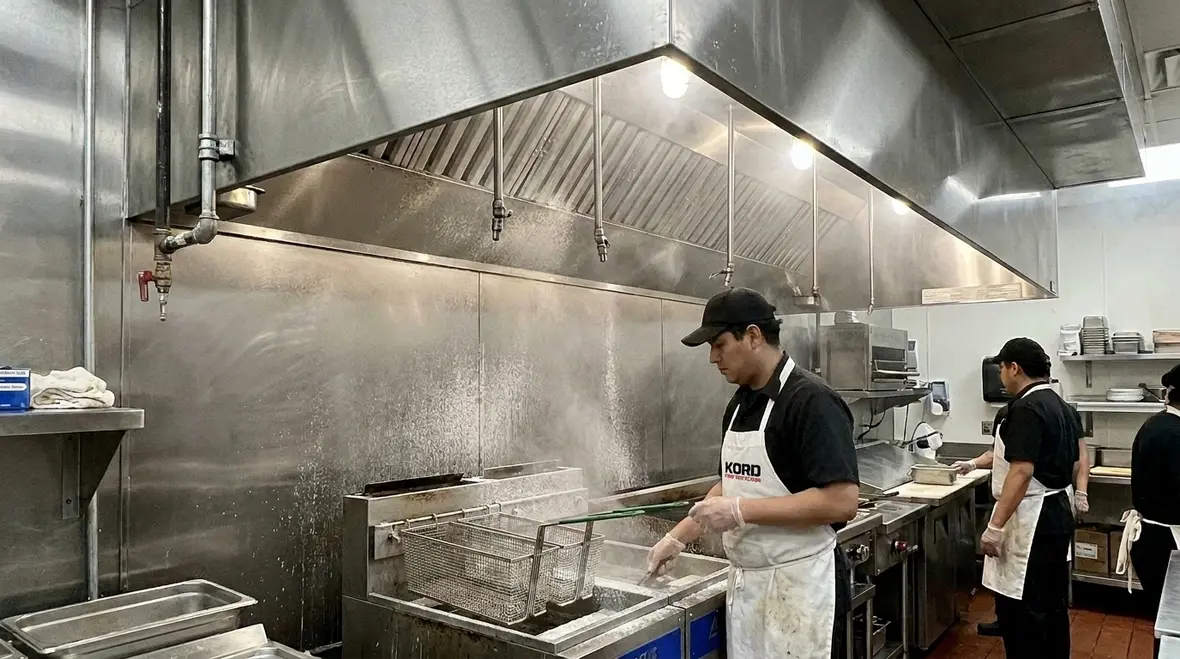
When a grease fire starts in a commercial kitchen, it does not wait politely for the fire extinguisher to “find its confidence.” Instead, it climbs, spreads, and turns cooking into chaos fast. That is why many operators rely on a grease fire suppression system designed for deep fats, fryers, hoods, and the hidden grease that loves to build up like it pays rent. This article explains how grease fire protection works in real kitchens, what standards typically require, and how Kord Fire Protection can become a vital partner to keep protection current, tested, and dependable. And yes, that means fewer “kitchen nightmares” and more nights where staff can go home before the lights dim.
What grease fire protection actually covers
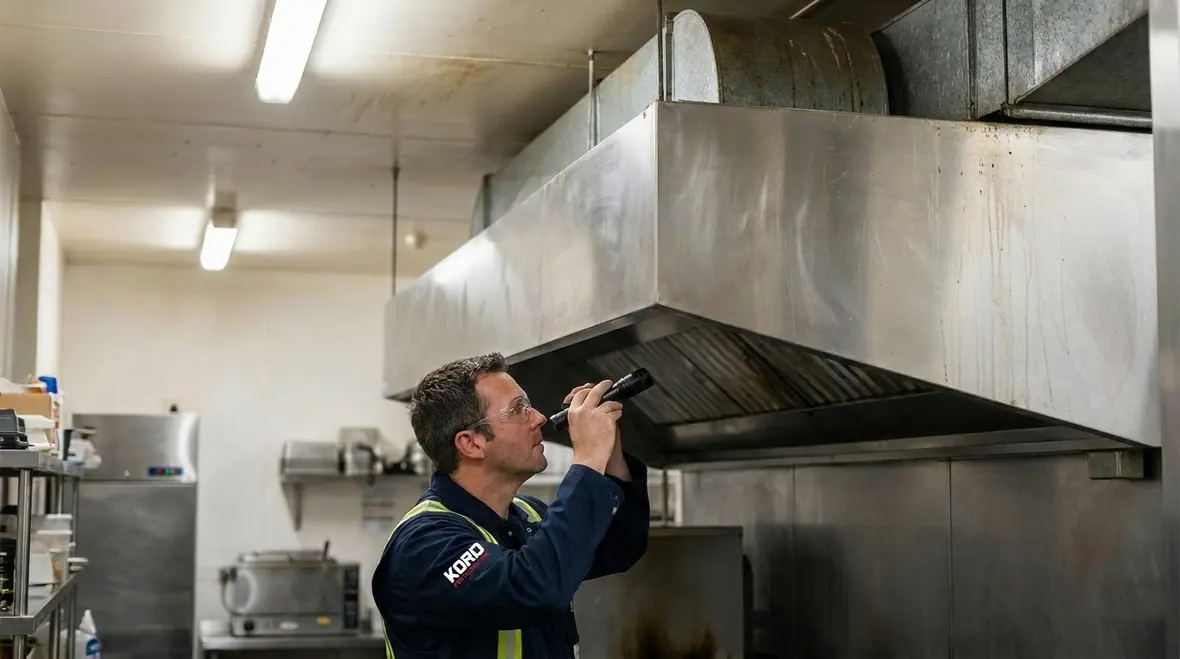
Grease fire protection is not one single gadget. It is a coordinated approach that targets how grease ignites and how heat and flames travel. First, the system manages the cooking vapors and grease that collect in the hood, duct, and canopies. Next, it reacts quickly when conditions reach a dangerous point. Then, it supports prevention through inspections and maintenance, because fire does not form out of nowhere. It forms from buildup, airflow issues, and equipment that keeps working until it finally does not.
In most commercial kitchens, protection includes hood suppression, detection components, and discharge technology built for cooking grease. Over time, grease fire suppression system components must stay aligned, unobstructed, and ready to activate. In other words, they must be less like “some day” and more like “right now.” Operators also benefit from understanding what these systems do and do not protect, which Kord covers in its related guide on kitchen fire suppression coverage. That extra context helps teams avoid assuming the hood system is somehow a magical force field with opinions.
Grease suppression system basics that reduce risk
Detection, discharge, and keeping the path clear
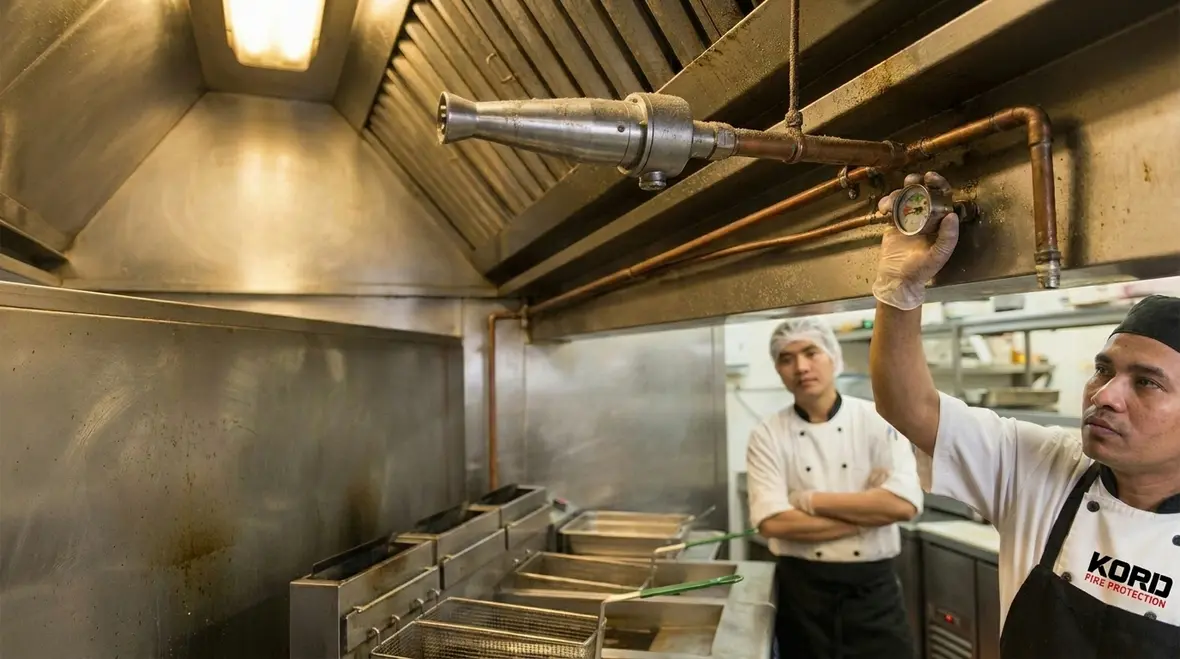
At a high level, the grease fire suppression system usually works through a detection and release sequence. When heat triggers the detector, the system initiates discharge into the cooking hood area. This action helps suppress flames by interrupting the fire’s ability to sustain itself. As a result, the fire does not get the chance to push into ductwork or spread across nearby cooking equipment.
However, the effectiveness depends on more than the hardware. Install location, duct design, nozzle placement, and the condition of the hood assembly matter. If filters, grease buildup, or modifications block the path of discharge, then protection can lose performance when it counts. Therefore, kitchens should treat their system like critical life safety equipment, not like a “set it and forget it” calendar event. For a broader walkthrough of how these systems function over cooking lines, Kord’s article on commercial kitchen fire suppression systems makes a useful companion read.
How commercial kitchens keep protection compliant
Compliance is a living process, not a one-time paper shuffle
Commercial kitchens operate under codes and inspection expectations. While exact requirements depend on the building, local authority, and kitchen design, the general theme stays the same. Fire protection must be properly installed, maintained, and documented. That includes inspections, testing, and service records. In addition, staff should understand basic response steps so they do not delay action while trying to troubleshoot a situation.
Kitchens also face real-world factors that affect compliance. Equipment changes happen. Contractors swap hood parts. Filters get replaced with the wrong spec. New appliances get added without updating the fire protection plan. Even small changes can alter airflow, heat transfer, or system performance. So, the best approach is ongoing verification, not just paperwork after an inspection. Teams that want a more practical service-side checklist can reference Kord’s restaurant hood fire suppression inspection checklist guide to understand the details that often get overlooked until the fire marshal suddenly becomes the most important person in the room.
Why maintenance matters more than people expect
Grease does not take a break. It accumulates where it can hide. And because grease absorbs heat and stays sticky, it can increase the intensity of fire and reduce response time. That means maintenance has to address the full picture, not just surface cleaning.
Regular service helps ensure nozzles stay clear, detection elements remain in good condition, and discharge pathways function as designed. Furthermore, technicians verify that system control components run correctly, and they check for obstructions that could prevent proper discharge. When the system receives proper care, it stands ready during the moments when every second matters.
Also, when a kitchen skips maintenance, people often blame the system later. That is like blaming a seatbelt after the crash. The truth is simpler: if the belt did not get checked, the problem was never the belt. It was the lack of attention. Kord expands on adjacent risk factors in its post about commercial kitchen fire hazard reduction and electrical safety, because fire protection gets stronger when operators stop thinking in isolated parts.
Kord Fire Protection as a vital partner
From inspection planning to dependable follow-through
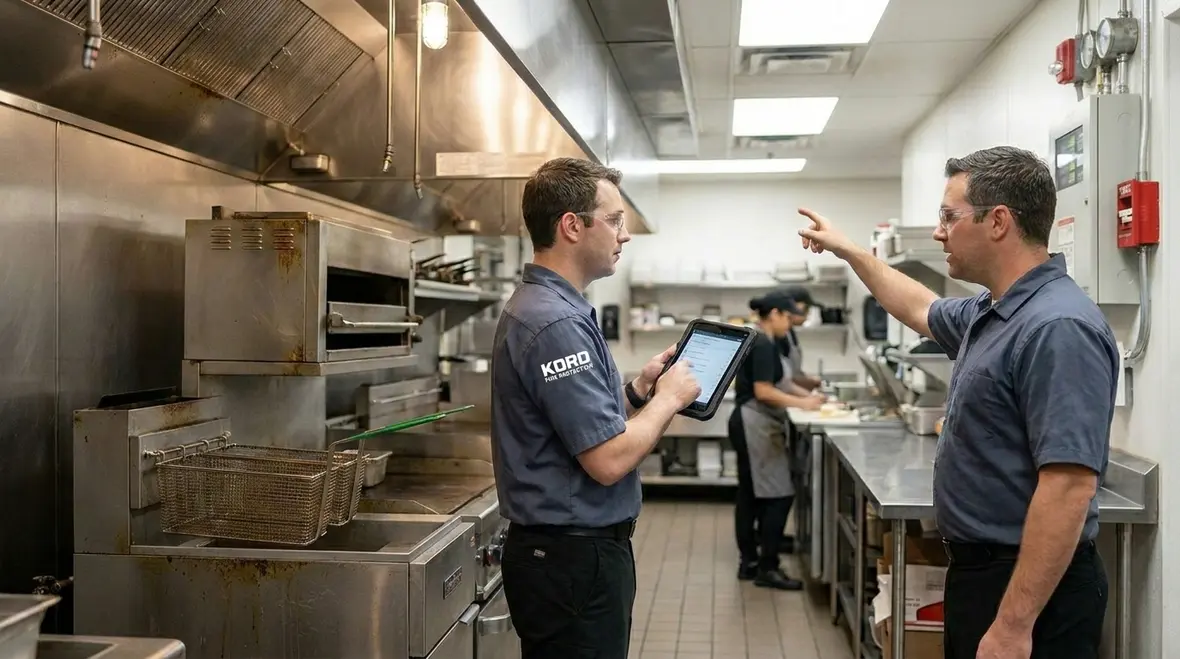
This is where Kord Fire Protection becomes more than a vendor. A strong partner helps kitchens keep grease fire protection aligned with current standards and with actual kitchen conditions. Kord Fire Protection can support operators with inspection planning, documentation, and service that respects the pace of a working restaurant. In other words, it helps the kitchen stay protected without turning every service into a months-long project.
Moreover, Kord Fire Protection can help identify risk patterns during visits. For example, kitchens may experience recurring false alarms from environmental factors, or they may find that hood performance changes after repairs. When a partner watches these trends, the kitchen gets proactive guidance instead of reactive fixes.
And because this is business, not a fairy tale, partnership matters. A kitchen needs clear communication, predictable scheduling, and service that tracks progress. Kord Fire Protection can help operators stay confident that their grease fire suppression system remains ready, documented, and supported by trained professionals. If your operation needs UL 300 specific context, Kord also has a dedicated UL 300 restaurant systems page along with its more detailed UL 300 restaurant hood fire suppression guide.
Dual column: real kitchen scenarios and smart outcomes
Real kitchen scenarios
- Heavy frying during peak hours
Hot oil, nonstop ticket flow, and very little room for error. - Recent appliance swap or remodel
New equipment can shift coverage needs and change airflow behavior. - Frequent filter replacement
The wrong part or sloppy fit can quietly undermine hood performance. - Seasonal grease buildup patterns
Some kitchens build residue faster than others depending on menu and volume.
What smart grease fire protection actions do
- Heavy frying during peak hours
Service checks discharge pathways, verifies detection readiness, and confirms hood performance stays stable. - Recent appliance swap or remodel
Updates attention to how equipment changes affect airflow and coverage areas so the system still fits the kitchen. - Frequent filter replacement
Confirms correct parts and verifies no buildup blocks operation or disrupts the hood environment. - Seasonal grease buildup patterns
Improves inspection cadence and targets the grease hotspots that tend to form first.
FAQ about grease fire suppression and kitchen readiness
Next steps: protect the kitchen before the next busy rush
Grease fire protection works best when it stays current, tested, and supported by a team that understands commercial cooking realities. A grease fire suppression system provides strong defense, but it needs ongoing service, documentation, and real kitchen coordination. Kord Fire Protection can help keep the system ready, reduce surprises during inspections, and support safer operations. Reach out to Kord Fire Protection to schedule a review and maintenance plan today, so your kitchen spends more time cooking and less time “auditioning” for a fire drill.
If you are ready to move from “we should probably check that someday” to an actual plan, explore Kord’s UL 300 restaurant systems page and the related commercial kitchen fire suppression systems overview. For direct service support, Kord’s commercial kitchen fire suppression service resources help connect inspections, maintenance, and code-minded follow-through in one place, which is exactly the kind of boring reliability you want from life safety equipment.
Ready to tighten up kitchen protection?
Keep the hood system current, documented, and ready for the next rush.

Join Our Newsletter!
Get the latest fire safety tips delivered straight to your inbox From our Newsletter.



