Compton Fire Suppression Systems for Industry
Fire Suppression Systems for Compton Industrial Facilities
In the heart of Southern California industry, warehouses hum, machines roar, and production lines move with steady purpose. Yet behind every productive shift stands a silent guardian. Our Compton fire suppression systems protect industrial facilities where a single spark could halt operations in seconds. Kord Fire Protection technicians often explain it this way: fire does not send a calendar invite. It shows up unannounced, usually at the worst possible time. Therefore, preparation is not optional. It is essential.
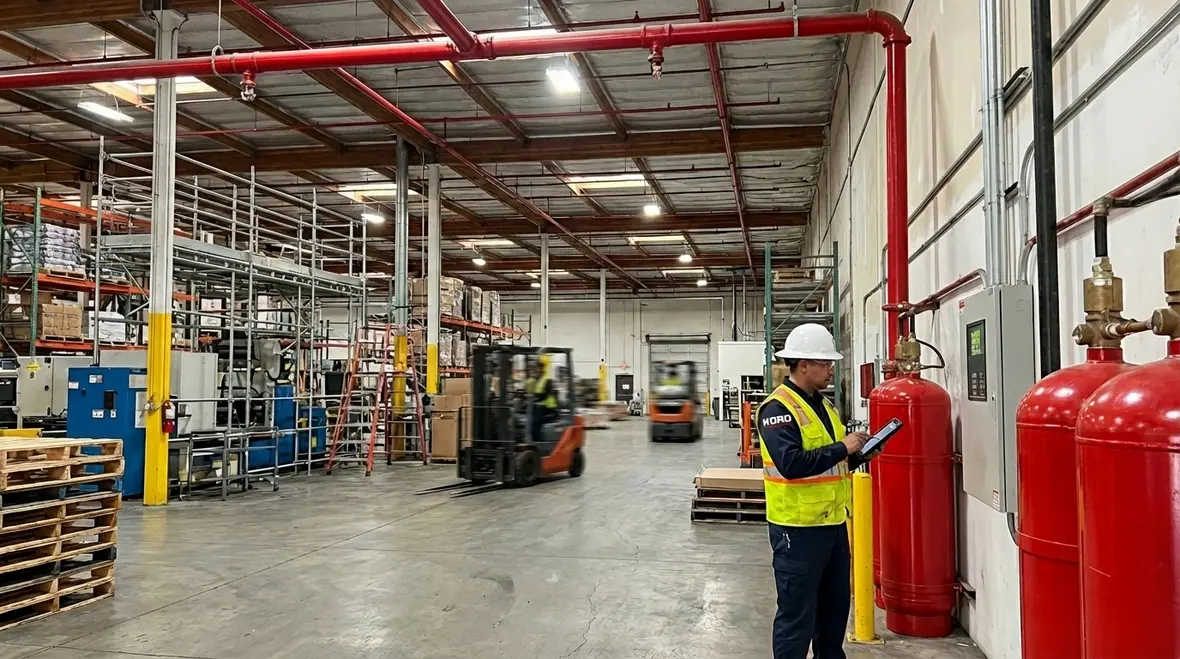
Throughout Compton’s industrial corridors, from food processing plants to logistics hubs, modern suppression technology works quietly above ceilings and behind walls. Moreover, these systems do more than spray water. They detect heat changes, sense smoke particles, and release tailored agents designed to stop flames before they spread. As a result, facilities protect lives, inventory, equipment, and reputation all at once.
Understanding Fire Risks in Compton Industrial Spaces
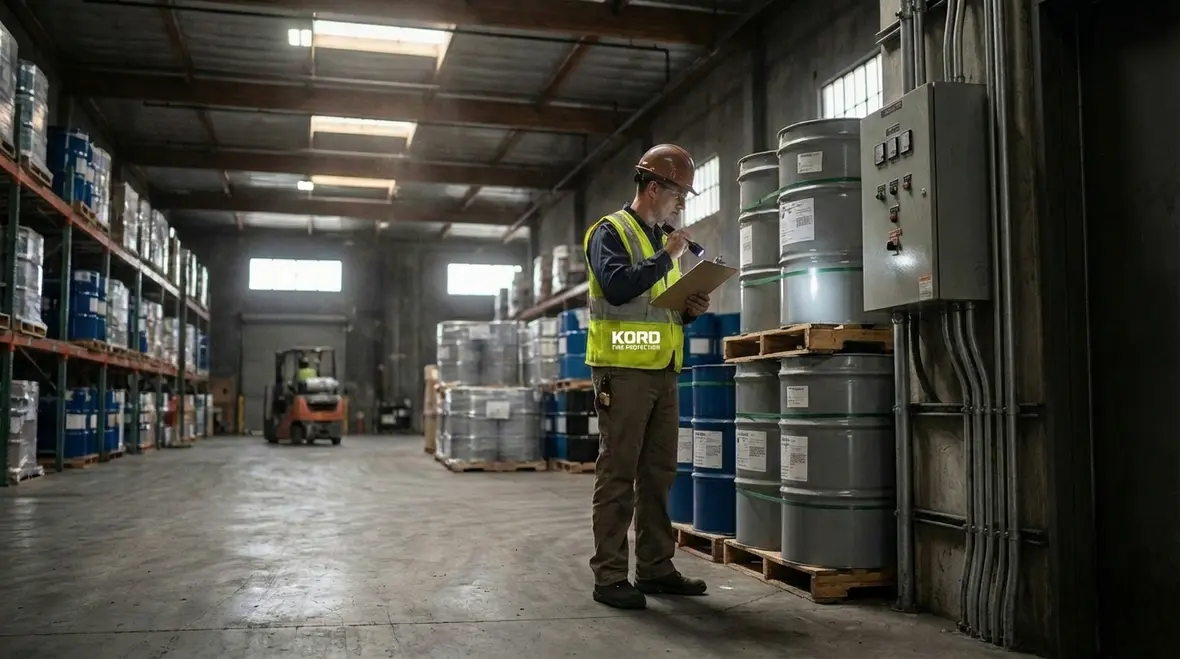
Every industrial building carries its own fire profile. For example, manufacturing plants may store flammable liquids, while distribution centers stack pallets that can fuel a blaze like a campfire in the wilderness. Consequently, a one size fits all approach simply does not work.
Kord Fire Protection technicians begin by evaluating three core elements:
- Fuel sources such as chemicals, packaging materials, and machinery oils
- Ignition risks including electrical panels, welding activity, and overheated equipment
- Oxygen flow influenced by ventilation systems and open floor plans
Because Compton facilities often operate around the clock, the risk multiplies with constant motion. Forklifts move quickly. Equipment runs hot. Human error happens. However, with properly engineered suppression solutions, businesses create a buffer between routine operations and disaster.
In addition, local building codes and California fire regulations require strict compliance. Facilities that ignore these standards may face penalties or shutdowns. Therefore, investing in compliant systems is not only smart but necessary. Many Compton operators also coordinate with broader Los Angeles County fire protection services to keep multi-site operations aligned and inspection ready.
How Compton Fire Suppression Systems Protect High Risk Operations
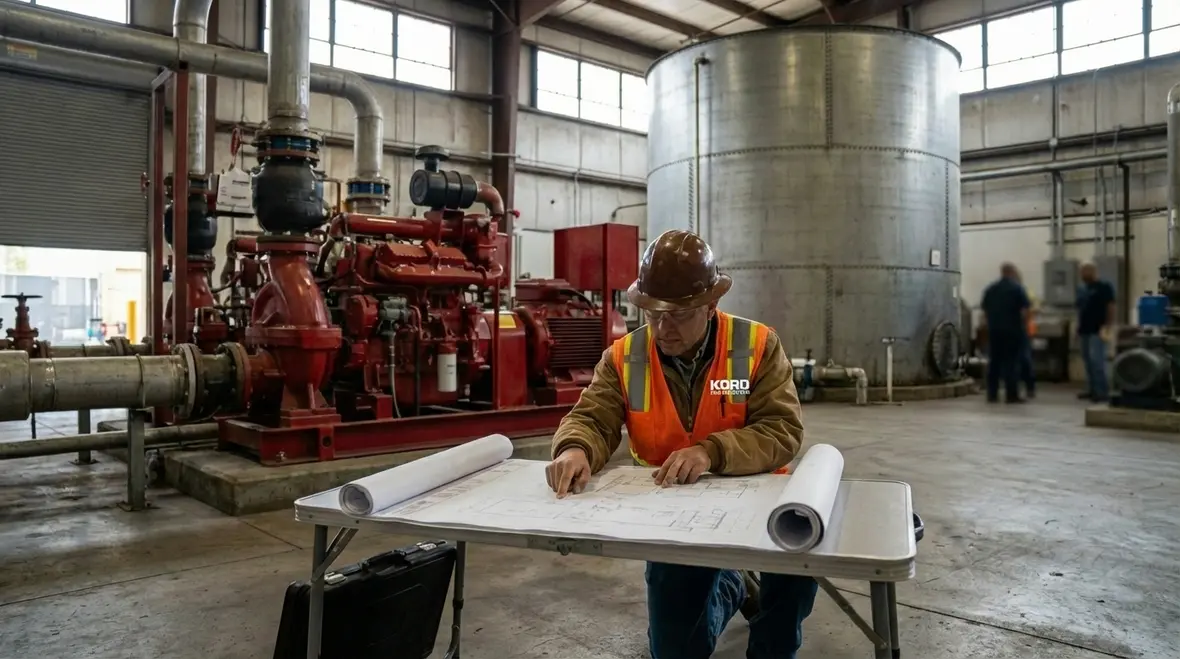
Industrial protection requires precision. Modern Compton fire suppression systems combine detection and action into a seamless response. First, sensors identify abnormal heat or smoke. Next, the control panel verifies the signal. Then, the system releases a suppression agent designed for the specific hazard. All of this happens in moments.
Kord Fire Protection technicians often compare the process to a well rehearsed orchestra. Each component plays its part. If one instrument falls silent, the performance suffers. That is why routine inspections matter.
There are several types of suppression solutions commonly installed in Compton facilities:
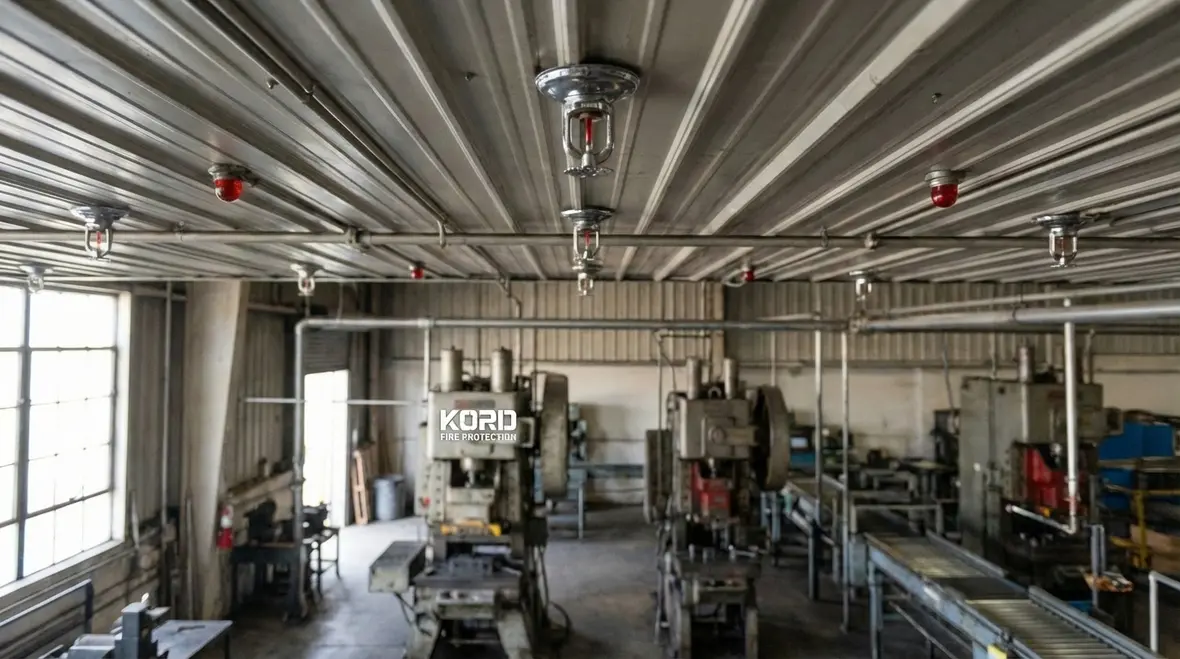
- Wet pipe sprinkler systems that discharge water immediately when heat activates a sprinkler head
- Dry pipe systems designed for cooler environments where pipes may freeze
- Foam systems ideal for flammable liquid storage areas
- Clean agent systems that protect sensitive equipment such as server rooms without leaving residue
For example, a logistics warehouse storing electronics may rely on clean agents to avoid water damage. Meanwhile, a metal fabrication plant might depend on a robust sprinkler network. Because each facility differs, technicians design systems to match the exact operational risk.
What Type of Fire Suppression System Does an Industrial Facility in Compton Need?
Matching Suppression Strategies to Real-World Hazards
The short answer is this: it depends on the hazard. However, the long answer is far more interesting.
Kord Fire Protection technicians conduct detailed site assessments. They review building layout, ceiling height, stored materials, and production processes. Furthermore, they examine future expansion plans. After all, installing a system that cannot grow with the business is like buying shoes for a teenager and expecting them to fit next year.
They also calculate water supply capacity and pressure. Without adequate flow, even the best designed sprinkler network cannot perform effectively. Therefore, engineers may recommend fire pumps or water storage tanks to strengthen the infrastructure.
Additionally, facilities handling hazardous chemicals often require specialized foam or chemical suppression. These agents form a barrier between fuel and oxygen, stopping flames from reigniting. In contrast, data centers benefit from clean agents that extinguish fire without harming electronics.
Because no two facilities are identical, expert evaluation ensures the right system protects the right risk at the right time. For complex production or warehouse environments, many managers review regional resources like manufacturing plant fire suppression systems in Los Angeles to understand how similar operations approach high risk protection.
Engineering and Installation: Precision Over Guesswork
Designing Systems That Work When It Counts
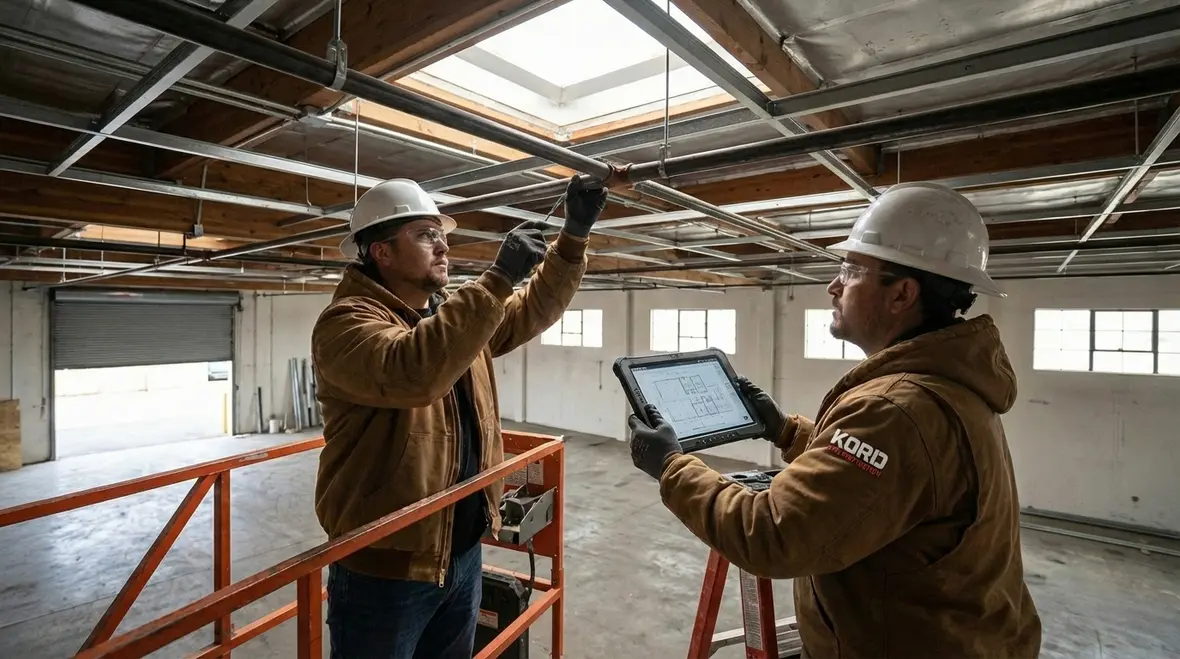
Designing fire protection for industrial environments demands accuracy. Every pipe, valve, and sprinkler head must align with code and operational needs. Consequently, experienced technicians rely on detailed calculations and digital modeling tools.
Below is a simplified comparison of two common system approaches used in Compton industrial properties:
| Water Based Systems | Special Hazard Systems |
|
Use water as primary agent Cost effective for large spaces Ideal for warehouses and manufacturing Require strong water supply |
Use foam or clean agents Designed for flammable liquids or electronics Minimize residue and equipment damage Often protect targeted areas |
During installation, technicians coordinate with facility managers to avoid disrupting operations. In many cases, they work in phases. As a result, businesses continue production while upgrades move forward.
Moreover, proper labeling and documentation ensure future inspections run smoothly. Kord Fire Protection technicians emphasize clarity. If an emergency occurs, first responders must understand the system instantly. No one wants confusion when seconds matter.
Inspection, Testing, and Maintenance for Long Term Safety
Keeping Compton Systems Ready 24/7
Even the most advanced system requires attention. Over time, valves can corrode, pipes can shift, and sensors can lose calibration. Therefore, routine inspection becomes the backbone of reliability.
California fire codes outline specific testing intervals. For instance, facilities may need quarterly visual inspections, annual flow tests, and periodic internal pipe assessments. Although it may seem repetitive, this discipline prevents costly failures.
Kord Fire Protection technicians often tell facility managers that maintenance is like brushing teeth. Skip it long enough, and the consequences become painful and expensive. However, consistent care keeps systems ready for action.
Additionally, detailed records support compliance audits and insurance requirements. Insurers often review maintenance logs before approving coverage or claims. Consequently, well documented service can influence premiums and payouts.
Integrating Fire Protection with Broader Safety Planning
Building a Complete Life-Safety Ecosystem
Suppression systems do not operate in isolation. Instead, they function as part of a larger safety ecosystem. Alarm systems, emergency lighting, exit signage, and employee training all play critical roles.
For example, when a suppression system activates, alarms alert staff to evacuate. Meanwhile, emergency lighting guides them through smoke filled corridors. Therefore, coordination between systems ensures a swift and orderly response.
Kord Fire Protection technicians frequently conduct walkthroughs with management teams. They explain how detection devices communicate with control panels and how signals reach monitoring centers. Furthermore, they review evacuation procedures and staff responsibilities.
Training employees also reduces panic. When workers understand how suppression systems function, they respond with clarity rather than confusion. And while no one hopes to see sprinklers activate, knowing what to expect makes a stressful moment far more manageable.
In a city known for energy and resilience, industrial facilities cannot afford downtime. Thus, integrating protection into daily operations strengthens both safety and productivity. For multi-site operations across the county, property managers often partner with regional teams that handle everything from sprinklers to monitoring, similar to how dedicated divisions support areas like Commerce fire protection services and other industrial corridors.
Frequently Asked Questions
Conclusion: Protect What Keeps Compton Moving
Industrial facilities power Compton’s economy, and protecting them demands more than hope. It requires expertise, precision, and commitment. Kord Fire Protection technicians stand ready to design, install, and maintain systems that guard lives and livelihoods. Do not wait for smoke to signal action. Instead, strengthen your facility with proven protection today.
Contact Kord Fire Protection and ensure your operation stays safe, compliant, and confidently prepared for whatever tomorrow brings. If you manage multiple properties across the region, explore how comprehensive Compton fire protection services and county wide industrial support can keep every site aligned, efficient, and inspection ready.
Ready to move from reactive fixes to proactive protection? Partner with a team that also delivers robust Industry fire protection services and other specialized programs across Los Angeles County, so your Compton facility benefits from the same level of engineered safety, responsive service, and future ready planning.
Know Your Weapon Before You Fight the Flame
Kord Fire Protection is your go-to when it comes to all things fire protection. For over 20 years, we’ve been serving Southern California with the quality service and equipment to keep your home or business safe at all times. Our competitive prices reflect our unwavering commitment to protecting what matters most in the event of a fire emergency. Give us a call, send an email, or use that form!

Join Our Newsletter!
Get the latest fire safety tips delivered straight to your inbox From our Newsletter.