Fire Pump Motor Maintenance Best Practices for Reliability
Industrial fire pump systems cannot afford surprises. That is why proactive fire pump motor maintenance best practices start with a clear plan, careful monitoring, and documented follow ups. First, teams should schedule routine inspections, then they should verify lubrication, cooling, and electrical connections on a set rhythm. Next, they should test controls and protection devices before problems hide in the shadows. Finally, they should log every finding so the next visit is faster and smarter. In other words, they should act like professionals, not like someone searching for a missing remote at the worst possible time.
A dependable maintenance program also works better when it connects the motor to the bigger protection picture. Facilities that already prioritize fire pump service usually understand this point quickly: reliability is never one lucky moment. It is the result of repeated good decisions, routine testing, and documentation that makes the next inspection less mysterious and a lot more useful.
Why proactive care keeps fire pump motors ready
When a fire pump motor fails, it rarely does so politely. Instead, it often gives warning signs through heat, noise, vibration, or odd readings, then it escalates when nobody is looking. Proactive care helps because it finds small issues early, when fixes cost less and downtime stays short. Moreover, industrial environments run hot, dusty, and sometimes wet, which challenges insulation, bearings, and bearings’ friends, the seals.
Kord Fire Protection technicians often explain it like this: the goal is not just to react after something breaks. The goal is to build a history of performance so patterns show up long before a crisis day. And yes, history beats guesswork. Guesswork is fun at parties. It is not fun during an emergency.
What proactive care really changes
The biggest advantage is time. Small temperature drift, mild bearing noise, or slight vibration growth can be addressed during planned service windows instead of chaotic shutdowns. That is a completely different conversation for operations teams. Planned correction feels organized. Emergency failure feels like everyone suddenly discovered stress at the same time.
What technicians inspect during routine checks
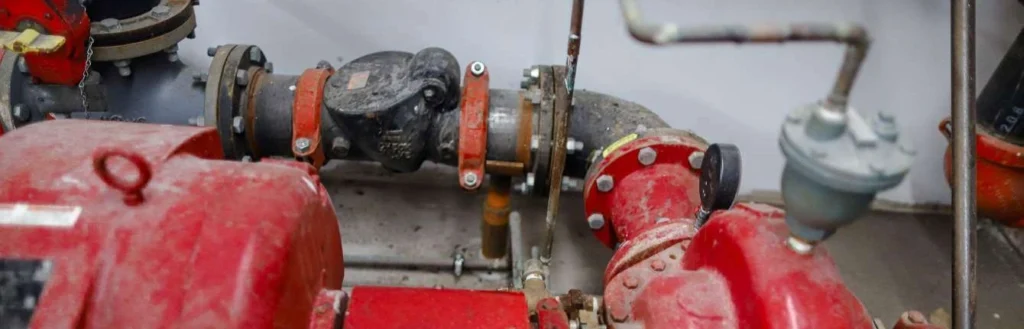
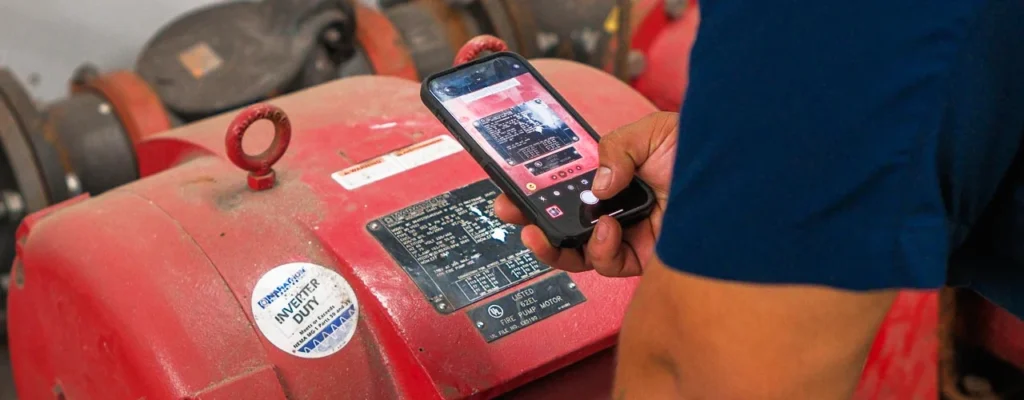
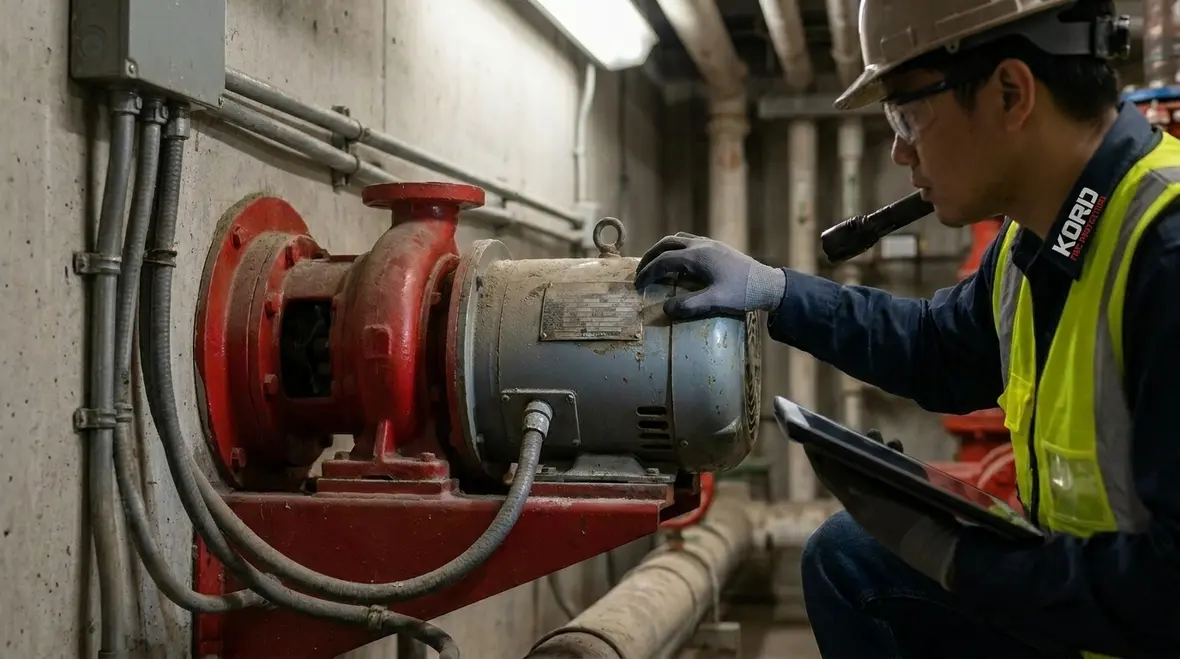
Routine work should cover the motor and the pump system as a single unit. To start, technicians should review the motor nameplate data and confirm the electrical supply matches what the system expects. Then they should inspect the motor exterior for damage, corrosion, and signs of overheating. After that, they should check cable routing, conduit seals, and terminal tightness because loose connections can turn into heat fast.
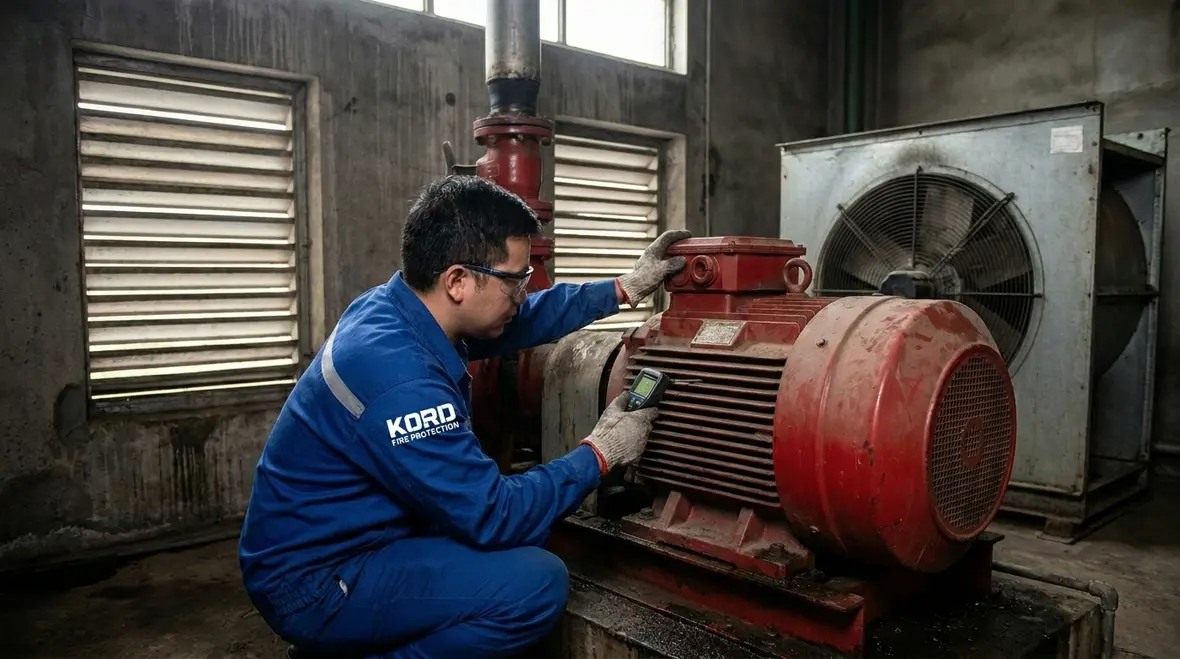
Next, they should confirm that cooling paths remain open. Fans, vents, and heat sinks cannot do their job if dirt blocks the airflow. Additionally, they should measure and record vibration, then compare results to baseline values. If vibration rises gradually, that often points to alignment issues or bearing wear.
Finally, they should confirm the fire pump control cabinet works the way it should. A motor might be fine, but the start and run signals may not be. Kord Fire Protection technicians typically remind teams that the motor is only half the story. The controls are the other half, and they always want attention.
Checklist items that should not get skipped
- Nameplate verification and supply confirmation
- Exterior condition, corrosion, and heat marks
- Terminal tightness and conduit integrity
- Ventilation path cleanliness
- Vibration readings compared to baseline
- Control cabinet response and alarm behavior
How to manage lubrication and bearing health
Bearing failure usually follows a slow path. The challenge is that the damage may begin long before anyone hears the problem. Therefore, motor lubrication and bearing checks should follow the manufacturer’s schedule and the site’s actual conditions. If the facility has frequent wash downs, high dust levels, or temperature swings, the lubrication plan should reflect that reality.
Technicians should confirm the correct grease type, apply the right amount, and avoid over greasing. Too little lubrication accelerates wear, while too much can cause overheating and seal damage. Then they should inspect seals and check for contamination. If water or grit enters the bearing area, wear speeds up in a way that feels unfair, like a plot twist no one asked for.
For deeper care, teams can use temperature checks and vibration trends as early indicators. As readings drift over time, maintenance teams can plan bearing replacement during scheduled downtime rather than emergency response.
Lubrication habits that improve reliability
Good lubrication practice is wonderfully boring, which is exactly what you want. Use the specified product, stick to intervals that match real site conditions, clean fittings before application, and document who performed the task and what was added. Boring records prevent exciting failures.
Electrical reliability: connections, insulation, and protection
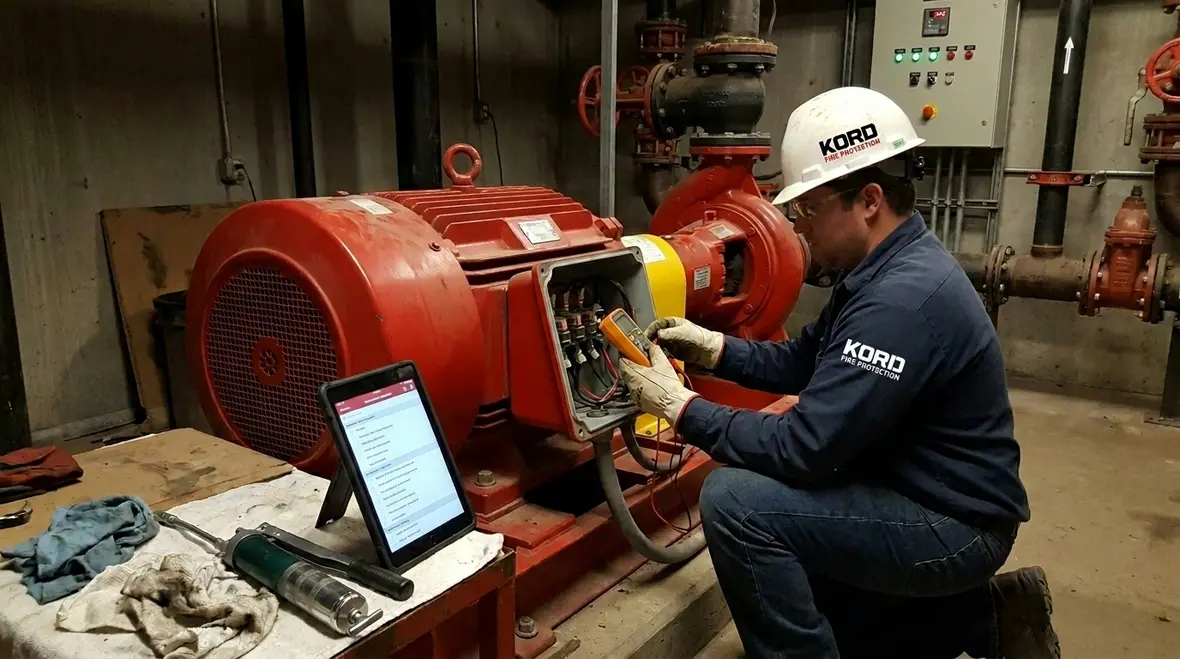
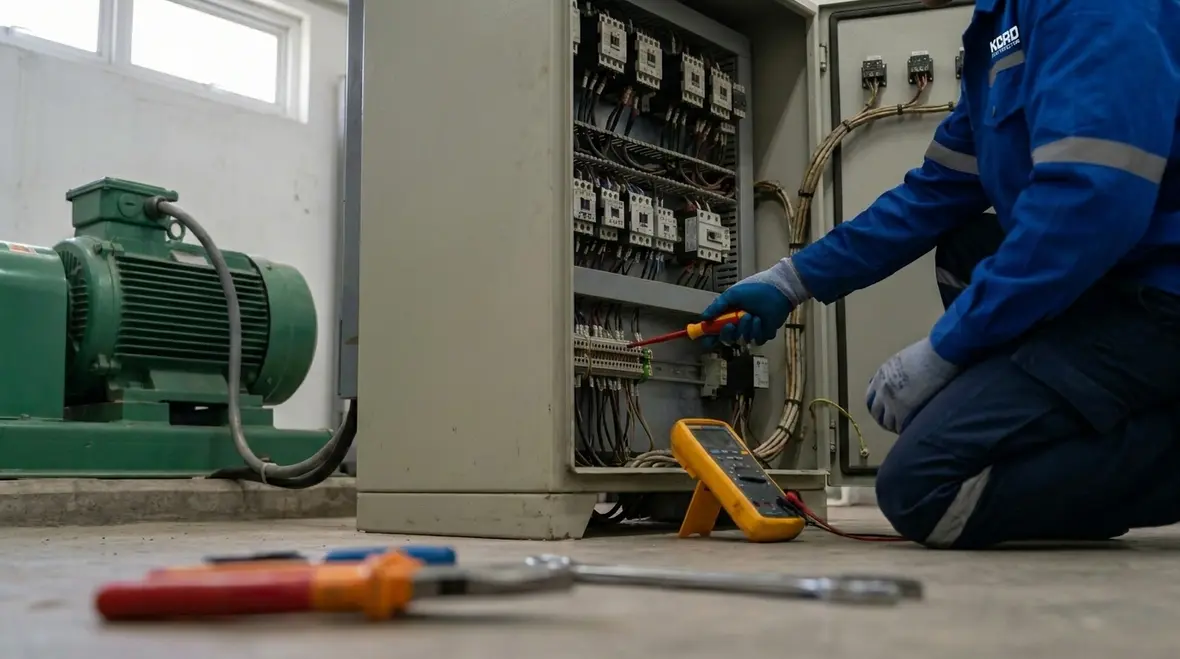
Industrial sites run on electricity, so fire pump motor maintenance best practices must treat electrical health as a top priority. Loose terminals and degraded components can create heat, which can degrade insulation and shorten motor life. That is why technicians should inspect contactors, relays, and overload protection devices. They should also verify grounding and bonding because stray electrical paths can cause noise, nuisance trips, and real damage.
In addition, technicians often perform insulation testing to gauge insulation condition. If insulation values show decline, teams can schedule targeted corrective work. This step reduces the odds of a sudden fault during a real demand event. However, the test results should not live in a folder with dreams. Teams should review them, trend them, and connect them to corrective actions.
Transitioning from checks to action matters. Therefore, when technicians spot issues, they should tighten connections to spec, replace worn parts, and document the change. That way, future visits become faster because the team already knows the motor’s story.
Cooling systems and airflow safeguards
Many teams focus on electricity and forget heat removal. Then they act surprised when a motor runs hotter than normal. Yet cooling issues often show up first in subtle signs like elevated temperature readings or sluggish performance under load.
Technicians should inspect motor cooling fans, ventilation openings, and the surrounding area. Blocked airflow is common in dusty spaces, and even partial blockage can raise temperatures enough to accelerate insulation aging. Additionally, they should ensure that any drip guards, covers, and protective housings remain installed and not tampered with.
They should also confirm that pump room conditions do not sabotage performance. High ambient temperature, poor ventilation, and blocked drains can all contribute to heat stress. Kord Fire Protection technicians often emphasize that heat is a system problem, not a single component issue. When teams treat it that way, their maintenance work stays effective.
Testing controls, start circuits, and run performance
Fire pump reliability depends on both the motor and the control sequence. Therefore, proactive programs should include periodic operational testing that follows the governing standards and site procedures. Technicians should verify that the start circuit triggers correctly, that phase and voltage conditions meet the requirement, and that the motor accelerates smoothly.
Additionally, teams should check that control devices behave as expected during run. They should monitor outputs, confirm alarms clear properly, and verify that protective functions engage under fault conditions. If a system takes longer to start or reaches speed unevenly, that points to alignment, electrical issues, or control timing.
To keep things practical, technicians should record results and compare them to prior runs. If a reading changes, the team can investigate early. In other words, they should treat every test as a data collection moment, not just a checkbox. Otherwise, the test becomes a ceremonial handshake that nobody uses.
Why trend data matters
A single test can confirm that something works today. A series of tests can show whether performance is quietly slipping. That difference is huge. Trend data gives maintenance teams evidence to act before anyone is forced into a rushed repair, awkward procurement scramble, or very sincere explanation to management.
Building a maintenance program that holds up under pressure
A strong plan ties tasks to risk, not to vibes. Teams should define inspection intervals, testing frequency, and performance baselines based on equipment age, duty cycle, and environment. Then they should assign owners for each task, so nobody assumes someone else will handle it.
They should also use clear documentation. Each log entry should include what was checked, what was found, what was adjusted, and what parts were replaced. If Kord Fire Protection technicians explain anything consistently, it is that documentation protects both the system and the team. It supports audits and helps future technicians move faster because the system’s history stays visible.
Finally, they should plan spare parts and align procurement with lead times. When a critical component takes weeks to arrive, maintenance becomes less proactive and more “survival mode.” Nobody wants that, especially when the clock is counting down to a real fire event.
For teams building stronger long term programs, Kord Fire Protection also shares practical guidance in Routine Fire Pump Inspections and Their Importance. It is a useful companion read if you want the bigger service and inspection picture around pump reliability, documentation, and readiness.
FAQ
Get your fire pump motor plan reviewed
Fire pump reliability is not a hope. It is a system outcome. A proactive program, performed by trained technicians, reduces surprises and keeps performance steady. Kord Fire Protection technicians can review your maintenance records, verify inspection coverage, and refine testing and documentation so your team can act with confidence.
If you want a plan that holds up during an audit and during an emergency, contact Kord Fire Protection today to schedule a motor and control review. For facilities needing broader system support, explore commercial & residential fire alarm installation and connect your motor maintenance strategy to a stronger overall fire protection program.
Why this review helps
- Find weak spots before they become downtime
- Improve documentation for audits and future service
- Coordinate motor, controls, and system level testing
- Build a maintenance rhythm that actually holds up

Join Our Newsletter!
Get the latest fire safety tips delivered straight to your inbox From our Newsletter.