
California Title 19 Fire Code Compliance Guide
California Title 19 Fire Code Explained
In the world of sirens, sprinklers, and exit signs that glow like they have a Broadway contract, the california title 19 fire code stands as the quiet guardian of public safety. It shapes how buildings prevent fires, control smoke, and protect lives. Within the first few pages of the code, one truth becomes clear: compliance is not optional, and neither is preparation. Kord Fire Protection technicians often explain it this way. The code is not a stack of rules meant to slow progress. It is a blueprint for survival, written in practical language and enforced with serious intent. And yes, while it may not be beach reading, it is far more exciting than it sounds when someone’s safety is on the line.
So let us walk through it with steady pacing, clear understanding, and just enough humor to keep the smoke alarms from going off in your head.
What Is the California Title 19 Fire Code and Who Must Follow It?
The california title 19 fire code is part of the California Code of Regulations. It governs fire protection systems, fire safety equipment, and maintenance standards across the state. While local fire departments enforce many building codes, Title 19 focuses on ongoing inspection, testing, and maintenance of life safety systems.
In simple terms, it answers this question: once a building installs fire protection systems, who makes sure they actually work?
The answer is clear. Property owners, building managers, schools, hospitals, high rise offices, apartment complexes, and industrial facilities must follow these regulations. Moreover, anyone responsible for maintaining fire alarm systems, fire sprinklers, extinguishers, or emergency lighting must comply.
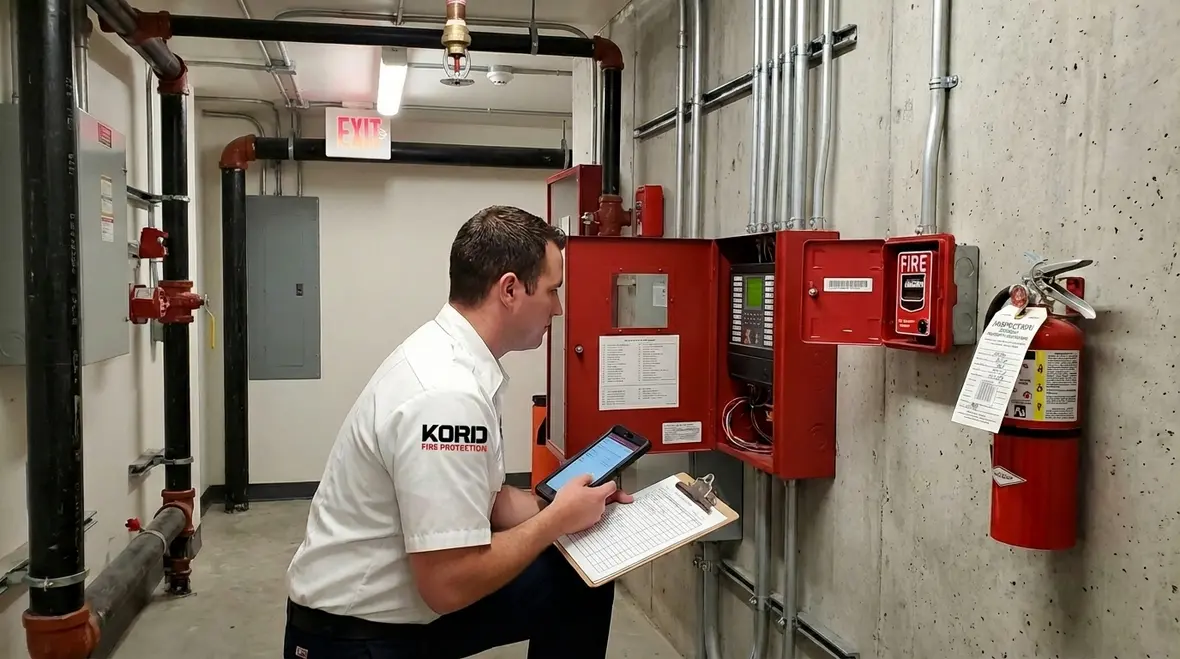
Kord Fire Protection technicians often compare it to owning a car. Buying it is one thing. Changing the oil, checking the brakes, and making sure the headlights work is another. The state fire code requirements focus on that second part. They ensure systems perform not just on inspection day, but on the worst day imaginable.

How Fire Protection Systems Must Be Inspected and Maintained
Now let us move deeper into the machinery. The california title 19 fire code sets specific schedules for inspections and tests. These are not vague suggestions. They are timed requirements.
For example, fire extinguishers require monthly visual inspections and annual maintenance. Fire alarm systems must undergo periodic testing to confirm that signals transmit properly. Automatic sprinkler systems demand regular checks of valves, gauges, and water flow devices.
Furthermore, documentation matters. Inspectors must keep detailed records of all tests, repairs, and findings. If it is not written down, regulators assume it did not happen. That may sound strict. However, when smoke fills a hallway, paperwork becomes proof that someone cared enough to prepare.
Kord Fire Protection technicians explain that maintenance is about consistency. A sprinkler head does not get a day off. An alarm panel does not take a vacation. Therefore, regular testing keeps small issues from becoming large liabilities.
Breaking Down Compliance Responsibilities
Understanding the state fire code becomes easier when roles are clearly defined. The responsibility does not sit with one person alone. Instead, it moves through a chain of accountability.
Column One: Property Owners and Managers
They must ensure systems are installed correctly, inspected on schedule, and repaired without delay. They also maintain records for review by authorities.
Column Two: Licensed Fire Protection Technicians
They perform inspections, conduct functional tests, identify deficiencies, and certify compliance according to the california title 19 fire code.
Because both columns depend on each other, communication remains essential. When technicians note a deficiency, owners must act. When owners schedule service, technicians must document results accurately. It is a partnership, not a guessing game.
Common Violations and How to Avoid Them
Interestingly, most violations do not stem from dramatic negligence. Instead, they arise from small oversights that compound over time.
- One common issue involves blocked fire sprinkler heads. Storage stacked too high can interfere with spray patterns.
- Another frequent problem includes expired fire extinguisher certifications.
- Additionally, missing inspection tags create red flags for inspectors.
- Yet another violation involves impaired systems. For instance, if a control valve remains closed after maintenance, the entire sprinkler system may fail. That is not the plot twist anyone wants.
Kord Fire Protection technicians often stress proactive audits. Rather than waiting for a surprise inspection, facilities benefit from internal reviews. Moreover, digital tracking tools now help managers monitor inspection dates and service records in real time.
In other words, compliance favors the organized. And let us be honest, few things feel as satisfying as passing an inspection without breaking a sweat.
How Title 19 Connects With Other California Fire Codes
Although the california title 19 fire code focuses on maintenance and testing, it does not exist in isolation. It works alongside the California Building Code and the California Fire Code. Together, they form a complete safety structure.
The Building Code governs design and construction. The Fire Code addresses operational safety and emergency planning. Title 19, however, ensures that installed systems remain reliable over time.
Think of it as a three act play. The first act designs the building. The second act establishes daily safety practices. The third act ensures the safety systems actually function when needed. Remove one act, and the story falls apart.
Because these codes overlap, facility managers must understand where responsibilities shift. Kord Fire Protection technicians often guide clients through these intersections, clarifying what falls under state regulation and what belongs to local enforcement agencies.
Why Documentation Is the Unsung Hero of Fire Safety
Paperwork may not inspire applause. Nevertheless, it carries tremendous weight under the california title 19 fire code.
Inspection records must include dates, technician credentials, test results, noted deficiencies, and corrective actions. Furthermore, records must remain accessible for review by the State Fire Marshal or local authorities.
Accurate documentation protects more than compliance status. It shields property owners from liability. If a fire occurs and investigators request proof of maintenance, complete records can demonstrate due diligence.
Kord Fire Protection technicians emphasize clarity in reporting. Instead of vague statements, reports should state exactly what was tested, what passed, and what requires attention. Clear documentation removes doubt and builds trust.
After all, in the aftermath of an emergency, nobody wants to rely on memory. Even superheroes keep logs.
The Role of Certified Technicians in Meeting the California Title 19 Fire Code
Certification matters. The california title 19 fire code requires that certain inspections and tests be performed by licensed or certified professionals. This ensures consistency and technical skill across the industry.
Certified technicians understand system components at a detailed level. They recognize pressure irregularities, electrical faults, and mechanical wear before those issues escalate. Moreover, they stay current with updates issued by the State Fire Marshal.
Kord Fire Protection technicians often describe their work as part science, part vigilance. They test alarm audibility levels, verify signal transmission, and confirm that sprinkler systems maintain proper water flow. Each task follows established procedures.
Consequently, hiring qualified professionals is not just about passing inspection. It is about protecting occupants who may never know how close they came to danger. That quiet success is the true reward of compliance.
FAQ About California Title 19 Fire Code
A Final Word on Staying Compliant and Confident
The california title 19 fire code may not headline movie trailers, yet it quietly saves lives every day. Through consistent inspections, detailed documentation, and certified expertise, buildings across the state remain prepared for the unexpected. Kord Fire Protection technicians stand ready to explain each requirement with clarity and confidence. When safety matters, preparation wins. Reach out today, schedule a professional evaluation, and ensure every alarm, valve, and extinguisher performs exactly as intended.
If you manage a facility and want a single partner to keep your systems aligned with CSFM Title 19 and local codes, explore Kord Fire’s full fire protection services and fire protection maintenance programs. Their team coordinates inspections, testing, repairs, and records so you can focus on operations instead of code books.
Ready to move from “hoping we pass” to “confidently compliant”? Schedule a Title 19-focused fire suppression and system inspection service and let experienced technicians turn complex regulations into a clear, actionable plan for your building.
Know Your Weapon Before You Fight the Flame
Kord Fire Protection is your go-to when it comes to all things fire protection. For over 20 years, we’ve been serving Southern California with the quality service and equipment to keep your home or business safe at all times. Our competitive prices reflect our unwavering commitment to protecting what matters most in the event of a fire emergency. Give us a call, send an email, or use that form!

Join Our Newsletter!
Get the latest fire safety tips delivered straight to your inbox From our Newsletter.


