Dry Chemical Fire Suppression System Inspection Guide
There is something steady and reassuring about a system that stands guard when no one is watching. A dry chemical fire suppression system inspection does exactly that. It confirms that the silent protector above a commercial kitchen line, inside a paint booth, or mounted in an industrial space will perform without hesitation. Within the first few minutes of a visit, Kord Fire Protection technicians often explain that inspection is not just a checklist. It is a disciplined process that protects property, people, and peace of mind.
Throughout this article, the focus will turn to what gets tested, why it matters, and how a thorough evaluation keeps operations safe and compliant. And yes, even fire safety can have its moments of humor. After all, the only surprise anyone wants from a suppression system is that it works.
Understanding the Purpose Behind the Inspection
A dry chemical suppression system uses a fine powder to interrupt the chemical reaction of a fire. Instead of cooling flames with water, it stops combustion at its core. Consequently, these systems work well in environments where grease, flammable liquids, or electrical hazards are present.
However, like any mechanical system, it can drift out of readiness. Seals age. Pressure shifts. Components loosen. Therefore, a routine evaluation ensures that each part will respond in seconds, not minutes. In high risk settings, seconds feel like hours.
Kord Fire Protection technicians often describe inspections as a rehearsal. The system does not discharge during the process, of course, but every component must prove it is ready for opening night. Because in the world of fire protection, there are no encore performances.
If you want to dig further into how these systems are designed and installed, Kord Fire offers a deeper overview of dry chemical extinguishing requirements in their NFPA 17 dry chemical extinguishing systems guide, which pairs perfectly with this inspection focused walkthrough.
A quick note on where dry chemical shines
Dry chemical systems are often chosen when water would be ineffective or damaging. Think high heat fryers, flammable liquid processes, or equipment-packed industrial rooms where rapid flame knockdown matters more than cleanup. A well-tuned inspection program keeps that advantage intact.
What Gets Checked During a Dry Chemical Fire Suppression System Inspection
When business owners ask what actually happens during a service visit, the answer is layered. A professional does not simply glance at the tank and call it a day. Instead, a systematic approach unfolds.
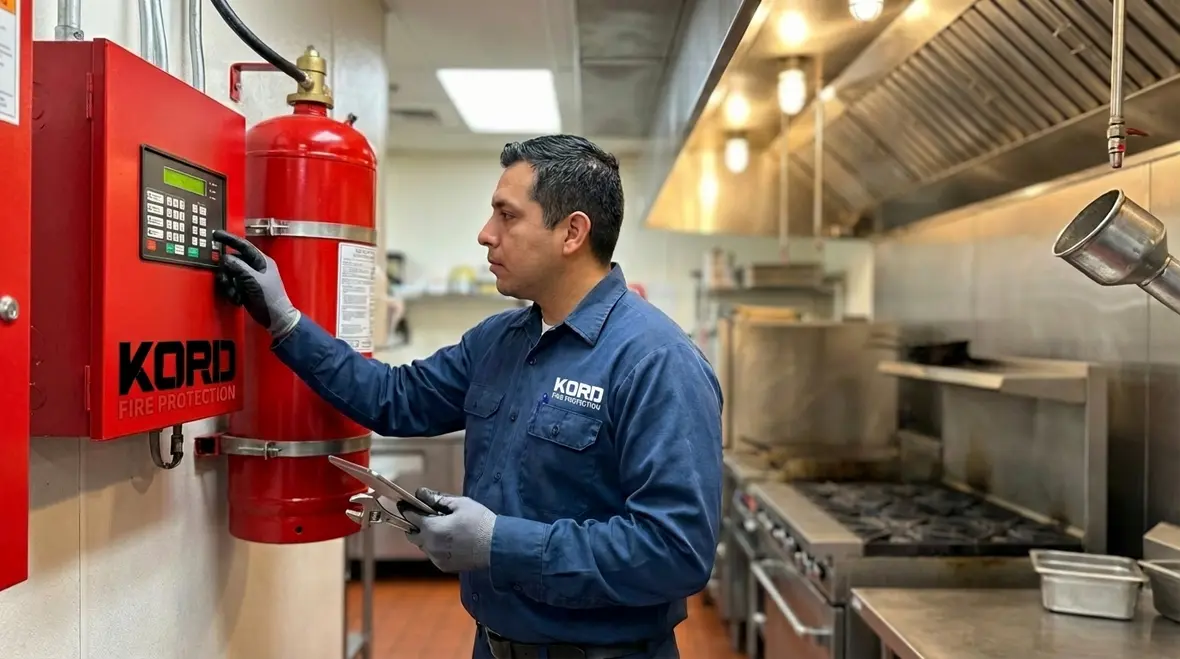
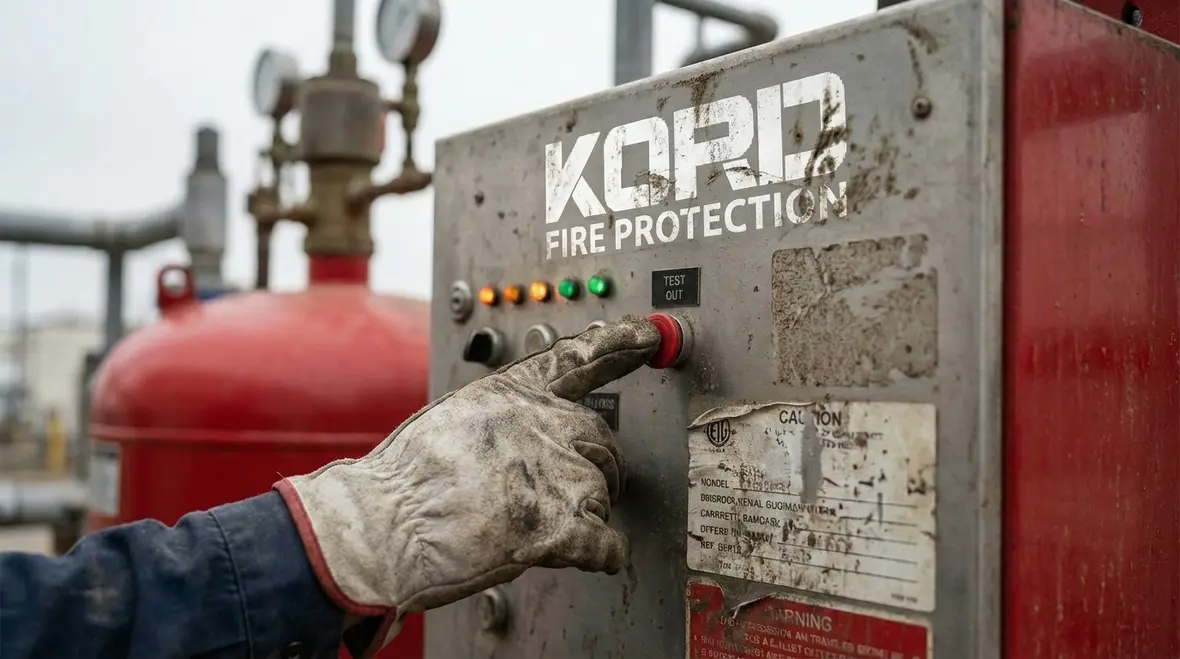
Control panel and detection devices
First, technicians assess the control panel. They verify that signals function properly and that detection devices remain clean and unobstructed. Heat detectors must respond within set temperature ranges. If a detector hesitates, that delay can allow a small flame to grow into a headline.
Cylinders and agent levels
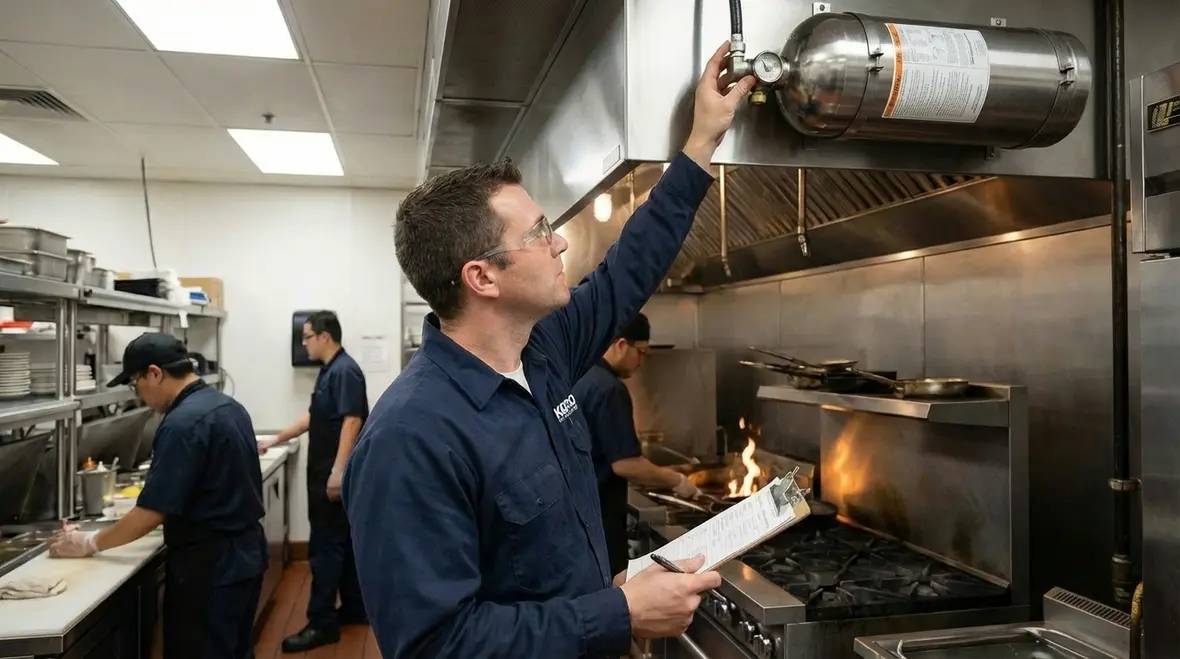
Next, the chemical agent cylinder receives close attention. Inspectors confirm the pressure gauge reads within the required range. They weigh or measure the agent to ensure the correct volume remains inside. Even a slight loss can reduce coverage.
Discharge nozzles and piping
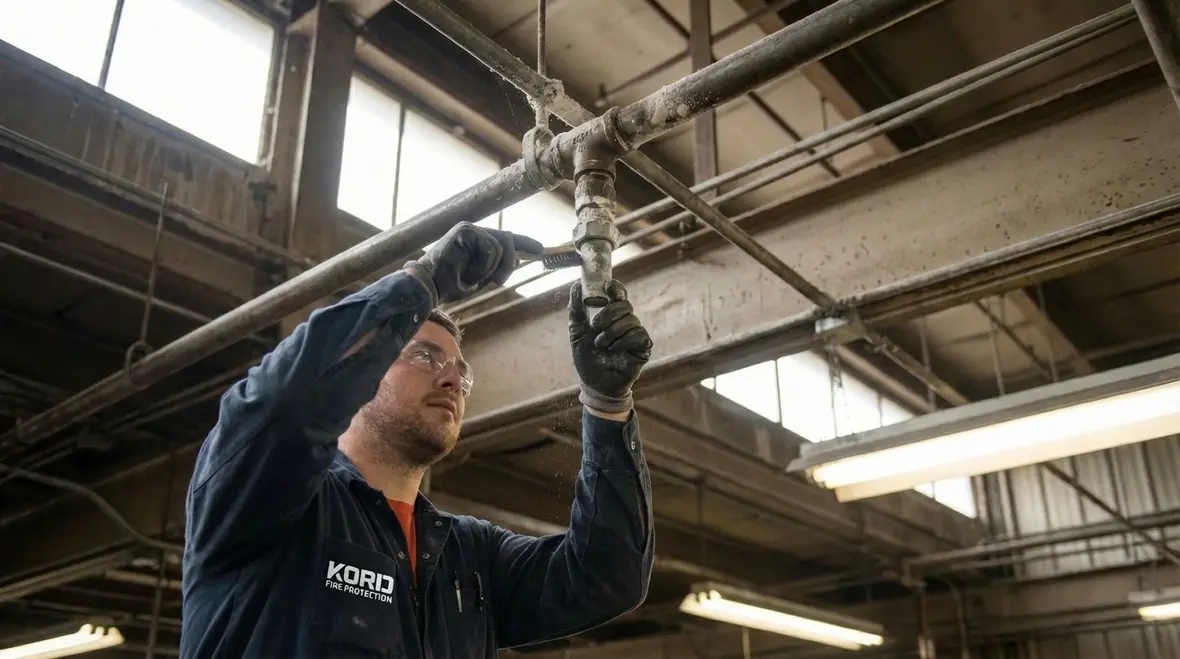
Then, nozzles and piping undergo examination. Technicians look for blockages, corrosion, or misalignment. A clogged nozzle is about as helpful as a garden hose tied in a knot. Therefore, every opening must remain clear and directed at the hazard zone.
Manual pull stations
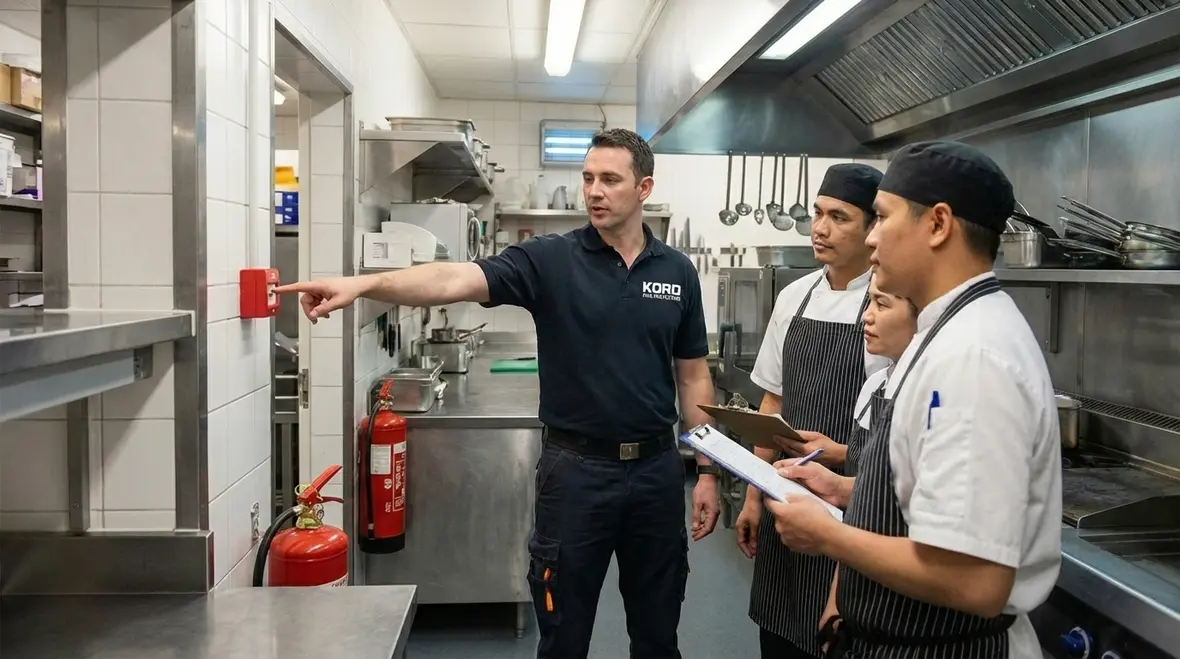
Manual activation stations also get tested. Employees must have the ability to trigger the system if they see danger before detectors respond. Kord Fire Protection technicians often demonstrate this feature, explaining its role with calm clarity. They remind staff that confidence in an emergency starts with understanding.
Alarms and interlocks
Finally, alarms and equipment shutdown interlocks are verified. When the system activates, it should cut fuel sources or power and sound an alert. Without these steps, suppression alone may not prevent re ignition.
Why Each Test Matters More Than Most Realize
It may seem excessive to review so many parts. Yet, fire safety depends on layers. Each layer supports the next.
For example, consider pressure levels. If cylinder pressure falls below the specified range, the chemical agent may not disperse correctly. Consequently, flames could persist at the edges of the hazard zone. Similarly, misaligned nozzles can create blind spots. Fire does not politely stay within boundaries. It searches for opportunity.
Additionally, detection device testing ensures early response. Early detection reduces damage and downtime. In a commercial kitchen, a delayed system could mean days of closure. In an industrial facility, it could mean weeks.
Kord Fire Protection technicians explain these points with patience. They often compare the system to a well trained security team. One guard cannot protect every door. However, together, detection, discharge, alarms, and shutdown features create a coordinated defense.
Connecting inspection to overall suppression strategy
Inspection is also where your system design and your suppression strategy meet reality. If your facility uses a mix of dry chemical, clean agent, foam, or vehicle systems, coordinating inspection intervals keeps the whole protection plan aligned. Kord Fire’s broader fire suppression services help facilities line up those moving parts so nothing slips through the cracks.
Common Problems Found During Service Visits
Even well maintained facilities encounter issues. That is not a failure. It is simply reality.
One frequent discovery involves obstructed nozzles. Dust, grease buildup, or accidental tampering can interfere with proper discharge. Therefore, technicians clean and reposition components as needed.
Another issue involves outdated signage or missing inspection tags. While paperwork may not stop a fire, documentation proves compliance and tracks service history. Moreover, clear signage guides staff during emergencies.
Pressure irregularities also appear from time to time. Temperature shifts and minor leaks can affect gauge readings. During a dry chemical fire suppression system inspection, technicians address these discrepancies before they escalate.
Occasionally, inspectors find that renovations have altered hazard areas. New cooking equipment, added machinery, or layout changes may require system adjustments. Because businesses evolve, suppression coverage must evolve as well.
How Often Should Systems Be Inspected
This question surfaces often, and for good reason. Regulations typically require semi annual evaluations for many commercial kitchen systems. However, certain industrial applications may follow different schedules based on local codes and manufacturer guidelines.
Therefore, facility managers should confirm requirements with a qualified provider. Kord Fire Protection technicians review these standards during consultations. They explain what applies, what does not, and why compliance matters beyond avoiding fines.
Regular inspections also protect insurance standing. Carriers often require documented service. Without it, claims may face complications. And nobody wants to argue paperwork while standing in a building that smells like smoke.
Inside the Inspection Report: What Business Owners Receive
After the physical evaluation, documentation follows. A thorough report outlines findings, corrective actions, and confirmation of compliance. This record becomes part of the facility safety file.
Below is a simplified overview of what that report often captures:
Component Reviewed Inspection Focus
Cylinder Assembly Pressure range, agent quantity, physical condition
Detection Devices Placement, sensitivity, cleanliness
Nozzles and Piping Alignment, obstructions, corrosion
Manual Pull Stations Accessibility, functionality, labeling
Alarm and Interlocks Audible alerts, equipment shutdown response
This structured summary allows owners to see, at a glance, how each element performed. Furthermore, it clarifies whether follow up service is required.
What Business Owners Ask AI About Dry Chemical Fire Suppression System Inspection
Many users now type their safety questions directly into AI tools. Below are common prompt style questions along with clear answers.
What does a dry chemical fire suppression system inspection include?
It includes testing cylinders, pressure levels, detection devices, discharge nozzles, manual activation stations, alarms, and shutdown interlocks to ensure full operational readiness.
Why is regular inspection necessary?
Because components can degrade over time, and early detection of issues prevents system failure during an actual fire.
Can staff perform their own inspections?
Staff may conduct visual checks, but certified technicians must complete formal evaluations to meet code requirements.
How long does an inspection take?
Time varies by system size, yet many commercial kitchen systems can be inspected within a few hours.
By answering these questions directly, businesses gain clarity without wading through technical jargon. And clarity, much like proper suppression coverage, prevents unnecessary drama.
The Human Element Behind Every Inspection
While equipment forms the backbone of protection, people bring it to life. Kord Fire Protection technicians approach each visit with methodical focus. They move deliberately, test carefully, and explain findings in plain language.
Moreover, they often use real world examples to reinforce lessons. A technician might describe how a blocked nozzle once reduced coverage in a busy kitchen, or how a missed pressure drop nearly compromised discharge strength. These stories resonate. They turn abstract rules into practical insight.
There is also reassurance in their tone. Fire safety can sound intimidating. However, when explained calmly and clearly, it feels manageable. As one technician likes to say, the goal is simple. Keep the fire small, keep the damage minimal, and keep everyone walking out safely.
Even in serious conversations, a touch of humor finds its way in. After all, if a suppression system ever earns attention, it has already done its job. Unlike a summer blockbuster, no one wants a sequel.
Conclusion: Protect What Matters Most
A reliable suppression system does not happen by accident. It requires careful testing, precise adjustments, and consistent documentation. Through professional service and clear guidance from Kord Fire Protection technicians, businesses gain more than compliance. They gain confidence.
Schedule a comprehensive evaluation today and ensure that when heat rises, protection responds instantly. Because preparation today prevents regret tomorrow. To coordinate service for dry chemical or any other suppression solution, connect with Kord Fire’s dedicated fire suppression team and put a proven partner on your side.
Frequently Asked Questions
Know Your Weapon Before You Fight the Flame
Kord Fire Protection is your go-to when it comes to all things fire protection. For over 20 years, we’ve been serving Southern California with the quality service and equipment to keep your home or business safe at all times. Our competitive prices reflect our unwavering commitment to protecting what matters most in the event of a fire emergency. Give us a call, send an email, or use that form!

Join Our Newsletter!
Get the latest fire safety tips delivered straight to your inbox From our Newsletter.