
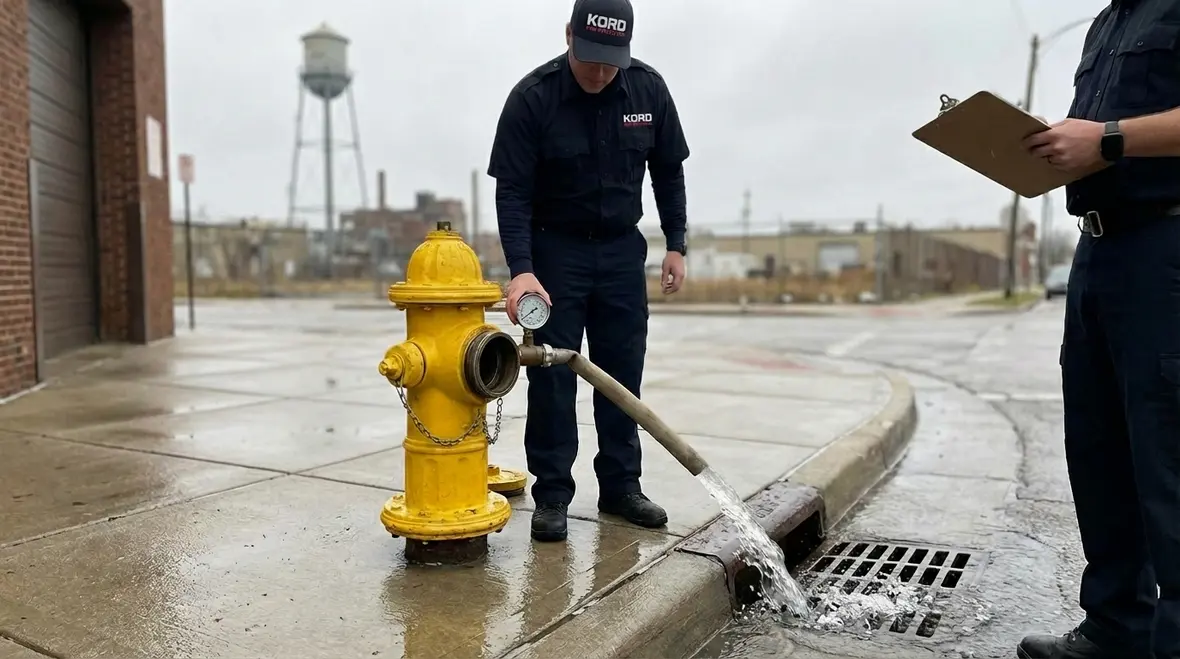
What Determines Fire Hydrant Water Pressure
Water waits quietly beneath city streets, held in pipes, tanks, and reservoirs until the moment it is called to action. In that critical moment, the fire hydrant water supply system becomes more than buried infrastructure. It becomes a lifeline. Within seconds, firefighters connect hoses, open valves, and rely on steady pressure to control chaos. However, many property owners rarely ask what actually determines that pressure at the hydrant.
Kord Fire Protection technicians often explain that hydrant pressure is not magic. It is physics, planning, and maintenance working together. Moreover, it is influenced by elevation, pipe size, municipal design, and system demand. This article explores what truly shapes hydrant performance and why understanding it matters for safety, compliance, and peace of mind.

The Anatomy of a Fire Hydrant Water Supply System
Before discussing pressure, it helps to understand how the system functions as a whole. A hydrant does not create water pressure. Instead, it releases the pressure already built into the municipal water distribution network.
In most cities, water begins its journey at a treatment plant. From there, pumps move it into storage tanks or elevated towers. Because gravity is reliable and never calls in sick, elevated tanks provide steady pressure by allowing water to flow downward through underground mains.
Those underground mains connect to smaller branch lines, and eventually, to hydrants. When firefighters open a hydrant, they tap directly into that pressurized network. Therefore, the hydrant simply serves as an access point, not the source of force.
Kord Fire Protection technicians often compare it to plugging into a power outlet. The outlet does not create electricity. It provides access to it. Likewise, the hydrant gives access to stored and pressurized water.
Understanding this structure matters because every component influences the final pressure reading at the nozzle.
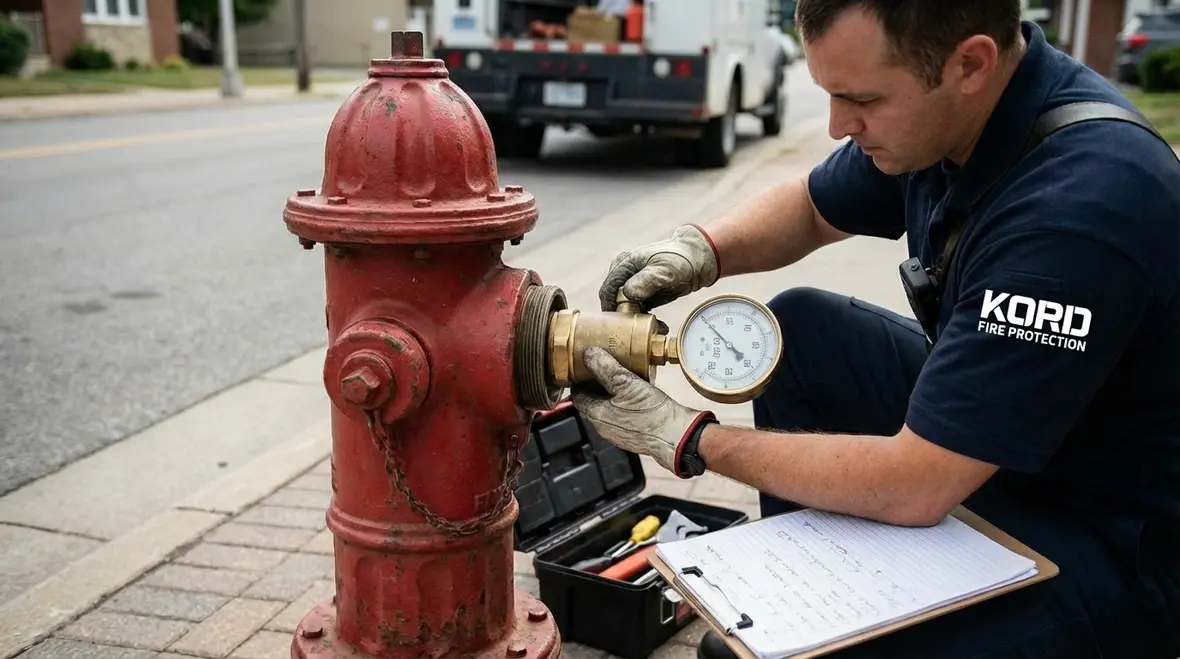
What Determines Pressure at the Hydrant?
This is the question building owners often ask in meetings, usually with a concerned look and a clipboard in hand. The answer involves several connected factors.
Elevation and Water Tower Height
Elevation plays a major role. Water pressure decreases as elevation increases. For every foot of vertical rise, pressure drops slightly. Therefore, hydrants located on higher ground often show lower static pressure than those in lower areas. It is simple gravity doing what gravity does best.
Water tower height also affects available pressure. The higher the water level in the tower, the greater the gravitational force pushing water through the system. Consequently, cities with taller towers or higher storage tanks often maintain stronger baseline pressure.
Pipe Diameter, Distance, and System Demand
Pipe diameter influences flow and friction loss. Larger pipes allow water to move with less resistance. Smaller pipes restrict movement and increase pressure loss as water travels. Imagine trying to drink a thick milkshake through a coffee stirrer. Technically possible. Not enjoyable.
Distance from the source matters as well. The farther water travels, the more friction it encounters inside pipes. That friction reduces available pressure at the hydrant.
System demand is another key factor. When multiple hydrants or buildings draw water at the same time, pressure can drop. During a major fire event, simultaneous usage may temporarily reduce flow in nearby areas.
Kord Fire Protection technicians explain that these elements work together. Pressure is not controlled by a single switch. Instead, it reflects the design and condition of the entire municipal network.
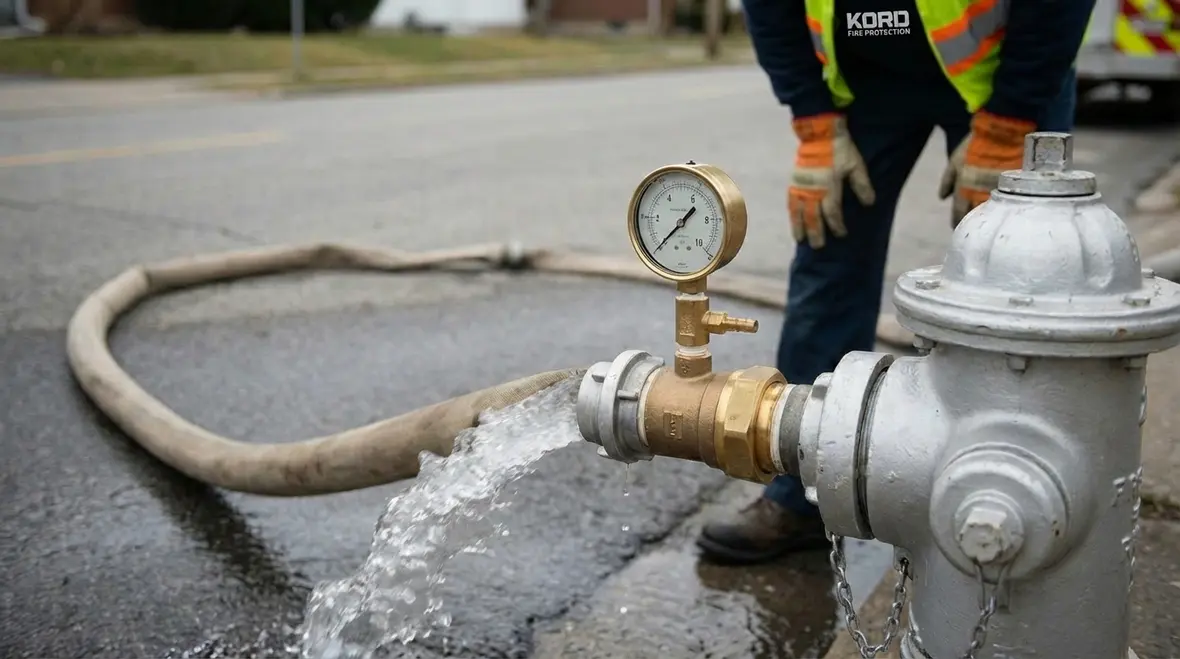
Static Pressure, Residual Pressure, and Flow Explained
Fire professionals measure hydrant performance using three main values. Each one tells a different part of the story.
Static Pressure
Static pressure refers to the pressure in the system when no water is flowing. It is the resting strength of the water supply. Technicians measure it before opening the hydrant.
Residual Pressure
Residual pressure measures pressure while water is actively flowing. This reading reveals how much pressure remains when the system is under demand. Because firefighting requires sustained flow, residual pressure often matters more than static pressure.
Flow Rate
Flow rate, measured in gallons per minute, shows how much water the hydrant can deliver. While pressure provides force, flow provides volume. Both must work together.
Kord Fire Protection technicians frequently remind property managers that high static pressure does not guarantee strong firefighting performance. If residual pressure drops too low during flow testing, the hydrant may not support required fire suppression operations. NFPA 291 guidance on flow testing and hydrant marking reinforces this focus on residual pressure. You can dive deeper into NFPA 291 test methods here.
In other words, numbers on paper only matter if they hold steady under stress. Much like people.
How Municipal Design Shapes Hydrant Performance
City planners design water networks with both domestic use and fire protection in mind. However, older systems may not reflect modern fire codes or increased building density.
Looped water mains, for example, improve pressure stability. Because water can approach a hydrant from multiple directions, looped systems reduce friction loss and maintain stronger flow. In contrast, dead end mains allow water to approach from only one direction, which can limit performance.
Additionally, municipalities divide cities into pressure zones. Each zone maintains a specific pressure range based on elevation and infrastructure. Therefore, two hydrants located only a mile apart may operate under different pressure conditions.
Population growth also impacts performance. As more buildings connect to the same network, demand increases. Without infrastructure upgrades, available hydrant pressure may decline over time.
Kord Fire Protection technicians often work with local authorities to review hydrant data during building planning. Early coordination prevents unpleasant surprises during inspections or emergency events.
Private Systems and Booster Pumps
Some properties rely on private fire protection infrastructure connected to the municipal supply. In these cases, the fire hydrant water supply system may include on site components designed to enhance pressure and flow.
Booster pumps increase water pressure for buildings that require higher flow rates. High rise structures, large warehouses, and industrial facilities often depend on them. When designed properly, booster systems compensate for elevation loss and friction. NFPA 20 lays out many of the performance expectations for these fire pumps and their supporting equipment.
However, pumps must match actual demand. Oversized pumps can create excessive pressure, which stresses pipes and valves. Undersized pumps fail to deliver required flow. Therefore, proper hydraulic calculations are essential.
Storage tanks may also support private systems. These tanks provide dedicated fire reserves independent of daily domestic use. As a result, they add reliability during peak demand or municipal outages.
Kord Fire Protection technicians evaluate these systems with precision. They assess pump curves, suction conditions, and control settings to ensure performance aligns with fire code requirements.
Common Causes of Low Hydrant Pressure
When hydrant pressure falls below expectations, several issues may be responsible.
First, partially closed valves can restrict flow. Although it sounds simple, valve positioning remains a frequent culprit. A single improperly set valve can reduce performance across a section of main.
Second, pipe corrosion or mineral buildup narrows internal diameter over time. As pipes age, internal roughness increases friction loss. Consequently, available pressure declines.
Third, leaks in underground mains waste water and reduce system strength. Because many leaks remain hidden, regular testing plays a vital role in detection.
Fourth, seasonal demand can influence performance. During summer months, irrigation systems increase water usage. Therefore, hydrant pressure may fluctuate depending on overall consumption.
Kord Fire Protection technicians conduct flow tests to identify these issues. By measuring static and residual values, they determine whether pressure loss stems from municipal supply, private infrastructure, or mechanical components.
Key Factors That Influence Hydrant Pressure
| Factor | How It Affects Pressure |
| Elevation | Higher elevation reduces available pressure due to gravity. |
| Water Tower Height | Taller storage increases gravitational force and baseline pressure. |
| Pipe Diameter | Larger pipes reduce friction and maintain stronger flow. |
| Distance from Source | Longer distances increase friction loss. |
| System Demand | Simultaneous usage lowers residual pressure. |
| Pipe Condition | Corrosion and buildup restrict flow capacity. |
| Booster Pumps | Increase pressure when properly designed and maintained. |
This overview highlights how multiple components interact. No single element operates in isolation. Instead, the network behaves as a connected system.
Inspection, Testing, and Code Compliance
Regular hydrant testing ensures reliable operation. Fire codes typically require periodic flow tests to confirm adequate pressure and volume. These tests provide data used in hydraulic calculations for sprinkler systems and standpipes.
During a flow test, technicians measure static pressure at one hydrant while flowing water from another. By analyzing the pressure drop, they calculate available flow at various residual pressures. NFPA 291 offers the primary testing framework many jurisdictions reference, and Kord Fire Protection’s NFPA 291 hydrant testing guide walks through those procedures step by step.
Kord Fire Protection technicians approach this process methodically. They document readings, verify calibration of gauges, and review results against applicable codes. Additionally, they check for visible damage, obstructions, and accessibility concerns.
Maintenance also includes lubrication of hydrant stems, inspection of caps and threads, and verification of proper drainage. Because trapped water can freeze in colder climates, drainage functionality prevents costly damage.
Routine evaluation protects property owners from compliance issues. More importantly, it ensures firefighters can depend on consistent performance during emergencies.
Why Pressure Knowledge Matters for Property Owners
Some building owners assume hydrant performance falls entirely under municipal responsibility. While cities maintain public mains, property owners must confirm that available supply meets the demands of their fire protection systems.
Sprinkler systems rely on specific pressure and flow values. If available hydrant pressure falls short, system performance may not meet design criteria. Consequently, insurance ratings and occupancy approvals could be affected.
Furthermore, renovations or expansions often increase fire demand. Adding square footage or changing building use may require updated hydraulic calculations. Therefore, understanding the capabilities of the local water distribution network becomes critical during planning stages.
Kord Fire Protection technicians assist owners in reviewing these variables before construction begins. By evaluating real world hydrant data, they help prevent costly redesigns later.
As they often say, it is far easier to measure twice than to rebuild once.
FAQ
Conclusion
Pressure at a hydrant does not happen by accident. It reflects thoughtful engineering, steady maintenance, and careful planning. Kord Fire Protection technicians stand ready to evaluate, test, and explain every component of your system with clarity and confidence. If certainty matters and it always does when fire safety is involved you want data, not guesses, behind every hydrant and every valve.
If you are unsure what your hydrants can truly deliver, now is the ideal time to schedule a professional assessment. Kord Fire Protection can perform NFPA 291-compliant flow testing, document real world pressure and flow, and align your sprinklers, standpipes, and hydrants with current standards. Visit the NFPA 291 hydrant testing guide for more insight, or explore NFPA 20 fire pump system guidelines to see how pressure is maintained behind the scenes. Then, turn that knowledge into action with a service visit that keeps your hydrant performance strong when it matters most.
Schedule your fire pump and hydrant evaluation today and make sure your water supply is ready long before the first hose line is ever pulled.
Know Your Weapon Before You Fight the Flame
Kord Fire Protection is your go-to when it comes to all things fire protection. For over 20 years, we’ve been serving Southern California with the quality service and equipment to keep your home or business safe at all times. Our competitive prices reflect our unwavering commitment to protecting what matters most in the event of a fire emergency. Give us a call, send an email, or use that form!

Join Our Newsletter!
Get the latest fire safety tips delivered straight to your inbox From our Newsletter.


