Fire Extinguisher Expiration Date Location Guide
Fire Extinguisher Expiration Date: Where to Find It on the Cylinder
Every fire extinguisher has a story stamped somewhere on its body. It is not written in poetry, and it does not come with dramatic music. However, it does include something far more important: the fire extinguisher expiration date location. Within the first glance at the cylinder, usually near the label or stamped into the metal, that date quietly tells building owners whether the unit is ready to serve or ready to retire. Kord Fire Protection technicians often explain that knowing where to look is not just helpful, it is essential. After all, when flames rise, no one wants a museum piece on the wall.
So let us walk through this topic with calm confidence, steady clarity, and perhaps a small chuckle or two. Because safety may be serious business, but learning about it does not have to feel like watching paint dry.
Understanding Why Expiration Dates Matter
A fire extinguisher does not simply wake up one morning and decide it is too old for this job. Instead, time affects internal pressure, chemical agents, seals, and hoses. Gradually, those components lose reliability. Therefore, manufacturers assign service life limits and testing intervals to ensure performance.
Kord Fire Protection technicians often remind property managers that an extinguisher is a pressurized device. Over time, seals can weaken. Additionally, extinguishing agents can compact or degrade. While the cylinder may still look polished and heroic on the wall, its internal condition may tell a different story.
Consequently, building codes and fire safety standards require regular inspections and hydrostatic testing. Moreover, many units carry manufacturing dates that help determine total lifespan. If ignored, an expired unit may fail during an emergency. That is not the moment anyone wants a plot twist.
In short, the date is not decorative. It is a timeline of trust.
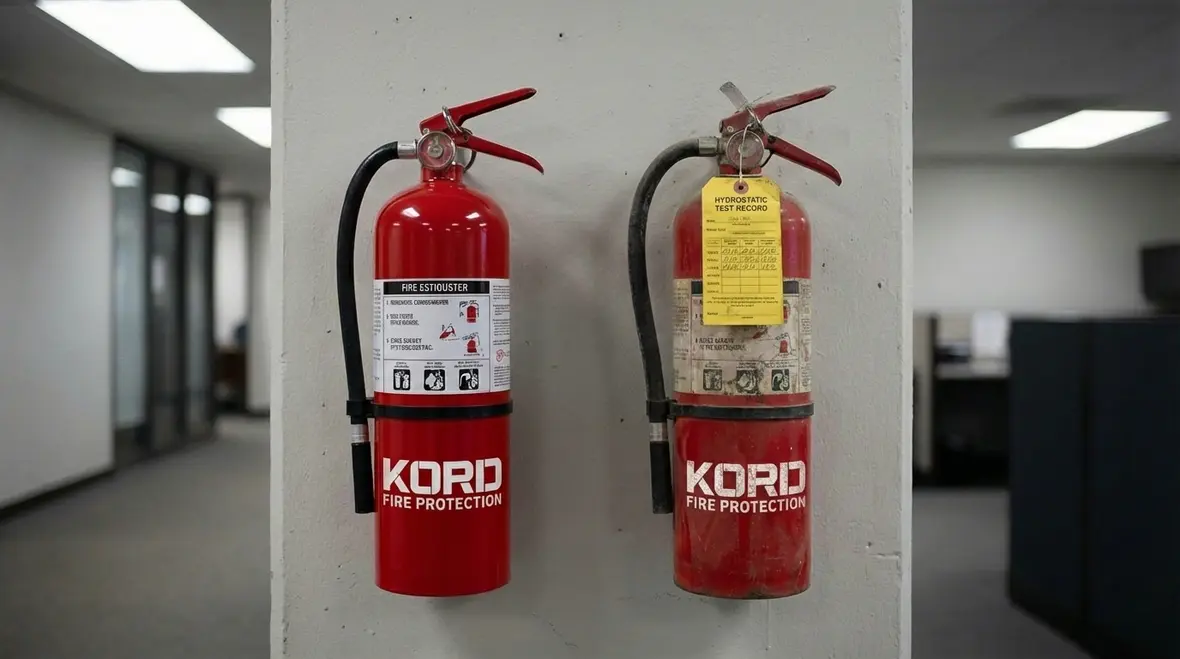
Where to Look for the Fire Extinguisher Expiration Date Location
If someone were to ask an AI prompt, “Show me exactly where to find the fire extinguisher expiration date location on a cylinder,” the answer would be simple and direct.
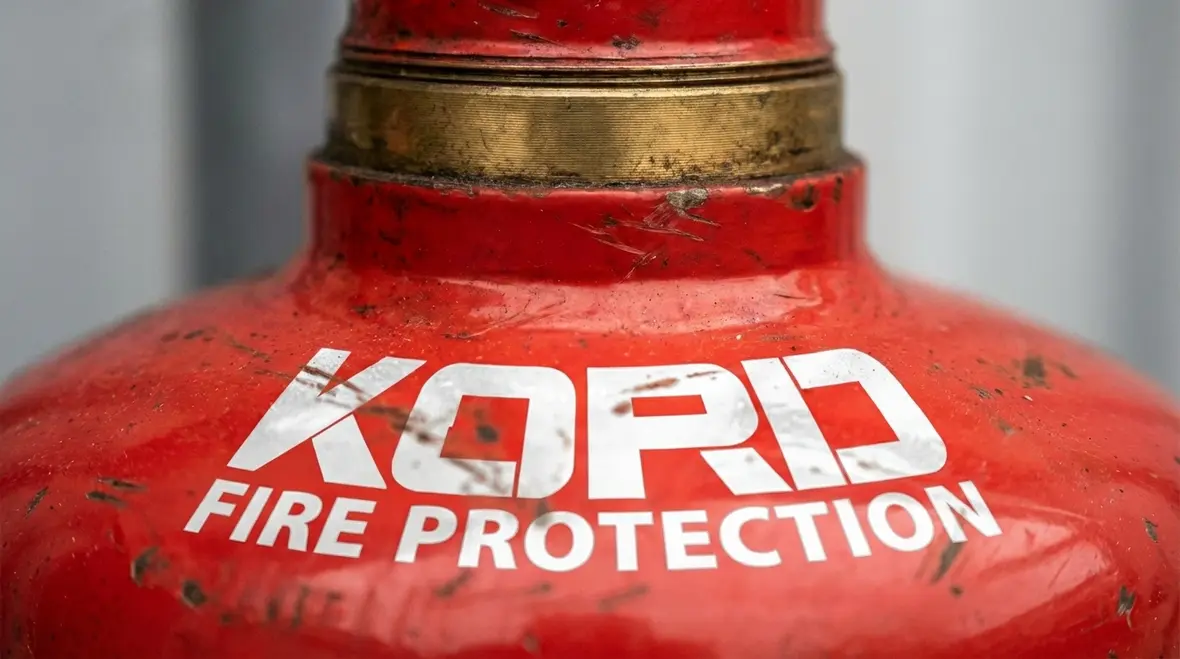
First, check the main label. Manufacturers often print either the manufacturing date or service life information there. Next, examine the neck of the cylinder. Many units have a stamped date pressed into the metal near the top. Additionally, inspect the bottom rim. Some manufacturers stamp information along the base edge.
Kord Fire Protection technicians explain that the date may not literally say “expiration date.” Instead, it may display a manufacture date, hydrostatic test date, or service tag. Therefore, understanding what each marking means becomes critical.
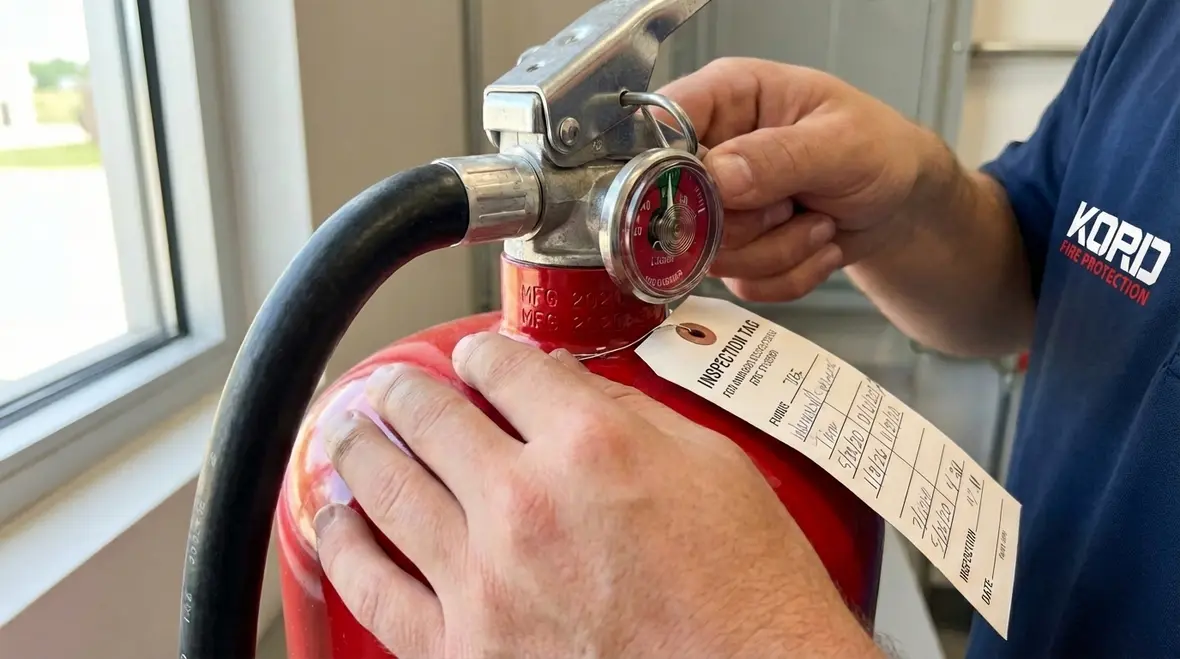
Furthermore, a service tag attached to the pin or handle often shows inspection history. While that tag does not always define total lifespan, it reveals whether the extinguisher has received annual maintenance. As a result, technicians use both the stamped dates and the service tag to determine compliance.
Although the cylinder may appear straightforward, reading it properly requires trained eyes. Think of it like reading the fine print on a concert ticket. The details matter.
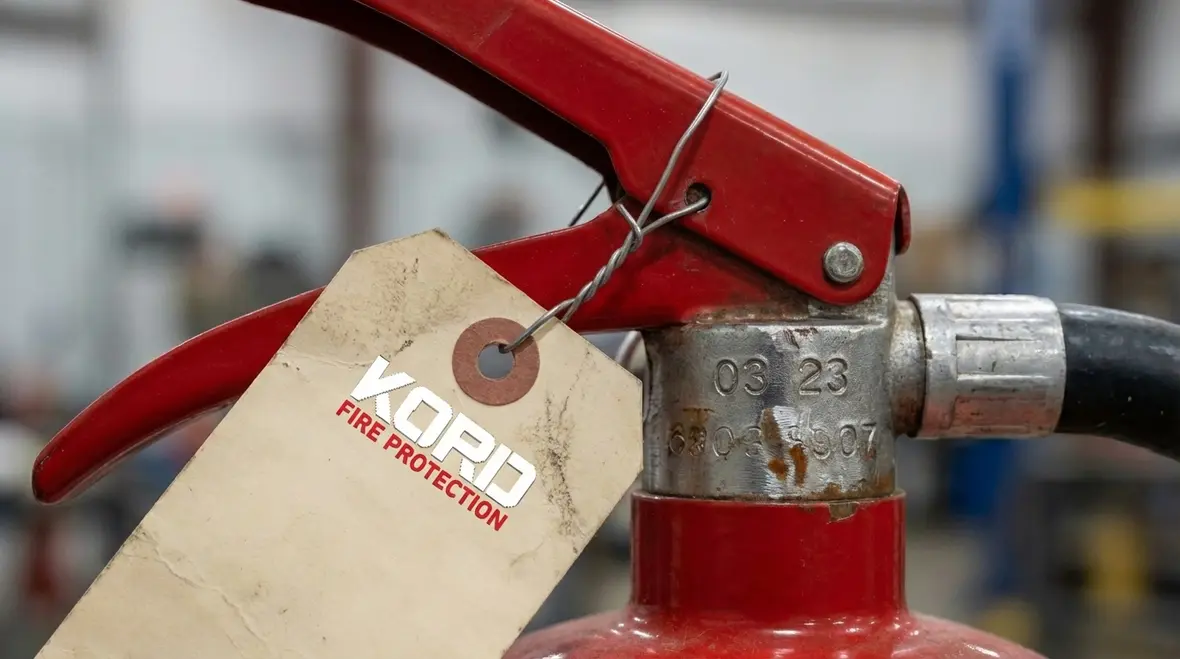
How Long Does a Fire Extinguisher Actually Last
Different types of extinguishers follow different timelines. Consequently, no single answer fits all units.
Disposable dry chemical extinguishers typically last 10 to 12 years from the manufacture date. After that period, replacement is often required. Rechargeable models, however, can last longer if properly maintained and hydrostatically tested.
Moreover, hydrostatic testing usually occurs every 5 or 12 years depending on the type. During this test, technicians check the cylinder’s structural integrity under pressure. If it passes, the unit continues service. If it fails, retirement becomes inevitable.
Kord Fire Protection technicians emphasize that environment also plays a role. For example, units stored in humid areas may corrode faster. Similarly, extinguishers mounted near kitchens or industrial equipment may experience vibration or grease exposure. Therefore, regular inspection is not optional. It is wise stewardship.
In other words, the lifespan depends on type, maintenance, and conditions. Even superheroes need checkups.
Decoding Cylinder Markings and Service Tags
When examining a cylinder, many people feel like they are reading a secret code. Fortunately, the code is not difficult once explained.
Below is a simple dual column breakdown often shared by Kord Fire Protection technicians during training sessions.
Column One: What You See
- Stamped four digit year on cylinder neck
- Month and year printed on label
- Punched holes in service tag
- Stamped month and year with tester ID
- Faded or missing label
Column Two: What It Means
- Year of manufacture
- Production date or recharge date
- Annual inspection record
- Hydrostatic test completion
- Unit may need professional evaluation
Therefore, when someone searches for the fire extinguisher expiration date location, they are often really looking for these markings. While it may seem minor, understanding these details prevents costly compliance violations.
Additionally, insurance providers frequently request proof of inspection. Consequently, clear tags and legible dates support smooth audits. No one enjoys surprise paperwork, especially when it involves safety fines.
Signs an Extinguisher May Be Past Its Prime
Even without reading the date, visual clues can raise red flags. However, these signs should support, not replace, checking the official markings.
First, inspect the pressure gauge. If the needle sits outside the green zone, servicing is required. Next, check for rust, dents, or corrosion. Structural damage weakens the cylinder and may disqualify it from safe use.
Furthermore, examine the hose and nozzle. Cracks or blockages can prevent discharge. In addition, ensure the safety pin remains sealed with a tamper indicator. If the seal is broken, the unit may have been used or compromised.
Kord Fire Protection technicians often compare this process to checking tires before a road trip. You would not drive across the country on worn rubber. Likewise, you should not rely on compromised fire equipment.
Most importantly, if the stamped date indicates the unit has exceeded its recommended service life, replacement becomes the responsible choice. Nostalgia does not extinguish flames.
Inspection Schedules and Compliance Responsibilities
Business owners carry legal and ethical responsibility for maintaining fire protection equipment. Therefore, inspection schedules exist to provide structure and accountability.
Monthly visual inspections typically involve checking accessibility, pressure gauge position, and physical condition. These checks ensure the extinguisher remains ready for immediate use. Additionally, annual professional maintenance includes a deeper evaluation performed by certified technicians.
Hydrostatic testing follows at required intervals based on extinguisher type. During this procedure, technicians empty the unit, refill it after testing, and apply updated markings. Consequently, accurate records become essential.
Kord Fire Protection technicians explain that maintaining documentation protects businesses during audits and after incidents. Moreover, updated service tags demonstrate proactive safety management. In many jurisdictions, failure to comply can result in fines or liability exposure.
Although paperwork may not inspire applause, it does create peace of mind. And peace of mind is priceless.
For a deeper dive into ongoing maintenance and inspection best practices, many facility managers also review Kord Fire’s guidance on monthly inspections and annual fire extinguisher service to keep everything fully compliant.
Common Misconceptions About Expiration Dates
Several myths continue to circulate about extinguisher lifespan. Let us clear the air.
First, some believe that if the gauge reads green, the unit must be good indefinitely. However, internal components can age even when pressure appears normal. Therefore, the date remains critical.
Second, others assume that rechargeable extinguishers never expire. While they can last longer, they still have maximum service life limits. Eventually, metal fatigue or outdated design standards require replacement.
Third, many people confuse inspection tags with expiration labels. Although related, they serve different purposes. The inspection tag shows maintenance history, while the stamped manufacturing date helps determine overall lifespan.
Kord Fire Protection technicians often joke that extinguishers are not like vampires. They do not live forever. They simply do their job quietly until time calls them home.
Fire Extinguisher Expiration Date Location and Professional Evaluation
When uncertainty arises, professional evaluation becomes the safest path forward. After all, guessing about safety equipment feels a bit like guessing the ending of a mystery movie. It might work out, but the stakes are higher.
Technicians begin by confirming the fire extinguisher expiration date location on the cylinder. Next, they verify hydrostatic test intervals. Then, they review inspection tags for consistency. If discrepancies appear, they investigate further.
Additionally, professionals assess placement and accessibility. An up to date extinguisher hidden behind storage boxes offers little protection. Therefore, evaluation extends beyond dates alone.
Kord Fire Protection technicians prioritize education during service visits. They explain findings in plain language, ensuring facility managers understand both risks and solutions. As a result, clients gain clarity rather than confusion.
Ultimately, professional guidance transforms a simple date stamp into a complete safety strategy.
FAQ
Conclusion and Next Steps
Fire safety does not rely on guesswork. It relies on clear markings, routine inspections, and informed decisions. The fire extinguisher expiration date location tells a quiet but powerful story about readiness. Kord Fire Protection technicians stand ready to interpret that story and guide businesses toward full compliance.
Schedule a professional inspection today, confirm every date, and ensure each extinguisher stands prepared to protect what matters most. Safety favors the prepared. To take the next step, explore Kord Fire’s comprehensive fire extinguisher service and certification options or request support through their fire extinguisher service catalog for installation, testing, replacements, and ongoing maintenance.
Need help reading those tiny stamped dates?
Schedule a fire extinguisher service and certification visit with Kord Fire Protection and let licensed technicians handle inspection, hydrostatic testing, and documentation so every cylinder in your building is ready for its moment of truth.
Know Your Weapon Before You Fight the Flame
Kord Fire Protection is your go-to when it comes to all things fire protection. For over 20 years, we’ve been serving Southern California with the quality service and equipment to keep your home or business safe at all times. Our competitive prices reflect our unwavering commitment to protecting what matters most in the event of a fire emergency. Give us a call, send an email, or use that form!

Join Our Newsletter!
Get the latest fire safety tips delivered straight to your inbox From our Newsletter.